
Solidifying the Story: John Wilson's 'The History of Concrete'
By Julia Krys
Like many New Yorkers, I think about concrete a lot. Often, I wonder if it’s going to fall from above or fail to meet my stride below. The best imaginable PR for John Wilson’s The History of Concrete happened just a few months before the documentary’s release, when a building in Midtown Manhattan began buckling. It seemed to be calling attention to a central theme of Wilson’s work: How can we know so little about what characterizes our daily lives?
I was first introduced to Wilson’s work through his HBO series How To with John Wilson. His entirely unique style is immediately recognizable. His documentaries are laced with calming narration and correlating visuals. For example, if he talks about sadness, we may see a flaccid garbage bag drifting in the wind. Wilson is always connecting abstract ideas with true NYC street occurrences.
I was first introduced to Wilson’s work through his HBO series How To with John Wilson. His unique style is immediately recognizable. His documentaries are laced with calming narration and correlating visuals. For example, if he talks about sadness, we may see a flaccid garbage bag drifting in the wind. Wilson is always connecting abstract ideas with true NYC street occurrences, often achieving an unexpected comedic effect.
When it comes to subjects and stories, Wilson truly shines. He has a Gonzo journalistic approach, allowing the story to emerge around the personal journey he took to capture the footage rather than seeking out a particular narrative. The result is a gentle celebration of the peculiarities in each person he encounters. Everyone we meet pulls us into a world of their own, no matter how absurd or grotesque. Whether it be a local band’s rehearsal or a bricklaying competition, Wilson somehow weaves serendipitous meaning into obscurity.
It is Wilson’s persona that makes these odd connections possible. He embodies an off-camera awkwardness that assures the viewer he is trying to make sense of the footage alongside us. His nonstop filmmaking practice lends personal anecdotes and real-world scenarios to complement his search for meaning. But the leap from short-form success to feature-length is difficult, and this felt especially relevant in Wilson’s case, as The History of Concrete was his feature directorial debut. His style lets us into those challenges as they unfold.
Magnolia Pictures
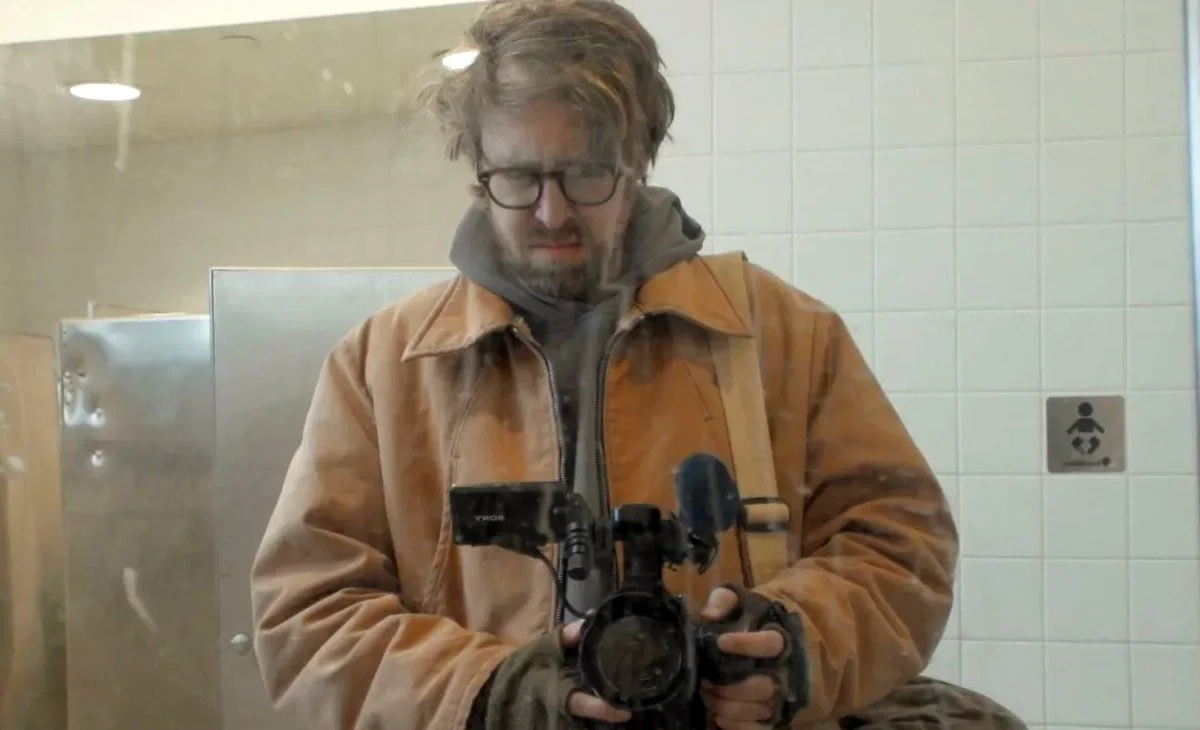
Though concrete is a thematic thread, the documentary itself is about how he completed the project. The History of Concrete reaches far beyond the failures of modern-day infrastructure and instead to our crumbling entertainment industry and how difficult it can be to get a documentary project made.
Still, despite what seemed to be a comical coating of floundering toward project completion alongside a string of concrete industry anecdotes, The History of Concrete indeed succeeded in getting made – and then seems to have received a healthy dose of marketing money. If anything, the project itself represents a sort of impossible victory. A man with conviction has set out to make a documentary on a topic so mundane, and in taking us on the journey, has succeeded in doing so.
I am glad to report John Wilson is the reason I know the difference between concrete and cement. I certainly prefer cement, but perhaps Wilson will consider a sequel.