'Song Sung Blue': The Neil Diamond Tribute that Fell Flat
By Catherine Murphy
Courtesy of Focus Features
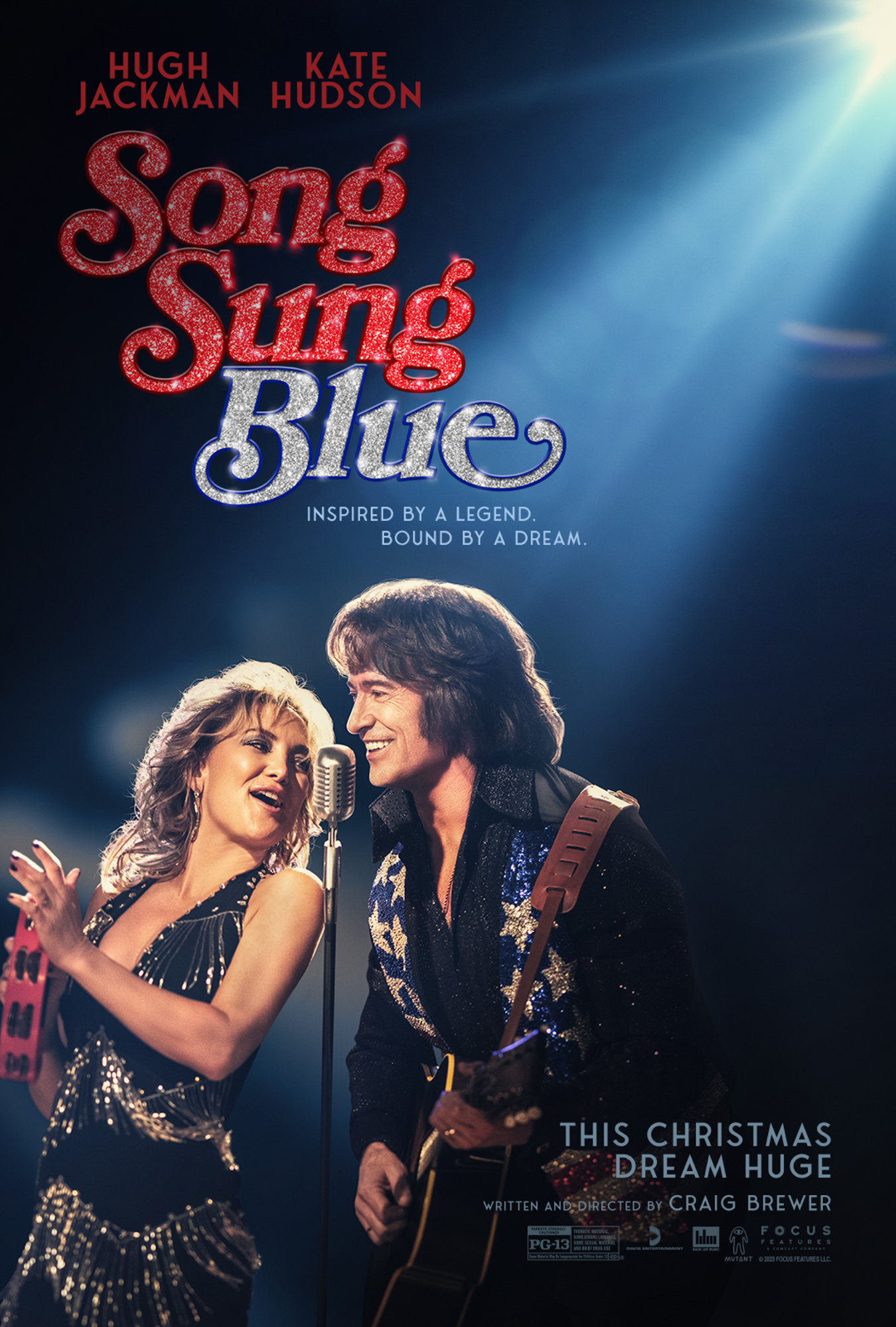
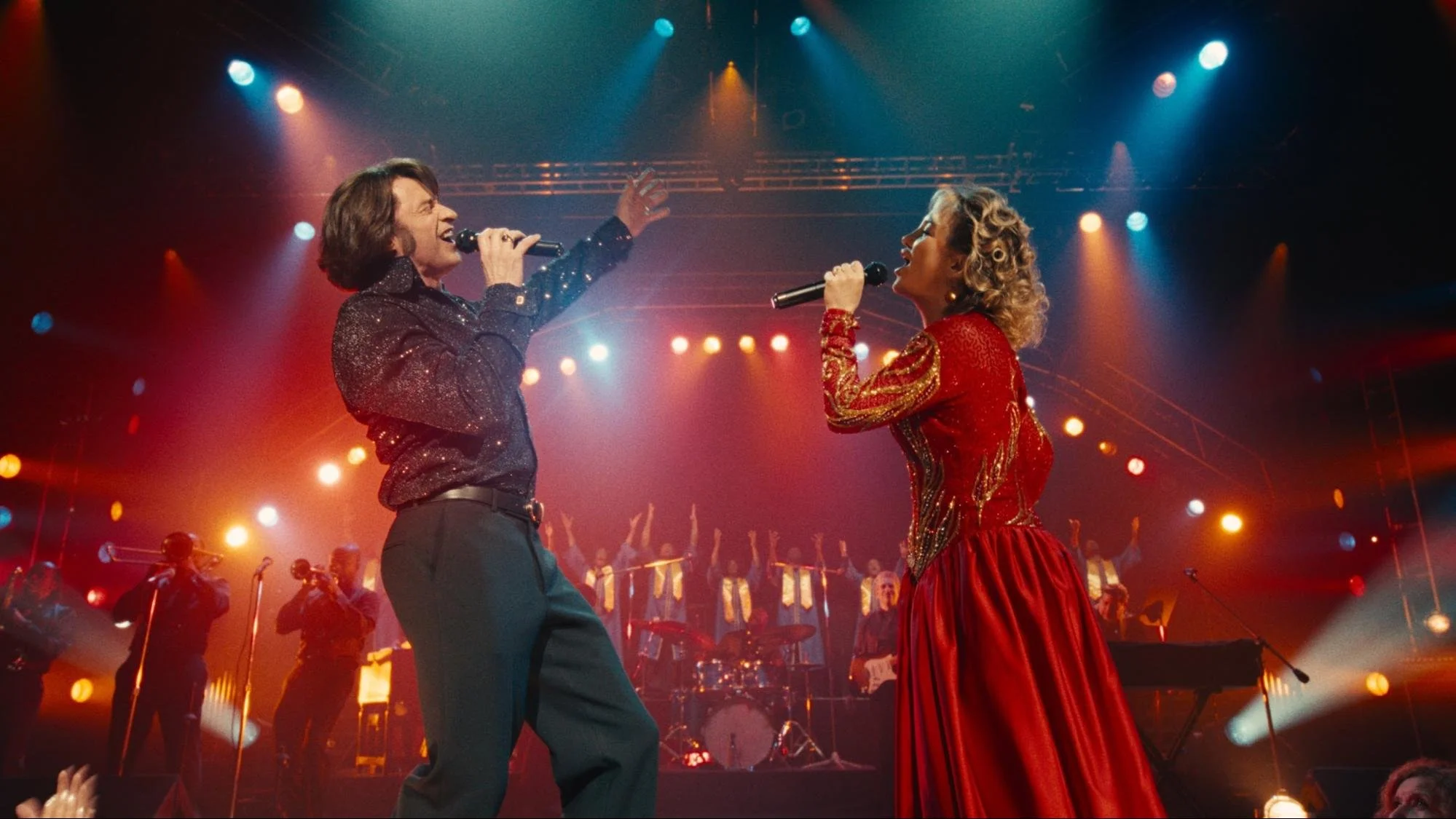
Song Sung Blue (2025), directed by Craig Brewer, stars Hugh Jackman and Kate Hudson as two musical impersonators who fall in love while forming a Neil Diamond tribute band. The film is based on the true story of Mike (Jackman) and Claire (Hudson) Sardina, the duo behind the famous “Lightning and Thunder.” The two meet at a state fair where both are set to perform as Don Ho and Patsy Cline, respectively. Although Mike decides, saying he won’t perform unless he’s allowed to do so as his stage persona “Lightning,” he sticks around long enough to watch Claire’s act and feels an immediate connection. When she overhears him quitting, she suggests that he should sing as Neil Diamond instead.
This chance meeting sparks a professional and romantic relationship as they become husband and wife; Lighting and Thunder. Their career takes off, and they’re finally settling into life together, when their world is rocked after Claire is hit by a spun-out car in her front garden. The accident results in her losing a leg, and this injury places the whole family’s life on hold. Lighting and Thunder are unable to perform, and Dana (Hudson Hensley) and Rachel (Ella Anderson), Claire’s children from her first marriage, are unsure how to shake their mother from her depression. Over time, Claire can seek both physical and psychiatric help. She’s able to reconnect with her family and her love of singing, and once again, Lighting and Thunder take the stage.
Song Sung Blue feels like it was created to be as widely enjoyed as possible. It stays in the shallow end even when it does begin to venture into exploring serious topics like alcoholism or disability. When Claire is admitted into a psychiatric hospital, we get a scene of her explaining how she’s let the loss of her limb take away her passions. It’s a touching and well-acted moment that undercuts what follows. When Claire or other characters reach what seems to be rock bottom, everything is quickly resolved in a “Sweet Caroline” or “Holly Holy” montage of emotional moments.
Courtesy of Focus Features
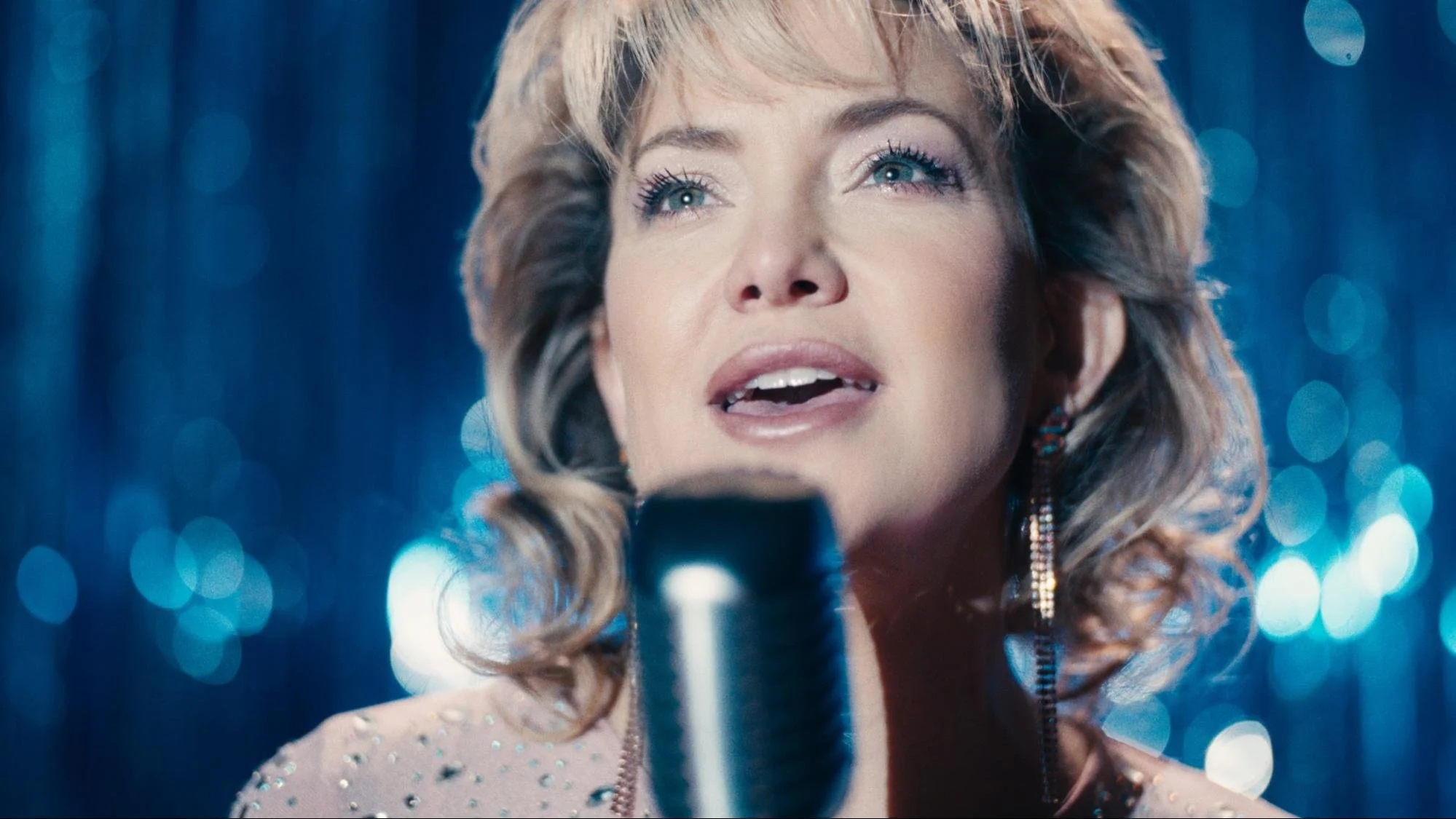
Leaving the theater, the film’s emotional highs felt unearned, and this was in no short part due to the underutilization of Kate Hudson. Hugh Jackman delivers a strong vocal performance and serves well as the film's leading man, Ella Anderson shines with every second of screentime, and even King Princess proves she’s more than just a singer. But it’s Hudson who carries the heart of the story.
More than Mike, we’re able to see how Claire’s trauma impacts her. After losing her leg, she spends days at a time in pain-pill-induced hazes. Finding herself missing hours of the day and monumental moments in her children' s lives, including the start of her daughter’s pregnancy. Throughout this struggle, she’s reasonably irritable and frustrated. She lashes out at her husband and drags her feet about going to important doctor’s appointments. But despite her depth, the film can’t decide whether it wants Jackman to serve as its sole protagonist or if it wants Hudson to share the spotlight. It’s clear from the directing that we’re meant to perceive Mike as the central force, but he serves as more of a source of stability for both the surrounding characters and the narrative. He may be the frontman of both Thunder and Lightning and arguably the film, but it’s Claire who drives the plot. It’s she who originates the creation of their group by suggesting Mike perform Neil Diamond covers, she initiates their relationship, and it’s her accident that launches the second act of the film. So why is she sidelined?
Courtesy of Focus Features
Kate Hudson brings an additional layer to a film that otherwise has one note, and this is recognized by her supporting actress nomination for her role. But Hudson suffers from delivering a stellar performance in a lackluster film. While her talent is undeniable, it’s difficult to compare her to fellow nominees. She does the best she can within the confines of the movie.