
The Illusion of Ethical Fashion
By Claire Theis
It isn’t that you need new clothes. Your seams are still intact, but it all feels outdated. Maybe they’re misaligned with the aesthetic you’re hyper-fixated on this month. I don’t believe the urge to purchase more denim is to replace what you already own. Putting a new piece in your closet offers instant correction. Nothing in your physical reality is fixed.

Sourced through Pinterest
The correction is more emotional than practical. None of us needs another black mini dress, but we want to move forward. We want to feel like we are, at least. Our purchases are proof of our motion, especially when nothing else has shifted. It is easier to update what we can see versus what we cannot. A new piece can translate into several things. It can be a sign of decisiveness, or it can tell your peers you have style (or money). Those desires align with instant gratification, which is structured into the experience. The immediate confirmation email, the shipping notification, the tracking updates. It all extends this feeling, and it’s calculated to get you to do it again. Craving all of this is inevitable. So we are told to do it responsibly. To shop sustainably. When we click “Checkout,” it must be through a brand that models the perfect white tee beside trees and is open about its supply chains. The brand has considered everything there is to consider, but when do these sustainable brands begin to lack sustainability?
The price point will be higher on these brands, and we know the materials and labor make it well worth it. That is because we are informed. On the company’s ethics, their new colors, their limited releases. That information builds a mutual trust between the consumer and the product, with an underlying layer of justification. When sustainability becomes attached to the label, we don’t focus on quantity, just quality. But one doesn’t just cancel out the other. Clean brands are still running on a system that is dependent on you and how much you buy. They drop colors and collections each season. They respond to trends. Regardless of the organic materials being used, the cycle remains. As sustainable shoppers, we question how it’s made, but we should be asking how much is made.
Online shopping and excessive production only grew during the pandemic. My rage formed during COVID, when the brand Shein was exposed for the amount of waste it produces. Billions of people stayed home online, buying from a brand that released thousands of new styles every week. This conversation brought a new sort of awareness into many of our habits. Despite several consumers bringing their Shein hauls to a halt, the brand walked away unscathed. You could assume this is because people couldn’t stop indulging in weekly trends, but I would argue it’s because it is more normalized than we know.
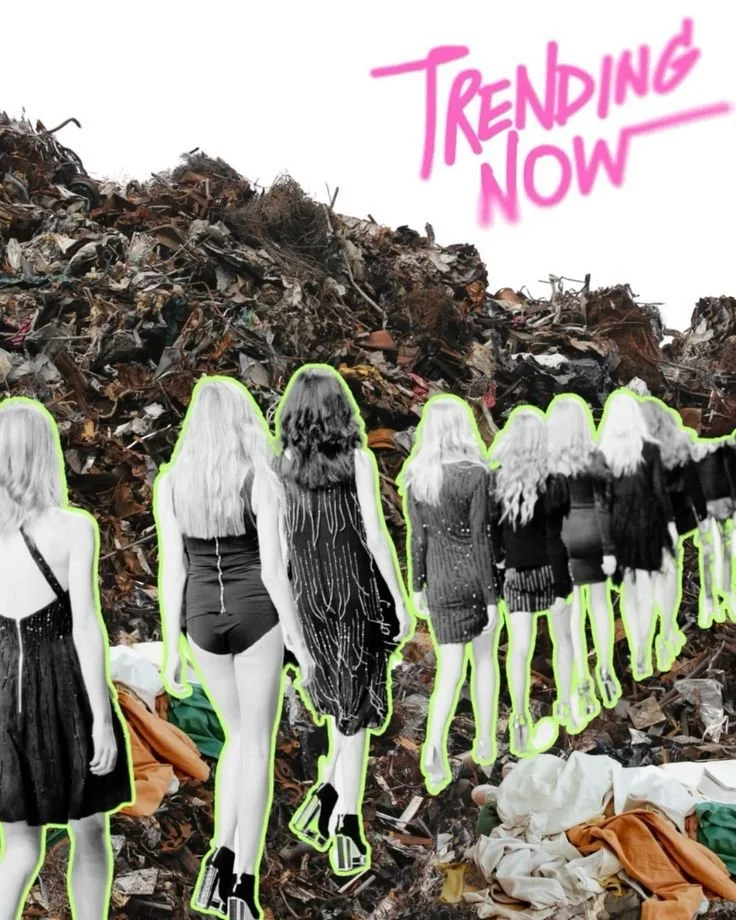
Sourced through Pinterest
Reformation is a brand known for sustainability because of its use of ethical fabrics. The brand transparently shares data about its materials and efforts to reduce impact. Yet researchers have pointed out that recycled and sustainable materials are not enough to offset the environmental consequences of frequent production and consumption.
Shein’s volume is criticized because it is inexpensive. Reformation’s volume is overlooked because of everything else the brand shows you.
The fashion industry is responsible for roughly 92 million tons of textile waste every year. That waste is made heavier by brands like Shein. The brand directly contributes to landfill overflow and pollution that’s tied to fast production cycles. Reformation markets itself around reduced impact, using recycled, deadstock, and renewable materials and reporting per-garment metrics that are lower than conventional industry averages. The brand releases frequent collections and trend-responsive styles, producing new pieces rapidly. Reformation does not publish total waste figures the way fast fashion companies do, but its rate of new products and regular seasonal updates means it still participates in production cycles. I’m not trying to single out either brand as good or bad. One exists at an extreme scale, the other under a sustainability framework. Putting their practices in perspective shows that reduced material impact does not equate to reduced total waste.
Looking at brands that are sustainable at the core, we have to look at how a business is built. Oddli is an example of this, producing products with material that already exists and would otherwise be thrown out. That decision immediately limits production. Aside from this, Oddli uses a different structure. The brand’s identity is tied to what is available, not what is trending. What they create doesn’t orbit seasonal aesthetics. They are branded around consistency.
When a brand isn’t chasing what’s next, it removes the urge to purchase. That is the clearest difference. Sustainability isn’t just about recycled inputs or carbon tracking per garment. It’s about whether a brand depends on constant reinvention to be successful.
I don’t think sustainability was meant to feel exciting. The industry convinces us that it’s okay to keep the same habits; we just have to shop for the right label. We have to make it socially acceptable to include in an outfit check. It’s easier to believe the solution is external. That the right brand absolves the behavior. That ethical production cancels out our constant consumption. But sustainability cannot exist inside urgency.
If a brand depends on convincing you that what you own is no longer enough, it doesn’t matter what the fabric is made of. I’m not arguing that materials don’t matter. They do. Labor conditions matter. Supply chains matter. But velocity and quantity matter too.
The most sustainable choice isn’t finding the best brand, but letting yourself live fully through your closet before hopping on the next trend cycle.