Speaking With the Team Behind 'Maggots', Still in Their Developing Form
An Early Short Film in Development About Girlhood, Control, and the Spaces in Between
By Natalie McCarty
There is a kind of teenage boredom that registers as a slow, ambient, cumulative pressure. It’s something sacred and stubborn that’s held too long without release. Call it teenage angst, call it the precipice of becoming, or call it nothing at all; hold it instead as an intangible condition with only a feeling to its name.
A feeling that is already captured in the early development of Maggots, the new short film from writer-director Fiona Lynette McNeal, who is in the process of building a world that is held together, at this stage, by a single conviction: that adolescence is not defined by what happens, but by what is endured while nothing seems to happen at all.
“I found myself nostalgic for teenage summers,” she says, “but then I remembered how bored we were—how bored I was. It got me thinking of other teen girls who spent their summers bored and not knowing any better, wanting to be older than they were, wanting to be somewhere else. In a mixture of those feelings, you find yourself in grey areas, a place you don’t want to be, but you’re trapped there.”
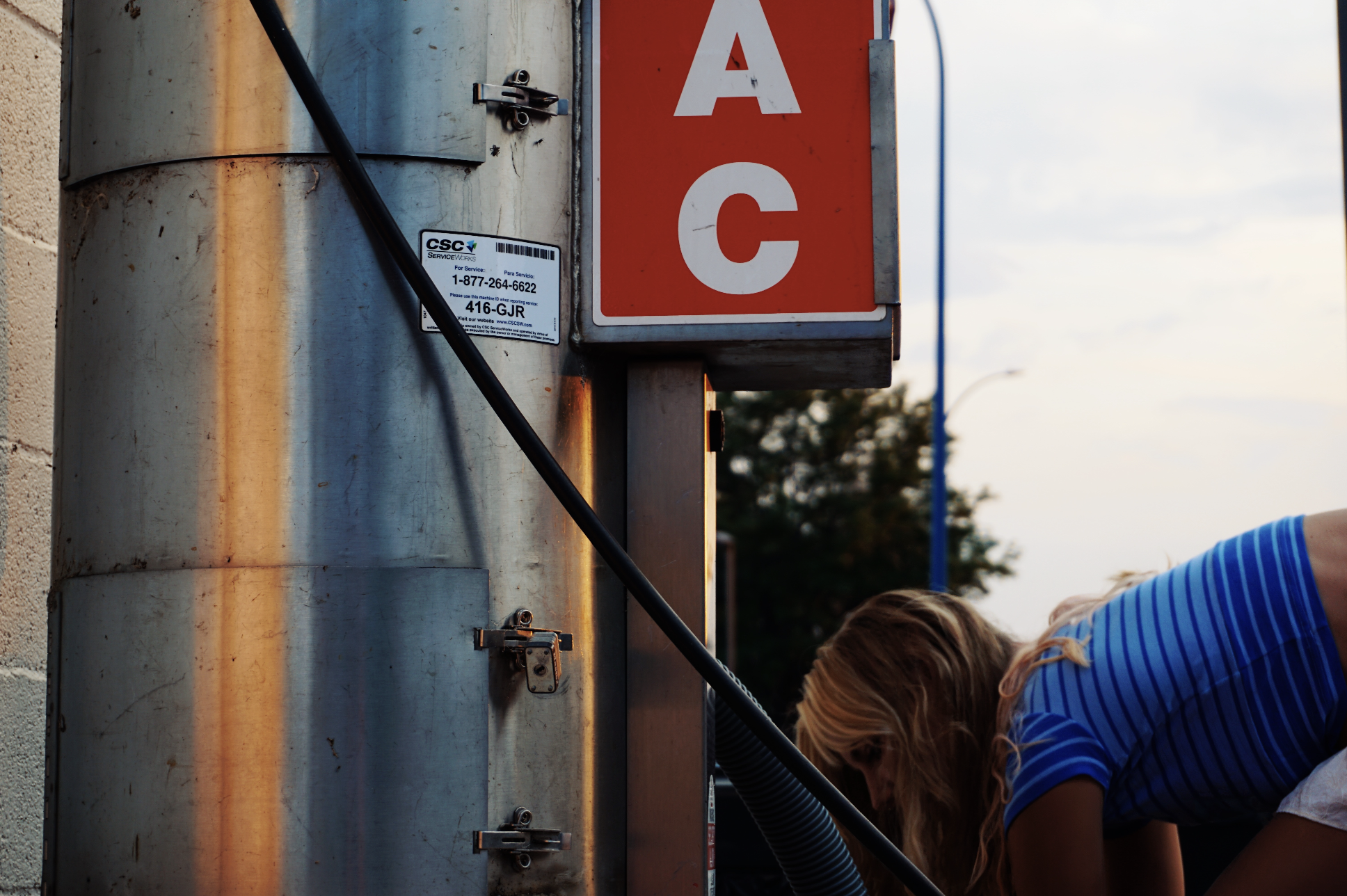
Credit: Isabella Grace Cohn
What she keeps circling is not an event but duration, the way time behaves when it has nowhere to go. In Maggots, that duration becomes the atmosphere for three girls—Bee, Chloe, and Harper—moving through rural Colorado, a landscape that does not sit behind them so much as presses against them, shaping perception as much as place.
In this early stage of development, Gut Instinct Media sat down with writer-director Fiona Lynette McNeal, producers Sarah Jo Carré and Isabella Grace Cohn, and director of photography Isaac Sheets to speak about Maggots as it is still in its developing form, to learn a bit more about the project.
WHAT DISTINGUISHES MAGGOTS IN EARLY DEVELOPMENT
What distinguishes Maggots at this stage is precision of intent. Even in early development, there is a clear sense of a story built with and for women, shaped by women, and attentive to the specific conditions of its own making.
Producer Sarah Jo Carré describes joining the project as a question of alignment rather than calculation. “Short films are always a choice,” she says. “You’re deciding where your time goes, and why.”
Working in short film production, she emphasizes, means operating within a structure where financial return is not guaranteed and time itself becomes the primary resource being allocated. Every project requires a deliberate decision about what receives energy, attention, and sustained commitment.
“What stood out to me about Maggots was not only the strength of the material, but the way Fiona approaches storytelling with such clarity and intention. I believe in the story we’re telling, but even more than that I believe in the team behind it. That’s what makes the effort feel worthwhile,” said Carré.
That sense of clarity carries into how she understands the production process itself. She describes the film as already carrying an unusual internal coherence in development. “There are projects where you can feel they’re still figuring out what they are,” she says. “This already had a sense of what it refused to become.”
That refusal becomes structurally significant as the project moves forward. It reduces the range of compromise available once production pressures begin to accumulate. In independent filmmaking, those pressures are concrete and compounding: budget constraints, scheduling realities, location access, cast availability, weather dependencies, and the constant recalibration of what can remain intact.
For Carré, producing is therefore an ongoing negotiation between vision and limitation, intent and material conditions. “You’re constantly negotiating what survives,” she says, “not just in terms of budget, but in terms of integrity. What version of the film still feels like the same film once it has to exist in the real world?”
And that reality, she adds, is entirely practical. “Short films don’t just get made,” she says. “They’re held together by a lot of people deciding, repeatedly, that it’s worth continuing.”
THE SUBTLE, GRAY SPACES
Producer Isabella Grace Cohn—whose work has long engaged with sexual harm and the fragmented language used to describe it—approaches Maggots through a related but distinct lens. She is currently completing Watch You Rise, a feature documentary on youth sexual harm produced with Elizabeth Woodward and Marina Hunt at WILLA, and situates her work within an ongoing engagement with what is visible, what is misnamed, and what remains structurally unspoken.
“What interested me,” she says, “was how harm often exists in subtle, gray spaces. Spaces created by unclear laws, inadequate sex education, and cultural norms that don’t name what is actually happening. That in-between space is where this story lives.”
She also points to the uneven distribution of visibility within those narratives, where cultural representations of vulnerability often default to a narrow demographic, despite the reality that harm disproportionately affects Black, Indigenous, queer, and young people of color. Expanding that frame, she argues, is not additive but corrective—an adjustment in what audiences are trained to recognize as real or possible.
THREE GIRLS, ONE SHIFTING SYSTEM
At this stage, Bee, Chloe, and Harper exist less as fixed characters than as evolving internal logics.
Bee functions as an entry point—attentive, unformed, still learning how attention can distort perception. Harper is constructed through performance: confidence as posture, sexuality as visibility, control as projection rather than possession. Chloe is defined through withdrawal, where absence becomes a strategy rather than a lack.
McNeal resists stabilizing them into archetypes. “There’s a pressure to make female characters perfect,” she says, “especially when dealing with sexual violence. But teenagers aren’t coherent. They contradict themselves constantly.”
Across conversations, what the producers return to is relationality rather than individuation. The girls operate less as separate identities than as a shifting system of misalignment and response. What one cannot articulate, another absorbs incorrectly. What one performs, another misreads. Friendship becomes a continuous recalibration under pressure.
Moreover, the theme of control in Maggots becomes quite prevalent but in different forms.
What does control look like when you don’t yet understand the system you’re trying to control?
For Bee, control begins as legibility: being seen correctly, understood, and recognized as a woman. “Part of growing up for her is being desired,” McNeal says. On the other hand, Harper performs control through accumulation: attention, sexual visibility, social proof. And Chloe rejects it entirely, withdrawing into opacity that resists interpretation. Bee attempts to convert innocence into readability, as though correct interpretation might function as protection.
None of these positions resolves into success or failure. They function as temporary survival strategies that all women endure within a system that continually shifts the meaning of their actions.
Cohn frames this beyond adolescence. “Validation, belonging, desire, control—these aren’t teenage experiences,” she says. “They’re lifelong ones. Adolescence just exposes them more clearly.”
She also notes how language around sex has become increasingly entangled with aggression and distortion, where intimacy is often overwritten by idioms of dominance or dismissal, compounded by a wider landscape shaped by unclear laws, inadequate sex education, and cultural norms that fail to equip young people with the tools to understand their own boundaries, communicate them, or recognize and respect the boundaries of others.
In Maggots, atmosphere is not something added to the story after the fact. It is part of the story's emotional architecture from the beginning.
For McNeal, rural Colorado is not simply a setting but a condition that shapes the girls' lives. She describes it as a place that is simultaneously beautiful, lonely, and steeped in histories of violence. The isolation of the landscape weighs heavily on Bee, Chloe, and Harper, amplifying the boredom, restlessness, and longing that define their adolescence.
“There is nothing to do but survive,” she says. “That kind of environment compresses everything.”
Credit: Isaac Sheets
The film's vision of small-town life pushes back against the nostalgic mythology often attached to rural America. The open fields and endless horizons that are frequently romanticized become, in Maggots, a kind of enclosure. Opportunities feel distant. Escape remains largely theoretical. For the girls, friendship becomes one of the only meaningful forms of refuge.
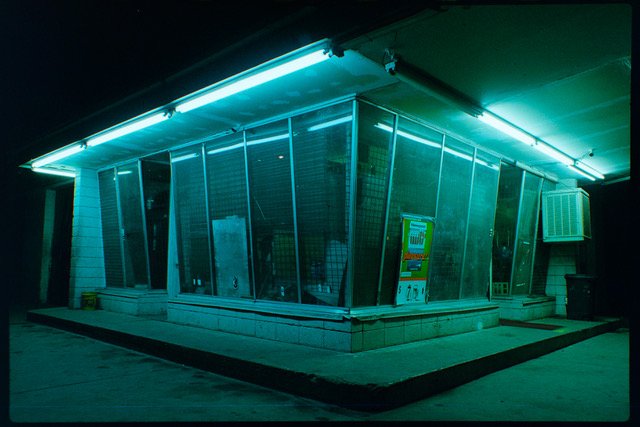
That sense of confinement extends into the film's visual language. Director of Photography Isaac Sheets and McNeal have built their approach around a shared interest in vérité documentary filmmaking, developing a style that privileges discovery over control.
“We want the viewer to be immersed with the girls as they navigate the night and more broadly girlhood and sexual violence,” Sheets explains. “We want the viewer to be with the girls, not looking at them from outside.”
The camera is therefore imagined less as an observer and more as a participant—moving alongside the characters, discovering spaces with them rather than dictating how those spaces should be seen. McNeal describes the process as one guided by a single recurring idea: freedom. Freedom for actors to move naturally through scenes, freedom for the camera to respond rather than impose, and freedom for moments to emerge organically rather than through rigid choreography.
That philosophy is also central to the team's decision to shoot the film entirely on 16mm.
For Sheets, the format is both practical and conceptual. Because so many of the vérité documentaries that inspire the project were captured on lightweight 16mm cameras, shooting on film becomes a way of placing the audience directly within the girls' experience while paying homage to the documentary traditions that shaped the project's visual identity.
Credit: Isaac Sheets
The choice is ambitious. Shooting on 16mm requires more resources, greater preparation, fewer takes, and a level of focus that affects nearly every aspect of production. But for both Sheets and McNeal, those limitations are inseparable from the emotional experience they hope to create.
“Film will always be the superior format,” McNeal says. “Colors and textures are captured differently on film. In my opinion, creating a more immersive environment.”
She describes the medium as inherently intimate. Film stock is finite. Every frame requires intention. The physical process demands patience, care, and attention—qualities she sees reflected in Bee's story itself.
“Film forces attention,” she says. “You can’t treat it casually.”
That tactile quality is also what excites her most about the format's emotional potential. The grain, imperfections, and physical texture of film create a sense of human presence that digital formats often struggle to replicate. For a story concerned with vulnerability, girlhood, and the fragile space between innocence and experience, that humanity feels essential.
The result is a visual strategy built around a series of productive tensions: freedom and confinement, movement and stillness, openness and isolation. Just as Bee's world gradually narrows over the course of a single summer night, the film's visual language shifts alongside her—moving from the apparent freedom of adolescence toward a more complicated understanding of what growing up actually demands.
WHAT REMAINS UNRESOLVED
Because Maggots is still in development, many elements of the film continue to evolve, including its ending. What remains consistent, however, is the importance of the girls' relationship to one another.
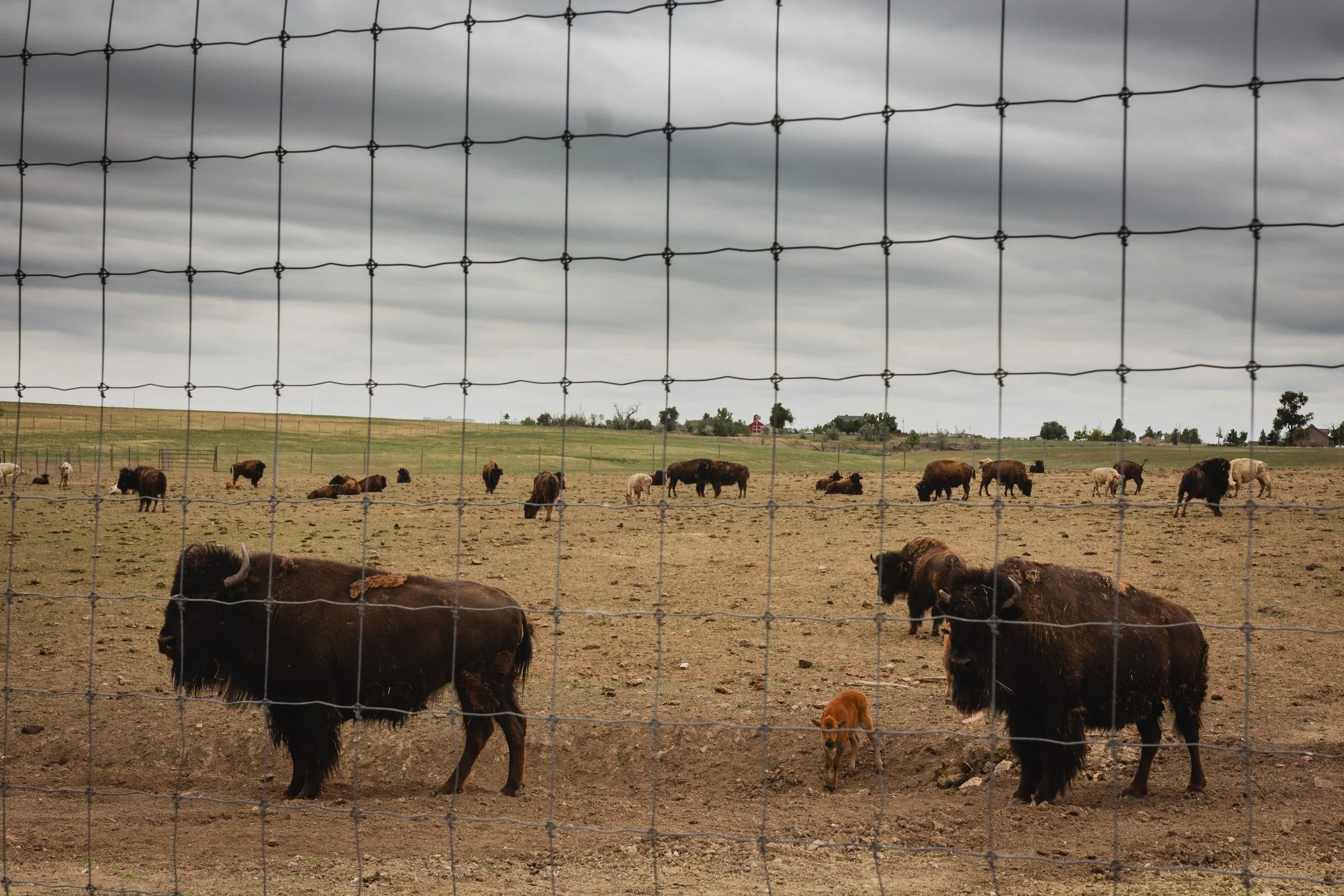
In McNeal's vision, Bee, Chloe, and Harper arrive at the end of the night changed but not necessarily resolved. Their circumstances may not be different, but their understanding of themselves—and of each other—has shifted. In one of the film's final images, the girls sit together behind a fence alongside bison, animals that once roamed freely across the landscape but now exist within imposed boundaries. The image emerges naturally from the world of the film and from the recurring ideas of freedom, confinement, and transformation that run throughout the story.
For McNeal, that final note is rooted in something simple but deeply felt. “Becoming a woman is learning that your greatest allies are other women.”
That idea feels central not only to the film itself, but to the way the project is being made.
Throughout development, Carré, Cohn, and McNeal repeatedly return to the importance of protecting the film's core intentions as it moves toward production. For Carré, independent filmmaking is a constant negotiation between creative ambition and practical reality—a process of ensuring that the original vision can survive the logistical and financial pressures required to bring it to life. For Cohn, the urgency lies in preserving the film's complexity and resisting the simplification that often accompanies stories about gender, harm, and adolescence. And for McNeal, the goal is to create space for characters like Bee, Chloe, and Harper to exist in all of their contradictions: messy, vulnerable, flawed, and fully human.
What is at stake is not simply whether Maggots gets made, but how it gets made—and whether the specificity, honesty, and perspective that drew this team to the project in the first place can remain intact as it moves from development into production.
HOW YOU CAN SUPPORT THIS STORY
Maggots is currently in early development, moving through the fragile space between conception and actualization. What it ultimately becomes will depend, in part, on whether it can move forward with the proper funding.
As McNeal puts it, independent filmmaking is ultimately powered by community. "Anything helps, donating time, equipment, or financial support. Talking about the film helps too," she says. "With community support you're giving us the freedom to tell the story we want and in our own way."
For Carré, that support has always been at the heart of independent cinema. "Independent filmmaking has always been powered by community," she says. "The reality is that short films only get made because hundreds of people believe in a story enough to support it, often with whatever they can."
That belief extends beyond funding. It becomes part of the filmmaking process itself. "The people donating and supporting aren't just helping a film get funding," Carré explains. "They're becoming part of this journey with us."
Cohn echoes that sentiment, emphasizing that community support allows the project to remain accountable to its original intentions rather than external pressures. "What audience support makes possible is straightforward," she says. "It keeps the decision-making in the hands of the filmmakers. It means Fiona can protect her vision, we can cast boldly, and we can make sure this film reaches the people who need it most."
That idea—protection of vision—returns again and again throughout conversations with the team. Not because they are interested in preserving a fixed object, but because they are committed to preserving the complexity at the center of the story. The messiness of adolescence. The contradictions of girlhood. The difficult conversations around desire, belonging, violence, and survival that Maggots refuses to simplify.
"People are craving new voices, new ideas," McNeal says. "If you want new voices, something different, supporting Maggots gets you that."
At this stage, the film exists as a possibility: a script, vision, team of filmmakers investing their time, labor, and belief into a story they feel deserves to exist. Community support is what gives that possibility room to grow.
For those interested in supporting Maggots as it moves from development toward production, you can contribute to the short’s crowdfunding campaign and follow the team on Instagram for future updates on the project.
Credit: Maggots (Short Film)