The Afterlife of Anthony Bourdain
By Sadie Jane Mayhew
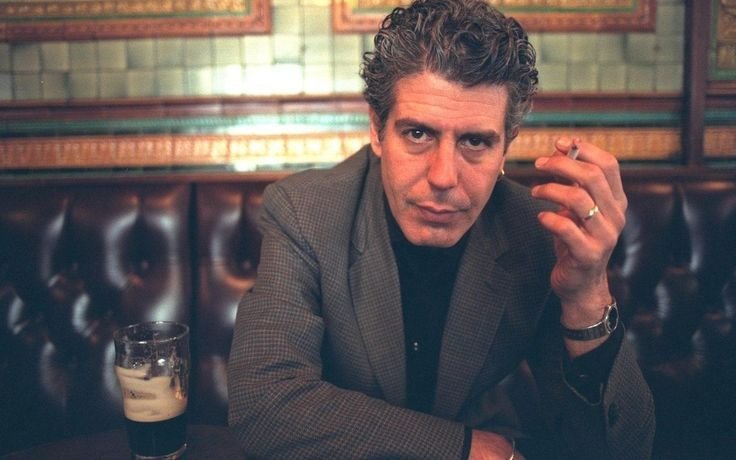
Sourced through Pinterest
There are cultural figures who leave behind work. And then there are cultural figures who leave behind a temperature.
Anthony Bourdain left behind a climate.
He began as a downtown New York chef with a heroin habit and a sharp pen, publishing Kitchen Confidential in 2000 and accidentally detonating the mythology of the restaurant world. What followed was stranger than the arc of a celebrity chef. He became a traveler, then a narrator, then something closer to a secular anthropologist of late capitalism— drifting through war zones, fishing villages, karaoke bars, and street stalls with the same curiosity and the same appetite.
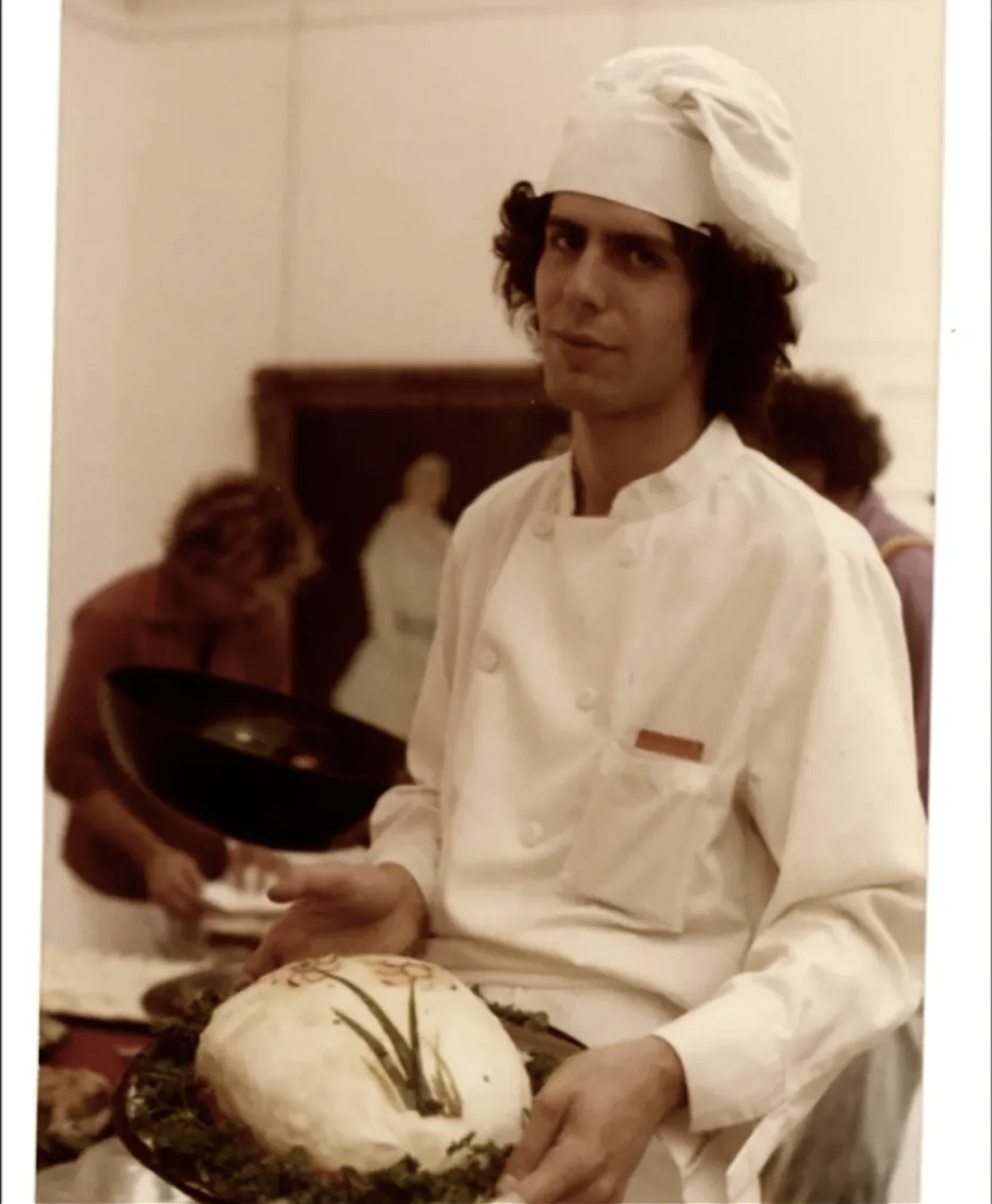
Sourced through Pinterest
Through his shows like Cook’s Tour, No Reservations, and Parts Unknown, he turned food television into something looser and more dangerous. Less about recipes than about power, migration, grief, colonialism, and joy.
He died in 2018, by suicide, at 61, while filming in France—a loss that felt less like the passing of a television host and more like the sudden silence of a familiar voice that had been narrating the world back to us.
And yet lately, Bourdain seems to be everywhere again. Not just on our TV’s, but on our social feeds, Pinterest boards, and in our everyday style inspiration.
His old monologues circulate as TikTok edits scored to moody synth tracks. Streaming rewatches are rising. Younger viewers, many of whom were still in grade school when he died, are discovering him for the first time, treating Parts Unknown like a text rather than a show.
There is also a coming Hollywood canonization: Tony, an A24-backed biographical film starring Dominic Sessa, is expected to arrive soon, dramatizing his early life as a heroin-using chef in grimy New York City, years before his fame.
In other words, the resurrection cycle is underway.
But the renewed sense of fascination, and maybe even some scrutiny in the digging deep of his personal life, isn’t just nostalgia, but more recognition and appreciation that many artists receive long after they’re able to produce something new.
The Tony I Knew
Sourced through Pinterest
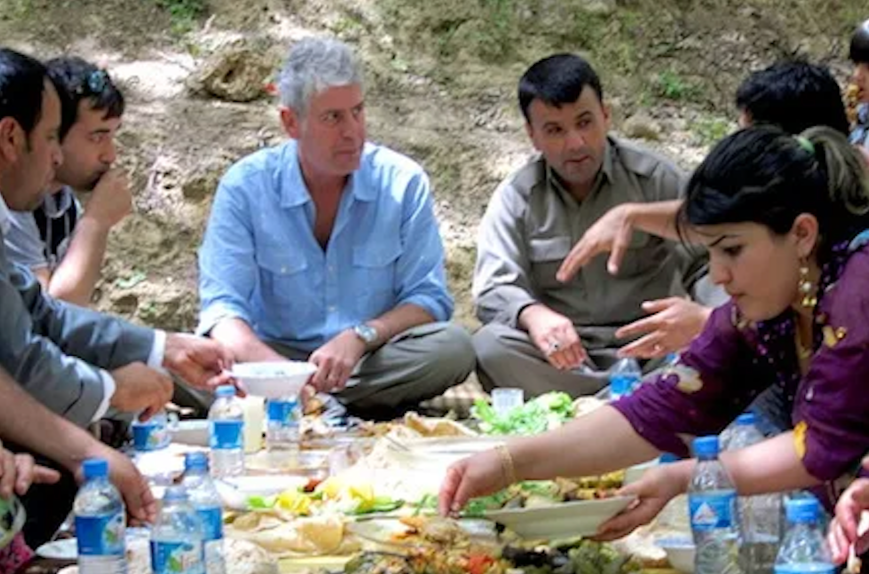
For me personally, Tony isn’t a new figure in my sphere. I grew up with him floating around in the background of my upbringing. His iconic voice was always somewhere nearby. My parents had his shows on often. Lots of sleepy Saturday and Sunday afternoons with Parts Unknown playing on CNN while we watched, learned, and then got hungry or felt inspired to go outside and try something adventurous.
I personally admired his storytelling, wit, and unconventional attitude toward television. It’s like he rejected being a TV personality so much, and yet he was absolutely perfect for it at the same time. He was intriguing.
I’m happy so many people have been discovering or rediscovering him in recent years. It’s been wonderful to witness because I’ve even been on a kick myself, which has sparked my love for travel, writing again, cooking at home, and world politics.
Is that just me or everyone else?
And if you aren’t aware of this sudden appeal Tony has over the young masses, you might ask, what’s with the hype?
The Punk Who Traveled
Sourced through Pinterest
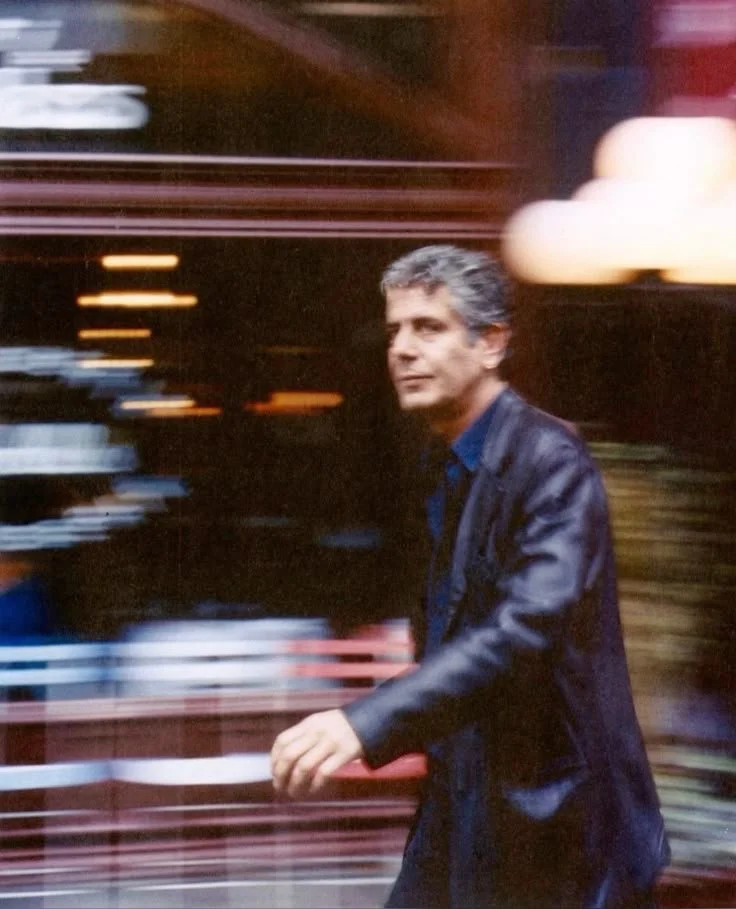
The truth is, there has never really been another figure quite like Bourdain because he wasn’t built from the usual aspirational materials.
He was:
Profane and funny.
Good-looking in an unpolished way.
Open about his mental state.
Passionate about food and culture.
Suspicious of authority.
Tender toward strangers.
The Smithsonian once called him “the original rock star” of the culinary world. And he absolutely was a rock star in every sense, despite the lack of actual music. He embodied it as a chef and writer.
And in an age of culinary fascination that has taken over much of the U.S. and the world, who better to look to for inspiration than one of the greatest rock stars of the food world itself, Mr. Bourdain.
While line cooking has always been seen as a low-class, rough industry, it’s something Bourdain sort of romanticized. Yes, cooking shows have been popular for a long time, but we’re entering a new era of cooking content on social media that isn’t always so produced. “Gio the Line Cook,” as he’s known online, has become somewhat of an icon on TikTok and Instagram for his looks and cool style, which kicked off an informal series, What I Eat in a Day as a Line Cook. Now line cooking is becoming somewhat of a cool young job to have—something Bourdain put real respect on by noting and spotlighting that most great kitchens are run by the most hardworking immigrants.
As a dishwasher, turned line cook, turned chef himself (and ultimately writer and TV host), he carried himself less like a host and more like someone who had wandered into the job from the wrong scene… punk-adjacent, chain-smoking, faintly exhausted by the performance of success. Something that resonates with a lot of people these days struggling to find stable work under a government and economy that doesn’t care much for lower class people trying to make an honest living.
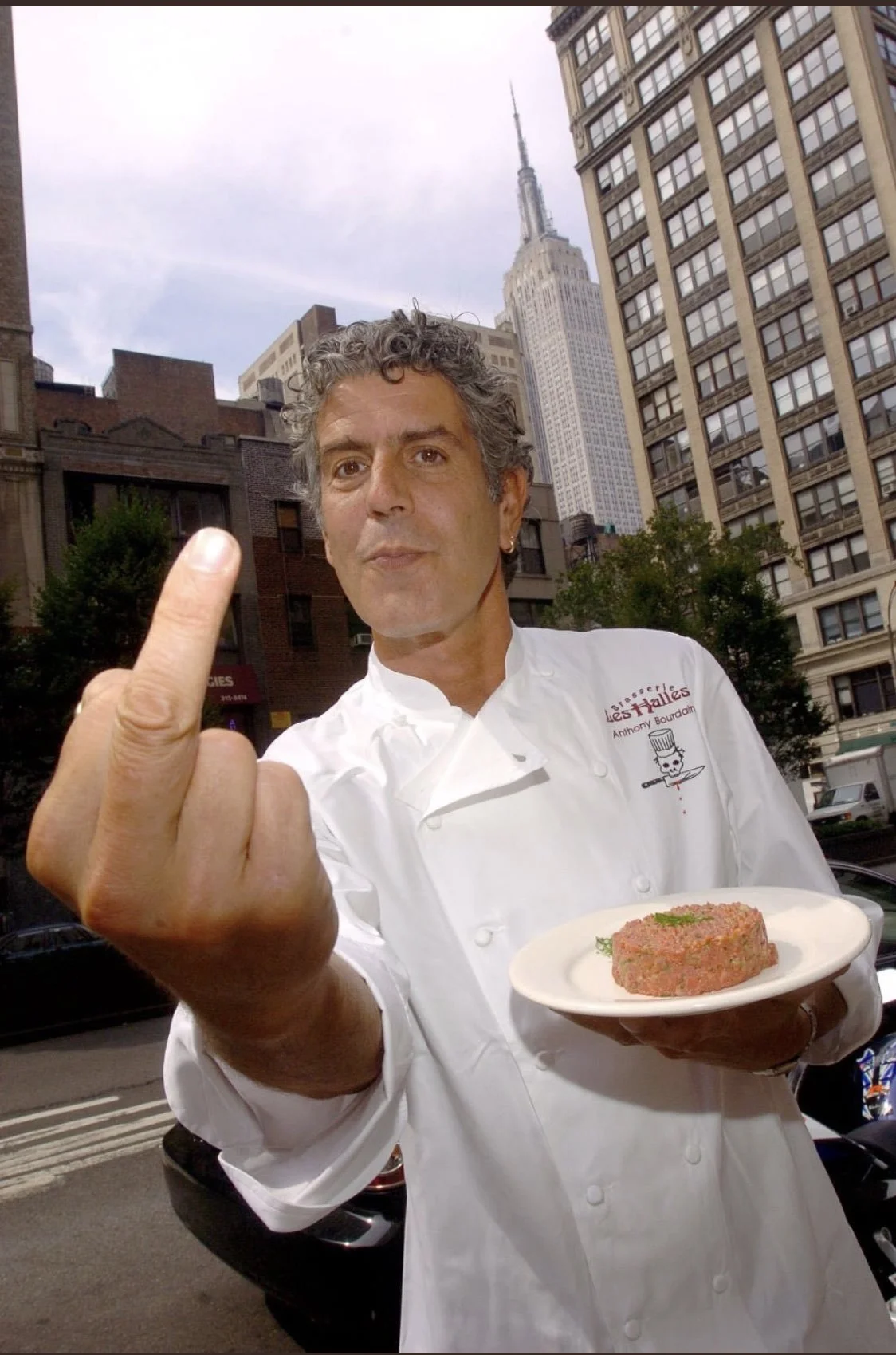
He swore too much for network television. He ate too adventurously for Western comfort. He refused to flatten the places he visited into network television-friendly postcards or travel ads.He was tough-skinned in public on the streets and soft, indoors at the kitchen or dinner table, where it mattered most.
Sourced through Pinterest
More importantly, he did something television rarely manages: he changed the scale of the world for many people. He brought the world into your living room. He didn’t just make the world smaller and more approachable. He also made it bigger by showing viewers how vast and unfamiliar it was.
Not filtered through a specific agenda, brand identity, or propaganda, but real, unedited, raw scenes with real locals, learning about history, traditions, and customs. And sometimes it wasn’t always pretty, but his willingness to try and explore made it all the more fascinating and thrilling.
Food became a social solvent. A reason to sit down, listen, and pay attention. And in a world filled with disconnect and miscommunication that has led to isolation, people crave community, exploration, and new experience.
WHile all of this was seen as sort of taboo for network television and made him all the more cool, we don’t have these kinds of sensors on social media today, so people can create their own content like this freely. It’s not as edgy as it once was, but maybe not having restrictions makes it all the more promising for young wanna-be chefs, content creators, and personality types inspired by the original.
Why Now?
So why is he resonating again, especially with people who didn’t grow up with him?
Part of it is what I mentioned above, but also the aesthetic of Bourdain’s attitude and lifestyle.
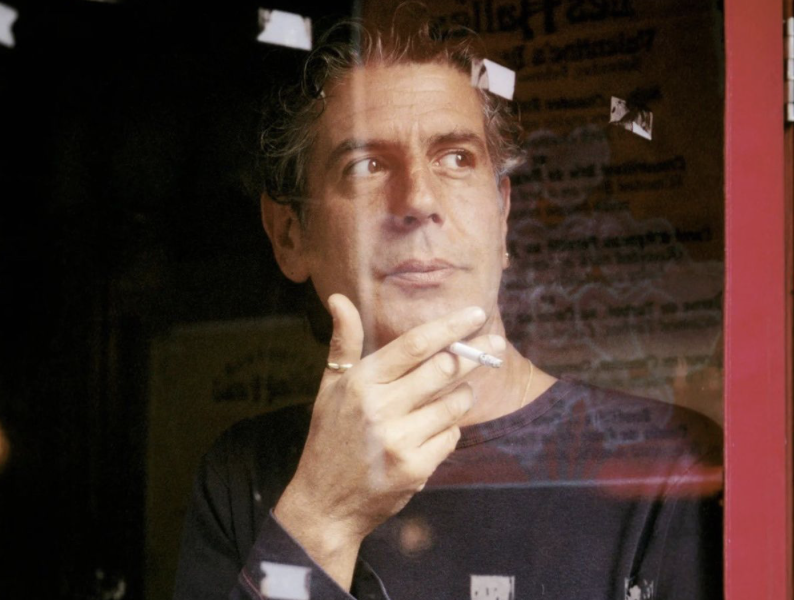
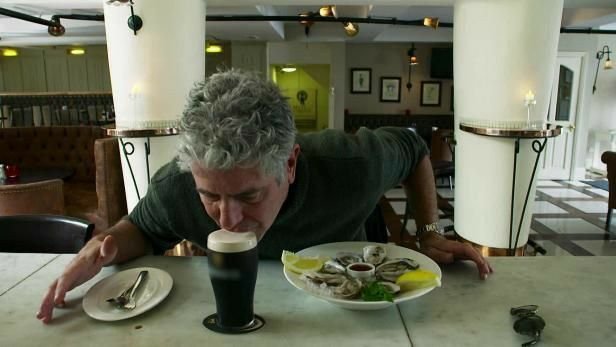
Dim bars, peeling paint, street smoke, fluorescent-lit kitchens—his visual world feels closer to the moodboards of contemporary youth culture than to the glossy food media that surrounded him in the 2000s. His shows look analog in a digital age. His sometimes vulgar language and attitude were seen as rebellious then, but feel more culturally normal now.
Sourced through Pinterest
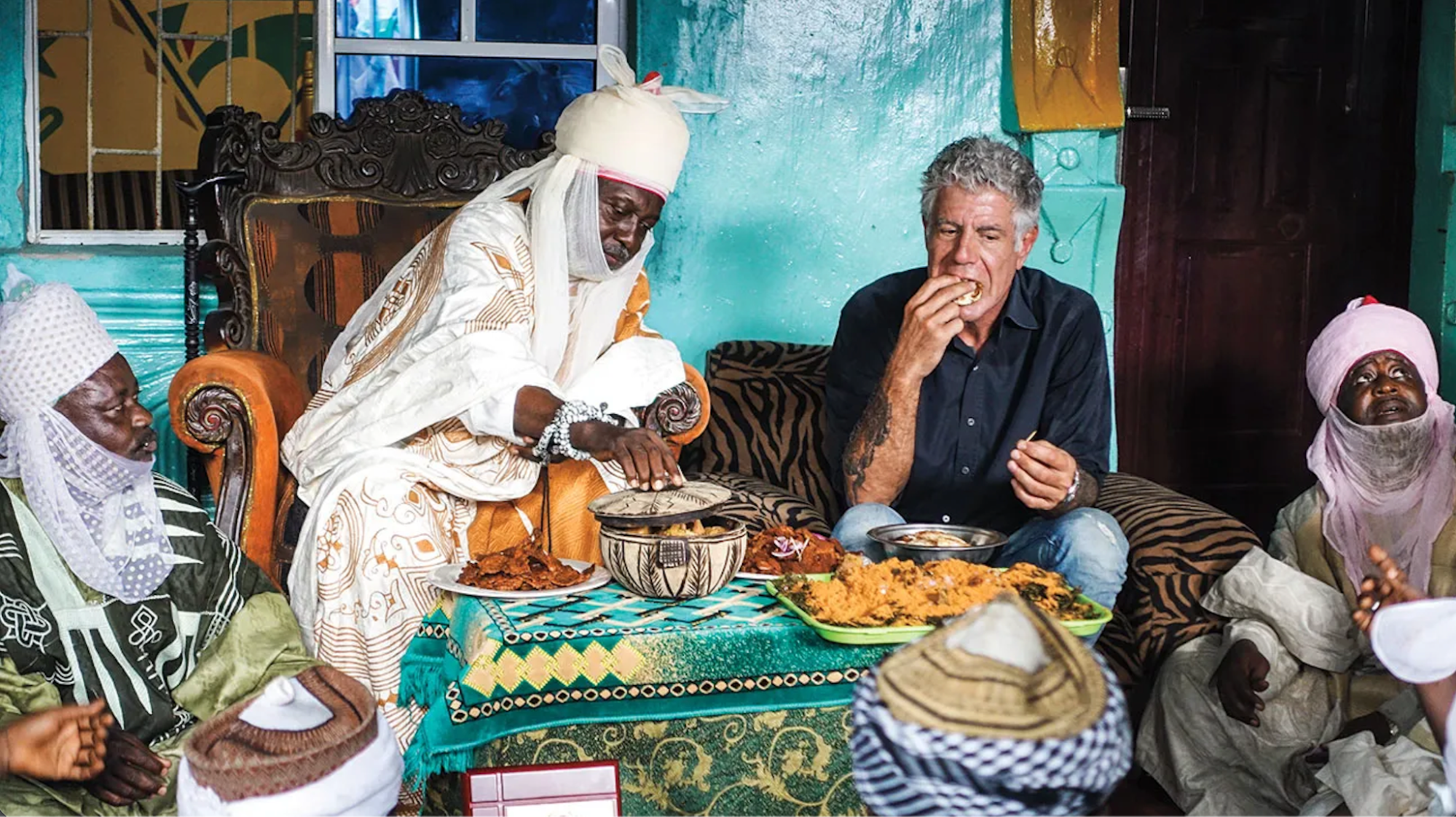
Younger audiences inherited a world that feels closed off–economically, politically, and even psychologically. Travel is expensive and beyond most of our means, but he encouraged travel the uncomfortable way. He once said, "If you're willing to sacrifice some comfort, it's not that bad at all.. travel doesn't have to be expensive." He often reiterated to just use whatever money you have left for a one way plane ticket and live with the locals and figure it out from there. Something that can be dangerous, but rewarding in the risk.
This is becoming more appetizing for many as cities are homogenizing and feeling too sterile and commercial. Authenticity is monetized almost instantly every time something new is created. Even “community” often comes with a subscription fee which is leading to so much isolation and alone time. We crave connection and feel inspired by it, by watching his life.
Bourdain’s worldview runs in the opposite direction of what so many of us are living.
A Style of Living
Sourced through Pinterest
Bourdain offers something more than travel advice or cuisine recommendations. He offers a way of being.
An attitude suggesting you didn’t have to be polished, fully knowledgeable or educated, or even figured out to be compassionate and find connection or community. All of those things come in your willingness to be open and curious. He showed that skepticism–a healthy dose of skepticism that is– didn’t preclude tenderness. He also proved that intelligence didn’t require full detachment. That you could stand in your knowingness and beliefs.
However, often times, his persona made space for contradictions too:
You could be personable but insecure.
Worldly but comfortable with familiarity and tradition.
Enjoy being lazy at some times and restless at others.
Non-chalant but self-critical too.
He was really an enigma.
Sourced through Pinterest
In his TV series and writing, he didn’t sell happiness nor promise it by encouraging what he practiced. But his experiences showed that you could find it in the small moments if you were willing to be open and take the risk.
Which may be why, in an era defined by algorithmic identities and personal branding, his presence feels so radical again.
He wasn’t optimizing himself. He was observing himself. And I think in an age where there are so many options for branding yourself, people feel burnt out by having to be something they’re not just for the appeal of being an image online.
He believed curiosity is a moral act, that conversation is resistance, and that sitting down with someone unlike you wasn’t just self-improvement— it was survival in the modern world.
He moved through the world without pretending it was simple. He acknowledged inequality, violence, and colonial histories. He couldn’t be easily bought or swayed and that’s badass. He was tough and cynical at times because much of his upbringing and life in New York in the ’80s and ’90s was rough, but he still sought peace and kindness.
I think that’s also why so many people, young men especially, are attaching themselves to Bourdain's identity. Hoping to emulate him, they might feel closer to themselves. I don;t think that would be his takeaway or hopes for fans or viewers entirely, but it could be a good start in wanting to find yourself. I mean, there’s worse people to emulate in the world.
We Can’t All Be Tony
Sourced through Pinterest
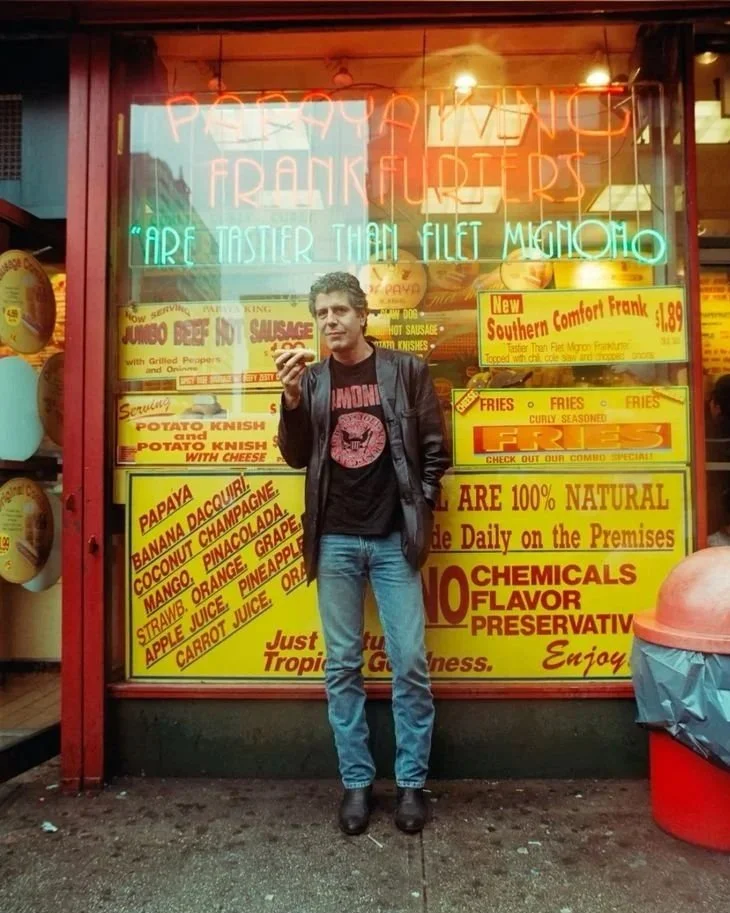
Even while many young men try to emulate Bourdain aesthetically: fashion, style, attitude… no one can really encapsulate who he was and no one ever will.
He really was unique, and there will never be another quite like him. I think many know that which is why some young men are trying to see if they can be the closest likeness to him. It would make them feel special too.
And with that, some people are digging deeper into his life now, and many won’t like what they find. But people need to realize he was human. Very human. He was unfiltered and authentic.
But I think that alone is something worth aspiring to be and something I hope the new generation of fans takes away in their aspiration of being like him.
The Cultural Echo Decades Later
The coming biopic will inevitably mythologize him further.
But the real reason Bourdain endures is much less cinematic.
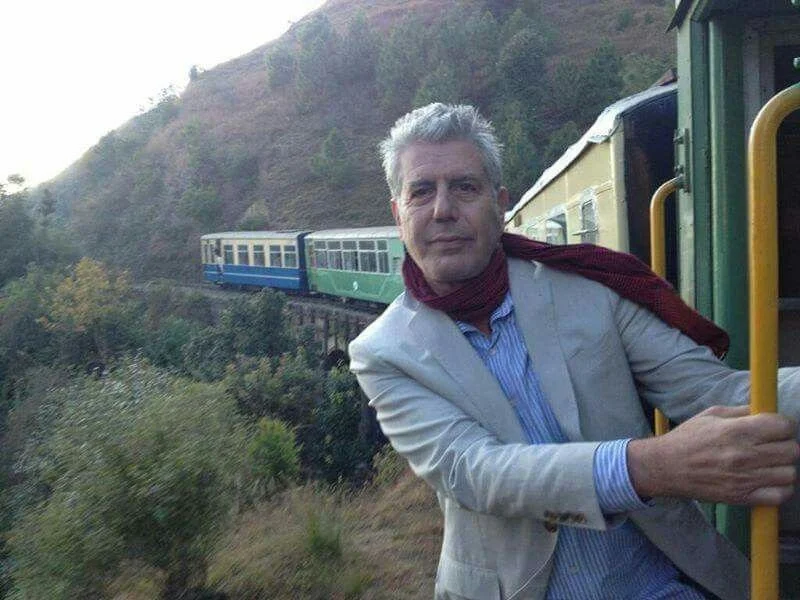
He reminds viewers that the world is still out there; all messy, uneven, worth encountering anyway.
Not to consume it. But to meet it. Bourdain-style… if you wish. Travel on, my readers.
Sourced through Pinterest