By CG Morand
The beloved world of Runway Magazine is not too far removed from our own reality. A fashion magazine devoted to culture and style, centered in the mecca of the fashion world, New York City, Runway draws clear inspiration from Anna Wintour and Vogue. That is what makes Runway Magazine, and its EIC Miranda Priestly (Meryl Streep), such an engrossing reflection of the fashion industry’s power and prestige in David Frankel’s cult classic The Devil Wears Prada.
The highly anticipated sequel, The Devil Wears Prada 2, has audiences eager to see how Frankel would expand the story and revisit the lives of these beloved characters 20 years later.
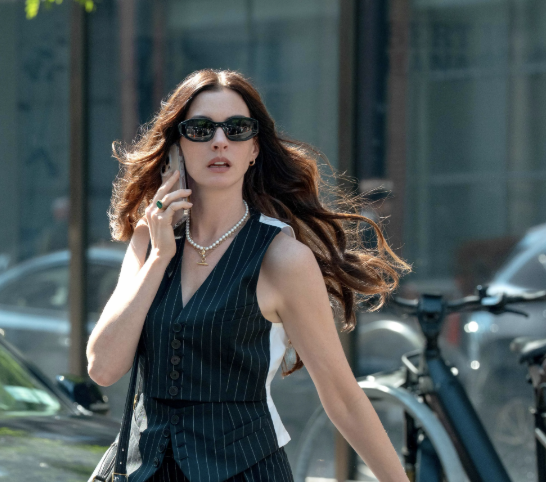
The Devil Wears Prada 2 (2026)
Andy Sachs (Anne Hathaway), Priestley’s former assistant, is now the respected, serious journalist she always expected to become. She writes for The Vanguard, a prestigious New York City newspaper. However, while accepting an award for her journalistic accomplishments, she learns that not only she, but her entire team, has been laid off amid sweeping budget cuts driven by the surge of media consolidation.
Her fervent, rancorous speech about the importance of preserving independent journalism—and her objection to AI-driven cost-cutting—lands her back in Miranda’s office. She begins a new journey at Runway, this time as a writer, but struggles to break through the ever-expanding noise of the modern media landscape.
As in the first film, the story holds a vicious mirror up to the current fashion journalism industry. Only now, the once-glossy pages of editorial magazines, long seen as the holy grail of the fashion world, pale in comparison to clickbait headlines and short-form content churned out by influencers and pushed by algorithms. Sound familiar?
“We used to write about what people need to hear; now we only write about what they want to hear,” Andy exclaims. Reluctantly, she and the entire team at Runway bend the knee to technology as the magazine’s pages grow thinner and thinner, and more and more crowded with ads.
We see this in our own world. Ad budgets dictate the success and strength of a magazine, and influencers now dominate the once-revered landscape of print media, using TikTok to break down designers’ latest collections. Fashion journalism certainly looks a lot different than it did in 2006.
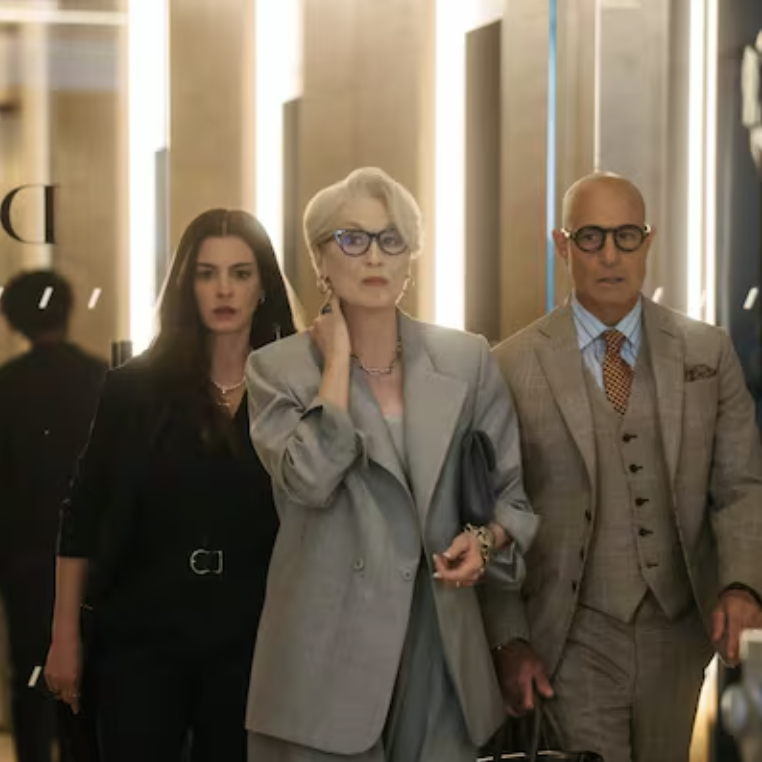
The Devil Wears Prada 2 (2026)
Then comes big tech’s takeover of media, triggered by the sudden death of Runway’s parent company CEO, Irv Ravitz (Tobor Feldman), which is a nod to Vogue’s own parent company, Condé Nast. His successor, and son, Jay Ravitz (B.J. Novak), is eager to modernize the company, with big plans for how Runway is going to evolve. And by “big plans,” he really means big budget cuts and even bigger layoffs, all in the incessant pursuit of technological efficiency.
The film reaches a boiling point at a private dinner during Milan Fashion Week, held in the shadows of da Vinci’s The Last Supper. Miranda finds herself defending the importance of the arts to Benji Barnes (a stand-in for Jeff Bezos), who has an interest in buying Runway.
This scene heightens the tense conversation surrounding technology and the arts. Miranda enumerates the importance of creative and cultural institutions, insisting that their reliance on artists—those composed of flesh and bone, mind and soul—is what makes the fashion industry a lasting influence on the world it examines and dissects. Benji flouts her concerns. He declares that soon enough, there will be no need for designers, models, photographers, or stylists, as technology will replace the spine that once bore the weight of human imagination, reducing the creative process to a calculation.
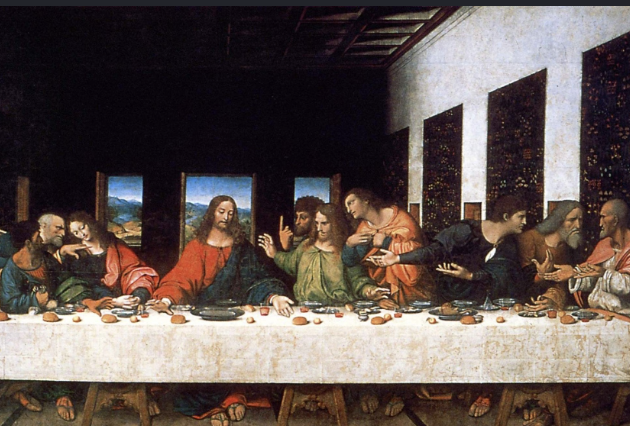
The Last Supper (1498)
These deep pockets dining in front of The Last Supper are symbolic enough, yet the conversation between Miranda and Benji further exposes the tension between creative expression and the supposed profundity technology now insists it brings to the table.
For the past few years, society has been fed a narrative that AI is here to stay, so we might as well get used to it. There is no getting around its expansion into every corner of our lives in the name of “optimization.” Even creatives themselves, such as actress Demi Moore, who said at the Cannes Film Festival, “AI is here… to fight it is a battle which we will lose,”—have echoed that sentiment, to the frustration of many.
However, in the process, we have become inured to prioritizing product over process, eliminating the wrestle and dance we have with our passions and sensibilities. There is now a computer that can do that for you. But creating art is not supposed to be easy, thoughtless, or frictionless. Rather, it is a necessity—a feeling that must be excavated. Art is necessary to contend with the anxieties of being human, and love and passion are always at the center of that art.
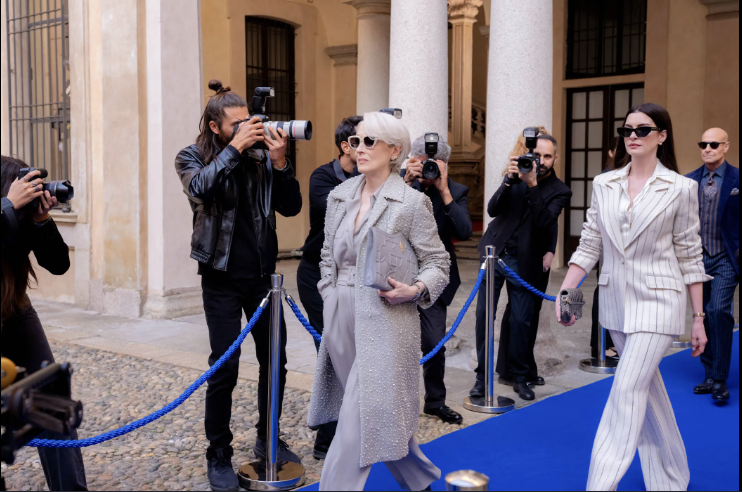
The Devil Wears Prada 2 (2026)
No computer can ever come close to imitating the passions—the elegance and the ugliness—of what it means to be human. Art, whether fashion, design, drawing, or painting, that is produced by software will always be a diluted version of the human experience and of one’s own identity… if you let it.
The Devil Wears Prada 2 serves as this reminder: the moment convenience is chosen over creativity, we risk turning everything into an Amazon Basic.