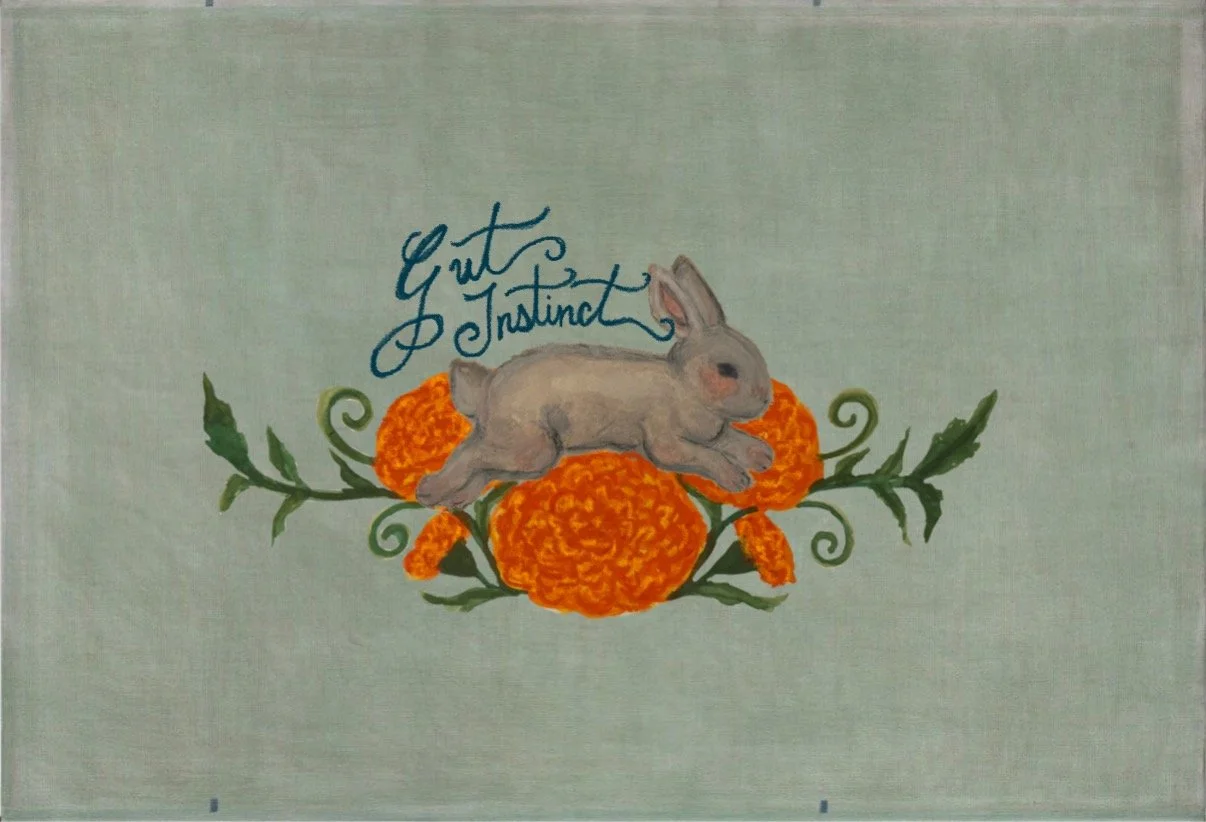
Gratitude and belonging can survive an honest account of the holiday’s origins.
By Sadie Jane Mayhew
As the latest NYT Cooking newsletter of Thanksgiving recipes rolls into your inbox, your feed of influencers sharing their fave Thanksgiving meals, and family members trying to coordinate and plan who’s hosting this year and mentally preparing for how the holiday season has come around in a blink of an eye again, I think we should also take the time to talk about Thanksgiving in all of its glory, origins, influence, controversy, and traditions before we head in.
After another year of unrelenting news beyond most things graspable for one human brain, and maybe even private worries within a family, the appeal of this holiday and holiday season is easy to understand. At least a day off, a full, decorated table, maybe winding down to football, waking up to the Macy’s parade- not because you like singing, dancing, and gaudy musicals, but because you've done it every year, and your parents before, and it feels sacrilegious to stop at this point; the heavy sleep of a cold afternoon after a buttery warm meal (how scandalous!): comfort is not a trivial thing to want… something many argue we need and will use the national holiday to have it.
In a 2024 Pew Research Center survey, 91% of American adults said they celebrated Thanksgiving, and nearly three-quarters planned to eat with other people. But the comfort the holiday offers often rests on a story many of us learned before we were old enough to question it: that in 1621, English Pilgrims and Native Americans sat down to a friendly feast that became the origin of a harmonious national tradition.
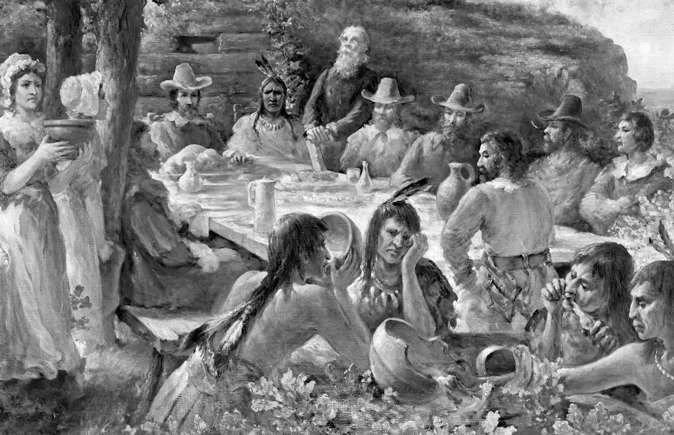
Sourced through Pinterest.
A meal did take place. Plymouth colonists held a three-day harvest celebration, and Ousamequin, the Wampanoag leader also known as Massasoit, arrived with about ninety men and brought five deer. But it was not a scene of uncomplicated friendship. The Wampanoag were making political calculations in a landscape already transformed by European contact. Epidemics introduced by earlier visitors had killed a large share of their people; the English settlement was established in Patuxet, a Wampanoag village whose community had been devastated. What followed included diplomacy and mutual-protection agreements, but also encroachment, broken promises, warfare, and the seizure of Indigenous land.
The meal did not become the holiday’s founding story in any continuous way. In the nineteenth century, the editor Sarah Josepha Hale campaigned for a national day of thanksgiving. In 1863, during the Civil War, Abraham Lincoln issued a proclamation establishing a national observance. A country fractured by war reached for common feeling, and the harvest gathering of 1621 offered a usable scene of harmony. In that picture, the Wampanoag, a people with their own leaders, laws, and history, became supporting characters in someone else’s origin story.
In 1970, Wamsutta Frank James, an Aquinnah Wampanoag leader, was invited to speak at a Massachusetts commemoration of the Mayflower landing. After organizers reviewed his remarks, they withdrew the invitation. James delivered the speech at Cole’s Hill in Plymouth instead. That gathering helped establish the National Day of Mourning, which the United American Indians of New England has observed on Thanksgiving ever since. Participants honor Native ancestors and protest colonization’s lasting consequences, including what many describe as genocide, land theft, racism, and broken treaties.
Native people do not share a single view of the holiday. For some, it is a painful reminder of dispossession; for others, a day for family, community, and cultural continuity, without any attachment to the Pilgrim story. Indigenous traditions of gratitude long predate the United States. The Wampanoag held harvest ceremonies for thousands of years; the Haudenosaunee Thanksgiving Address, recited at gatherings, offers thanks to the people and natural world that sustain life. Thanksgiving did not introduce gratitude to this continent.
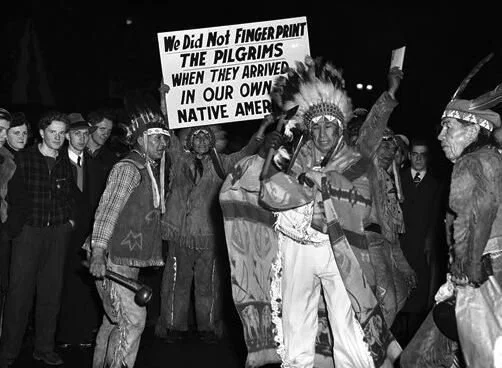
Sourced through Pinterest.
So should the rest of us feel guilty? Guilt is a poor word to use as a guide; it can curdle into defensiveness or become a performance of helplessness that centers the person feeling bad. Acknowledging history does not require pretending that every contemporary family gathering celebrates conquest. Most people at the table are thinking about the people beside them, and those missing: a parent’s recovery, a child’s first year, a partner who stayed through a difficult season, the sacrifices that brought a family to this afternoon.
Affection does not make history irrelevant. We can learn whose land we live on by consulting resources such as Native Land Digital and seeking out tribal sources. We can read Native writers, use the National Museum of the American Indian’s resources to question the schoolbook version, and support Indigenous-owned businesses. We can share a little of the fuller history before dinner. No one needs to turn the meal into a lecture. The point is not to scold people out of gratitude, but to make it much more honest. We’ve talked about it in the past, and especially much more in the 21st century or the last 10 years alone, but the conversation should never cease to die; always allow the indigenous voices first and foremost, and continue the education and awareness each year.
That honesty leaves room for the holiday’s newer meanings, too. For immigrants invited into a neighbor’s home, Thanksgiving can be a welcome into American life, a tradition they can enter and alter in return. This year, there is a family welcoming relatives from Japan for the first time who are for the first time setting aside the expected turkey and pies, trading in for a meal of traditional Japanese dishes that feels familiar to their guests. Cooking together side by side, learning together, sharing new recipes, and creating new traditions for this new joining of families by marriage. Food can always be a form of generosity and connection, not merely an emblem of abundance or gluttony.
I come to this as someone whose family relationships have not always been easy. I am an atheist, without a religious tradition of my own, and for several years, distant cousins I did not grow up with have invited me to their Thanksgiving. We say grace, then go around the table and tell one another what we are grateful for. I have watched people struggle through sentences about a parent’s recovery, a child, a spouse who stayed through the worst of a year. People who might not say “I love you” in an ordinary week find themselves crying over mashed potatoes.
I believe gratitude belongs to every day, but there is something in setting aside an afternoon to express it together. It gives the feeling somewhere to go. For someone who has long wished for a home and a sense of belonging, sitting for a few hours inside another family’s rituals has been a gift I try not to take lightly.
On Thanksgiving, some people will gather at Cole’s Hill in mourning; millions of others will gather around tables to offer thanks. Neither scene cancels the other. We can keep the meal, the company, the recipes, the moment when a roomful of people acknowledges what they have been given. We can also remember whose history was edited to make the holiday seem innocent. Gratitude need not ask us to forget. It should ask us to look clearly at what we have, what has been taken, and what we owe one another now.
*Pages to read: