
By Natalie McCarty
Few stories have the ability to shape the way an entire generation sees the world. Fewer still have the lasting power to remain relevant as that world changes around them. Suzanne Collins’ The Hunger Games is one of those rare exceptions. And with Sunrise on the Reaping, the franchise delivers a rather extraordinary reminder of why its story has endured in the first place.
The film is a righteous accomplishment—not simply because it succeeds in expanding an already beloved universe, but because it understands precisely what made that universe so consequential to begin with. At its core, The Hunger Games has always been a rather damning indictment of power, propaganda, and the machinery of control.
Courtesy of Lionsgate.
The literal violence of the games is obvious, but the more insidious, covert violence is in everything surrounding it: the narratives constructed to justify it, the spectacle designed to distract from it, and the media apparatus that convinces an entire population to accept its own oppression as entertainment (sound familiar?).
This franchise will live on forever because of its ability to articulate and confront what happens when those in power become so comfortable with their authority that they no longer feel the need to disguise their cruelty. It is the purest example of the weaponization of storytelling and the manufacturing of public perception—with Sunrise on the Reaping being perhaps its most blatant example of it yet, and so particularly suited to the political environment we’re living in.
There is something almost unsettling about watching a dystopian story written as a warning continue to find new ways of reflecting the tangible world around us. The mechanisms may look different, but the underlying questions remain remarkably familiar. Who gets to tell the story? Who controls what we see? How much of what we believe is our own understanding, and how much has been carefully handed to us? And, perhaps most importantly, at what point does obedience become complicity?

Courtesy of Lionsgate.
The Hunger Games has always carried the flame of revolution and inspired a culture of rebellion. It has inspired us with the realization that the conditions you’ve been taught to accept are neither natural nor inevitable, that the people demanding your obedience have a vested interest in your believing you have no other choice.
There is a particularly powerful undercurrent here about the role of the individual within a system designed to make individuality feel futile. How easily people can be reduced to spectators, how readily suffering can become digestible, and how desperately those in power need everyone to keep playing along.
And this is where the film’s understanding of media becomes so important. The spectacle of The Games is the strategy! The cameras, the pageantry, the carefully constructed personalities and public performances are not incidental to the oppression, but rather they are the continuation of oppression, repackaged into something palatable.
Perhaps that is the most damning part of the entire premise: you don’t need to agree with the system to help sustain it; all you have to do is keep watching.
It is a remarkably intelligent premise, and one that feels all the more urgent when considered against our own relationship with media.
Courtesy of Lionsgate.
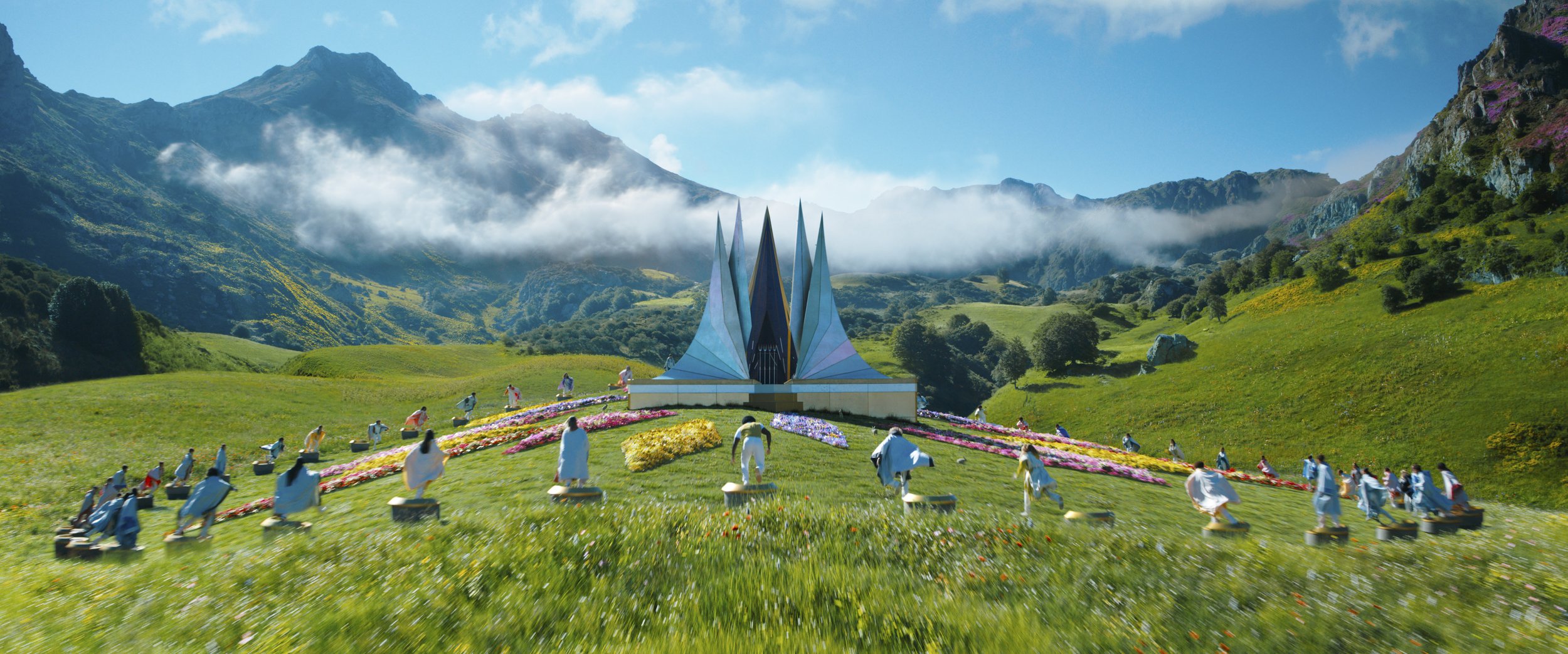
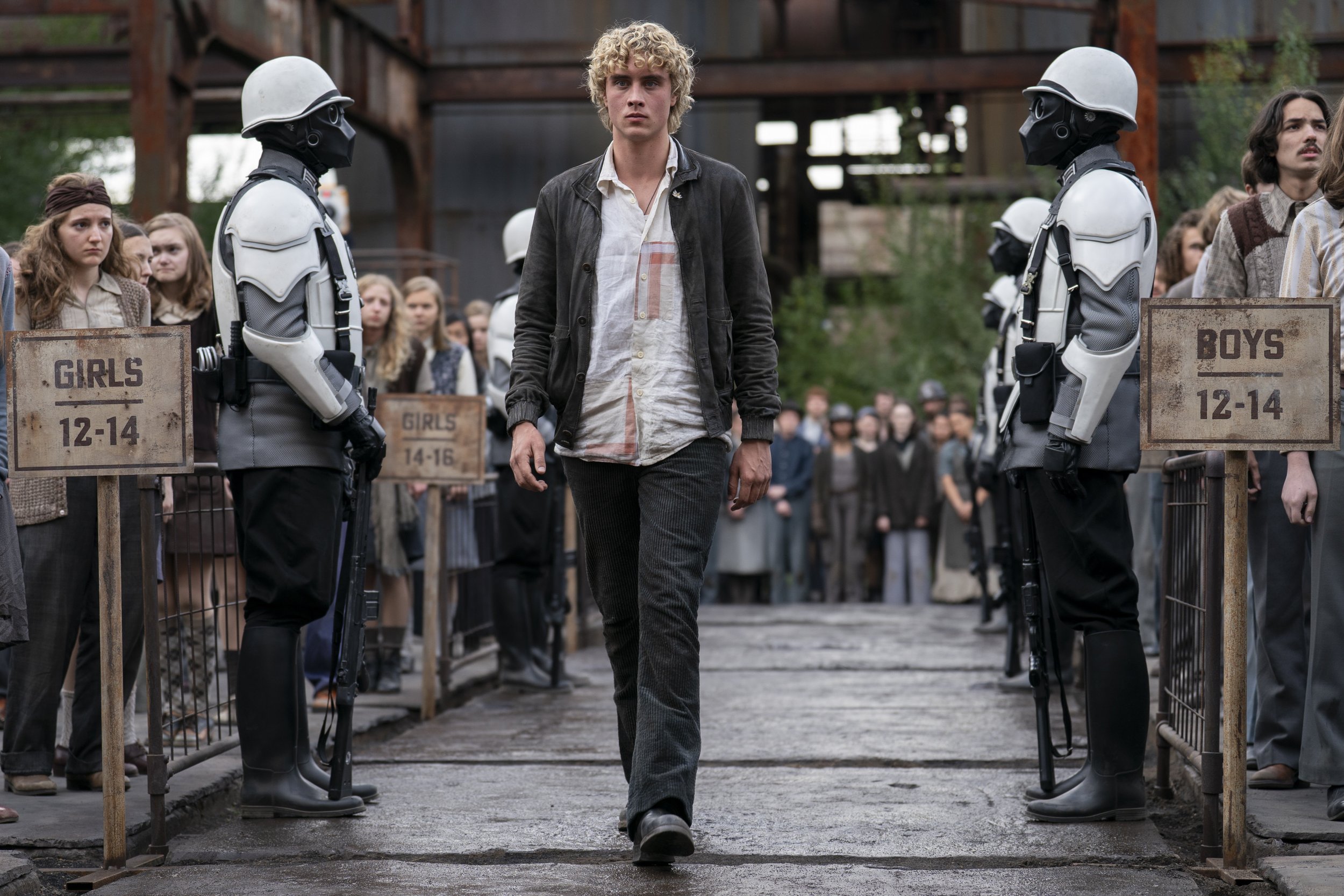
On a filmmaking level, this is an impeccable feat. The world feels immediately recognizable as that of the original trilogy, from the production design and atmosphere to the original score and cinematography. There is a particular texture to this universe that is difficult to replicate—the gross overindulgence of the Capitol next to the oppressive weight of its institutions, the contrast between its excess and the deprivation of the districts. It is all here, and it is remarkably assured.
The world has its familiar darkness, but there is also something else running through it. Something stubborn. Something that refuses to go out.
There is fire yet that burns.
Courtesy of Lionsgate.
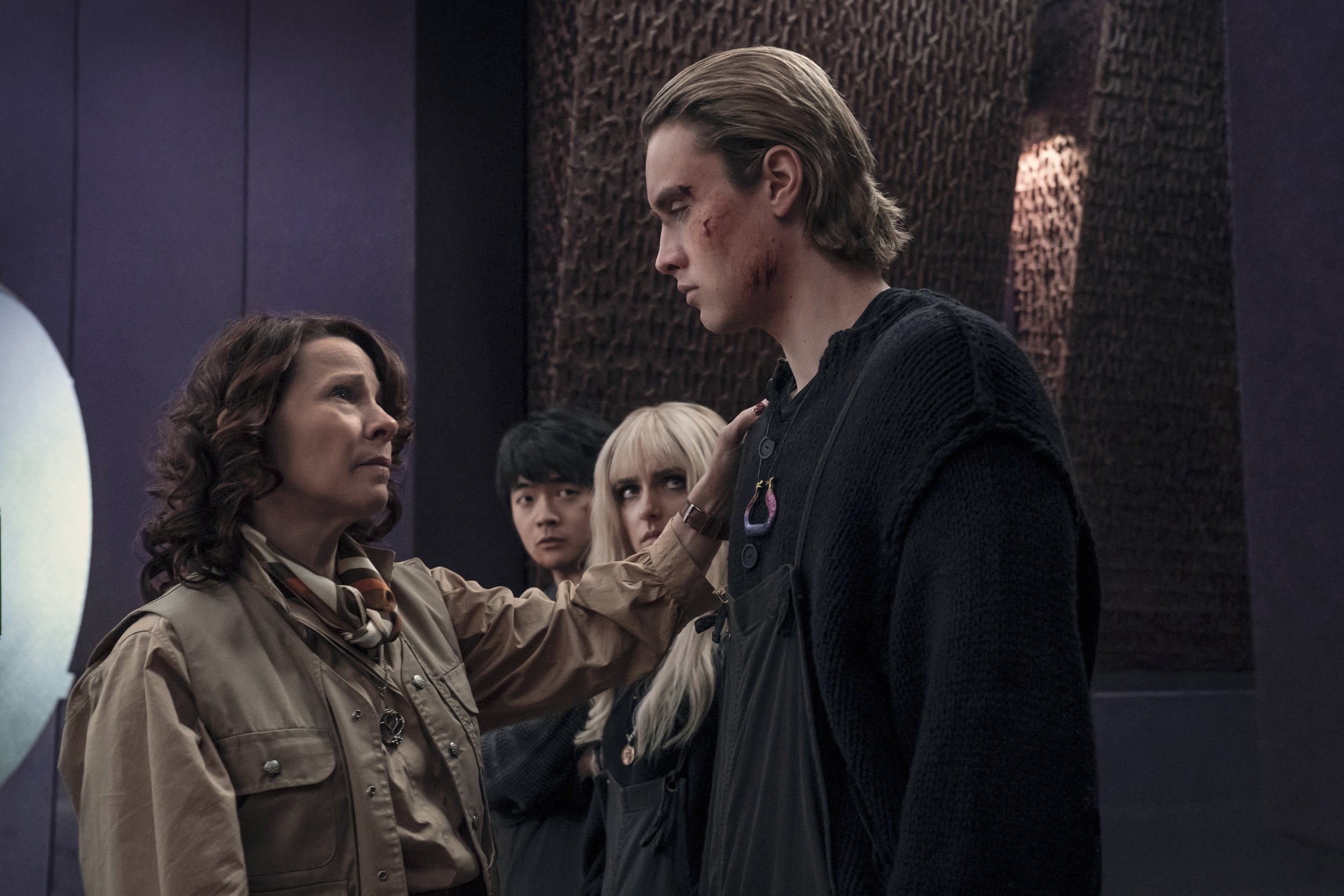
The casting is, frankly, exceptional. Elle Fanning as Effie Trinket, Ralph Fiennes as President Snow, Kelvin Harrison Jr. as Beetee, Maya Hawke as Wiress, Kieran Culkin as Caesar Flickerman, Glenn Close as Drusilla Sickle, and the list goes on. It is an embarrassment of talent, with each performer bringing something distinct to a world that already has such an established identity. What is particularly impressive is that this ensemble doesn’t simply trade on the recognition of familiar characters, but it makes the world feel inhabited again, as though there are countless lives unfolding beyond the boundaries of the story we’re being shown.
Courtesy of Lionsgate.
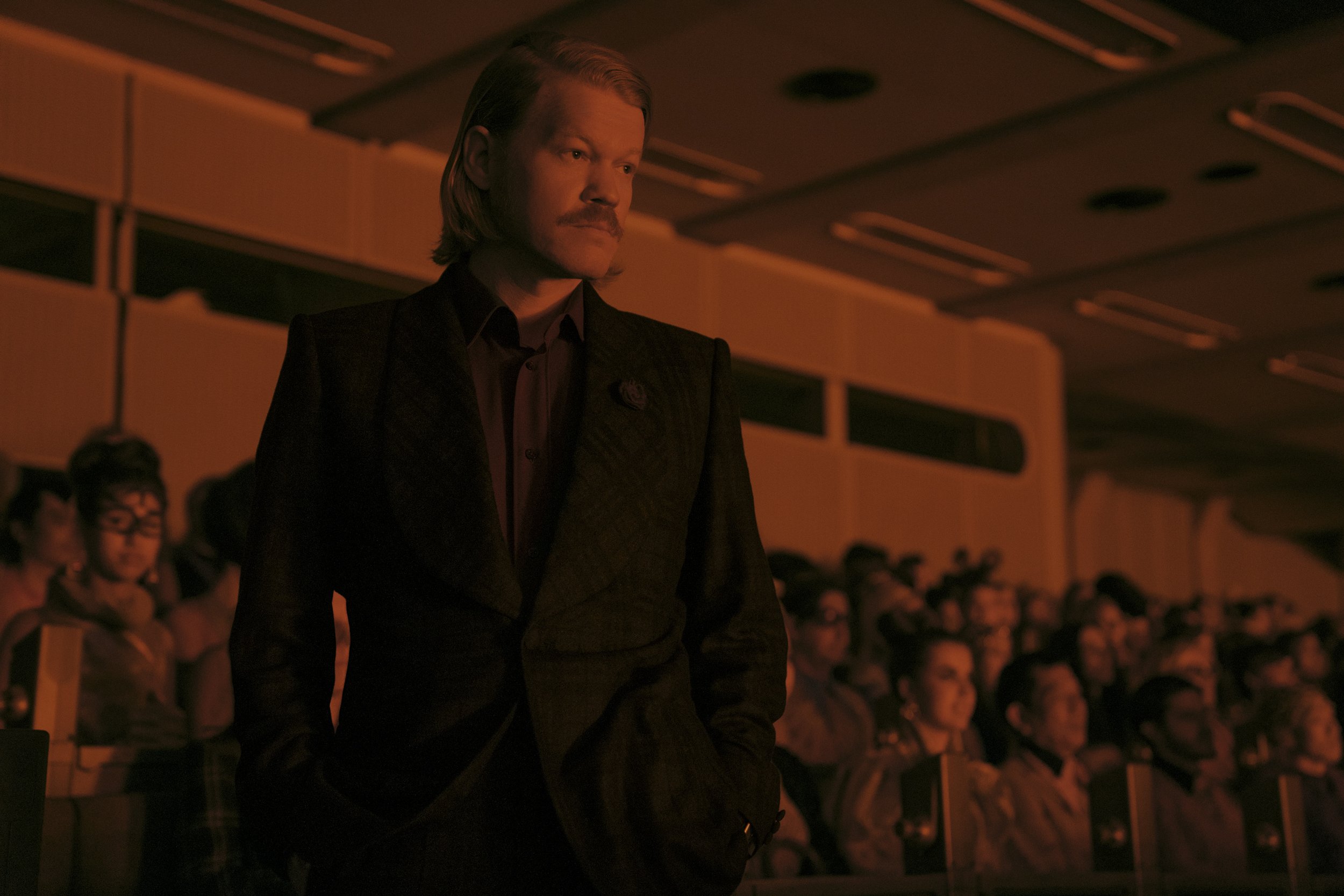
Jesse Plemons as Plutarch Heavensbee is another particularly inspired piece of casting. Stepping into a character so closely associated with Philip Seymour Hoffman is no small undertaking, but Plemons brings an intelligence and restraint to the role that feels entirely his own. Plutarch is such an interesting figure within this universe because he represents something the franchise has always understood: revolutions are built on an understanding of how the very machinery being used to oppress people might eventually be turned against those operating it. His presence is a compelling reminder that there are people working within the system who recognize its vulnerabilities, even when the rest of the world cannot yet see them.
But the real revelation is the new generation of talent at the center of this story.
Joseph Zada is a force of nature. There is a certain command he brings to the screen, but what makes his performance so affecting is the sensitivity beneath it. He understands that Haymitch is not simply a future rebel or a young man destined to become Victor. He is someone with something to lose, someone capable of imagining a future that looks different from the present, and someone who has not yet surrendered the part of himself that believes such a future is possible.
What a perfect Haymitch. Truly. It is one thing to inhabit a character audiences already know and love. It is quite another to make us understand who that character was before the world gave him every reason to become the person we eventually meet. Zada does precisely that. He gives us a Haymitch who feels young, vulnerable, fiercely intelligent, and full of the contradictions that make a character worth following. There is something incredibly moving about watching someone who will eventually become so guarded still possess so much hope.

Courtesy of Lionsgate.
There is a generational quality to this franchise that I find particularly moving. Every rebellion inherits something from the one that came before it. Every act of resistance is shaped, in some way, by the people who dared to resist before there was ever a name for what they were doing. Haymitch’s story gives that inheritance a face, as it reminds us that the people who eventually become symbols were once just young people who wanted the chance to live their lives.
He is the face of a rebellion, yes, but more importantly, he represents the possibility of a better future. One in which another sunrise does not have to bring another reaping. One in which the next generation is not simply expected to survive the cruelty of the last.
Mckenna Grace is equally remarkable. She has been demonstrating her extraordinary ability for years, and I genuinely believe she is going to be one of the defining actresses of her generation. Her performance as Maysilee is another reminder of just how much she can do with a character. There is an emotional intelligence to her work, a strength that never feels manufactured, and an ability to make even the smallest moments feel so alive. She is a real standout, and one of the film’s most affecting presences.
What is particularly wonderful about both performances is that they make the stakes feel personal. It is easy to talk about rebellion in sweeping terms. It is harder, and far more important, to remember what is actually being fought for. These are young people with lives, relationships, dreams, and futures that should never have been theirs to bargain away in the first place. The film never loses sight of that, and I commend it, for that is ultimately what makes its message so motivating.

Courtesy of Lionsgate.
I keep coming back to the question of why we accept things the way they are. Why do we become so accustomed to the conditions imposed upon us that we begin to mistake endurance for living? Why do we keep behaving like the dog that gets beaten, returning to the same master, accepting the same treatment, and somehow convincing ourselves that this is simply how things must be?
At what point do we stop confusing obedience with virtue?
There is something deeply unsettling about the idea that people can become so accustomed to their own confinement that the prospect of freedom begins to feel more frightening than the conditions they already know. That is one of the most effective things The Hunger Games has always understood. Control is not maintained through force alone, but it is maintained through conditioning. Through fear. Through division. Through the slow erosion of the belief that anything else is possible.
The most dangerous thing a person can do within a system like that is simply refuse to believe it.
Perhaps this is why I find the story so motivating. There is an insistence here that we should never become so comfortable with the world as it has been presented to us that we stop imagining what it could be. We are taught, in so many different ways, to behave, to conform, to stay within the lines, to accept the terms we’ve been given. And eventually, the repetition becomes so familiar that we stop questioning who drew the lines in the first place.
But who benefits from our compliance? Who profits from our silence? And why are we so often made to feel that questioning the conditions of our own lives is somehow more disruptive than the conditions themselves?
I think there is something deeply important about refusing to become a willing participant in your own diminishment. About retaining the capacity to question, to disagree, to imagine something better, even when the world around you insists that wanting more is unreasonable. In keeping your dignity.
I think Sunrise on the Reaping is asking audiences to leave the theater feeling a little less comfortable with the world they’ve been willing to accept. To question the narratives placed in front of them. To recognize that the people who benefit from the status quo will always have a reason to convince everyone else that change is impossible.
That is a rather remarkable thing for a blockbuster to accomplish.
There is, of course, an interesting contradiction in making a film about the power of propaganda within one of the world’s biggest entertainment franchises, but I don’t think that contradiction undermines what the film is trying to say. If anything, it reinforces it. Entertainment is not inherently empty, and achievement does not have to come at the expense of substance. Cinema can be an escape, certainly, but it can also be an invitation to look more closely at the world we return to when the credits roll.
After all, the best films make it considerably harder to keep thinking the same way we did before we watched them.

Courtesy of Lionsgate.
It is also why the film works so beautifully as a standalone piece. You do not need to approach it simply as an extension of an existing franchise to appreciate what it is doing. It is a compelling story in its own right, with an emotional center, a remarkably assured cast, and something genuinely meaningful to say. The history of Panem enriches it, but the ideas at its heart do not depend on familiarity with the universe. They are universal, and unfortunately, they are not going anywhere.
I am blown away by what this film accomplishes. It manages to honor the foundations of the original films while giving the story a renewed sense of purpose. More than that, it reminds us that the fire at the center of this franchise was always about the possibility of illumination. About the idea that even in the darkest circumstances, someone can decide that enough is enough. That a different world is worth fighting for, even when the people in power have spent generations insisting otherwise.
We need stories like this—not because cinema is obligated to provide answers to the world around us, but because the right story can give us the language to ask better questions. It can make us reconsider things we have stopped noticing. It can remind us of the difference between being informed and being manipulated, between watching something happen and recognizing our responsibility to it.
When did we become so comfortable with the unacceptable?
Few stories have the ability to shape the cultural consciousness such as this. I have no doubt The Hunger Games will continue to do so for generations to come, all the more with the gift of this film.
The sun will rise again. The question is whether we will continue to let someone else decide what happens when it does.

Courtesy of Lionsgate.