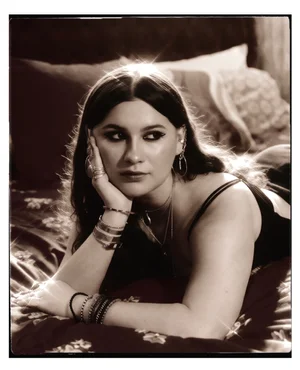
The Hyper-Feminine Rebellion of Nude Martini
By Natalie McCarty
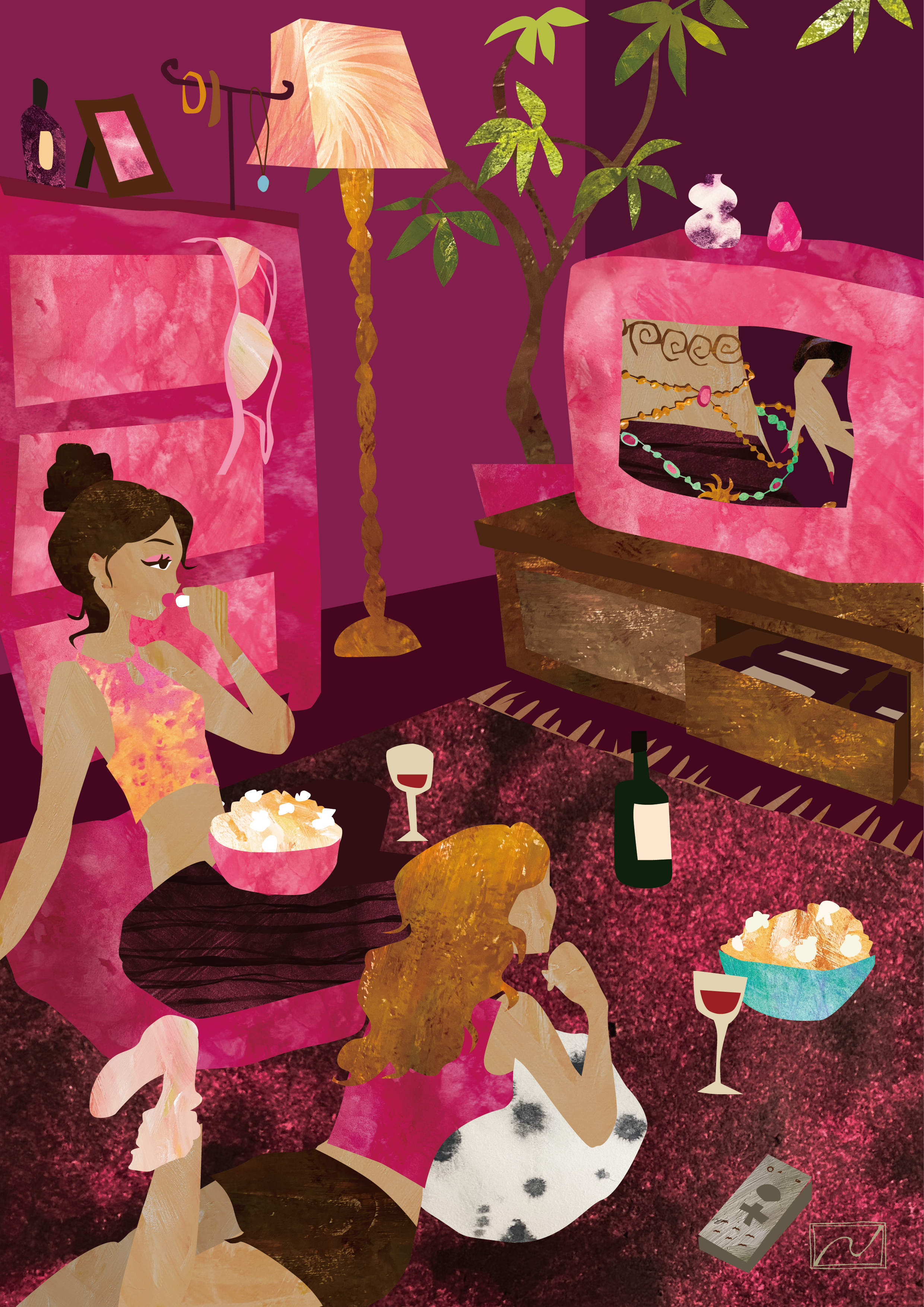
Natalie, the artist behind Nude Martini, doesn’t draw women who apologize for existing. Instead, she draws women who arch their backs a little further, gloss their lips a little shinier, and take up space without asking permission. Long legs, heavy lashes, and polished silhouettes define her martini girls. They look delicate. They are not.
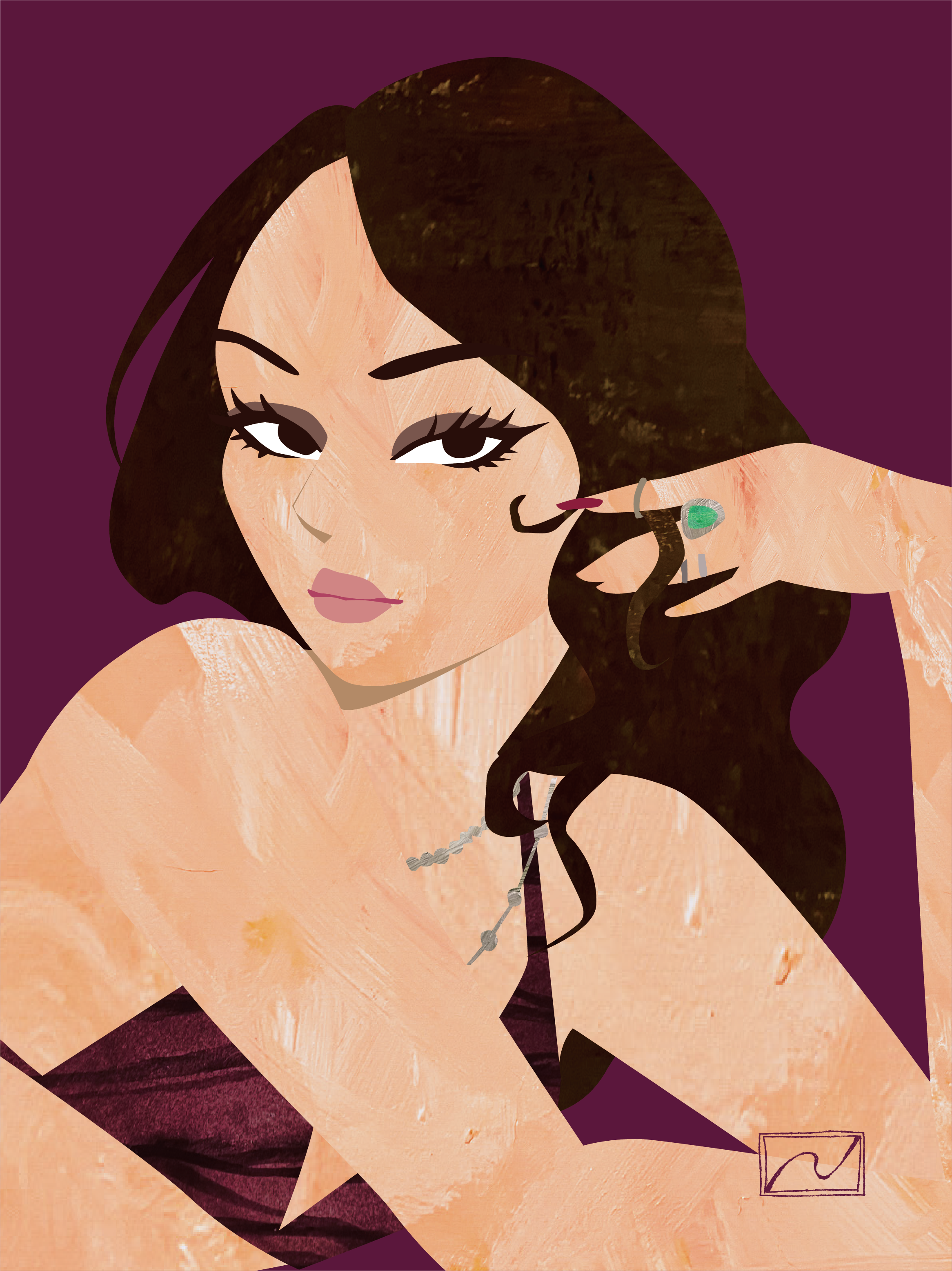
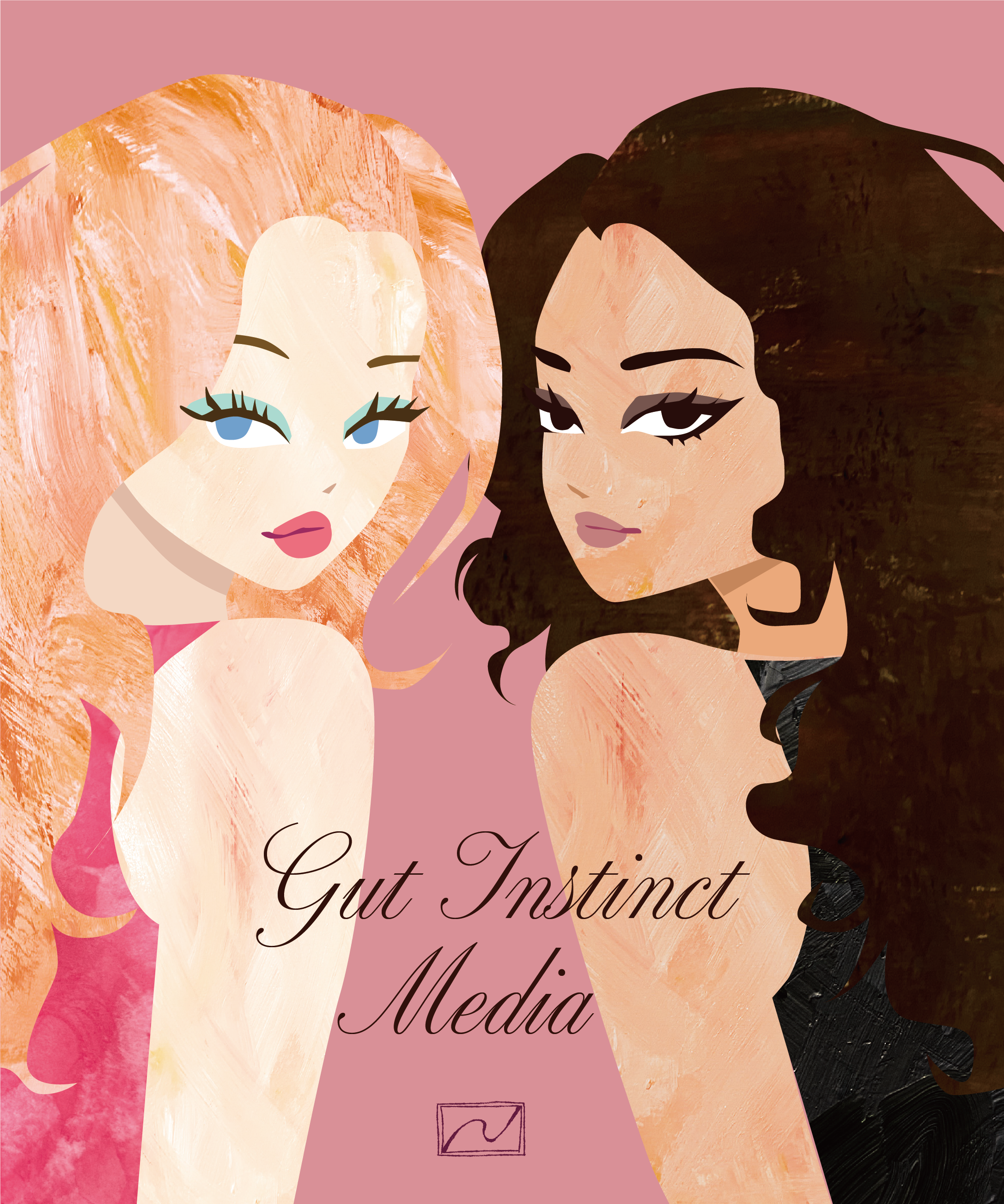
Nude Martini x Gut Instinct Media
Born and raised in Tokyo and currently traveling across Japan, Natalie is building her world in motion. In a year, she plans to backpack through Europe and Africa, carrying her sketchbook with her. Becoming a full-time artist after university, she says, allowed her to step directly into the life she imagined as a child–“an artist and a traveler.” That childhood vision is not separate from her work now, rather, it is the blueprint.
Her training was formal as she studied design and illustration first in high school, then at art university, where she developed technical fluency and a strong visual foundation. But the defining layer of Nude Martini, which is the animation, she taught herself frame by frame, experimenting privately until the rhythm felt right. That self-directed process mirrors a larger shift in her creative life for, in school, she learned how to design for others. Over time, she realized she wanted to build something that felt entirely her own. “That shift changed everything,” she explains. What emerged was work that no longer tried to moderate itself for approval.
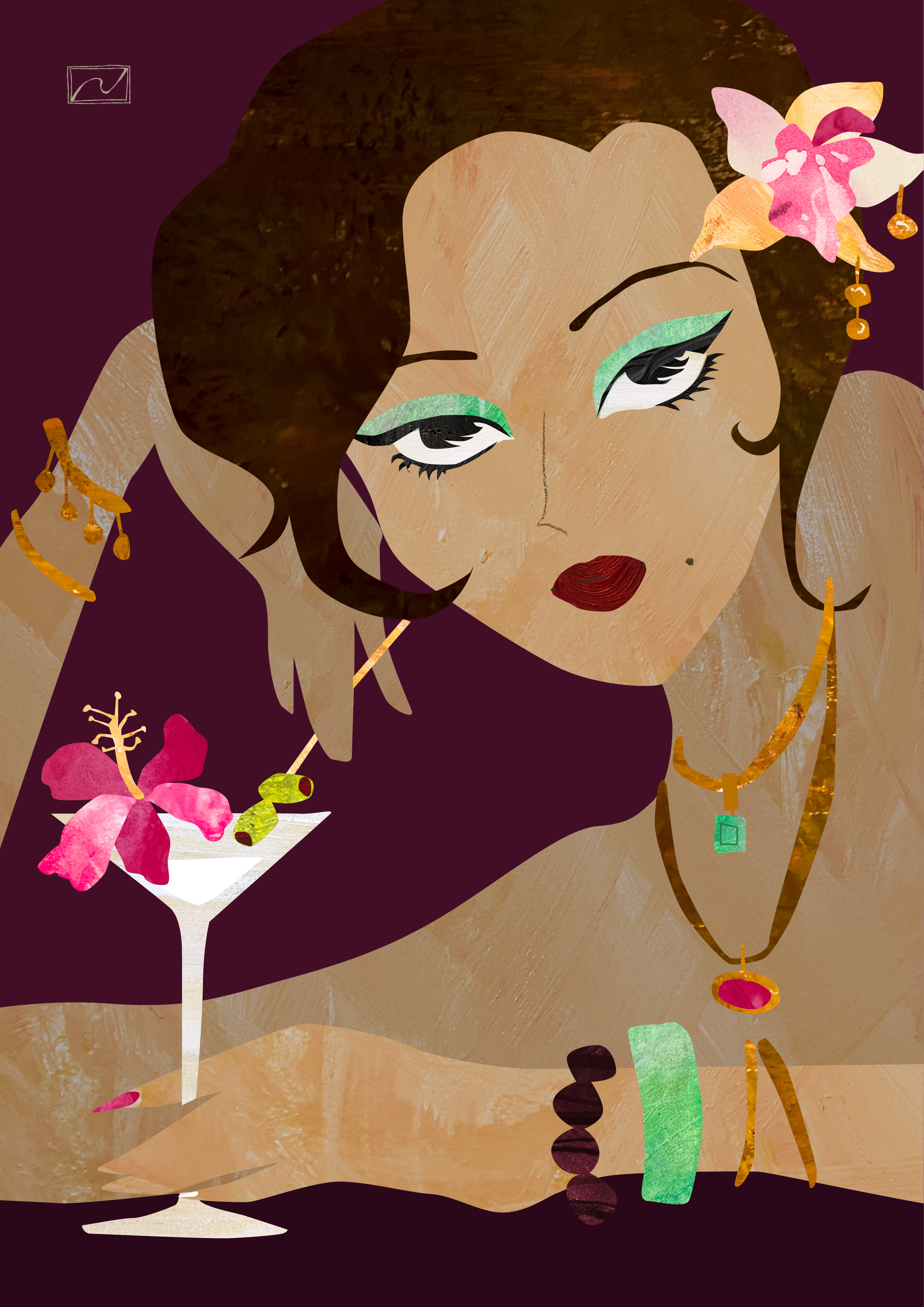
Courtesy of @nudemartini
There was no singular epiphany where she suddenly found her voice. She has been posting drawings online since she was fourteen. But something clicked when she stopped softening her instincts. “When I let them be glamorous, dramatic, even a little ‘too much,’ my work finally felt honest.” The exaggeration, the gloss, the drama, the hyper-femininity stopped feeling indulgent and started feeling essential. “Drawing this way feels healing,” she says. “It feels like I’m reconnecting with a younger version of myself, the girl who loved sparkle, dolls, and fantasy without hesitation.”
That younger self was shaped by a blend of cultures. Growing up between Japanese and Australian influences, Natalie absorbed both Western doll culture, such as Barbie and My Scene, and Japanese icons like Licca dolls and Hello Kitty. She still collects Licca catalogues, studying their styling the way someone else might study archival fashion editorials. The outfits on her martini girls often echo that early fascination, coordinated sets, glossy textures, high-drama silhouettes. She also credits illustrators like Jason Brooks and Blair Williams, artists known for rendering women who appear poised, glamorous, and slightly untouchable. Nude Martini feels like a composite of these references, playful but polished, nostalgic but brand new.
Even the name carries a metaphor. Nude Martini comes from the image of a martini glass, delicate in shape and sharp in content. “I love how delicate the shape is, yet it holds something strong and sharp inside. That contrast feels very feminine to me.” The martini girls embody that duality. “They look soft, but they’re in control.” When she first began drawing them, they represented a kind of aspirational womanhood, someone she admired from a distance. Now, she says, they feel like an extension of her. As her own confidence has grown, so has theirs.
Courtesy of @nudemartini
Her workflow resists the speed of contemporary content culture. Ideas begin as feelings, a color palette, a mood, a small imagined scene. She sketches everything by hand first. Pencil on paper keeps the process intimate. Only after that does she move into Adobe Illustrator, refining the composition and constructing the animation frame by frame. The slowness is intentional. Each movement is built, not automated. There is something almost meditative about that repetition, a quiet insistence on care in a medium often optimized for velocity.
The early 2000s aesthetic that defines her work is frequently dismissed as excessive or unserious. Natalie approaches it differently. “The early 2000s celebrated femininity in such a bold way. It was glossy, dramatic, playful, sometimes even excessive.” For her, revisiting that era is not ironic nostalgia.“It’s about reclaiming the parts of girlhood that might have felt ‘too girly’ or dismissed.” In a culture that often equates seriousness with restraint, Nude Martini argues that glamour can be powerful, sparkle can be strength, and softness does not equal submission.
Nude Martini x Gut Instinct Media
The response from her audience confirms that the work is landing where she hopes it will. Many women tell her the illustrations make them feel connected to a younger version of themselves, a version that had not yet learned to shrink. That is the emotional center of Nude Martini. “If my art can gently remind someone of who they were before they started shrinking themselves, I’ve done my job.”
Looking ahead, Natalie does not see Nude Martini remaining confined to static images or short loops. She imagines larger animated worlds, immersive environments, perhaps even interactive spaces, a universe viewers can step inside rather than simply observe. “I see it growing into a creative space where women feel expressive, safe, and inspired.” The community forming around her work is still intimate, but it is deeply engaged. The martini girls are evolving in tandem with their creator, becoming bolder, more dimensional, more expansive.
At its core, Nude Martini is not about the martini glass, the gloss, or even the nostalgia. It is about scale, emotion, and visuals. It is about refusing reduction. The figures may be elongated, stylized, or exaggerated. But the intention behind them is precise: to restore glamour as something autonomous, not performative, and to present femininity as both aesthetic and assertive.
Ultimately, Natalie says, “The martini girls are just getting started.”