The Rebrand of Horror
By Avery Wilson
Based on the past couple of months at the movies, you would think that if you wanted a hit, you should make a horror movie with a director who seemingly appeared out of nowhere. Among all the recent praise and innovation the genre has seen, I remember a time when making a horror film was associated with a sharp decline in one’s career or with being an indicator that you, as a viewer, were into some weird shit. Apparently, the only thing horror needed for good PR was a Best Supporting Actress Oscar win, a couple of indie box-office smashes, and some fresh-faced actors…
But when, and how, did we get here? And should we expect a continued rise, or is this just Hollywood’s latest fad?
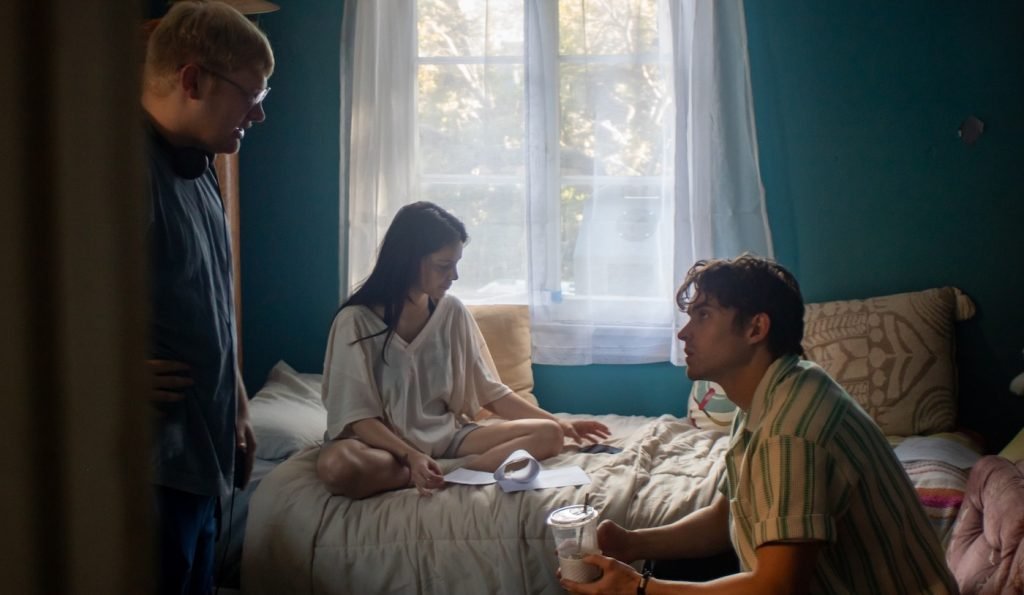
Obsession (2026); Sourced Through Pinterest
If you’ve been on social media at all recently, I’m willing to bet you’ve seen something relating to either Obsession or Backrooms. The two films share a lot of similarities despite being drastically different in tone; both were made on a tight budget (Backrooms at $10 million and Obsession at an even tighter $1 million), and both have a young director, with Curry Barker being 26. Kane Parsons is 20, which certainly makes me feel washed, and happens to be a part of the YouTuber-to-director pipeline, which is only secondary to the comedy-to-horror director pipeline, with Curry as the third most recent addition, following Zach Cregger and Jordan Peele. It’s one thing to smash at the box office; both films individually have surpassed $200 million in ticket sales. It’s another to win public favor; surprise, both have achieved that as well, with praise not only from their peers within the industry but from us, the common folk of the internet who seemingly have an overanalyzed take on why something’s bad waiting on the back burner at all times.
This is a rarity, especially in a genre that is already at a public disadvantage. It’s no secret that most normal moviegoers don’t really mess with horror like that unless the film they’re seeing is seemingly exceptional or part of a bigger cultural moment. For example, the first horror movie I saw in theaters was the It reboot. I hated horror movies but wanted to feel included with what everyone in middle school was talking about, and I had a fat crush on Finn Wolfhard. It wasn't until my freshman year of college that I really gave the genre another chance and found myself enjoying movies I wouldn’t have dared to watch years earlier.
Why is there such a large portion of the population who stay away from horror movies? Perhaps they don’t find pleasure in the rush of adrenaline or simulated fear. Maybe their perception of horror is one of scantily clad girls running from a murderer in a mask, or they think it’s lowbrow, classless slop. Whatever it may be, there’s a reason why being a fan of horror movies is its own subculture.
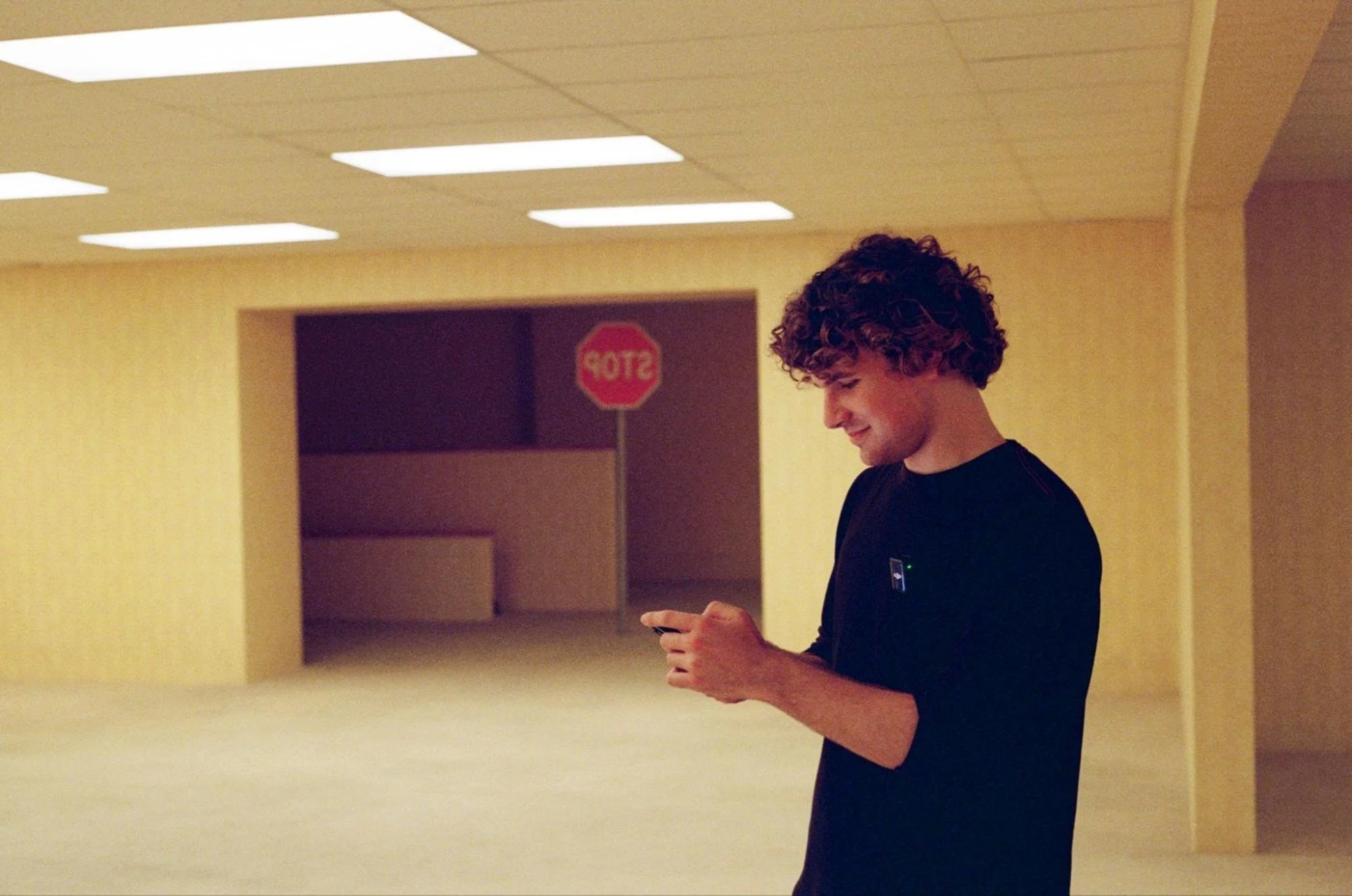
Backrooms (2026); Sourced Through Pinterest
Because of how expansive the spectrum of what a horror film is, trying to nail down the first horror film is arguable and way out of my depth in terms of semantics. Upon my amateur research, however, the genre seemingly started in the 1890s with George Méliès’ Le Manoir du Diable, translated in English as The Haunted Castle or The House of the Devil. The three-minute film has ghosts, bats, and, of course, the devil. It was the first film to use the supernatural and set a precedent for what came next.
Skipping ahead a bit to the 1920s and 1930s, the genre began to establish itself, and many of the most famous horror classics were made during this period. You had the silent era with Nosferatu (1922) and The Cabinet of Dr. Caligari (1920), followed by Frankenstein (1931) and Dracula (1931). The success of this golden era bled over into the '50s, where horror seemingly was at its peak. Gimmicks were introduced, such as 3D glasses or electric buzzers installed into theater seats to scare audiences further; however, this quickly died due to the massive expenses involved. The genre persisted, however, and so did audiences' demands.
From the '60s onward, we saw an increase in low-budget productions, giving rise to the slasher genre and the occult film, both of which became cultural hallmarks of the 1970s and 1980s. These subgenres produced massively successful films, many of which still have franchises running today, but they were also subject to public controversy and moral panic, some of which stemmed from a cultural obsession with religious evil.
I think it's during this era that many of the stereotypes associated with horror films began to take shape. Public perception shifted away from seeing horror as simply another movie genre and toward viewing it as something trashy, exploitative, or debaucherous. That's not to say that all of those criticisms were entirely unwarranted. There has been a long, valid criticism of the way women are portrayed in horror movies, and for me, that's partly why I didn't engage with the genre for so long.
In recent years, however, we've seen fewer of the sexualized depictions of violence against women that once defined many corners of horror. Still, as the genre appears to be experiencing a major renaissance, it's worth reassessing how much has actually changed and whether some of those criticisms continue to hold weight today.
Within the industry, taking a role in a horror film was often seen as a sign that an actor couldn't find work elsewhere, a perception likely tied to the genre's long history of low-budget productions and direct-to-video releases. That stigma has extended into award season as well, where horror films have traditionally struggled to earn recognition despite their cultural impact. Yet that perception appears to be changing. Recent critical and commercial successes, along with major award recognition, such as Amy Madigan's Best Supporting Actress win for Weapons, suggest that horror is finally being evaluated on the same artistic terms as other genres. As boundaries between prestige cinema and horror continue to blur, the question is no longer whether it deserves recognition but why it took so long to receive it.
Looking ahead, horror may be entering one of its most influential eras yet. Studios are increasingly drawing inspiration from internet culture, independent creators, and online horror communities, transforming web series, Creepypasta, and digital folklore into mainstream entertainment rather than reusing old IP. At the same time, audiences are embracing horror not simply for scares but for its unique ability to explore social anxieties, identity, technology, and cultural change. Many of the most recent popular horror movies explore social issues through metaphors in a way that is exclusive to the genre.
If the genre continues to attract acclaimed actors, critical recognition, and massive box-office success, it may finally shed its reputation as cinema's lowbrow outsider. So the real question is not whether it’s having a renaissance but whether the industry and audiences are prepared to rethink everything they thought they knew about horror.