
By Catherine Murphy
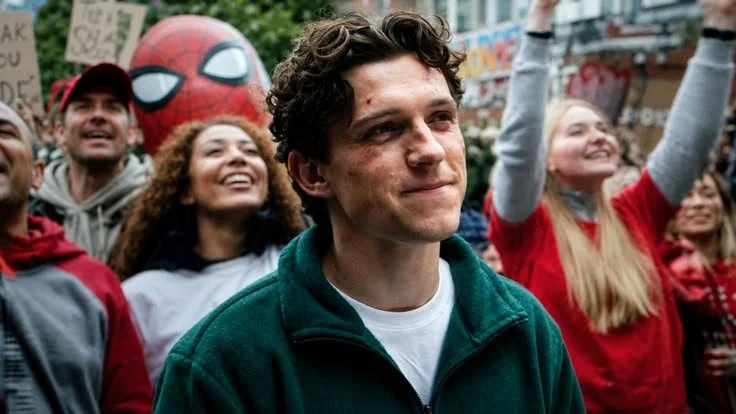
Spider-Man: Brand New Day (2026).
The Marvel Cinematic Universe has been accused of many things: relying too heavily on CGI, straying too far from the source, and, by some, just being purely uninteresting. But perhaps the most damning accusation is that the MCU serves as propaganda for the military-industrial complex.
And this claim comes for good reason! To date, six Marvel films have been created with both the support and approval of the United States military. In exchange for leading production of actual military equipment and locations, the studio accepted oversight requiring scripts to be directly approved by the Pentagon itself.
While only six films may seem a small price for the seemingly endless list of MCU creations, it's clear that Disney works to keep good relations with the films in between agreements. And though not all source material for these films can be described as entirely nonconservative, there’s still reason to wonder if the anti-establishment and progressive elements from the comics are being erased.
One of the most blatant examples of how Disney’s Marvel has fallen full force in line with not just the US military, but policing and the ever-growing surveillance state, which work with it hand in hand, is with their iteration of Spider-Man. What makes Spider-Man and Peter Parker so likeable is his relatability. An orphaned young boy whose stunning revelation of gaining super skills is overshadowed by the soon-to-follow death of his uncle, Peter isn’t a god or unstoppable alien; he’s a kid. Spider-Man was one of the first comic heroes to share as much in common with the kid reading his story as he did with the heroes he fought alongside. Dealing with grief, struggling to make ends meet, and often misunderstood by the people he wanted so desperately to help, at his core Spider-Man is just trying to do his best.
These themes are translated fairly straightforwardly in the early 2000s Tobey Maguire and later Andrew Garfield films. Both adaptations show Peter before the life-changing spider bite and the death of his Uncle Ben that he feels he could’ve prevented. We lose this origin in the MCU’s Tom Holland Spider-Man, which isn’t unreasonable. At this point, everyone knows how his story begins, but more is lost than just witnessing Uncle Ben’s shooting something that can’t be replaced, even if we take MCU Spider-Man’s journey to begin at the death of his Aunt instead.
While Holland plays a convincing underdog in the social sense, nerding out with Ned (Jacob Batalon) and awkwardly attempting to woo MJ (Zendaya), he hardly feels down on his luck. Even in Spider-Man: Brand New Day (2026), which is after both the death of Aunt May (Melissa Tomei) and his greatest benefactor, Tony Stark, Peter is able to financially support himself in a NYC apartment with all the tech he needs.
Now there are a number of in-universe ways we might be able to overlook this; after all, rent might be lower in a city with numerous near world-ending catastrophes, but that doesn’t remove the feeling of security that’s presented.
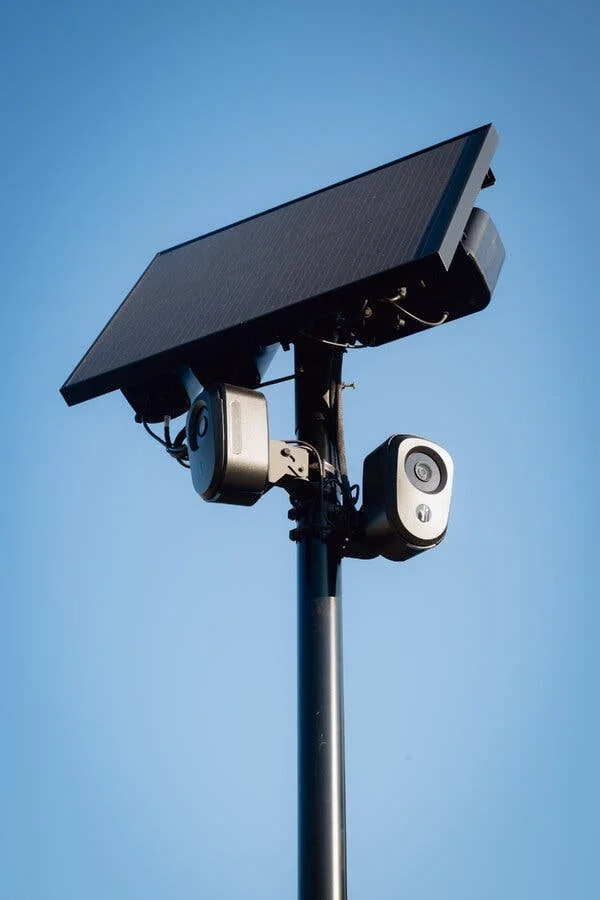
The New York Times.
But Spider-Man’s lack of financial struggle is perhaps the least of Brand New Day’s worries. Many people have found a troubling connection between Peter’s surveillance technology used to track Jean Grey (Sadie Sink) and the scourge of the Earth that is Flock cameras.
Flock cameras have been popping up all over the country in the past year and have been met with extreme resistance. While they are presented as license plate readers intended to help law enforcement solve crimes, in reality they have been used to misidentify suspects at best and stalk ex-girlfriends at worst. Brand New Day shows Flock as intended: a tool used for the benefit of the community. The only people who need to be afraid are those who intend to do harm.
In addition to the normalization of an all-seeing, all-protecting Big Brother, Brand New Day also shows Peter in close connection to the LAPD. Of course, there are so many comics to be pulled from, but most iterations we’ve seen of Spider-Man’s relationship to law enforcement are tense at best.
In this newest film, however, Peter works closely with an NYPD detective (Liza Colón-Zayas) to get to the bottom of what Jean Grey has been planning. Over the course of the film, Peter does learn to be distrustful of other government and law enforcement officials with the reveal of V-Max, but there’s no realization about the system at large. While he understands that he, along with the police, inadvertently aided the corrupt Department of Damage Control in their search for Jean, there’s no investigation into how institutions like the NYPD are always going to align themselves with power rather than a masked vigilante.
It’s reasonable to think that in an attempt to do his best, Peter might unknowingly rush to action without the full story, but Brand New Day also asks us to believe that the NYPD takes the same limited culpability for its seemingly long-term collaboration with Damage Control. The film presents itself as if they’re outside of the system, rather than an important cog in the machine.
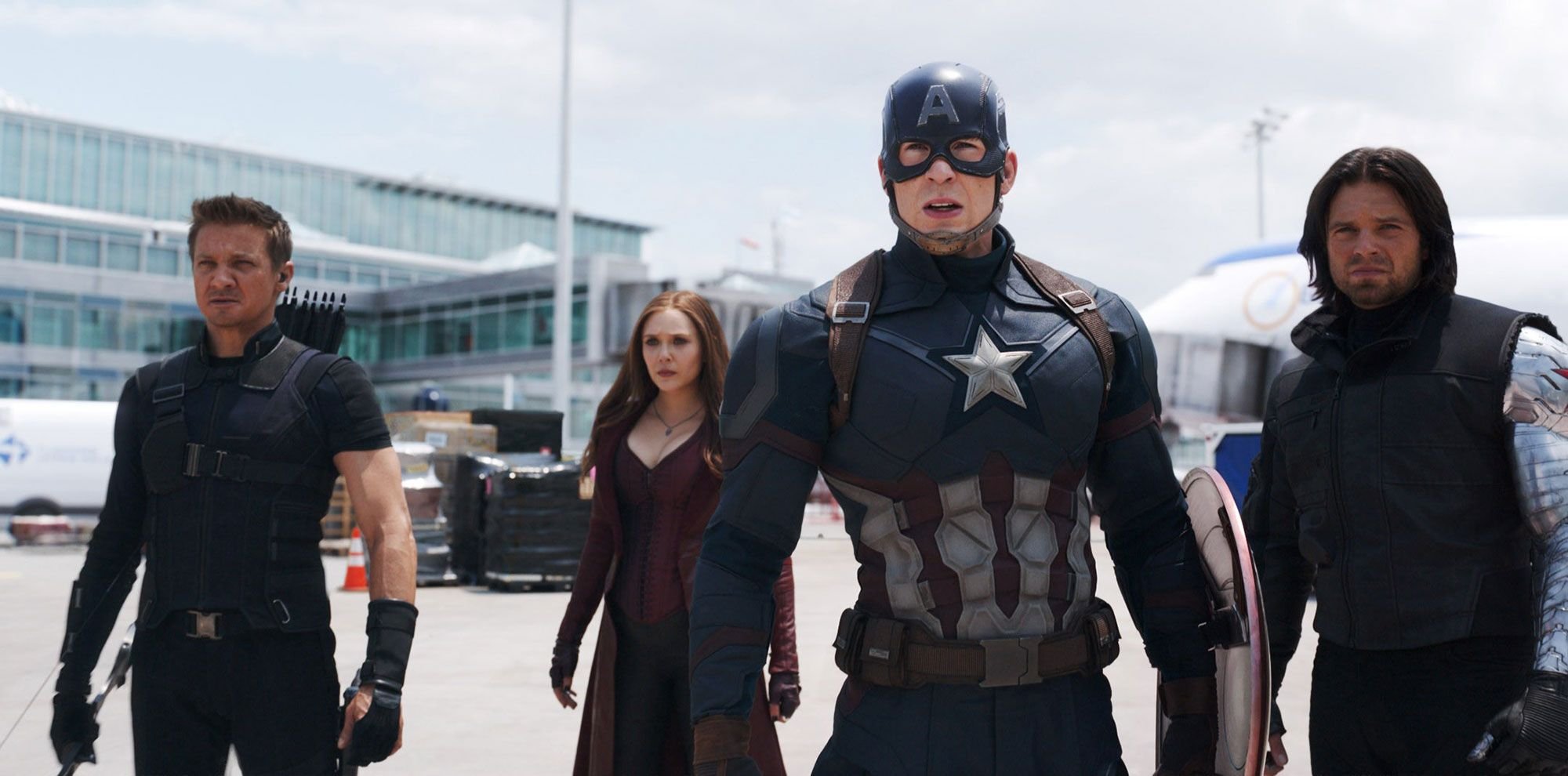
Captain America: Civil War (2016)
This being said, of course, we can find opposing evidence in the films: moments that push back against government overreach and all-powerful military might. Captain America: Civil War (2016) is often cited by devil's advocates looking to excuse the MCU. While the Avengers are deciding whether or not to sign the Sokovian Accords, which would limit their ability to respond in a situation of emergency, giving the power instead to the UN. Steve Rogers (Chris Evans) and several other members of the team fight against this agreement, out of fear of being controlled. This concern is presented as entirely valid; after all, by this point we have seen how government officials in the MCU can be corrupted either through supernatural means or otherwise. Like most instances of governmental distrust in the MCU, however, this moment is a setup for a later storyline, not for any thematic statement.
But how antimilitaristic can a franchise be whilst actively receiving funding and support from the United States government directly?
If Spider-Man: Brand New Day is any indication, we can assume that the MCU’s continued goal is not to disrupt the status quo. We may be allowed glimpses of corruption and distrust in parts of power systems when useful to move the plot, but by and large the franchise insists that we can place trust in the police, the military, or the government.