Petra Collins and the Stolen Visual Legacy of 'Euphoria'
By Amy Walter
Season three of Euphoria tells a familiar story. While the desert backdrop and stripper storylines may seem worlds away from the show’s original identity, behind the scenes, it reflects a narrative all too familiar to women in the creative industry — or any industry, for that matter. It is the story of how, behind every celebrated production, there is often a woman whose contributions remain unrecognized once the work becomes culturally valuable. In the case of Euphoria, that woman is Petra Collins.
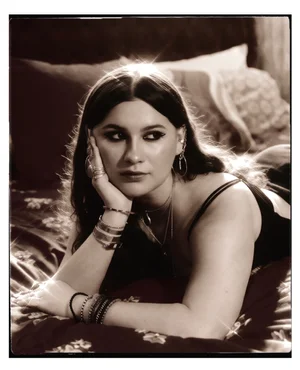
Petra Collins is a Canadian artist, director, actress, and photographer who rose to prominence in the early 2010s. Her world of feminine whimsy and dreamy visual storytelling became almost synonymous with Tumblr-era girlhood. Her work captured both the desire for escapism and the quiet intimacy of adolescence, romanticizing the mundane without reducing it to cliché. A quintessential Petra Collins image from this era would feature 35mm film photography, girls in domestic spaces such as bedrooms or bathrooms, and soft lighting and blur that created a dreamlike haze.
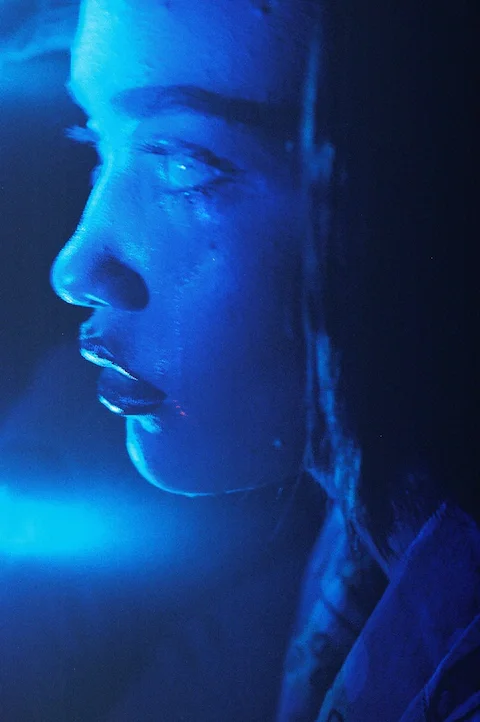
Collins helped forge a visual language that captured young women through the female gaze. It resonated deeply with girls online who had rarely seen themselves portrayed with such tenderness and interiority since filmmakers like Sofia Coppola. By the end of the 2010s, Collins had established herself as a serious artistic force within a male-dominated industry. She proved there was both an audience and a market for depictions of female adolescence that did not rely on spectacle or objectification.
In an interview with photography magazine Punkt, Collins explained that it was during this period that Sam Levinson contacted her to help shape the vision for a show that would eventually become Euphoria. Excited by the opportunity, Collins flew to Los Angeles and began working on the project. During her time there, she contributed to casting decisions — including recommending collaborators such as Zendaya and Hunter Schafer — while also helping cultivate the show’s aesthetic identity. After five months, however, she was dropped from the project. While there has been speculation surrounding the reasons, Collins herself suggested Levinson believed she was “too young.” Regardless, she left under the impression that the show would continue in a different creative direction.
But walking through Los Angeles sometime later, Collins encountered a different reality. Euphoria had officially been announced, and towering above her was a promotional billboard for the show. It looked unmistakably like her work: the hazy lighting, the glitter, the romantic softness. Yet it was no longer hers. The visual language she had cultivated to celebrate feminine experience had seemingly been absorbed into a show from which she had been removed.
The series quickly became a cultural phenomenon. Throughout 2019, glittery eye makeup and outfits inspired by Euphoria dominated social media. The show was especially praised for its visuals, with moments such as the prom sequence in season one’s finale defining its dreamy, hyper-romantic aesthetic. But for those familiar with Collins’ photography, the similarities felt difficult to ignore. The colour palettes, the lighting, even some of the models Collins had previously worked with, all echoed her artistic world. Sources close to Levinson later told The Daily Beast that Collins had never been formally “promised” a role on the show. Still, whether intentional or not, her influence appears embedded within the visual identity of Euphoria’s early seasons.
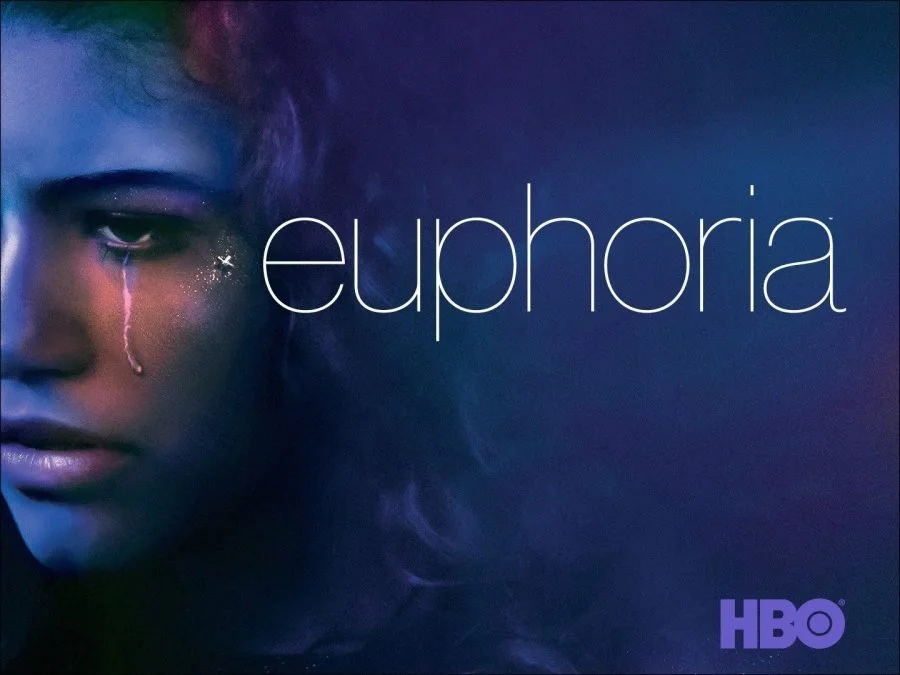
That is what makes the direction of season three feel so striking. The show now appears less interested in emotional storytelling than in spectacle. The camera lingers, ogles, and sensationalises rather than observes. Women are increasingly degraded in the name of shock value, and the connection to Collins’ original artistic sensibility feels almost impossible to trace. The aesthetics and depictions of women could not be more different.
Looking at behind-the-scenes images from the production, the imbalance becomes noticeable: the crew is predominantly male, the producers are predominantly male, and Sam Levinson remains the show’s central creative voice. Considering the amount of female nudity and the heavy focus on sex work within the series, that imbalance feels particularly significant. It reinforces the sense that Euphoria has become a show that not only appropriates women’s creative labour and ideas, but also profits from the commodification of their bodies.
Levinson’s approach to women and their stories can also be seen in his 2023 HBO series The Idol. On paper, the premise sounded compelling: an aspiring pop star becomes entangled with a manipulative cult leader, offering a satirical exploration of Hollywood and exploitation. In practice, however, the show became notorious more for its shock value than its substance. Despite starring Lily-Rose Depp and The Weeknd, it failed to leave the kind of cultural impact Euphoria once did.
Like Euphoria, The Idol was originally envisioned very differently. According to reports from the BBC, director Amy Seimetz initially intended the series to function as a critique of Hollywood’s treatment of women. But after creative conflicts, Seimetz exited the project, and Levinson took over. The result was deeply ironic: a series originally conceived as a critique of the male gaze instead became a textbook example of it.
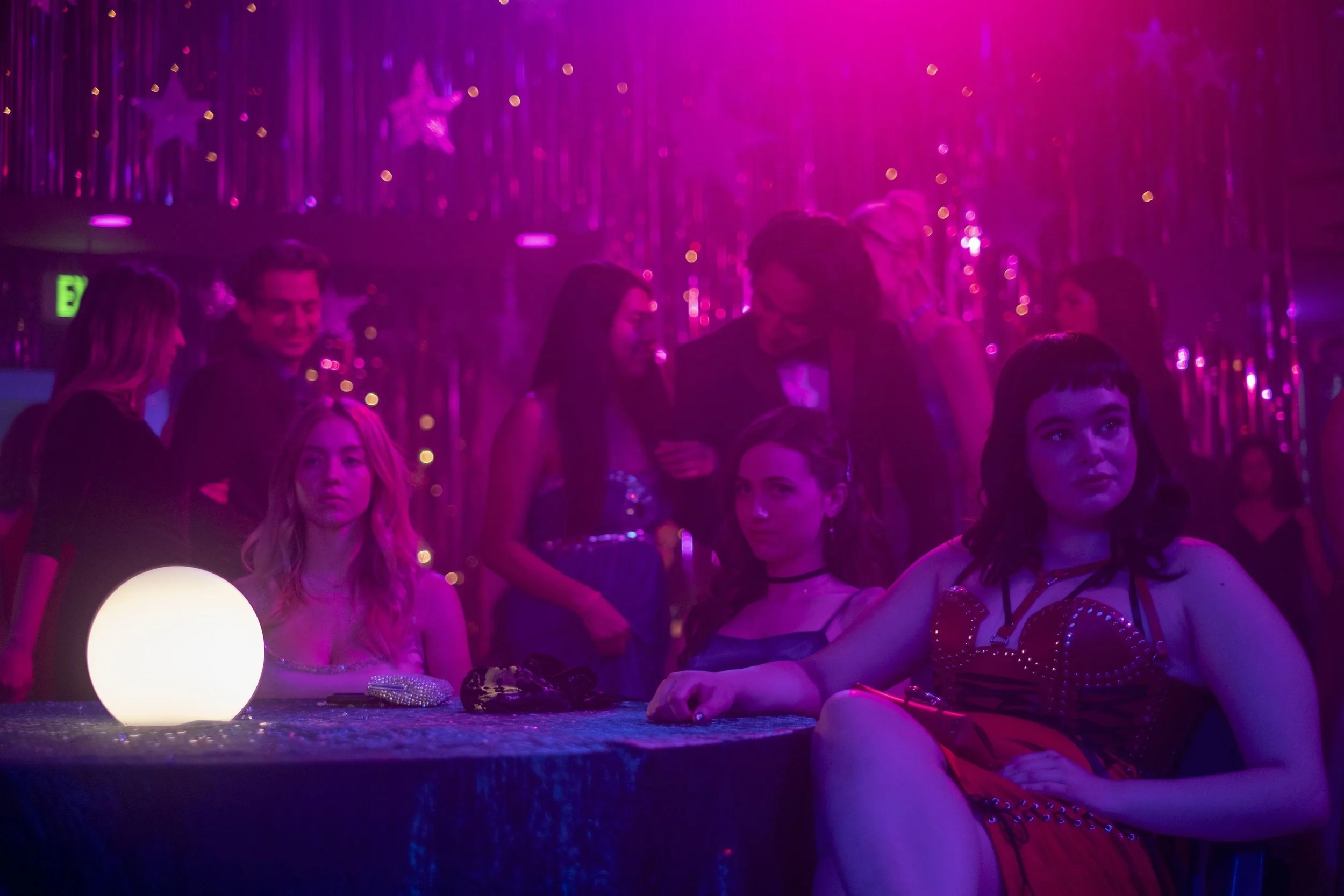
The success of these shows, despite sustained criticism and controversy, reflects a broader problem that extends far beyond Hollywood. Women are repeatedly sidelined, ignored, or invalidated despite producing meaningful and defining work. Their contributions shape aesthetics, narratives, and entire cultural movements, only to be absorbed into systems that rarely fully credit them. What begins as something nuanced and personal is often repackaged through the lens of male authority until it becomes almost unrecognisable from what made it powerful in the first place.
Petra Collins, however, continues to create on her own terms. From collaborations with Miu Miu to directing Olivia Rodrigo’s music videos, she has remained committed to her artistic vision while allowing it to evolve alongside her own experiences and perspective. Her work still carries the same emotional honesty that made it resonate in the first place. As Collins once said, creating art “completes” her.
In a cultural landscape where women’s voices are constantly interrupted, repurposed, or spoken over, there is something powerful about continuing to create anyway. Collins’ work reminds us that art does not need to be the loudest thing in the room to leave the deepest impact.