Turns Out Your Evil Ex Is Nosferatu
By Bella Kovar
At fourteen, I had a special shoebox hidden under my bed. It was a ritual I copied from my older sister. It became a space of dreams and keepsakes that I held closely to me. Jewelry, letters, photos, poems, and my journal, where I documented everyday happenings as well as my hopes for the future. I wrote a lot about what I wanted my future husband to be like. I yearned for a partnership that I knew couldn’t exist for me yet. A lot of the time, I felt extremely lonely, as many teens tend to feel. However, I remember my ill feelings eviscerating me to the point of unmanageable frustration. I often turned to movies, spirituality beyond what Catholicism taught me, and my own imagination to escape my strange and unexplainable pain.
I was diagnosed with depression and anxiety when I was twenty. It came as no surprise, but what upset me the most was that I could have been a happier teen if I had been medicated and undergoing treatment. But I didn’t know any better then—I thought what I was feeling was normal and that sadness always felt deep, borderline debilitating, and inherent. Movies helped then, and now. So, I saw Robert Eggers’ Nosferatu on Christmas Day in 2024. I’ve been trying to figure out for the past year why the film struck me as it did. The cinematography is cosmic and entrancing, while Eggers’ blatant passion for history and horror reaches out from the screen and caresses every ounce of my curiosity. These reasons felt good enough. But, there was also Ellen Hutter (Lily-Rose Depp), and I needed to find out why she cut me so deeply.
Nosferatu (2024)
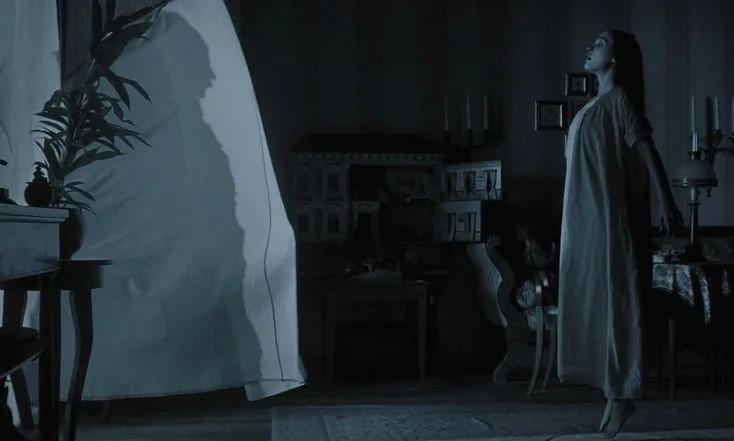
The opening scene is a young Ellen on her hands and knees, praying for something. She’s not quite sure what. Begging for understanding, purpose, a cure to her all-consuming loneliness...she calls upon a spirit of some kind, an angel, anything to free her from her own private torment. In her desperation, instead of inviting in a wholesome connection of growth and companionship, she invites a monster. Nosferatu haunts her eternally just because of her initial plea for love. I’ve come to interpret this aspect of the film as an allegory for human connection and how relationships endured in moments of personal weakness—whether because of mental illness, youthful stupidity, or situational cataclysm—linger in peculiar, seemingly unexplainable ways.
I think of people I’ve been previously involved with who have hurt me: Did I not invite these vampires in myself?
Like Ellen, I saw any form of aid as crucial, even from a man who would suck the life out of me just to make me feel understood and held for a brief time. It is much easier for me to break away from such ties since my exes aren’t supernatural entities who suck blood, sleep in caskets, or utilize ancient Satanic rituals.
But, does their existence and undercurrent bleed into my present relationships? Unfortunately so.
Must I be reminded of my past insecurities, sorrows, and poor decisions even when I find myself in rewarding, healthy relationships? Well, yes, we are only human. This idea is depicted in Ellen’s marriage to Thomas Hutter (Nicholas Hoult).
Nosferatu (2024)
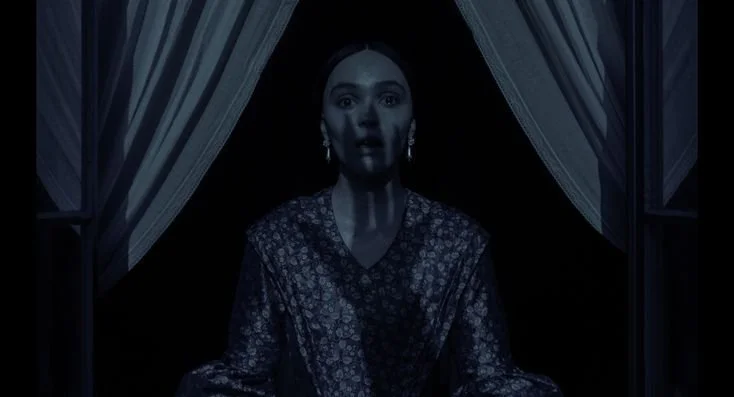
As Ellen enters adulthood, she is aware of her wavering mental conditions but still feels a tie to her younger self, who was so attached to aligning meaning to spiritual connection and finding someone (or something) that would validate her torment. She has now married Thomas, a stable and loving husband who cares for her in ways she never thought possible. Even with Thomas by her side, she feels unable to let go of her past, and Nosferatu clings to her like a leech. He ruthlessly infects her relationship with Thomas and is a constant reminder of her previous suffering that she’s spent years trying to escape. Thomas recognizes Ellen’s past traumas and dealings with depression and still actively chooses to love her. He affirms her, listens intently, and turns himself inside out in an attempt to create a comfortable life for both of them to live happily. Even with all of this, Ellen still finds herself dancing with shadows she wishes would disappear. Ultimately, she sacrifices herself to save everyone from Nosferatu’s hand, including Thomas.
I want to emphasize that Ellen’s fate is merely a lesson in this allegory (as well as a crucial ending that intertwines other horror plot points within the story) and not an outcome that everyone with a looming evil ex should face. Sacrificing your autonomy, abandoning loved ones who are trying to be there for you, or succumbing to pernicious seclusion despite growth within your grasp only deters your best-case scenario, which you deserve. Ellen deserved to be happy with Thomas.
That person (or monster) that you accidentally manifested amongst your loneliness doesn’t have to have such a gruesome hold on you. The vampires do not have to win. There is a way to be grateful for growth and harbor empathy for your past self rather than resentment. Loving relationships can help you heal instead of detrimentally reopening past wounds. Perspective is your friend. I’d totally go back in time to tell my fourteen-year-old self that. I’d give her some Zoloft, too.