Vancouver Based Illustrator Alex Demarchi on Vulnerability in Art
By Natalie McCarty
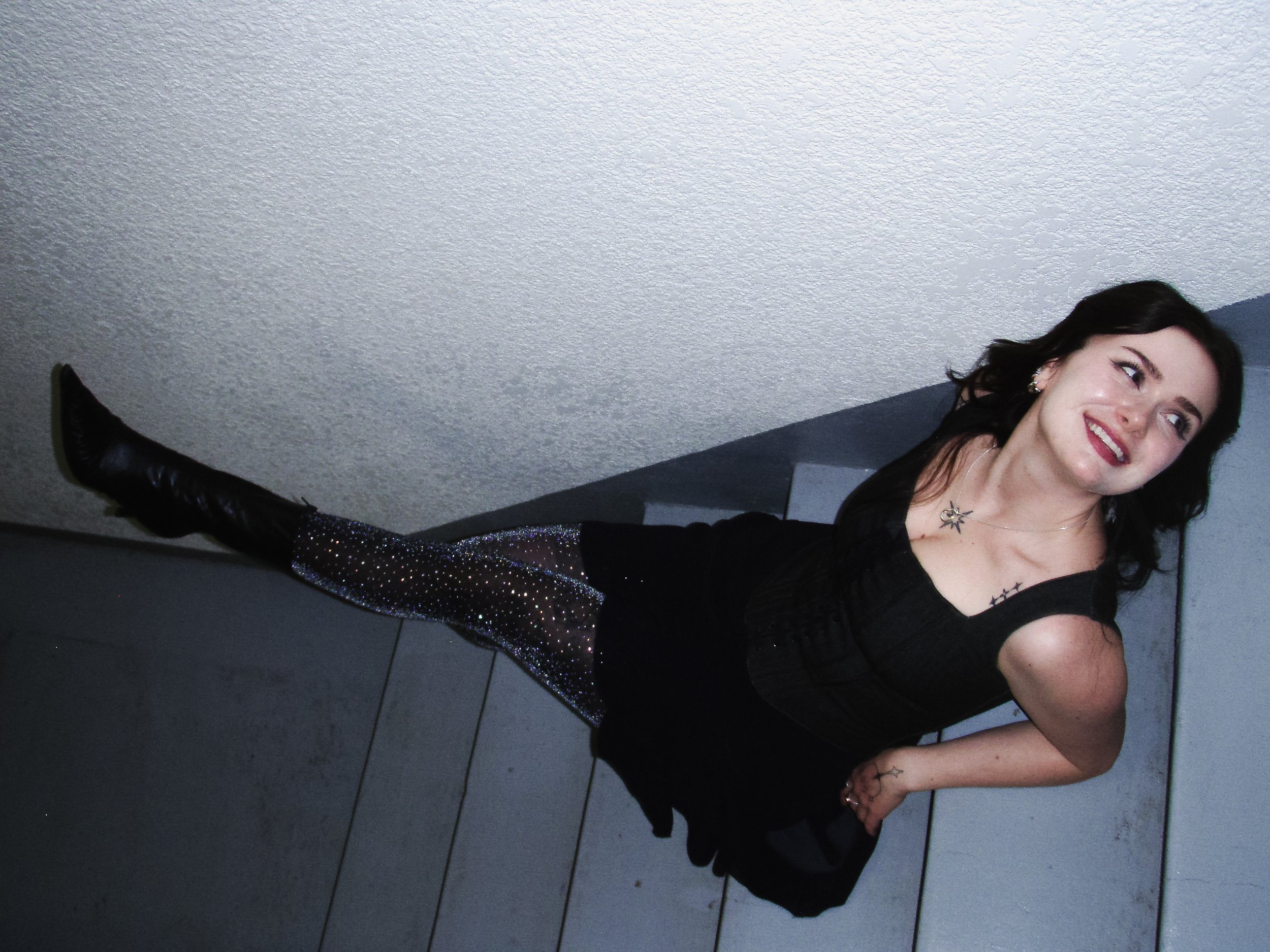
Photo Provided by Alex Demarchi
Alex Demarchi doesn’t fictionalize herself to make the work easier. If anything, she moves closer to the source. Her art is a diary in color, a record of small catastrophes, desires, heartbreaks, and quiet revelations that fill her days. In watercolour, gouache, ceramics, and writing, she maps the way her life unfolds in the private moments that stick.
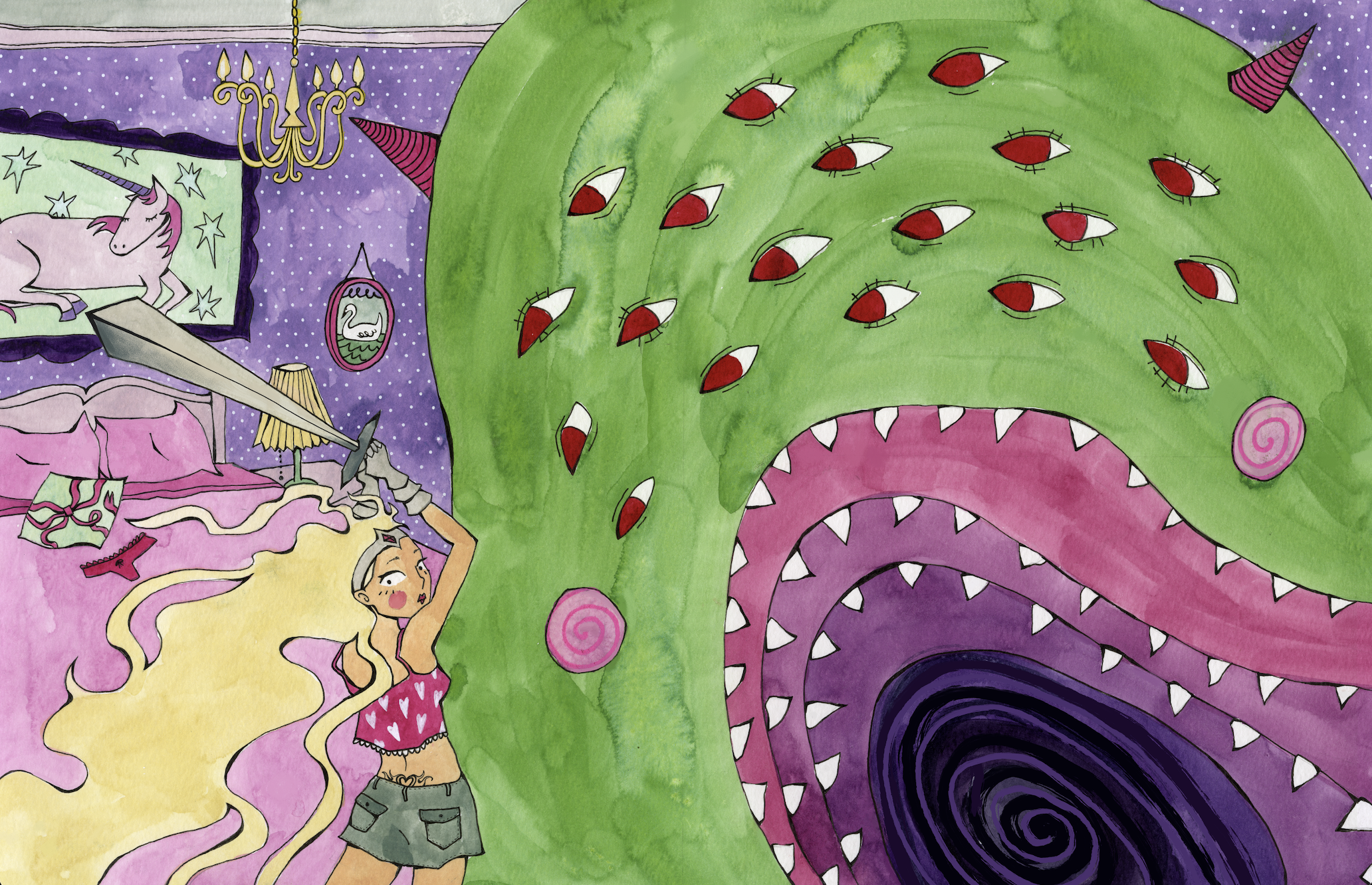
Demarchi’s upcoming art book, Hunger Pangs, collects these moments into something both intimate and universal. “The project I am working on now is an illustrative art book titled Hunger Pangs, which explores desire. Each illustration draws from experiences and feelings from my own life, accompanied by a short ‘diaristic’ description to give context to the piece.” Every page is confessional, tracing the cravings, frustrations, and small catastrophes that dominate her thoughts. Desire winds through it all: for the future, for different outcomes, for people, and for the ways things might have been. Even in its most personal moments, Alex hopes readers recognize themselves. “Although this project is based on my own life, I want viewers to be able to see themselves and their own experiences reflected in these pieces. So, although my perspective is personal, I don’t think most of these desires and experiences are unique to me alone.”
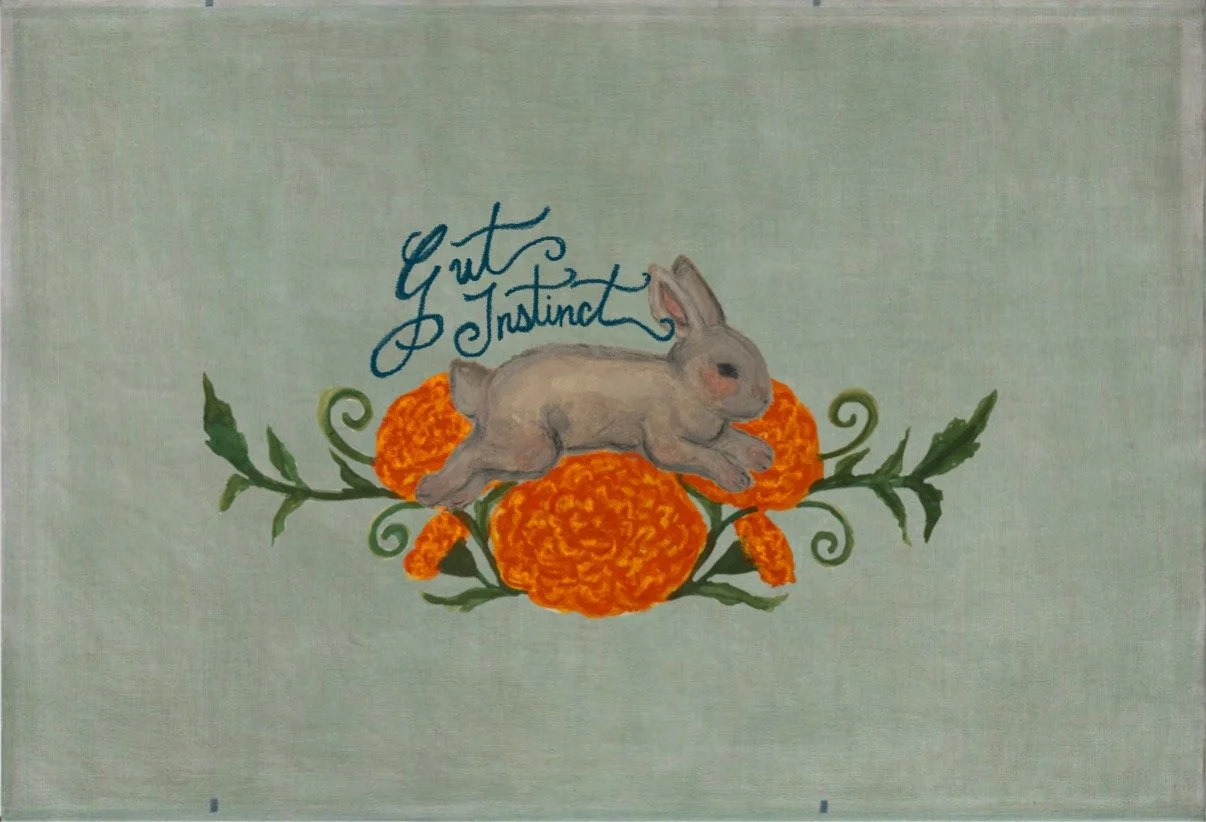
Gut Instinct by Alex Demarchi
Her choice of medium is an extension of her voice—with watercolor and gouache to carry the diaristic weight of her illustrations, lending a soft, naive quality that mirrors what she calls a “second coming-of-age” in her twenties. As for her ceramics, they are more conceptual, less literal, objects that explore ideas rather than narrative. Writing underpins much of her work, even when it doesn’t appear publicly, capturing intense feelings before they transform into visual expression. Many of her illustrations are playful, “unserious” interpretations of deeply felt moments, yet the writing beneath them grounds the work in honesty.
For Alex, the contrast between her approach and that of her peers became clear in art school. While attending art school, I came to realize that in critiques, you often have to share some pretty personal stuff with your classmates, who are sometimes strangers, in order to effectively talk about your work and why you made it. It felt very jarring at first, and sometimes still feels jarring.” Whereas other students build fictional worlds or characters, Alex’s illustrations act as windows into her life. She’s careful about what she exposes, especially when a piece touches on someone else. A breakup became a metaphor in one work: “I made a piece about getting dumped by my situationship, which coincided with getting my wisdom teeth removed, and I illustrated the process of recovery from my surgery as a metaphor for the pain of the heartbreak I had experienced, rather than explicitly making a piece about heartbreak.” Vulnerability is secondary to creation. “Ultimately, creating art is more important to me than any embarrassment or vulnerability I may feel when I put it out into the world.”
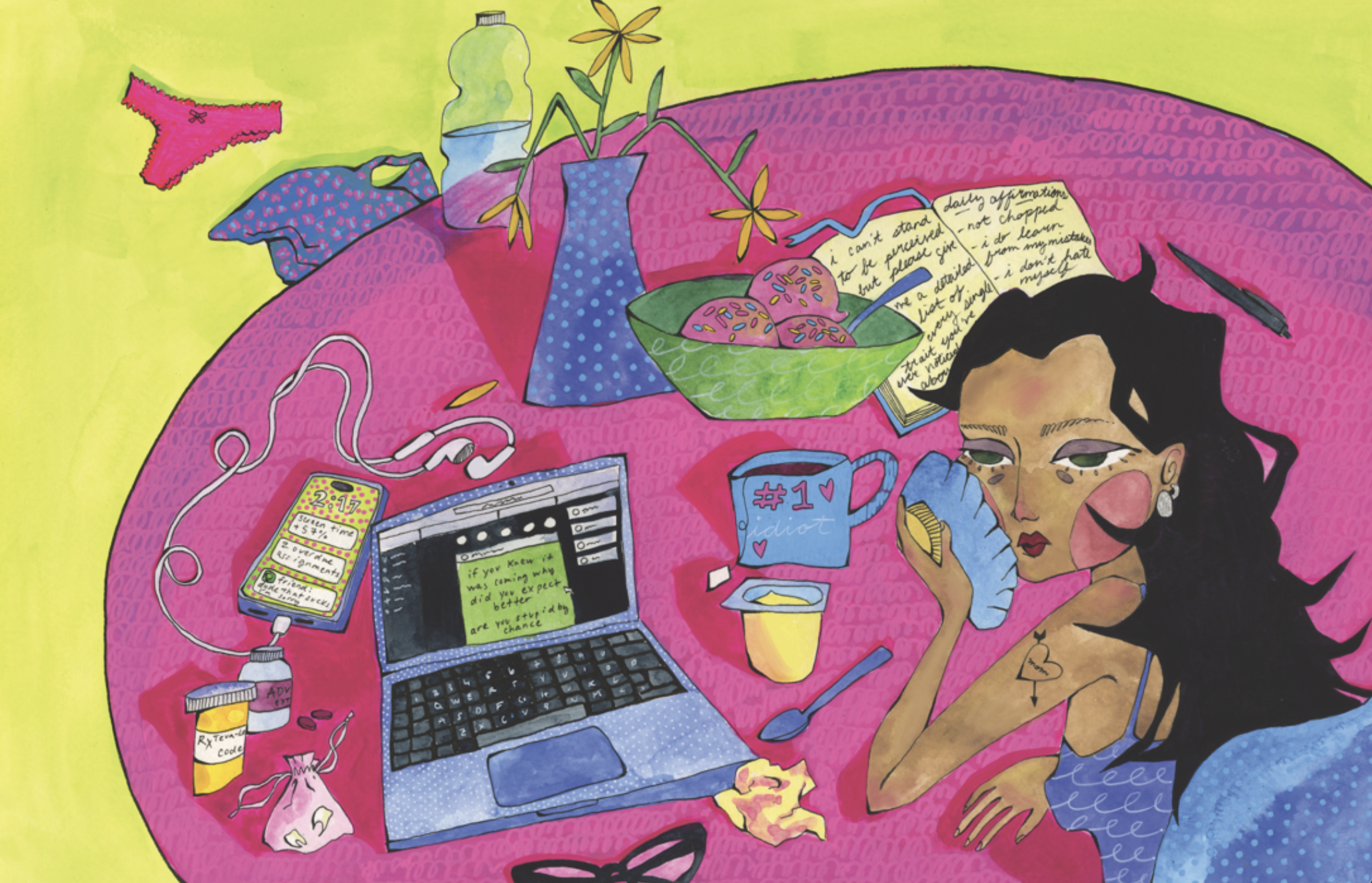
Wisdom Teeth by Alex Demarchi
Honesty in media inspires her. “I love the TV show HBO Girls, which is entirely about a coming-of-age experience, just not a teenage coming-of-age. It’s funny, but also so sincere and so real, which is everything I aim for in my illustrative work.” For Alex, growing up in Gen Z means navigating a life largely lived online, where identities, politics, relationships, and insecurities are public, constantly adjusted to the ever-present noise. “It feels like we are constantly adjusting in a rapidly changing world where information is constant and readily available. We are trying to be sincere in a culture that shames sincerity. We want real connection, but also resist vulnerability. It is hard trying to understand who you are when there’s so much noise telling you who to be.”
Her work thrives in print and digital forms, or, as Demarchi describes it, “Because my practice is diaristic and confessional, individual viewing almost completes it. The vulnerability feels sharper when someone encounters it alone.”
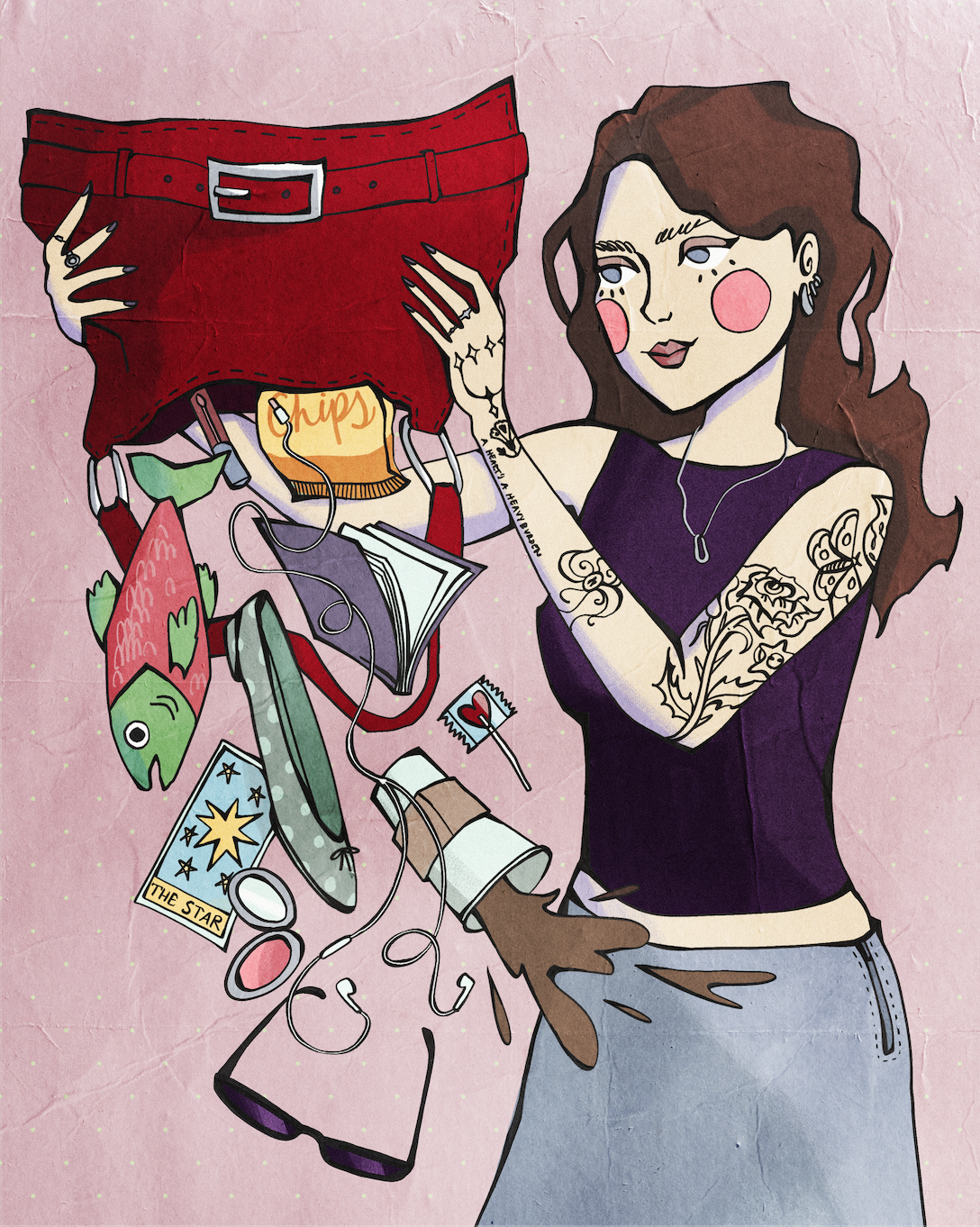
Portrait of Natalie McCarty by Alex Demarchi
Looking ahead, Alex is drawn to what hasn’t happened yet. “I’ve seen my illustrative style evolve over the course of my lifetime, and I think what excites me most is not the work I have made, but the work I have not yet made.” The future is big, scary, and uncharted, but also full of possibility. “Truthfully, as someone who has decided to pursue a career in the arts, the future is scary. Conversely, the more I talk to professionals in the field, the more I’ve come to understand that a life dedicated to creativity and art is absolutely possible.” So far, her experience affirms it: “So far I’ve found that no matter what has happened to me or what I’ve had to deal with, everything works out in the end– or at least I’ve been able to make art about it.”
“Perhaps it is not that I am excited to see how my work progresses, but more about the ways my life will unfold and then shape my work as a result.”