By Natalie McCarty
The more you see, the less you know.
Courtesy of A24
Only Nathan Fielder could turn a documentary about Elizabeth Holmes into a psychological thriller this completely deranged. Co-directed with Lance Oppenheim, You Can See Everything begins with Holmes inviting a film crew into her life 34 days before she's sent to prison. What follows is an increasingly bizarre three-year journey in which every new development makes you question what you thought you understood moments earlier. By the end, I genuinely don't know what to make of any of these people.
Holmes is fascinating because I can't get a read on her. Is she a master manipulator who knows exactly what she's doing? Does she believe her own bullshit? Has she spent so long performing the “Elizabeth Holmes character” that the distinction between the person and the persona has ceased to matter? Or is she just a scapegoat, a woman being taken advantage of by the men in her life? I can make a case for all of it, which is what makes the film so maddening. You really can never make heads or tails of a single interaction between any of the subjects. And, ultimately, her conviction for fraud is a matter of public record, but understanding the person behind it is an entirely different problem.
Whether Holmes is deliberately evasive or genuinely believes what she's saying is impossible to pin down. Either possibility is unsettling.
Her husband, Billy Evans, also makes the whole thing even more confusing. He's insufferable, so wrapped up in himself that I found myself dreading every time he took over a scene, but his presence complicates the picture of Holmes in ways the film is smart enough not to resolve.
It's hard to reconcile the woman responsible for one of Silicon Valley's most notorious frauds with the possibility that she's also vulnerable to the man she's married to. Maybe she's playing him. Maybe he's playing her. Watching them together, I wouldn't rule out either.

Credit: Lance Oppenheim
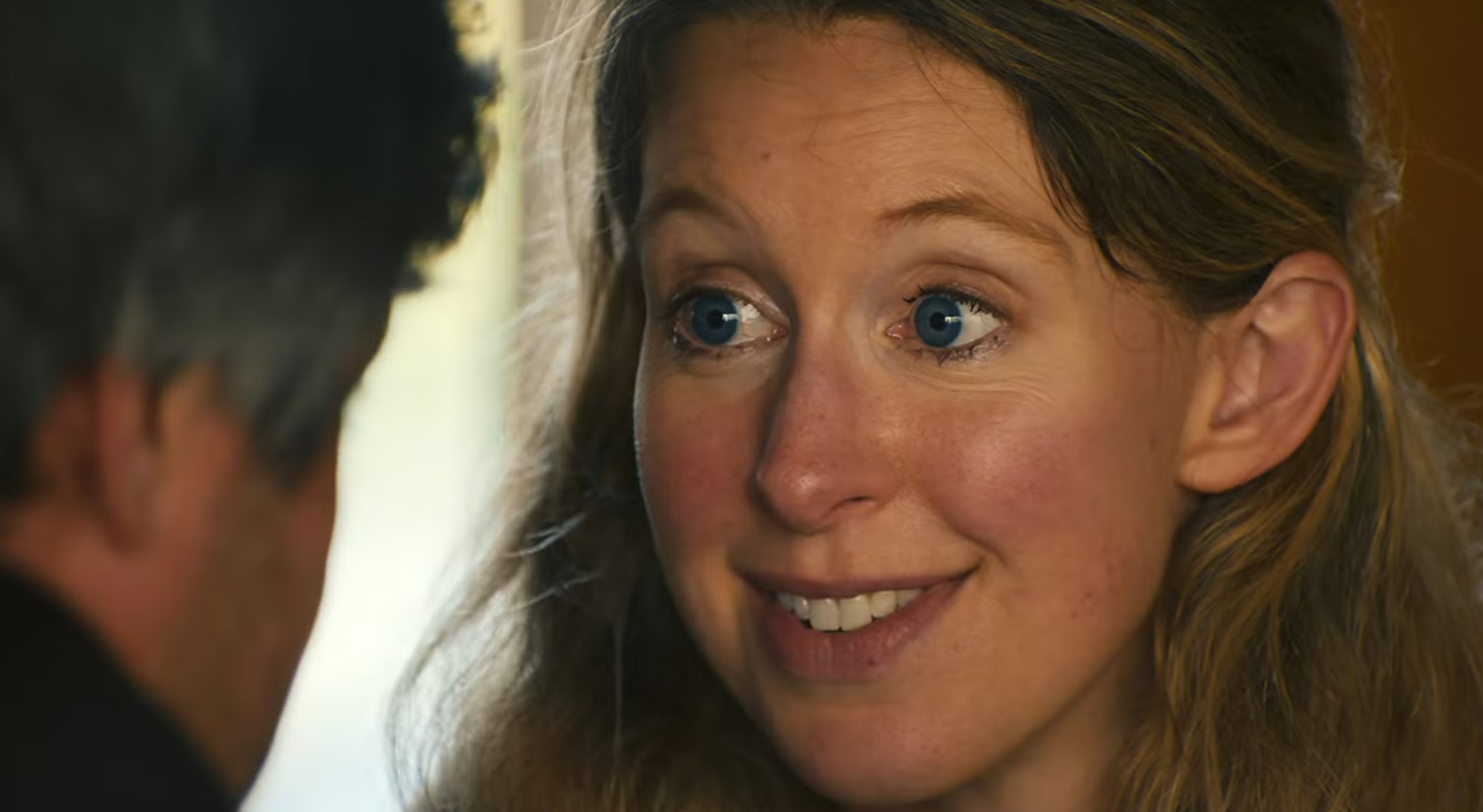
Amanda Seyfried's appearance in the final third is a brilliant narrative choice that deepens the film's impact tenfold. I won't spoil the mechanics of it, but her presence changes how you look at everything that came before. The film's questions about identity and performance suddenly take on another dimension, and I found myself reconsidering the entire experience. It's a bold move that could easily have felt like a gimmick. Instead, it makes an already disorienting film that much more compelling.
Fielder's own involvement is the cherry on top. He's spent much of his career finding ways to expose the absurdity of human behavior, but here he becomes a compromised narrator himself. The longer he spends with Holmes and Evans, the harder it is to separate the filmmaker trying to understand them from the person caught up in their world. His skepticism doesn't put him above the chaos. He's in it with the rest of us, trying to work out what the hell is going on.
That's what makes You Can See Everything so effective. It's an unsolved mystery in which every new clue makes the case harder to crack. You can watch these people for hours and still have no idea what motivates them, what they believe, or whether the version of themselves they're presenting is one they even recognize. The film keeps giving you reasons to settle on an explanation, then makes you question it all over again.

Courtesy of A24
This is a film only Nathan Fielder could have made. It's funny, deeply uncomfortable, and impossible to get a proper read on. I came away with more questions than answers, and I suspect I'll be second-guessing certain scenes for a while.
Truly with this, the more you think you understand, the less you actually do.