What Do We Want from Museums?
By Anna Seger
Many works of art transcend their frame metaphorically; Marc Chagall’s America Windows do so literally. Watery blue light seeps out from behind the stained glass, engulfing the gallery and viewer into the depths of its dreamy world. Symbols and scenes of history, music, painting, literature, architecture, theater, and dance stretch across the glowing panels—fragments of a shared cultural memory. When I first encountered the windows as a teenager visiting the Art Institute of Chicago, I recall lingering at the grand display far longer than I did in front of most paintings. It had a spellbinding quality, with new designs and dimensions of color and light opening up the longer I looked.
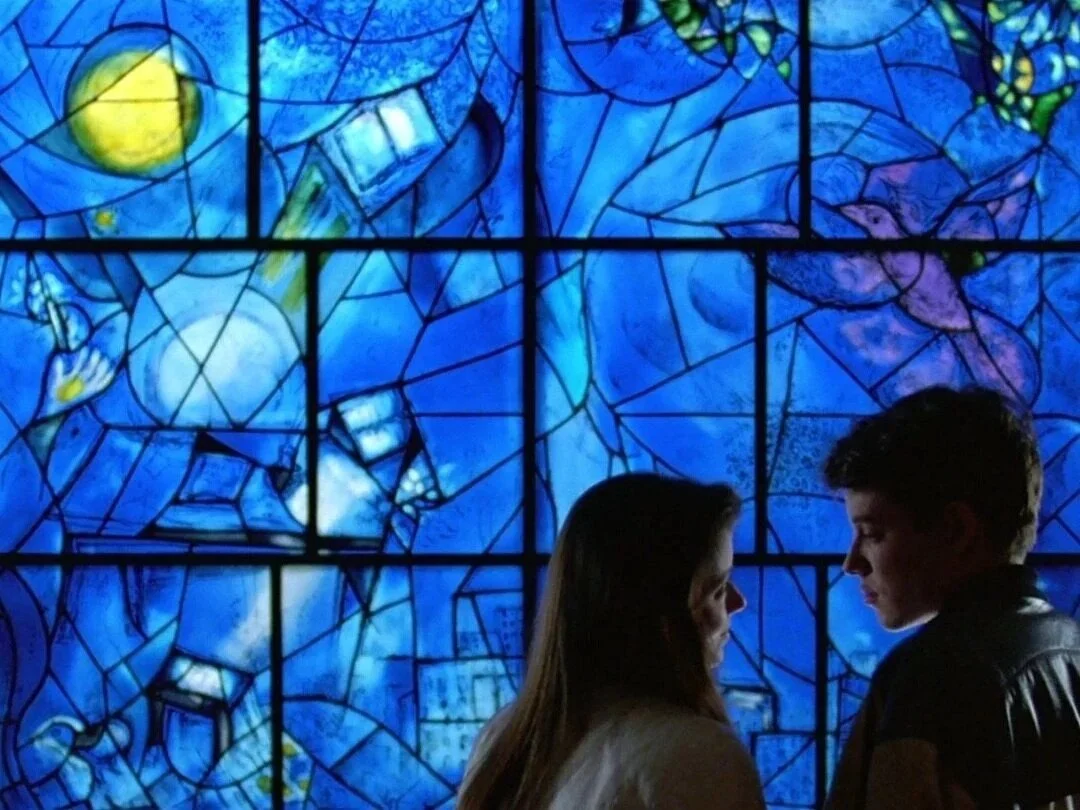
Ferris Bueller’s Day Off (1986)
Chagall created and gifted the triptych to the Art Institute in 1977 for the U.S. Bicentennial, an homage to the country that sheltered him after his rescue from Nazi-occupied France in 1941. Though he eventually returned to Europe, he carried a deep gratitude for the artistic freedom and support he found during his exile in the United States.
Barely fifty years since the America Windows, the vision of the country Chagall captured in the stained glass piece feels increasingly fragile. The National Speech Index reports that, as of January 2026, nearly three-quarters of surveyed Americans believe freedom of expression is heading in the wrong direction. The growing sense of pessimism is particularly pointed as the country approaches its next landmark anniversary this July. Since the March 2025 executive order “Restoring Truth and Sanity to American History,” the Trump administration has targeted museums that embrace critical histories of the US, commanding them to instead highlight the country’s “unmatched record of advancing liberty, prosperity, and human flourishing.” More recently, the White House has pressured the Smithsonian to share its plans for 250th anniversary exhibitions and programs, threatening to withhold federal funding if the administration does not receive enough materials for a content review. This surge of intense scrutiny and attention underscores an important fact: museums hold real cultural power.
But, in the face of instability and suffering, what can these spaces really do for us? Why should we care about visiting museums and looking at art when the world’s problems seem to demand immediate action?
Museums are uniquely positioned to foster several dual, seemingly opposed experiences. They are spaces for social engagement and inward contemplation; for escaping reality and facing it; for feeling comfort and confronting uncertainty. The museum’s charge is to collect, preserve, and animate objects and artworks, but curatorial work has limits. What a visitor gets out of a museum largely relies on how they engage with it.
As social spaces, museums carry a lot of implicit rules. In Museum Bodies: The Politics and Practices of Visiting and Viewing, Helen Rees Leahy examines how, traditionally, museums have prescribed silent, ocular observation as the proper, sophisticated method of engaging with works. It can be intimidating to visit a museum without an artistic or intellectual background, and visitors often desire—consciously or not—to signal their capacity to look and understand a work of art. Performance artists like Marina Abramović and Tino Sehgal have made it a central part of their technique to implicate audiences in pieces that illuminate and interrogate the habitual, passive viewing museums often foster.
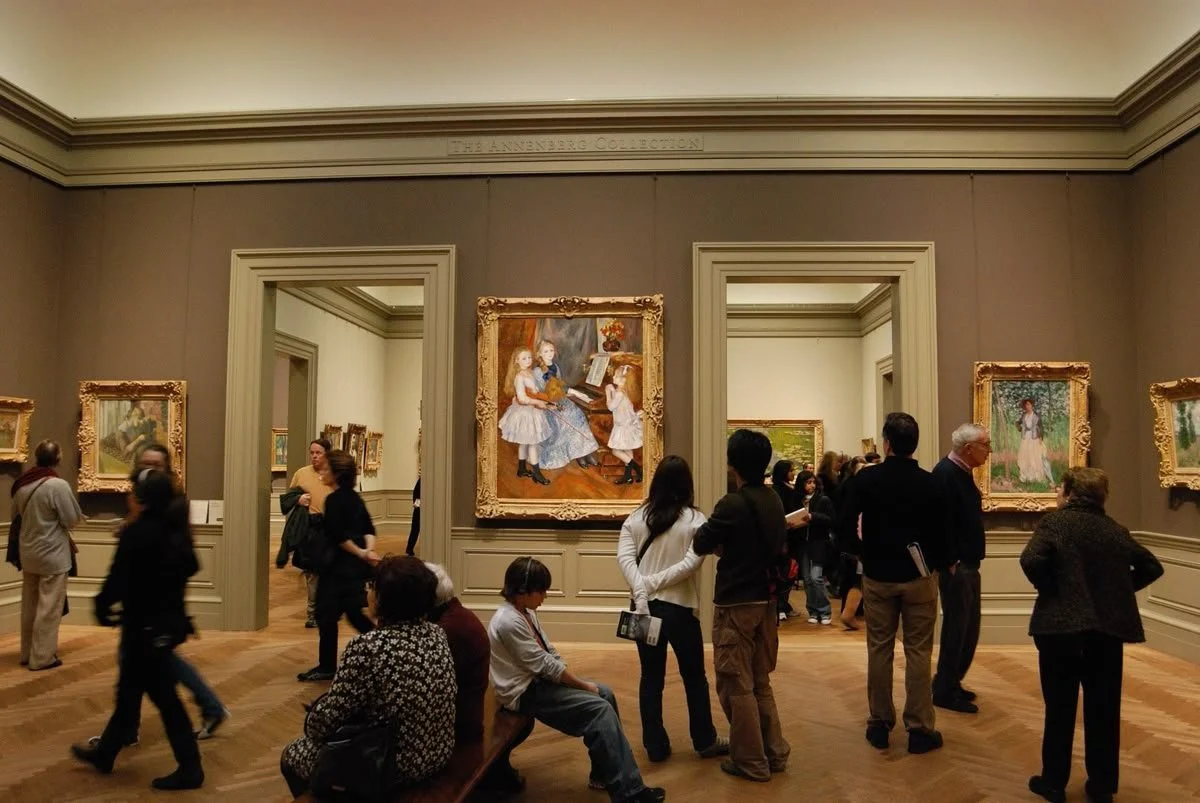
(Sourced through Pinterest)
Museums are, of course, not ideal or neutral authorities. Often, they are deeply flawed institutions. Despite this, they are also uniquely equipped to offer visitors the experience of transformation through artistic engagement.
In a culture of distraction, spaces that encourage sustained attention, critical reflection, and meaningful connection are more important than ever. As we become increasingly disconnected from the world, events, and people around us, we tend towards a narrowness of sympathy. Martha Nussbaum argues in Political Emotions: Why Love Matters for Justice that democracies depend on cultivating political emotions, or shared civic feelings of empathy, compassion, hope, purpose, and love. Without these emotional bonds, divisions fester and societies fracture. Museums, with their ability to slow us down and open us up, can help develop these political emotions on an individual and cultural level.
Chagall once said, “In our life there is a single colour, as on an artist’s palette, which provides the meaning of life and art. It is the colour of love.” This sentiment permeates the America Windows, which imagine a country united not through blind patriotism but through art, community, and history.
The next time you visit a museum, try to move through it with intention. Look at a work of art for longer than you normally would. Invent a story or meaning for it. Let yourself feel something about it. Share your impressions with a fellow visitor, or, if you’re feeling particularly brave, ask them about theirs. You will feel a more intimate connection not only to the art, but more importantly to your community and to yourself.