By Kelly Darroch
Over the past two years, Mannequin Pussy has inched closer towards becoming a household name. Maybe not because it's become a more socially acceptable phrase, but because they released such a metamorphically band-defining record, you can’t help but give them a shout, or even a loud bark.

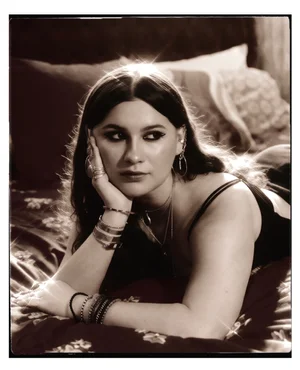
Missy Dabice for Gut Instinct Media. Photo taken by Kelly Darroch.
The cathartic and unapologetically intrepid voice behind the Mannequin Pussy sound, Marisa “Missy” Dabice, was one of the many forces who created I Got Heaven. It’s an album that wraps you in its tender arms, and then slaps you on the back to unleash all that’s pent up. I Got Heaven is a lattice of the sound they’ve been building since 2010, from their self-titled 2014 debut, to Romantic, Patience, Perfect, and their collaborations.
I sat down with Dabice at a local coffee shop in LA, her new home, on one of her rare periods of break from tour to chat about everything from her old project Rosie Thorne, karaoke, Philly culture, tour burnout, artist authenticity, piano lessons, the euphoria of an Oasis concert, and more. Dabice sat opposite me in a knitted black sweater, a flouncy, floor-length blue skirt, and a hot coffee in hand, inexplicably dressed in the perfect winter attire for a comically sweltering LA winter day.
If you’ve been keeping up with MP, you’ll know that they’ve rarely jumped off the touring horse in the last few years, with the largest gap in their touring schedule since 2020 being COVID-19. I saw them back in 2023, opening for the post-hardcore band, Movements, at the Hollywood Palladium, and they’ve played a show nearly every single month since. Throughout the many years of touring, Dabice has built a fortress of methods to keep herself mentally and physically healthy and learned to accept the grueling realities of the music industry, specifically the fact that no one is looking out for you except for you.
“You really just have to kind of stay within constant conversation for yourself to make sure, like, 'Am I okay? Is there something that I'm not getting that I need right now? Do I actually need to rest, and do we need to make hard decisions to stop?’” said Dabice. “Sometimes you do.”
Dabice acknowledged that you can only truly make a living as an artist by performing a minimum of 50 shows a year, or if you own your masters and have high streaming numbers. When money is on the table, no one will suggest a break or fully recognize your suffering; you must establish it for yourself, which is something Mannequin Pussy has become more comfortable clearing space for in their career.
Something Dabice and Mannequin Pussy have never hesitated in is standing forthright in their political opinions, whether it's contributing to artist fundraising efforts for Palestine, execrating billionaires, religious institutions, and capitalism on stage, or using their platform to encourage community action against the current U.S. administration and ICE. If you attend an MP show, you won’t leave the room without being efficiently reminded that punk is an inherently political genre and culture, and they’re simply one cog in the wheel of what punk should represent.
“You hear stories of artists who are being told to just keep their mouths shut because it’s bad for business,” explained Dabice. “That’s not a business I want to be a part of, where our role is simply to entertain; that’s not why I started making art in the first place, it was a reaction to the world around me.”
Given her recent tribute to Sinead O’Connor on John Mulaney’s show, Everybody’s Live, I wondered if any other artists inspired her tenacity and commitment to being a politically vocal musician. Dabice reflected on The Chicks’ (formerly the Dixie Chicks) outspokenness during the Iraq War against the Bush administration, despite their roots in country and bluegrass, a music culture that emphasizes this erroneous expectation that if you have a twang in your voice, “you’re not just a musician but a patriot.” She admired their fearlessness in a moment where they had a lot to lose in their careers, and lose they did.
“I was a young teen during the Iraq war and 9/11, and saw the way that musicians spoke out against that and had to deal with the real repercussions of that,” said Dabice. “I think ultimately, you live by your own moral code and you don’t let people corrupt that.”
Her tribute to O’Connor was a clever nod to the similar fearlessness she showed in protesting the Catholic Church on SNL in 1992. The combination of performing “I Got Heaven,” a track that condemns the weaponization of Christianity as a political and social divide, in a beautifully ornamented church that they constructed on the stage, on a show hosted by John Mulaney, who comes from the world of SNL, with O’Connor’s face plastered on the kick drum, or what Dabice described as the “beating heart of a song” during their first television performance was no coincidence by Dabice and the band. It was an inclusion of O’Connor in their performance that they viewed as a “necessary continuation” of her work.
While not every live “I Got Heaven” performance is delivered at the scale of the Mulaney performance, you will almost always find Dabice giving a commanding speech leading into the song before she spews the lyrics, “I went and walked myself like a dog without a leash.” One of her most memorable performances of the song was their 2024 show at The Bellwether in LA, a show I was in attendance for. Like Dabice, I felt something in the air that night, and it wasn’t just the fog mixed with the smoke of someone’s joint they may have just packed using their official Mannequin Pussy grinder they snagged at the merch table. It defied the stereotypes she had been fed incessantly about the unenthusiasm of LA crowds.
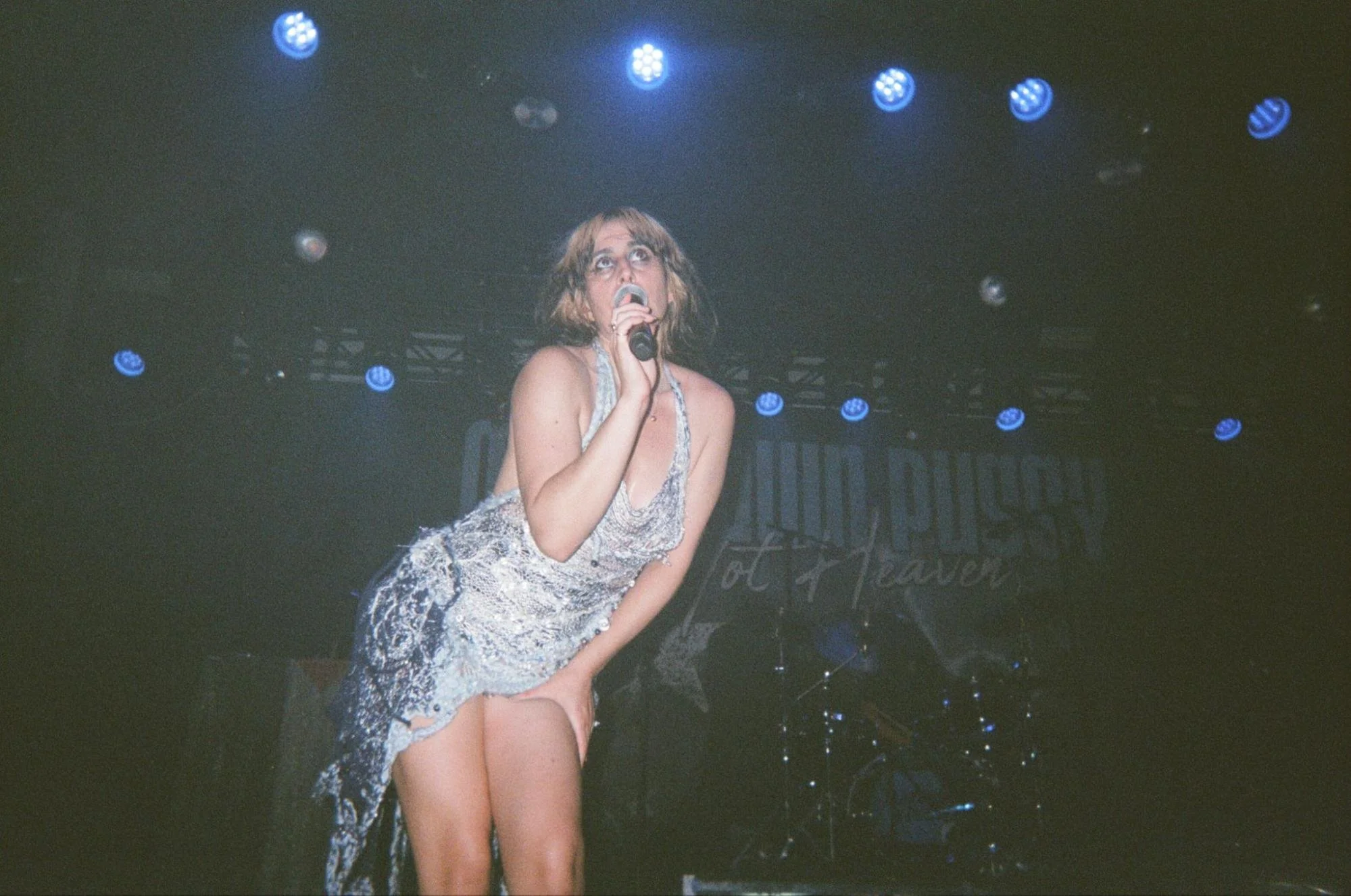
Missy Dabice onstage at Mannequin Pussy’s show at The Bellwether in LA on 10/11/2024. Photo taken by Kelly Darroch.
“I do think that our music attracts a really passionate and intelligent person who is searching for music that speaks to the same observations that they’re having that we are also having about the world around us,” said Dabice, who embraces the confidence of her band’s pure cultural community of people who may feel a bit outside in the world, just as the members of Mannequin Pussy did growing up. “I just feel like being a freak is so much more interesting in this lifetime, and it’s a compliment to our community that there are these intelligent freaks, and I see that in them, and I love that in them.”
Throughout the touring cycles, Dabice has interacted with so many fans, especially those of Gen-Z, which has both inspired her and generated a type of heartbreak for her. She does believe that it has been harder growing up Gen-Z than as a millennial because of the immediate interconnectivity of the modern age, and understands why Gen-Z feels so in touch with their anger and refuses to be convinced that things are as they should be. Dabice reflected on her own coming of age, saying, “I think it speaks to the intelligence and passion of our generations together as to like continuing to notice what’s wrong and wanting to call it out and not wanting to be devoid of compassion or anesthetized of our own anger.”
Dabice invites growth and change into her life with open arms; after all, it’s what allowed her to mature as an artist and eventually release such a transformative album as I Got Heaven. Being an artist in her thirties, she’s heard the age-old “running out of time” rhetoric in the past decade and squashed it. Dabice challenges herself to grow creatively every day, and is critical of the pressure for young artists to be extraordinarily perfect so early in their careers.
“The thing about the 20s is that it’s really more the time for planting seeds,” said Dabice. “It takes 10 years for a seed to start to grow when it comes to the maturation of your own life and seeing the fruits of your labor.”
The period between releasing Patience and I Got Heaven allowed the necessary space for Mannequin Pussy’s maturation as a band, which led to the departure of their original guitarist and the addition of their new guitarist, Maxine Steen, a longtime collaborator of Dabice’s, alongside members Kaleen Reading and Colins “Bear” Regisford.
One of the recent major changes in Dabice’s life is her relocation from Philadelphia to Los Angeles. The greatest positive change of the move has been her inclination to strengthen her musical chops. The overwhelming passion of the people she’s met in LA and the benefit of being able to afford LA’s cost of living via Mannequin Pussy have allowed her to take lessons in voice, piano, guitar, and sewing.
“I felt like my own skill sets were really plateauing, and I wasn’t finding it very inspiring to write with instruments,” said Dabice. “Instead of kind of giving up on them, I was like, ‘Maybe it’s just time for me to study again.’”
The idea of mastering these instruments at some point in the future inspires her. Her relationship to her instrument is something she realized is lifelong, so it makes complete sense to her to want to continue to nourish that relationship in the decades to come.
“If I’m just starting piano lessons this year, it would be very cool if in like 15 years, maybe I’m putting out a piano record or something,” she laughed.
I suggested a Missy Dabice rock opera record, so who knows? Perhaps we’ll get that in ten years time.
Regardless of whether Dabice has swapped the East Coast for the West Coast location-wise, she hasn’t swapped it in spirit. There will always be something quintessentially Philly about Mannequin Pussy, because according to Dabice, “We’re certainly not very Hollywood.” Philly has a certain grit about it; it’s a city where you say what you mean, and MP is all too familiar with that philosophy. It was not always an easy place to wake up and live in, according to Dabice, but like any place, there are positives and negatives, and she has a fondness for the positive Philly attributes that are wedged between the layers of her band.
“There’s so much lead poisoning in Philly, and that’s why people are so unhinged there; they’re out of control,” said Dabice. “I think we have a bit of that too.”
Whether bonded by a mutual nascent lead poisoning or not, Mannequin Pussy is “a collective that assumes the risk together, and enjoys the highs and lows of what the risk can bring,” according to Dabice.
In previous interviews, she has discussed how being in a band is a socialist endeavor. There are always challenges in being a group, and the division of labor will always fluctuate in one way or another. Despite the pressure of being the frontwoman and voice of her band, she wouldn’t ever wish to do it without them, and that has not shifted even with the newfound attention and acclaim of their album.
“This is a very individualist country, and I’ve said it so many times, but solo artists are kind of inherently capitalist because music is something that usually requires a lot of people to make something,” said Dabice. “When you have just one face pushing the thing, it’s not exactly true to the experience of what creating it is like, and that’s not a negative or positive, just an observation.”
At MP shows, the stage is not just a place for Dabice to vocally use her voice, but also to experiment and express herself artistically in non-musical ways, one being fashion. She is generally critical of how wasteful the fashion industry is, and gravitates towards independent designers who practice repurposing and reclaiming fabrics and older materials, like Philadelphia-based knitwear designer Jasmine Schulte. Dabice has also begun to take knitting classes and hopes to start making things for herself to wear. As a woman, she’s familiar with the discomfort society pushes on women for dressing the way they want, and she hasn’t really seen these conversations lessen over time.
“The stage is really the space to dress as you want, to express yourself as you want, and to feel like there’s one place where you can be untouchable,” said Dabice. “And I’m going to enjoy every time I step on that stage and feel that freedom to fully express myself.”
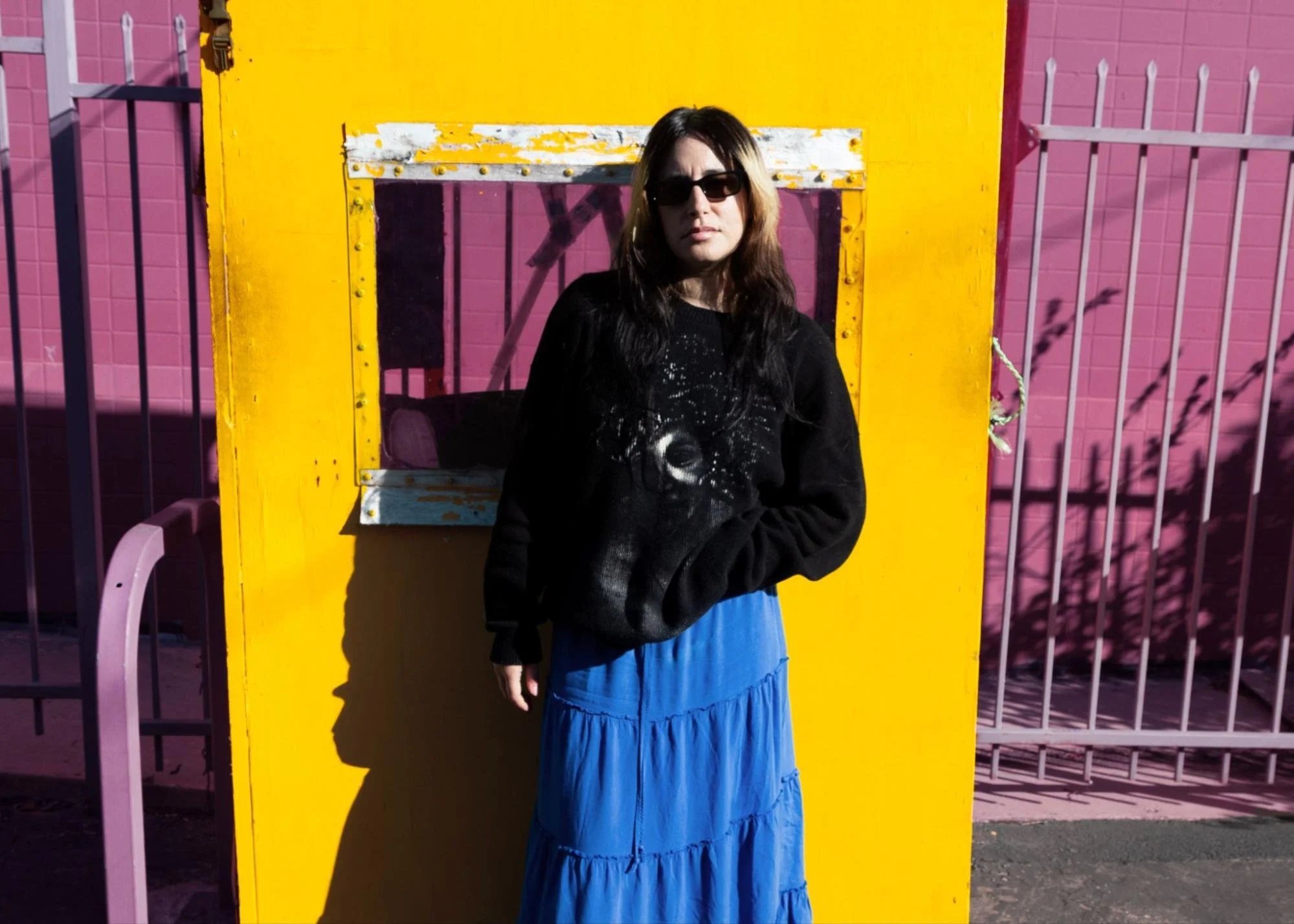
Missy Dabice for Gut Instinct Media. Photo taken by Kelly Darroch.
Stage attention is really the only kind of attention she wants, so naturally, I had to ask what her opinion was on karaoke.
“No shade to anyone to anyone who I’m friends with who I love, but I think it is borderline psychotic when I meet lead singers who love karaoke,” Dabice exclaimed. “Like, is it not enough for you, the attention you get, that you want to go out afterwards a show and do more singing and performing? It’s just so crazy to me.”
Ironically, she revealed some lore that karaoke does run deep in her family upbringing, specifically her uncle, who was one of the karaoke machine kings of the 90s, and sold them to people all over the world. Dabice explained that it was a “huge rags to riches, lost it all type of thing” because of the .com boom.
Fostering an authentic spirit of personal expression in her art is always a priority for Dabice, who is uninterested in singing someone else's song at karaoke, as well as mimicking anyone but herself in her writing. It’s why she listens to a lot of instrumental and classical music during her writing periods, in an effort not to overdo the natural level of inspiration and subconsciously pick up on her contemporaries.
“Not to put down a gender, but sometimes I’ll meet a lot of men in the industry who are like a treasure trove of what they want their music to sound like,” Dabice remarked, between many interjections, prefacing that this is a generalization. “They’re like, ‘I want to make a song that sounds like my favorite band,’ and like, okay, well, your favorite band already did that.”
Dabice (generally speaking) finds the music of women, femme people, and queer people to be more fascinating, “because their music is coming out of an intensely personal experience and not the desire to do rockstar cosplay.” For her, it just clicks when someone allows themselves to be the driving force.
But of course, not every song comes out in a snap for her. With “Softly” being the song I blasted through every speaker I had access to in 2024 (in my car or in public), I had to ask about the writing and production process. Dabice described it as a “beat your head against a wall a bit until you find it” type of song. She wasn’t visited by a spirit of inspiration as she was with a song like “Romantic.” Dabice wrote “Softly” on a fall trip to LA while staying at a friend’s house on an old, painful-to-play guitar that belonged to her friend. She started with this concept that the first note of the song would be the last note of their 2021 song “Control,” thus creating a transition between the two songs. The tense lyrics of a desire for agency in “Control” unravel into the “vulnerability of love” and the fear of losing the love and desire you feel for someone in a blended storm of dreamy guitar, synth, and Dabice’s cathartic, distorted yelling.
“Softly” is but one thread in the fabric of the album that evokes this feeling of an awakening or a rebirth. This thread is spun into the album’s visuals, which I was somewhat surprised to learn that Dabice is relatively uninterested in, or rather less comfortable with the selling the visual world of the album. I wondered if the visuals being grounded in nature were a thematic choice, and in some ways, it was – Dabice wanted to play with the idea of what is heavenly.
The greater reason behind the visuals was explained to me through the work of Belgian-born French filmmaker Agnès Varda, who would engage with scriptwriting and ideas by asking herself ,“Where do I want to spend two months?” Dabice elaborated on her film, Le Bonheur (1965), which despite its dark content, is filled with these idyllic picnic scenes in the summertime. For Dabice, spending time on a farm with her bandmates to film their music videos sounded more than ideal.
Throughout our conversation, we got to discussing some bits and bobs of Mannequin Pussy’s past, one being her favorite MP deepcut. She responded with the final track off of MP’s debut self-titled record, “Pissdrinker,” which was actually the first song she ever wrote.
“I can just hear how desperate I am in the song to understand myself and my situation, and how rudimentary it feels to play,” said Dabice.
Her mention of the debut album reminded me of a track called “Clit Eastwood,” which I’ve always found to be stupidly amusing. I asked who came up with the title, and to no surprise, it was Dabice, who, at the time, was often trying to make jokes out of her song titles.
Outside of MP, Dabice also released projects in 2018 and 2022 under Rosie Thorne, her collaboration with MP guitarist Maxine Steen. They haven’t put out anything in nearly four years, so I asked whether we might see new work from the duo down the line.
“We [Steen and Dabice] were actually talking about that yesterday, but I feel like we would call it something different now,” Dabice said.
Following the interview, MP’s Instagram announced that Missy and Maxine would perform an intimate set and a live Q&A at the First Unitarian Church in Philadelphia on March 14. While we may not receive any officially recorded releases from them in the near future, the pair have a collection of songs they’ve written together that continue to resonate in a live setting — tracks they hope to eventually finish and, as Dabice put it, “bring into being.”
In 2025, I met Dabice just minutes before she was to head to the Rose Bowl to catch the last night of Oasis, which I had just seen the night before. Dabice explained how this was the first time in a while that she had attended a show because she really wanted to see the band, not because it was her own show or a friend’s. The energy of the stadium bursting from the hearts of decades-long fans enveloped Dabice in a euphoria that she professed to have felt for a week. She also realized at the concert that most of their songs are actually quite positive.
“They act like these really like surly, nihilist dudes – I mean, I'm sure it is true to who they are, but like the swagger and kind of rock star way they act is so distinctly different than the positivity that's in their music,” said Dabice. “Like, you got to roll with it, you got to take your time, I'm a rock and roll whatever, you know?”
Mannequin Pussy concerts imbue the room with an unparalleled energy, so much so that they’ve had a proposal happen at one of their shows in Albany. Dabice explained how they came on stage and proposed to their partner, saying something like, “Will you join me in a lifelong commitment to fighting the patriarchy and capitalism and loving each other?” An aspect of their connection and lifelong declaration of love to each other being political in nature was something that Dabice found to be extremely beautiful.
The connection that art brings within the fanbase of the MP universe is something that Dabice is incredibly grateful for, and they often share it through their social media. She’s seen people get MP tramp stamps, “Loud Bark” hand tats, and even tattoos of her face, which she said makes her think, “Oh god, let me not disappoint these people.” The sentiment of people being inspired enough by her art to make their own is exciting to her, which includes all of the videos she has seen of young bands covering her songs.
“If you listen to something and that inspires you to want to make something, I feel like that is the best possible energetic exchange of what art is,” said Dabice. “It reminds people that creating things does help you to feel more alive.”
In the upcoming year, MP is gearing up to check off some firsts on their 2026 touring dates: playing arenas and stadiums. They’ll be joining Foo Fighters and Queens of the Stone Age on their “Take Cover” tour, as well as a few dates on Florence + the Machine’s North American “Everybody Scream” tour. Dabice expressed her admiration for Florence, whilst briefly getting distracted by a butterfly behind me, and resumed expressing her excitement about seeing how Florence’s audience will respond to MP. Generally, she’s looking forward to witnessing a new side of the show production and expand their music to uncharted territory with less pressure than a headline show and shorter set times. She conferred with some friends who have played similar shows, like Amy Taylor (Amyl & the Sniffers), and ultimately decided that playing for an audience that may or may not gravitate towards her music presents an exciting challenge of “representing who we are as a band in these really condensed timeslots.”
Apart from the tours of 2026, they are in the early stages, or what Dabice described as the “hunter-gatherer phase” of the next MP album. When I spoke with her, she had just spent 6 days in the studio a week prior, just writing and pumping out about 18 demos of new ideas.
“My work this week is to really dive into them, and start to see what’s the cream that’s going to rise to the top or what songs I feel most inspired to write to,” Dabice explained.
Before you get too excited, she clarified that she really has no prediction of how long it will take to make this next album. She doesn’t feel inclined to rush it because she really values this next album being a part of their evolution as artists. Producing an entirely new album within a year of releasing one is just not her style, “I would never say that I’m a prolific person, I’m poetic, but not prolific,” declared Dabice.
Her producer, John Congleton, also reminded her and the band recently that they must protect their energy as a band more, rather than letting the industry “pimp [them] out for ticket sales,” as Dabice put it. The repetitiveness of touring and the disconnection from real life do not really generate an inspired place of mind to write, and taking time to regenerate remedies that for MP.
The next Mannequin Pussy record is not yet a fleshed-out, clear vision, but it sounds like it will be indicative of the mental and spiritual growth of the band these last few years. The connection people felt to their last album will not be taken for granted or prevent them from pouring as much, if not more, effort into the next one.
“I feel like coming into each project with humility,” said Dabice. “Just thinking, ‘Okay, here I am again, and I’m going to climb this mountain, again.”