What Happened to the Real America Millennials and Gen-Z Were Promised?
By Sadie Jane Mayhew
Yes, it might have been blissfully idealized, but for many of us, we thought it was where we were actually headed as a nation.
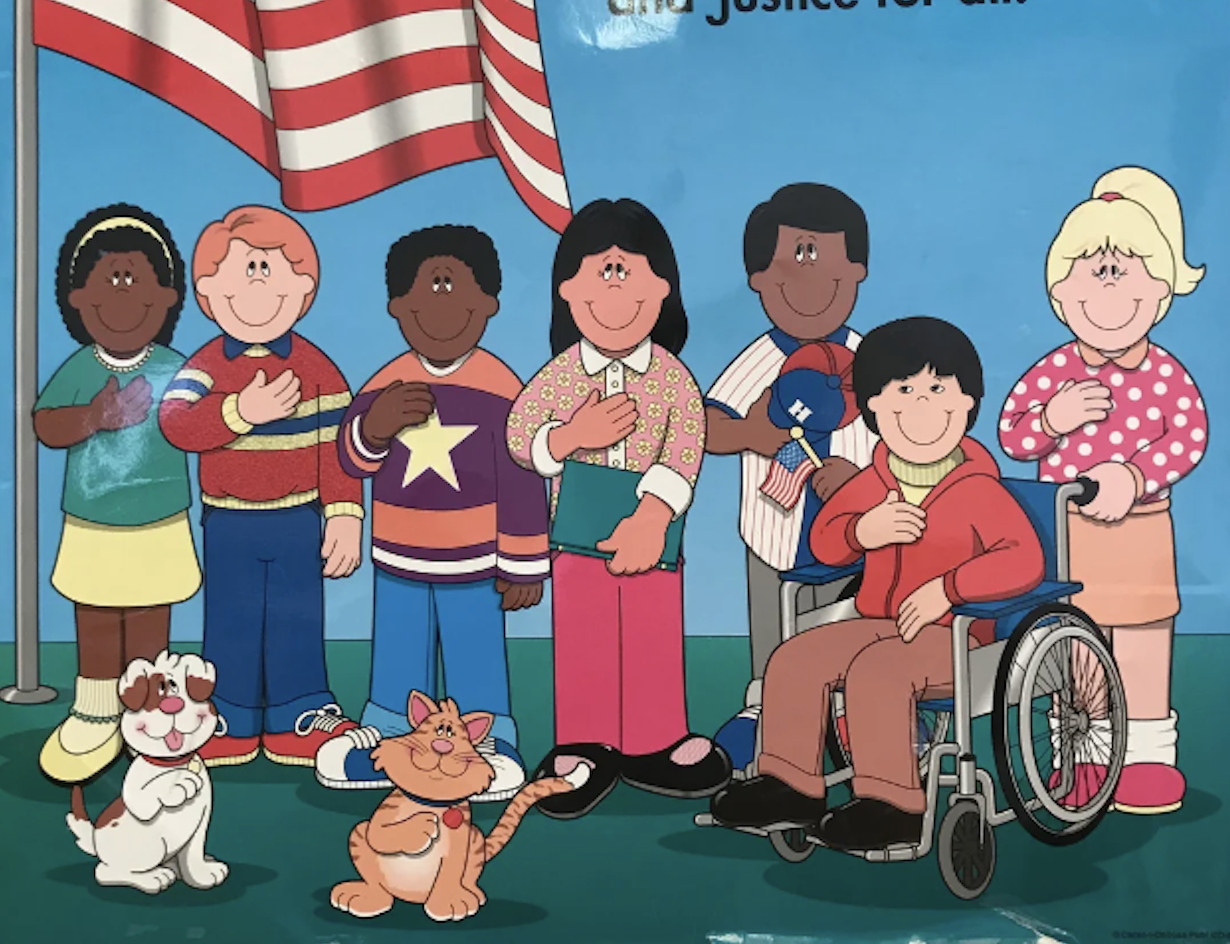
Sourced through Pinterest
In elementary school classrooms across the country, a majority of Millennials and Gen-Z absorbed a particular vision of America. It lived in construction-paper murals of diverse children holding hands around planet earth and colorful library books teaching the importance of sharing and kindness to everyone. It was the collage of many hands in different shades linked together. Or even the art of trees, oceans, and recycling symbols plastered all over and around it. It was about the controversial historic events of what was, in reality, violence and conflict, now resolved into friendship and love. It was endless imagery of lessons about sharing, fairness, and the idea that diversity was not simply tolerated but celebrated.
The ‘promise’ wasn’t even subtle. It was embedded in curricula, in assemblies for Martin Luther King Jr. Day, in posters declaring that anyone could grow up to be president or whatever they wanted to be. That there was space for all of us here in this melting pot of a land of people, rich cultures, backgrounds, beliefs, goals, and interests.
And the subtext underneath it all was clear: progress may be slow, but it bends in the right direction. If we studied hard, respected one another, and participated in democracy, we would inherit a more unified nation than the one before it.
We were told that America was a grand, unfinished project moving steadily toward justice. Or was that just my school growing up?
Because the American reality is quite literally the opposite of all that was presented to us as children. Today, many young Americans have come of age amid financial collapse, endless war, climate crisis, mass shootings, reproductive rights rollbacks, and open displays of racism and misogyny in political life, ruled and controlled by mega corporations and our political leaders. The same institutions that taught us about equality now struggle to protect it. We were told to treat our peers with kindness; we watch leaders model cruelty. We were told education was the ladder; we carry historic student debt. We were promised stability; we navigate precarity.
How the hell did we get here?
The dissonance is profound and destroying us. Literally.
Part of this rupture stems from a more honest reckoning with American history. The sanitized story we were fed as children has given way to a clearer understanding of genocide, enslavement, imperialism, and systemic discrimination. That truth matters as the baseline to understanding our history and always will be. A democracy cannot function on myth alone, and we’re figuring that out in real time. But the exposure of historical violence has coincided with the visibility of present-day inequities, making it feel less like we are progressing toward the mural on the classroom wall and more like we are unraveling from it.
Commentary in much of our media today frames this generational mood as grief mixed with defiance. Researchers, historians, and analysts dissect the political realignments that have left many young voters disillusioned. But across the nation, presenting with the younger adult generations who were once hopeful and respected as Americans, something once promised feels withheld. And we were made to feel like fools. Were we naive to believe we were heading towards a more unified world where we all got along and worked together?
Was the promise ever real, or was it aspirational art?
If it was aspirational, then perhaps the betrayal is not that America failed to be perfect, but that it stopped pretending to try. Young people today are not asking for a utopian fantasy. Or heck, maybe some are. But the bar is set too low. And we know the bare minimum shouldn't be begged for or argued over. We’re just asking for clean air and water, affordable healthcare, reproductive autonomy, debt-free education, racial justice, and a political class that reflects the country’s actual diversity? Is that too much? Well, for evil people running the world, it is.
And now more so than ever, we must be willing to fight for a new world that values truth over spectacle and policy over provocation.
Is there still time to build it?
Demographically and culturally, power is already shifting into the hands of the younger generations. Millennials are now the largest share of the workforce. Gen-Z is the most racially diverse generation in U.S. history and among the most politically engaged at a young age. But don’t get too excited. There’s still a very prominent culture of radical right, misogynists, racists, and classist individuals who clearly didn’t get the memo growing up, or must have overlooked the potential naive hippie propaganda on our bulletin boards. These are the people upholding the divide, violence, and downfall of our country today.
On the upside, the younger generations are voting and are more environmentally and politically involved in local communities and government initiatives than our prior generations. More than half registered to vote agree on politics on the left end of the spectrum, which calls for policies more aligned with the kinder, safer, diverse, and unified society many of us imagined as kids.
They are actively trying to reverse the threads being undone by the current leaders of our government and workplaces; unionizing workplaces, organizing climate strikes, running for local office, and reshaping conversations around gender and identity. There’s certainly no guarantee of a pristine nation free of conflict, but it could be better than the horrors we are witnessing and experiencing now. Just think, a greener, fairer, more participatory society forged from hard truths rather than comforting myths.
Empires do not last forever. This is the end of ours, and time for a fresh start. This could be the chance to build that country many of us felt was possible someday.
The America we were inconspicuously “promised” will not arrive fully formed. We grew up and found out that it did not exist, but was an idea. It would not be handed to us, but something we could earn. It may have to be built deliberately, slowly, by policy, by vote, or by classroom. Or it might have to be with more grit and gumption. Radicalization, uprooting, and pure revolution. Looking back, perhaps those murals on the playground walls were never a reality, but a challenge for us to take on.
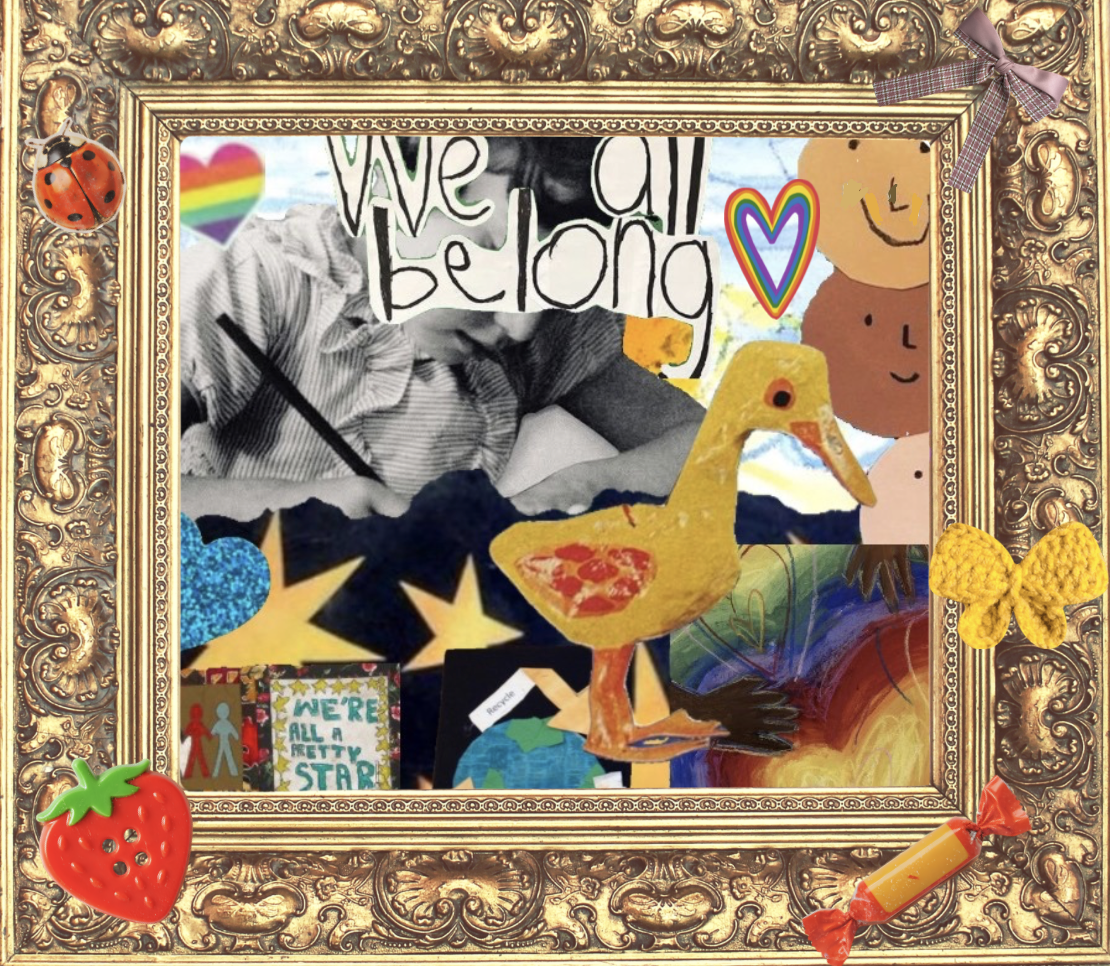
Sourced through Pinterest