What Success Leaves Behind: Inside the Soul of 'Merrily We Roll Along'
By Natalie McCarty
“Life is knowing what you want.”
But watching Merrily We Roll Along, I kept circling something heavier: What happens when the thing you want finally arrives, and you barely recognize yourself on the other side?

Still from Merrily We Roll Along (2025)
Long considered one of Sondheim’s most misunderstood works, Merrily has always carried the weight of promise and failure—both in its story and in its famously troubled original Broadway run.
Maria Friedman’s adaptation of the famously backward-told musical opens not with a bang, but with a fracture. A disjointed Hollywood living room. A party with too much gloss and not nearly enough soul. Franklin Shepard (Jonathan Groff), perfectly calibrated in charm and quiet self-delusion, sits at the center like a man orbiting the ruins of his own making. Around him hover the ghosts of old friendships: Mary Flynn (Lindsey Mendez), nursing bitterness and a drink, and the lingering mention of Charley Kringas (Daniel Radcliffe)—absent from the scene yet painfully present the moment his name surfaces.
How did we get here? The film’s first gift is that it asks the question before you even can.
And then it rewinds.
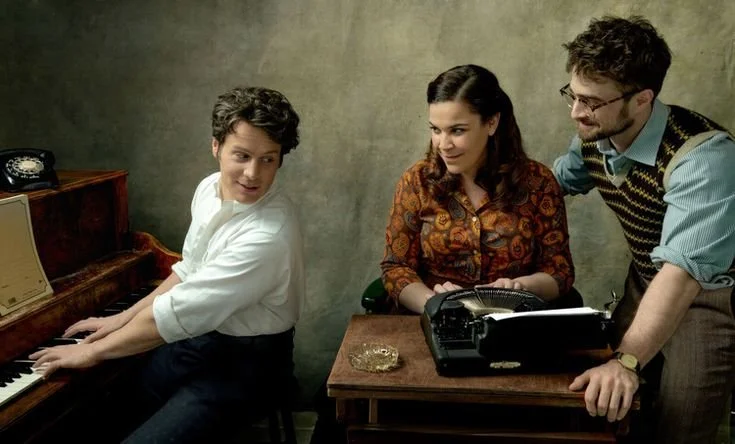
Image Courtesy of Vogue
Moving backwards through thirty years, each chapter peels away a layer of cynicism, revealing younger, hungrier versions of these people—versions they themselves can no longer see. In a movie musical, the reverse structure becomes the emotional engine. You don’t just watch them grow apart; you learn their closeness through the echoes of what’s coming. It’s a rare feeling: affection blooming in retrospect. And it worked quite well.
There’s something beautifully unfussy about how the film honors its Tony-winning stage origins. It still feels accessible, carrying that unmistakable Broadway glow… even if a few too many closeups flirt with trying a little too hard to “go cinematic.” And yet it still lands as wonderfully original, genuine in a way that gives the whole thing a pulse.
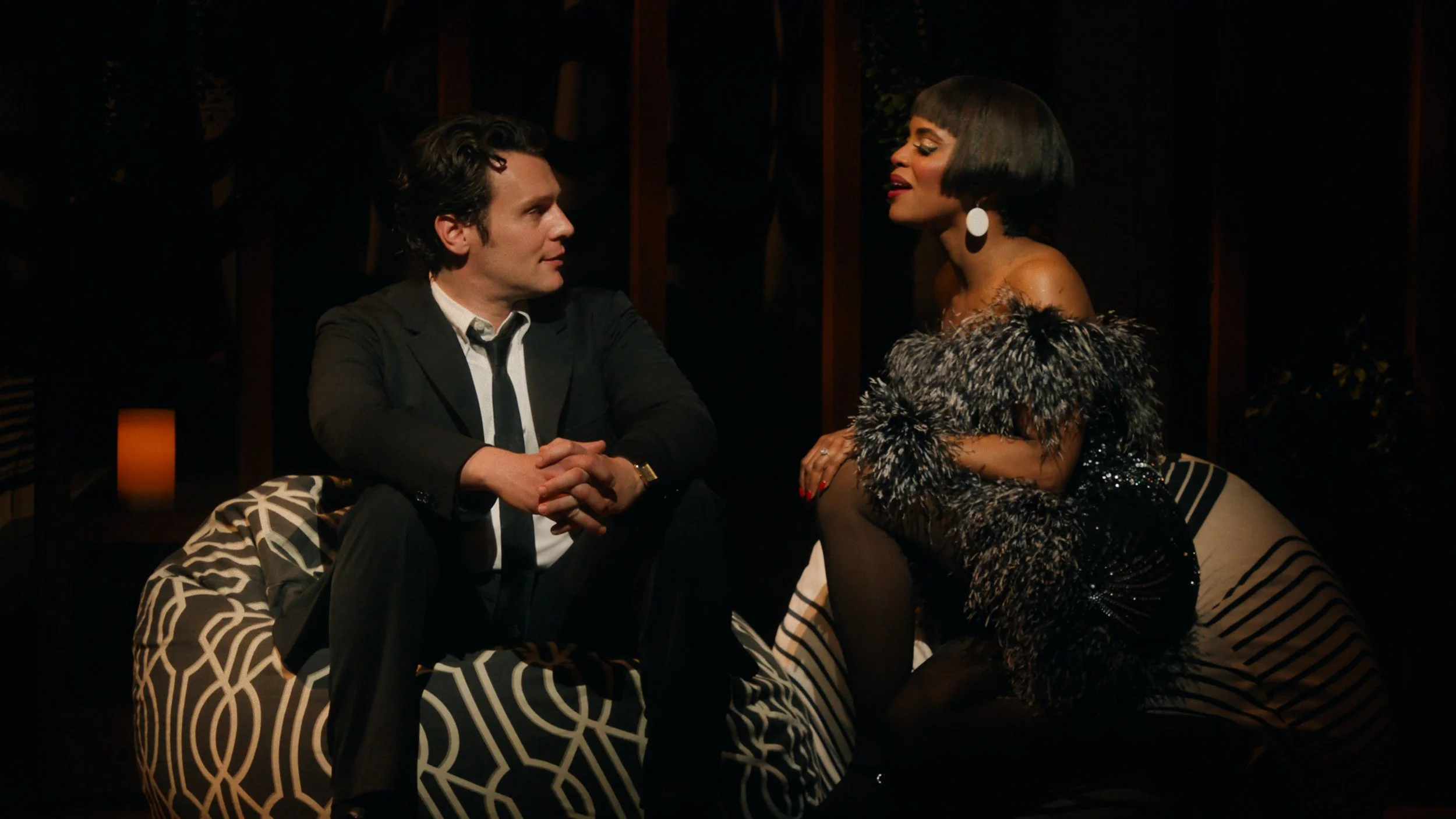
Image Credit: Sony Pictures Classics
Daniel Radcliffe is an absolute joy in this—funny, sharp, wounded in ways that sneak up on you. Groff feels almost inevitable in this role; he embodies Franklin’s contradictions without ever overplaying them. Krystal Joy Brown radiates every time she’s on screen, providing such nuance to each scene she touches. Lindsay Mendez has a few hit-or-miss beats, but when she hits, she adds so much gravity that you realize the story would collapse without her.
But underneath the performances is the film’s real sting: the slow erosion of idealism, the way time reshapes people who once shared a dream so fiercely. Watching them drift—first subtly, then catastrophically—I felt an ache I didn’t see coming. The younger versions of themselves are so full of absurd hope, creativity, and devotion. The older versions are worn down by compromise, success, money, and the messy human cost of wanting more.
It’s a trajectory I know too well, and one I didn’t expect to resonate with so deeply. The film captures that specific heartbreak of growing up in ambition’s shadow—of watching friendships bend, buckle, and sometimes break under the pressure of becoming who you thought you needed to be.
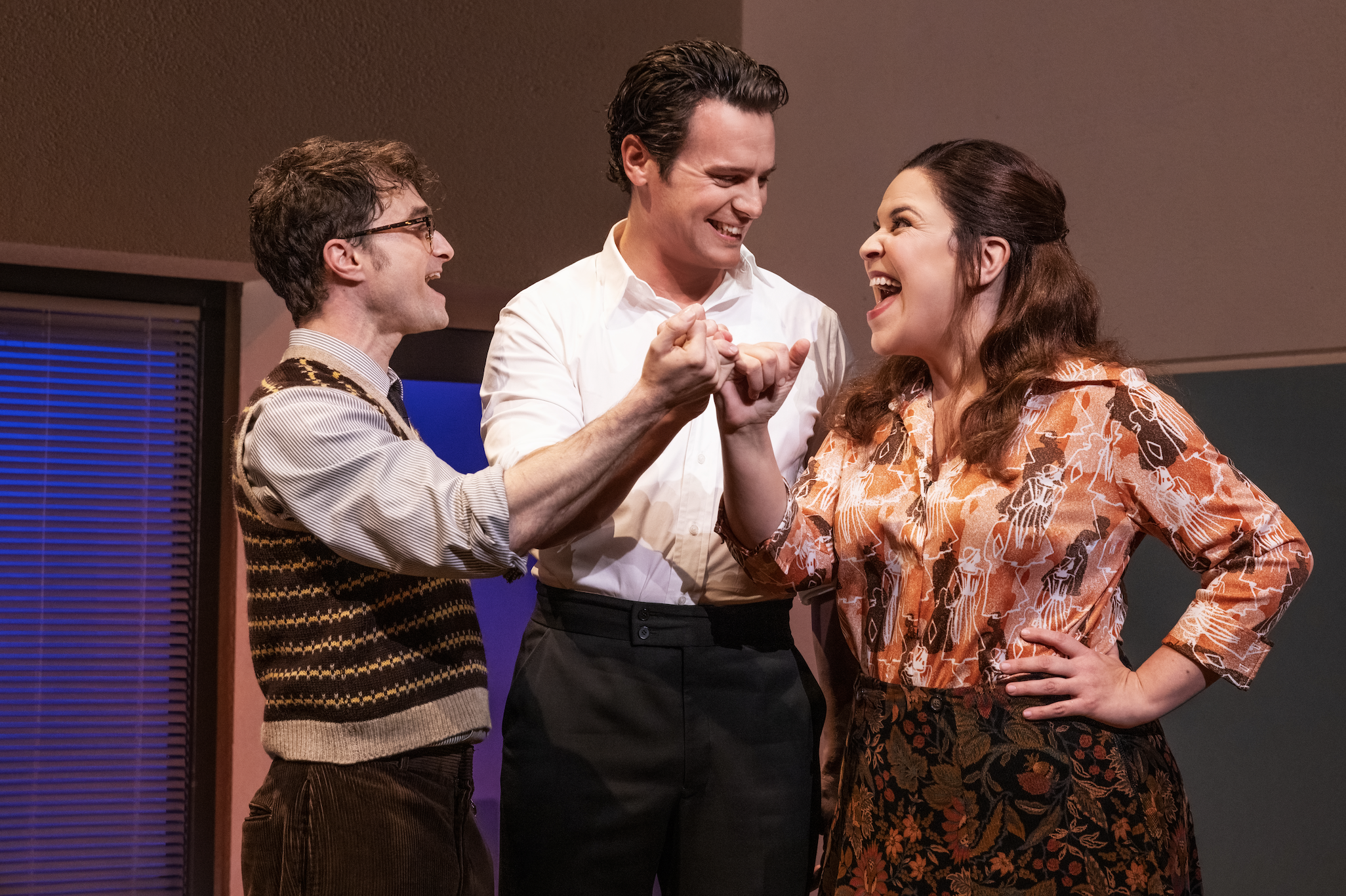
Image Credit: Sony Pictures Classics
Merrily We Roll Along isn’t flawless, but it’s full of heart, craft, and the uncomfortable truths that sneak up on you when you rewind your own life. It lingers not because it’s grand, but because it’s honest: success doesn’t necessarily ruin you. It simply reveals the trail of choices that got you there.
In the reverse, the film finds a truth most stories never reach: sometimes you only understand a life by walking backward through it.