The Theatricality of The Forest: How 'Hamnet' Brought Mysticism to The Screen
By Julia Krys
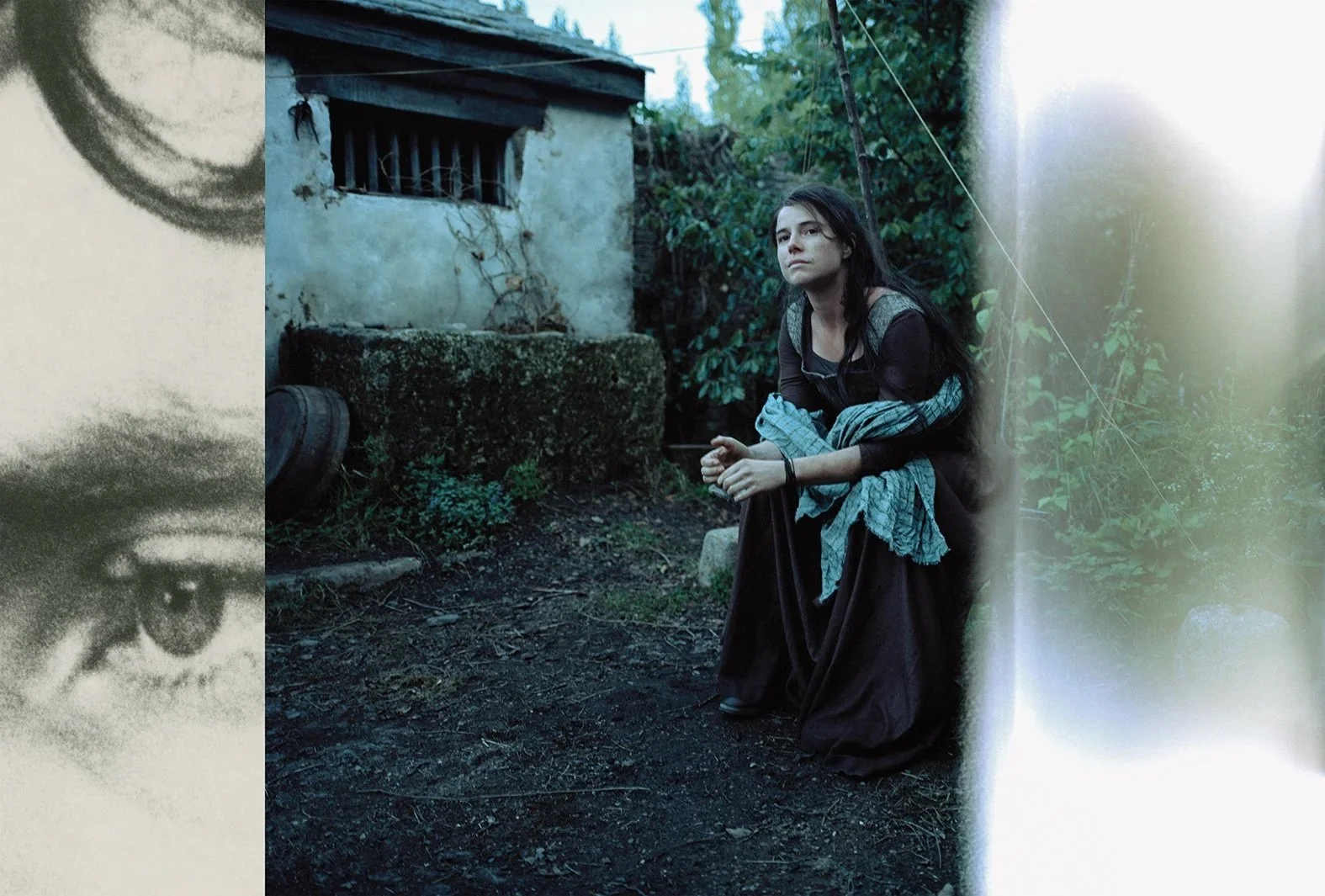
Image Courtesy of artnet; Jessie Buckley on the set of Hamnet
Agata Grzybowska, from Even as a Shadow, Even as a Dream (Mack, 2025). Photo: © Focus Features LLC. Courtesy of the artist, Focus Features LLC, and Mack.
Hamnet, adapted from Maggie O’Farrell’s 2020 novel of the same name, is an emotionally tumultuous portrait of how the loss of William Shakespeare and Anne (Agnes) Hathaway’s son transcended stage, book, and screen alike. Like any movie adapted from a book, it was difficult not to run mental side-by-side comparisons of how the original story differed. Oscar award–winning director Chloé Zhao took liberties that excelled and others that fell flat while translating a book full of deep internal grief into an external visual language. Most notably, she met the challenge of utilizing theatrical devices on the big screen.
When I read the book a few years ago, I remember thinking it was one of the most powerful pieces of historical fiction I had ever encountered. As a former theater kid and Shakespeare purist, it made more than enough sense that the most produced Shakespeare play of all time would be born out of the greatest pain imaginable — the loss of his own son.
Will’s wife, Agnes (played by Jessie Buckley), is an outcast in their town due to her association with “witch-like” behavior and affection for the forest. Her mystic capabilities evoke the same type of magic that Will (played by Paul Mescal) later translates onto the stage. The staging of the forest itself is one of the most powerful devices Zhao brings to life. Back in Shakespeare’s time, the forest was a dark, forbidden place. Its countercultural association with magic and taboo behavior is what made it so tantalizing to audiences. Magic and theatricality are closely related in the sense that they rely on audiences to see things that are not truly there in physical form.
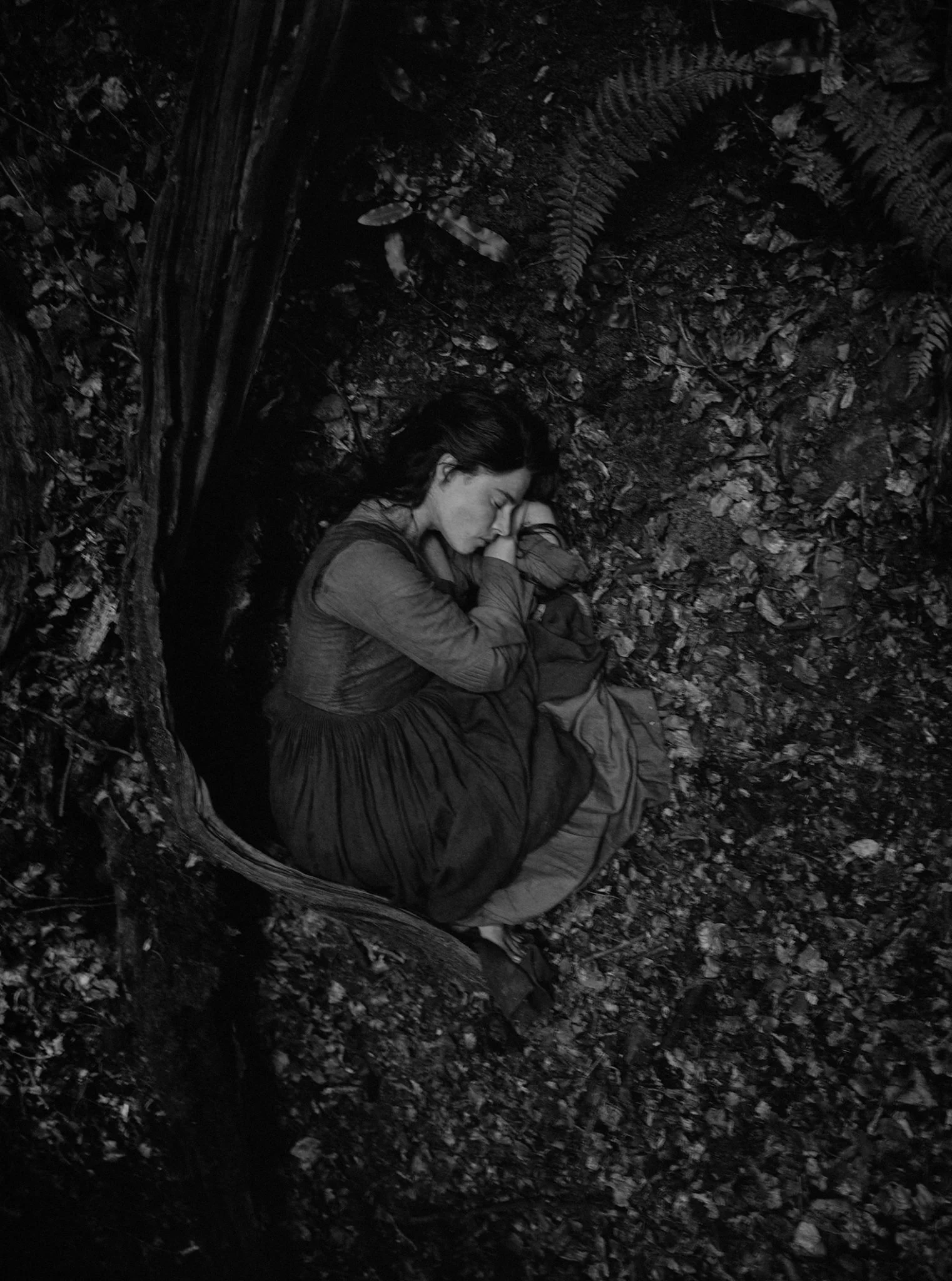
Image Courtesy of artnet; Jessie Buckley on the set of Hamnet
Agata Grzybowska, from Even as a Shadow, Even as a Dream (Mack, 2025). Photo: © Focus Features LLC. Courtesy of the artist, Focus Features LLC, and Mack.
Walking into the movie theater, I had questions about how Zhao could even begin to introduce the magical and mystical elements that were core to this story. This is where she excelled. There is no better director to imbue still moments with fullness and meaning, trusting the audience with a certain type of mystery. In staging theater, the tableau is of tremendous importance. Since sets generally remain static for the duration of scenes, it is paramount that all the storytelling elements be packed into a single image. Zhao understood this well and often began scenes with a wide shot, as though the camera was on the fourth wall for a long beat. Here is where the magic of theatricality thrived.
One of the most striking differences between the book and the movie was the structure. O’Farrell’s book switches back and forth between the family’s experience with the bubonic plague and the beginning of Agnes and Will’s love story. Zhao traded this in for a traditional three-act structure, complete with long blackouts as act breaks. At the end of Act I, Agnes gives birth to twins: Hamnet (played by Jacobi Jupe) and Judith (played by Olivia Lynes). Act II begins with them impersonating one another — perfectly introducing the next theatrical device: doubles.
In Shakespeare’s time, with small casts of players, it was common for one performer to play multiple parts. Moreover, in Shakespeare’s works, there are many instances of characters going under disguise or impersonating one another — a secret they kept from the audience. Hamnet and his sister Judith trade places with one another in life, just as they do in death. As Judith falls ill, Hamnet commands her to trade places with him, so he becomes the one to die. This story duplicates onstage when Will trades places with his son in Hamlet. Will embodies the ghost of Hamlet’s father.
Though these elements were already baked into O’Farrell’s book, the most powerful visual duplicate that Zhao envisioned is a mystical one. There are several scenes in the forest where Agnes lies beside a root-framed hole beneath a tree. Will recreates this chasm as a center-stage entrance/exit through a backdrop of woods. After Hamnet’s death, it becomes the representation of a liminal entrance/exit space — crossing over to the black abyss of death.
What Zhao understood and facilitated in the book’s journey to the screen is that O’Farrell imagined a life for Shakespeare that mirrored each theatrical convention he established through his body of work. He had twin children and made doubles a key literary device. He married a mystical woman who loved the forest, and he depicted the forest over and over in his work.
Although certain subplots from the book were cut for time, some of the creative additions in turn did not feel justified. The point at which Zhao’s liberties lost sight of O’Farrell’s original text was in Act III. In the book, O’Farrell hardly showed us Shakespeare’s life in London. If she did, it was in brief flashes where we learned key information, like the fact that he began to engage in promiscuous relationships after Hamnet’s death. Yet on screen, that plotline was cut. This veered away from Agnes’ original depiction as a misused muse; the woman who will always live in the shadows, giving birth to the ideas Will would bring to the stage. But to Zhao, Will’s character remained a heroic father-figure and tortured artist. To this end, we sat with him for longer, brooding as he recited an excerpt of his iconic “To be, or not to be” monologue. This scene was most frustrating to me because it left Zhao’s original visual language behind, pulling focus from Agnes simply so the audience could indulge in Mescal’s iteration of that monologue.
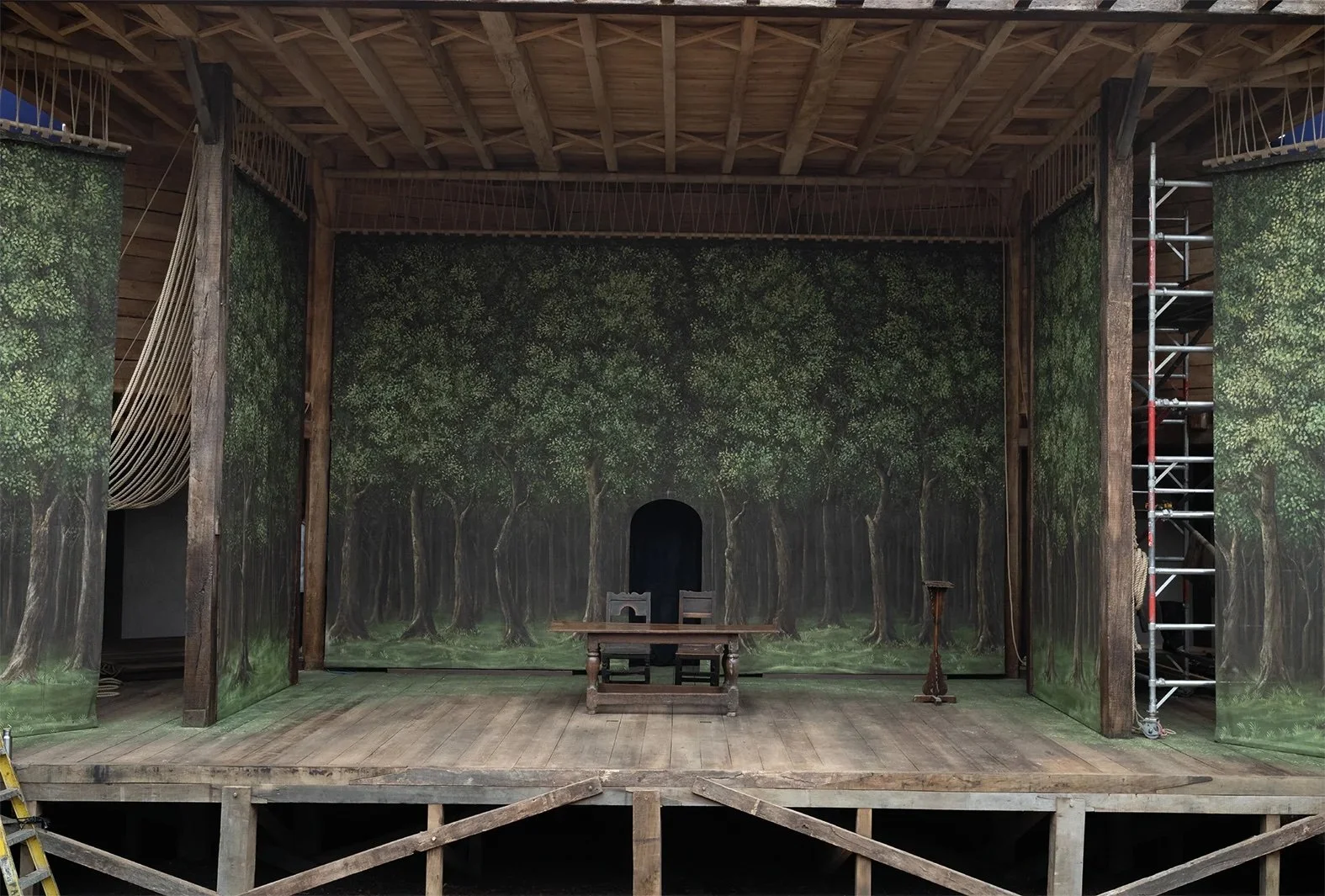
Image Courtesy of artnet; The Globe Theater stage in Hamnet
Agata Grzybowska, from Even as a Shadow, Even as a Dream (Mack, 2025). Photo: © Focus Features LLC. Courtesy of the artist, Focus Features LLC, and Mack.
This sense of indulgence extended to the performance of Hamlet at the finale of the movie. Though Zhao honored so many theatrical conventions up until this point, they were completely abandoned once actors were placed on a stage. The actors whispered to each other, face to face, absolutely relying on the presence of the camera and disregarding a space full of theater-goers. These were moments of “Hollywood treatment” that left me irked, and even surprised to see O’Farrell’s involvement in the credits.
Despite these slightly off-putting choices to a complete Shakespeare nerd such as myself, the movie stayed true to its namesake: Hamnet. The audience was taken through a lyrical journey of before, during, and after Hamnet’s time on Earth, all guided by the mystic principles of theater and the forest. The film lets us walk the narrow path between myth and memory, following grief as it shapes art across centuries. For all the liberties taken, one truth endures: Agnes remains the biggest mystery between Shakespeare’s verses. Hamnet is a testament to the creation of art out of despair. Art that can be reimagined hundreds of years later.