
Why the Loneliness Epidemic and Loss of Third Spaces Is Driving Gen Z Men to Catholic Mass
By Stella Speridon-Violet
For years, we’ve been asking where all the good men went.
Turns out, some of them are at church.
Sourced Through Pinterest
Not in a childhood, dragged-there-by-their-mom way. Not in a “finding God after doing psychedelics once” kind of way either. No, the modern Gen Z man is showing up to Catholic Mass like it’s a weekly therapy appointment.
And I guess it could be worse… well, not quite.
For a generation that won’t shut up about the death of third spaces, we’ve done a pretty impressive job of not replacing them. Coffee shops are overcrowded by performative matcha drinkers, bars feel financially irresponsible, and dating apps lead you to some frat guy’s bedroom. Everything is either too expensive, too performative, or too detached to actually foster connection.
So people improvise.
And some men, instead of waiting for a new kind of third space to emerge, are just returning to one of the oldest ones we have: the Catholic Church.
Not out of pure devotion, but out of something arguably more human: wanting somewhere to go to meet other people.
While it’s easy to joke about, the reality is: Gen Z men are lonely. The kind that builds when your social life is mediated through apps, your friendships lack deep understanding, and there’s no consistent place where you’re expected to show up and be seen.
And suddenly, the church starts to look less like a religious decision and more like a social obligation.
There’s a reason for that.
For a lot of people, church was their first third space. As a child this was the first time, even before beginning school, where we could interact with strangers and make connections.
That kind of environment barely exists anymore.
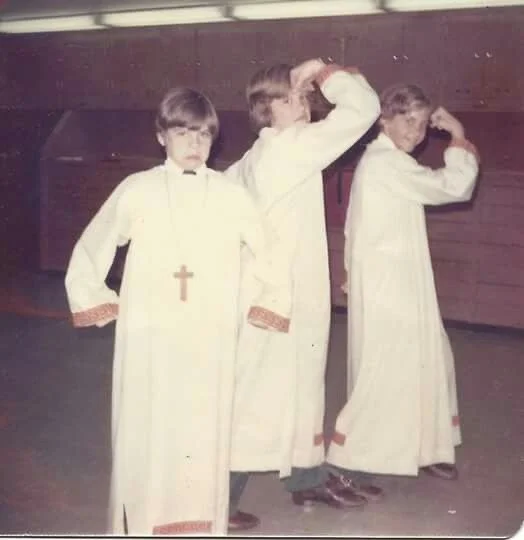
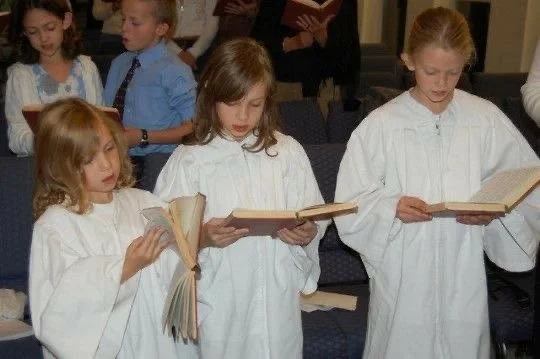
As a former Catholic myself, I regularly shook the hands of perfect strangers on Sunday morning and sneaked away to hang out with my altar boy crush after service.
Sourced Through Pinterest
It offers something that modern life doesn’t have anymore: built-in community.
And that’s exactly what a lot of these men are desperate for.
At many parishes now, it’s not just about attending Mass. It’s the ecosystem around it, the weekly group events and dinners that make a person feel socially fulfilled in a sense.
It’s kind of like Bumble (BFF and dating) but with more incense and an old priest, which, in 2026, is kind of endearing in a “let’s touch grass” kind of way.
What’s interesting, though, is why Catholicism specifically is resonating in this moment over other forms of Christianity.
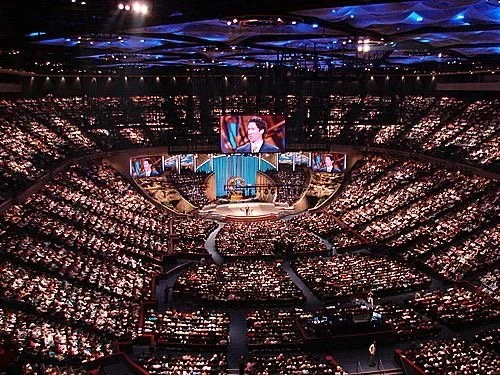
Well, it seems in recent years, youthful Christian churches have become less about church and more about aesthetic Instagram posts and, dare I say, politics. Yes, I am looking at you, Turning Point USA! But I’m sorry, it’s weird that the Church is selling overpriced caffeinated drinks and snacks for a long service about why our president is akin to Jesus Christ while guitars play and strobe lights blind the audience.
Sourced Through Pinterest
Catholicism, on the other hand, hasn’t really changed.
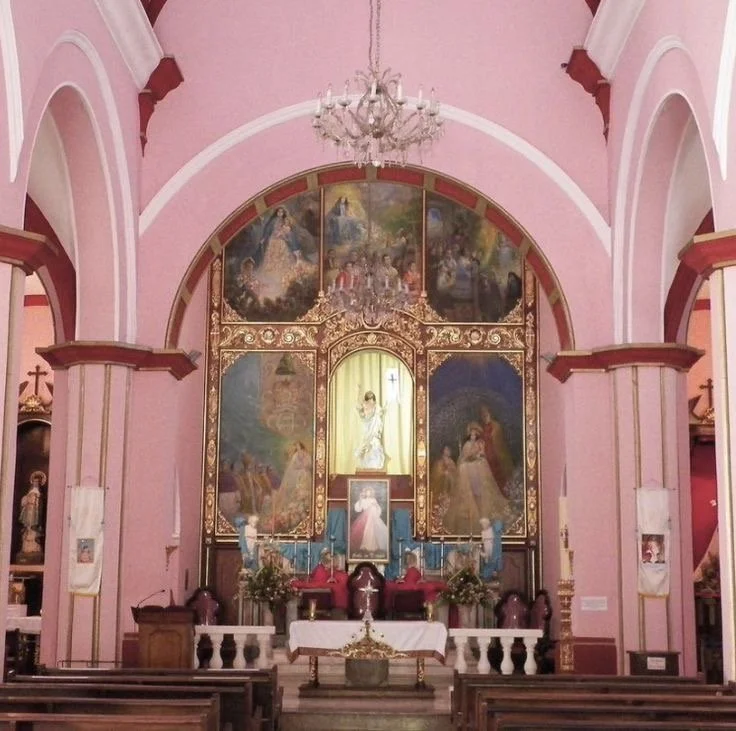
It’s always been ritualistic. It’s rooted in symbolism and structure. Lined with traditional aesthetics: candles, stained glass, and hymns that won’t go viral on YouTube Shorts. Whether you believe in it or not, it offers something that feels physically and emotionally grounded.
And for a generation raised almost entirely online, that kind of tangible experience is rare.
But let’s not pretend this shift is purely about spirituality! Because, alongside this return to ritual, there’s been a parallel rise in something more ideological, the romanticization of tradition. The soft focus of the resurgence of gender roles and the “trad wife” aesthetic is creeping back into the cultural imagination, rebranded as simplicity, femininity, and order.
Much like a cult, it’s subtle at first.
Simply just a preference for structure, a desire for clarity in relationships, an appreciation for defined roles. But zoom out, and it starts to look less like a personal choice and more like a prison.
While some young men are moving toward institutions that offer hierarchy, discipline, and a clearly defined sense of purpose, many young women are moving away from those same structures, questioning their limitations, their history, and who they were actually designed to serve.
So you end up with this almost invisible tension: Men are seeking systems that promise order, while women are questioning systems that once enforced it.
It’s less of a religious revival and more of a cultural divergence—and that’s where lines become blurred, and things become as uncomfortable as Sunday mass.
Because while it’s easy to frame this as harmless, men going to church, making friends, finding community, there’s also something slightly regressive about the conditions that make it so appealing. When modern life becomes too ambiguous and disconnected, the appeal of something rigid and traditional feels comforting, even if it means reaching backward.
And yet, despite all of this, it is working. At least in one very specific way.
The church is technically functioning as a third space again. A place where people can show up consistently, interact without their phones, flirt without pretense, and exist without the constant pressure to perform.
Sourced Through Pinterest
So while some people my age are finding solace in attending Sunday service, it’s important to ask the right questions.
Instead of asking what it says about religion, it might be more interesting to ask what it says about everything else.
Because if young men are turning to institutions like the Catholic Church not just for belief, but for structure, community, and direction, then the issue probably isn’t that they’re suddenly more religious.