A 'Good Guy with a Gun!' Wants You to Talk to Your Neighbor
By CG Morand
Los Angeles— Good Guy with a Gun! follows the story of an NRA lobbyist, Ron, played by Chris Sullivan, and his liberal daughter, Jenna, played by Kimiko Glenn, who have been given the ultimate gift by God in today’s political climate: the ability to make everyone agree with their political views. While this concept album has been in development for a decade, the subject matter is more relevant than ever.
Created by Philip Labes and Micah O’Konis, and executive produced by Hal Rosenfeld, the album gives audiences “the Broadway experience without a Broadway ticket!” says Labes before the show. “Tonally, it’s like the Book of Mormon for the NRA,” he elaborates.
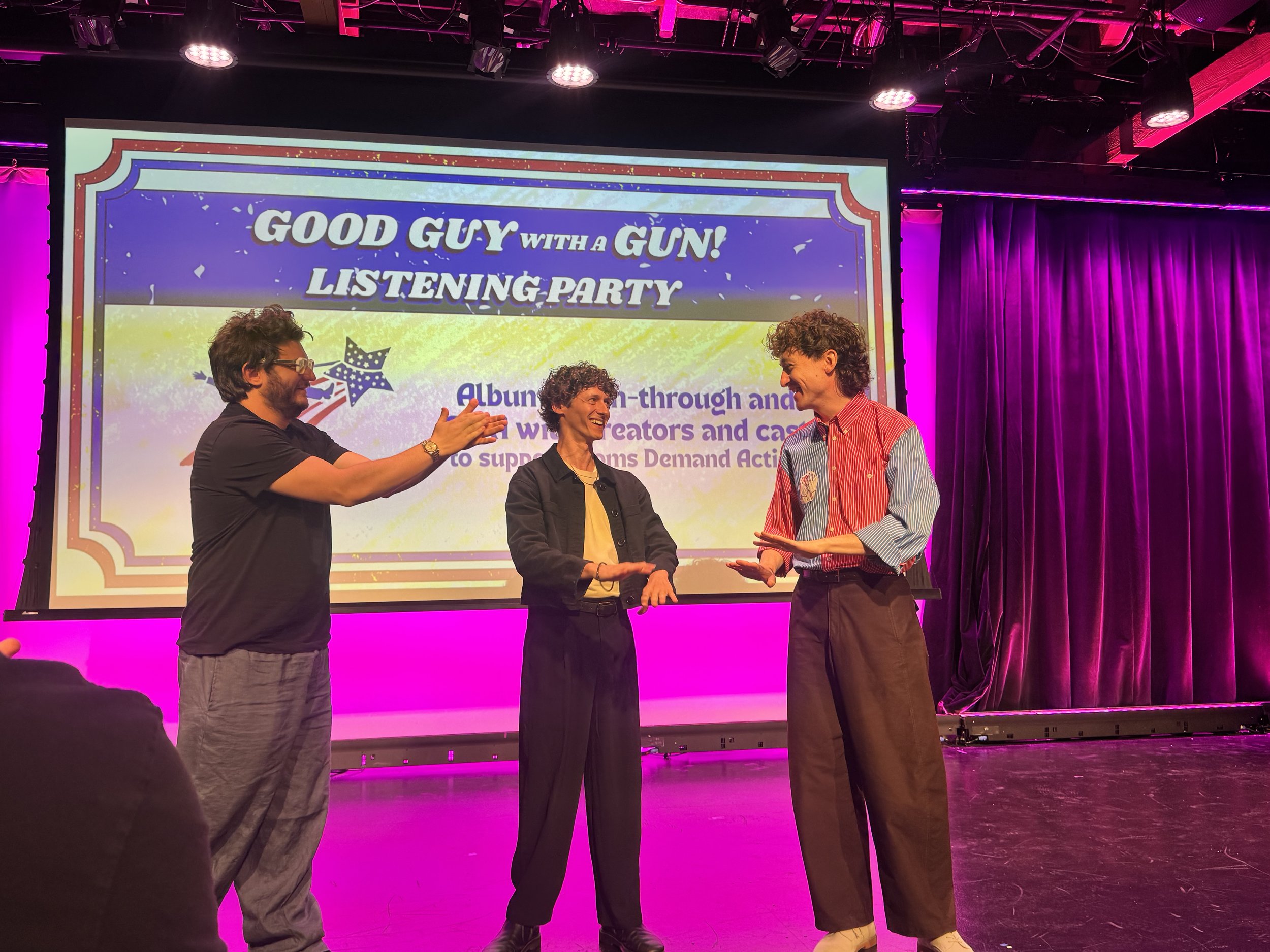
The album illustrates to its audience what our political discourse has come to: shameless isolation and making every issue black and white. “So much of our political discourse is defined by everyone’s ego being tied into the performance of ‘rightness’,” says Labes, “they have all the correct opinions. There can’t be any education or meeting people where they are.”
People have lost interest in the ability to converse with those who do not completely agree with them. This limitation does not allow for people to reach across the aisle and listen to other thoughts or opinions. As a result, American politics are at a standstill, and American politicians have capitalized on this increasing divide to continuously blame the other party for the country’s problems. “The American populace is tired of politics in moderation. We are living in an age where people feel extremely upset, so they are looking for extreme solutions,” says Labes.
While Labes and O’Konis do not have the solution to this problem, they hope that through their music they can open up the conversation and “give a model for another way to be,” says O’Konis.
That openness is not only imbued in what Labes and O’Konis are trying to say, but in how they choose to say it. Good Guy With A Gun is, after all, a comedy. In talking about polarizing topics in this country (especially gun control), humor offers a way to approach these politically charged topics that audiences might otherwise be quick to shut down.
In the world of Good Guy With A Gun, the 2nd Amendment is abolished. The idea of abolishing an amendment at all in America can seem unfathomable. We have a rich history of adding amendments, because apparently our nation’s instinct is, “yes, and?” However, underneath the jokes and the satirizing of conservatives and liberal ideology, is an attempt to get audiences to make room for conversations they may otherwise dismiss, and that is where comedy becomes a dynamic tool.
“I think putting that message in comedy is like putting your dog's pills inside peanut butter; people will digest it better,” adds Rosenfeld.
Through songs like Do the Lobby, a swinging jazz number, Liberal Love, a pop track, and the title track, Good Guy with a Gun, a western-inspired number, the show moves between genres as easily as it moves between comedy, satire, and political commentary.
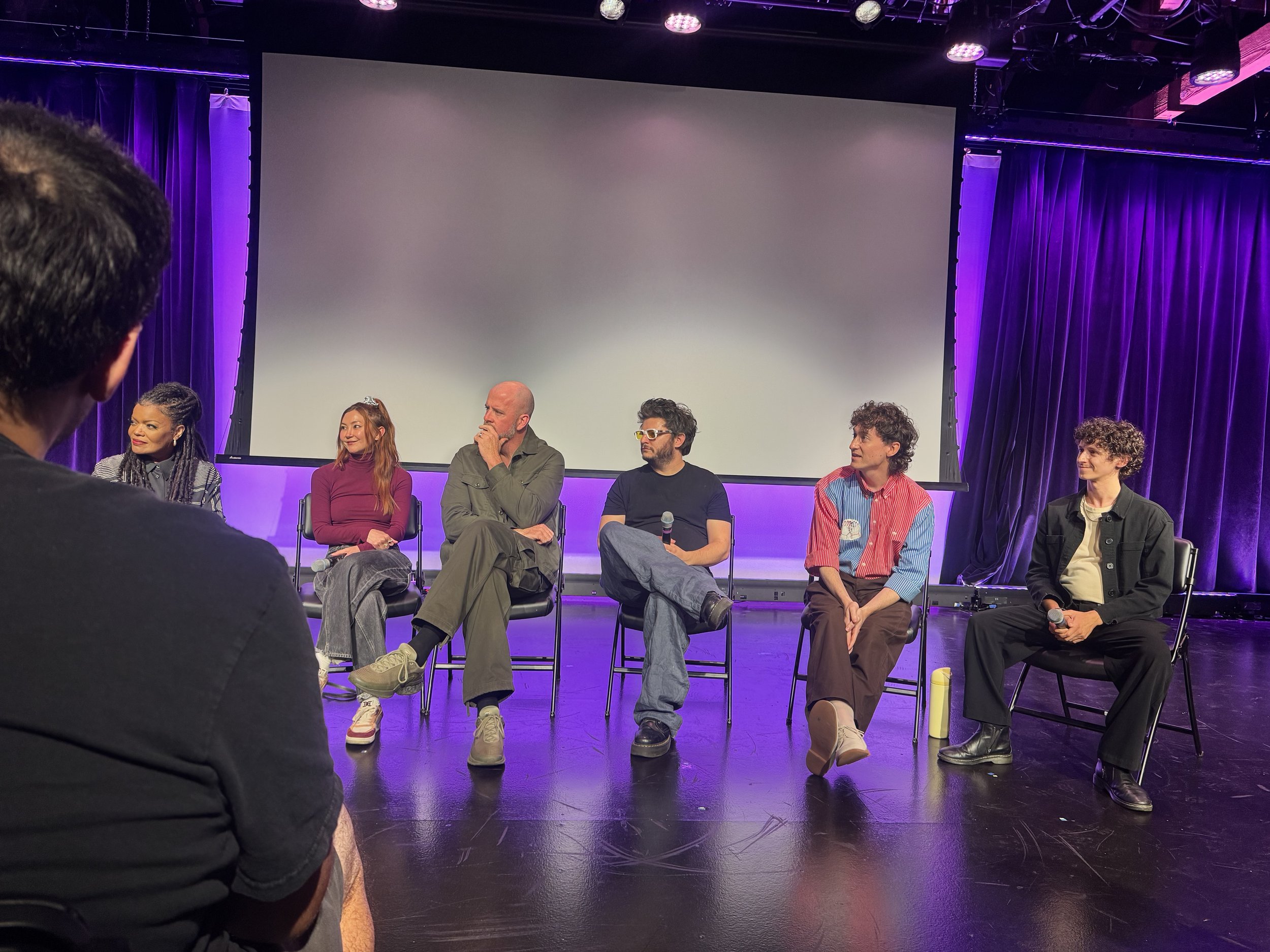
But the show is not just a comedy, and it is not just a musical. “There is a sci-fi fantasy magical element to it,” says O’Konis. We see this when Ron is gifted a magical gun, by God, of course, that will make anyone agree with his political view. On the opposite side of the coin, Jenna is gifted a magic megaphone, again by the Big Guy in the sky, that will make anyone agree with her political views. While both characters are given the same power, the show plays with what happens when the ability to even have a conversation feels impracticable and pointless.
People may think they want others to agree with them, but without substance or depth, no change can actually happen. Everybody is impacted by politics, yet so many people have become closed off to the conversations that shape their lives. Good Guy With A Gun asks its audience to lower their guard and consider the possibilities of engaging with ideas that pique their interest. “There are so many sci-fi stories about how horrible things can get. It’s nice to imagine a fantasy about how wonderful things can be,” says Labes.
At the center of the story, there is a father-daughter relationship. One that feels relatable to every audience member listening to this album somewhere in the politically fraught United States. Whether it’s a parent, a neighbor, an uncle, it seems that everybody has a family member on the other side of the political spectrum. In grounding this story in a relationship that exists outside political beliefs, the audience is reminded that the people we disagree with are, at the end of the day, still people. Politics may open up the conversation, but people and our relationships are what make it matter.
“The story is talking about politics,” says Rosenfeld, “but really it’s focused on the personal and family element of it.”
And perhaps that is what makes this story truly American. In a country where Thanksgiving can turn into a debate stage, the people sitting across from us are still family.