The Importance of Critically Engaging with Fashion
By Audrey Treon
For my 15th birthday, I was gifted a Vogue subscription from my maternal grandparents. I even got the seasonal tote bag, which meant I felt even cooler carrying my laptop to a coffee shop to get homework done. Each month I got excited when I found my name peeking out from the pile of mail that sat on my kitchen counter—a fashion magazine, addressed to little old me. That same birthday, I was given a small library of books covering everything from iconic designers, sewing and mending techniques, the history of the skirt, and the legacy of J.Crew.
That birthday marked the time in my life when I started to immerse myself in all things fashion. Monday through Friday, I woke up at 6:00 am for the optimal time to pick out an outrageously eccentric outfit—think a polka-dot blouse paired with a plaid skirt, fishnet stockings, thigh-high rain boots, and a beret to top it all off. My wake-up call also left time for thick eyeliner to be applied and pigtails to be braided. My daily uniform, or as I like to call it, costume, deepened my adoration for and understanding of fashion. Every early morning spent rifling through my closet and putting pigment on my face and hair ties in my hair was a morning spent learning about myself and the world and culture around me. I learned what I liked and what I didn’t, what other people liked and what they didn’t. I learned how fashion can bring people together; I remember hugging a stranger during passing period because she told me she loved my outfit. I learned how fashion can move people even further apart; I remember seeing a stranger scoff and laugh at my outfit during that same passing period. I spent my evenings geeking out over costume design in my favorite television shows and movies and bookmarking my growing library.
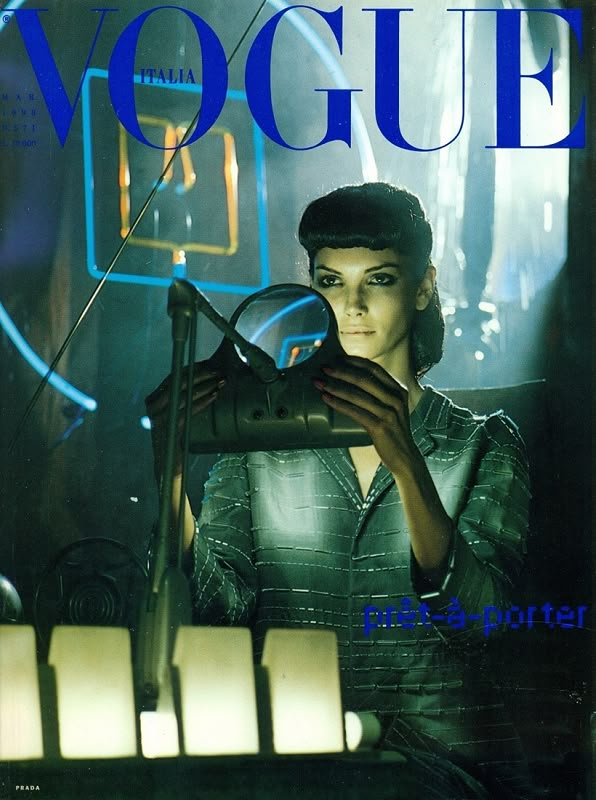
Vogue Italia, March 1998; Photographed by Steven Meisel
For me, fashion is an art form, a business, a personal exploration, a communal experience, and a way to engage with life. But for the masses, myself included, fashion can begin to seem trivial, even frustrating when confronted with just two options: cheap, fast fashion garments that fall apart after one wash or designer garments that cost more than the average person’s monthly rent. Despite this, fashion is so much more than just two extreme ends of the spectrum. Fashion, like any other art form and sociological practice, necessitates critical engagement at all levels.
I really, really, really disliked Demna’s tenure at Balenciaga. To me, his collections were vain, both self-indulgent and self-referential, lacking inspiration, billionaire-obsessed, and overtly post-apocalyptic fetishist. That said, I appreciate what his work meant for the cultural zeitgeist. His work inspired critique and response—good, bad, and everything in between—that matters. Fashion at its worst and best incites a reaction.
Critical engagement doesn’t require a person to become a critic or scholar in the subject; it doesn’t require a person to devote their life to something. Critical engagement with fashion and art at large is a chance to grow an appreciation and understanding. To appreciate something does not mean to love, or even like something. I don’t like most minimalist paintings, but I do appreciate what minimalism meant in the broader context of the modern art movement and how it let artists express themselves in new ways.
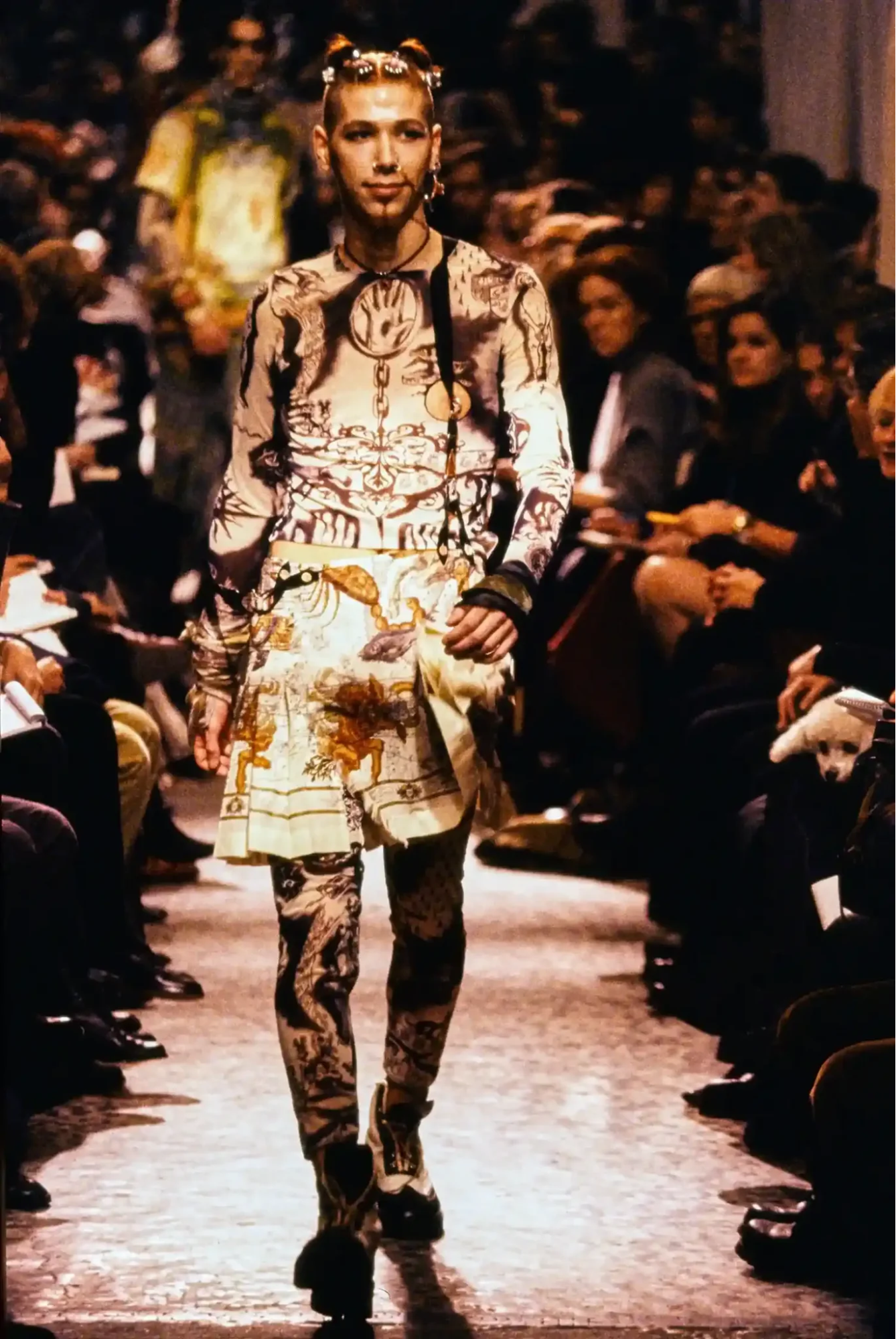
Jean Paul Gaultier Spring 1994 Ready-to-Wear; Photo courtesy of Condé Nast Archive
To critically engage with fashion means that one should see fashion as living, breathing history and an ever-expanding cultural marker. Fashion at large is a reflection of personal taste, societal expectations, tradition, cultural attitudes, and more. From what people wear to Paris Fashion Week to what people wear to the grocery store, the clothes a person wears indicate taste on the micro and macro level. Every level, every spot on the spectrum, every existence that interacts with fashion, is deserving of thought and engagement.
Once a sophomore in high school—simultaneously insecure and bold, like most high schoolers—I now know that those birthday gifts shaped my mind and future. I still feel incredibly cool going to my favorite coffee shop to analyze and write about fashion, but I feel infinitely cooler knowing just how much fashion has enriched my life.