Momo Yamaguchi on 'Hello, Limerence' and Complex Women
By Alivia Stonier
In a world filled with situationships and even more of your time filled with the corporate crime of work, it can be very difficult in your early 20s and adulthood in general to feel the connection that many of us crave, despite being arguably more connected on the internet than ever.
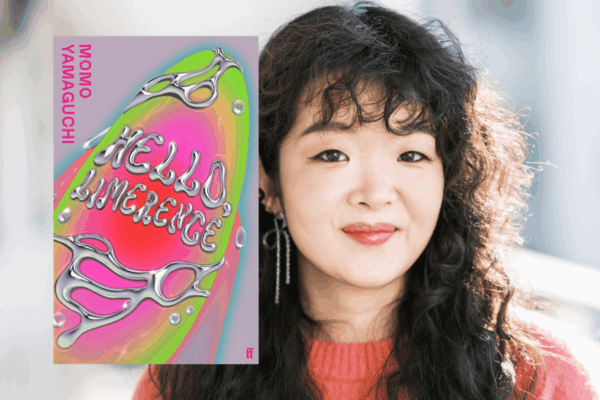
Momo Yamaguchi explores these very topics and how this loneliness can intersect with obsession in her debut novel, Hello, Limerence. A novel that stems from her short story entitled “Butter Dreams” leads to a more fleshed-out narrative.
For those unfamiliar, limerence is defined as “an intense, involuntary state of romantic obsession and emotional dependence on another person, often marked by intrusive thoughts and a desperate desire to have your feelings returned.”
Buzz Magazine
The novel follows Mika, a woman who is living in Asia and is desperate for connection, going to party after party with her supposed best friend, only to meet a man who is interested in her at the beach named Tyler. Quickly, Mika becomes obsessed, wanting to spend every moment with him that she can, but there is much more to the character than just this, as she also is coping with a toxic work environment and a need for support through being a daydreamer and allowing her imagination to run wild to get her frustrations out. Mika is three-dimensional far beyond her desire for love, and it instead reveals a deeper coping mechanism.
“I wanted her voice to be very funny, crude, and interesting, even if you didn't necessarily agree with her life choices or find her likeable. My favorite authors are ones where you could open the book to a random page without even looking at the cover but still be able to identify them because their voice is just that distinctive—like Samantha Irby, Junot Diaz, Fran Lebowitz, and Japanese authors like Mieko Kawakami, Aiko Sato, and Hideo Okuda. I definitely drew a lot of inspiration from them in creating a unique voice for Mika.” Yamaguchi fondly shared about her main character.
When speaking about how the title for the novel came about, especially since limerence is particularly characterized by being very intense, the author revealed that it wasn't an immediate choice.
“I didn't actually come up with the title until I finished writing the book. I came across the word “limerence” in a news article and immediately recognized it as what the main character was experiencing. While I want to be cautious of overusing or applying psychological terms inaccurately, like we tend to do with therapy speak, Mika's experiences go a little beyond that of a typical crush. It made sense to write the book through the lens of limerence, because her obsessive fantasies are a coping mechanism for every area of her life that she’s dissatisfied with, be it professional, social, or romantic. Limerence is how she finds escape and joy.”
The project speaks to a feeling that a lot of women go through in modern dating, outside of the aspect of limerence, in the way the main character Mika is treated by her love interest Tyler. I wondered why the author felt that a situationship was important to specifically explore when featuring her characters' struggles.
“Having a crush is a totally universal experience, [no matter how] old you are or where you're from. When you’re younger, you often feel like no one else could possibly understand how you feel or what you’re dealing with. Hormones and shit, with a touch of youthful arrogance. But if you watch shows like “Sex and the City,’’ which aired decades ago, or even books from hundreds of years ago, you'll find that dating has always been a horrendous ordeal. Just knowing about the universality of those feelings is very comforting. Hopefully, this book has a similar effect for readers who are either crushing hard right now or have been through it, to help them feel a little less crazy and alone in the world. Like hey girl, I see you! It’s going to be okay. Yes, we can, circa Obama 2008.”
She expanded, “She's very self-aware in the way that any girl growing up in a patriarchal society is, whether that's Japan or the States or basically any country, but she still can't stop herself from wanting the things that she knows society expects her to want and strive for, be it physical beauty or romantic love. I mentioned this in another interview, but it's like that Margaret Atwood quote that used to do rounds on Tumblr, about the man inside the woman watching the woman at all times; Mika is constantly surveilling herself under the male gaze and is aware of this, but still does it anyway because she's so hungry for love.”
“With regard to dealing with limerence, a pros and cons list always helps. A second tip would be to date a lot of people at the same time and just ho out. I read somewhere that a crush is just a lack of information, so you have to gather up that data in order to make an informed decision! And of course, doing an audit of your life so you can actively make an effort to fix aspects of your life that maybe you’re not 100% happy with, and taking the time to invest in yourself and your relationships with family and friends is the best antidote of all.”
Yamaguchi shared when speaking her thoughts on how people can empower themselves to stay away from these types of dynamics.
“Limerence can’t always be traced to a root issue, like daddy issues, but it’s likely the case that people who are more prone to this are dissatisfied with their lives in some way. In Mika’s case, limerence is a reprieve from the demands of her everyday life, and how she finds escape and joy… [it] is as much about your current state of being as it is about the other person. If the majority of your interactions with them are in your head than in person, it might have something to do with knowing that you’re not the idealized version of yourself yet and wanting to stay safe in your fantasies, than face the pain of being rejected for your true self in real life.”
The novel becomes less about another person for Mika as it progresses and instead also focuses on the version of ourselves we become when we get wrapped up in longing and how our sense of identity can warp, instead becoming a very personal mirror. I asked about the difference for the author between desire and romance being the focus behind these connections in the novel.
“I think especially when you’re younger, you tend to conflate one with the other, or in plainer terms, believe that the physical stuff will lead to the emotional stuff eventually. Mika is a late bloomer who’s not been inoculated to the perils of modern dating, so in the book, you see her journey of slowly figuring this out for herself.”
However, the writer also spoke to how not only the romantic relationships but also the decline of the platonic ones exacerbate the mental health issues for her main character.
“The friendship between Mika and Nana is a very common dynamic in friendships between younger women—a sort of frenemy, but there's still a real, lingering affection. Nana isn’t always the best friend to her, but Mika also projects a lot of her own insecurities onto her, which isn't Nana's fault. Her dissatisfaction with the quality of her friendship with Nana is likely one of the factors driving her extreme dependency and desire for romantic attention as an alternative source of external validation. It’s very normal to outgrow some friendships as you grow older, and I wanted to depict the specific tensions and heartbreak that come with that.”
Many recent novels ask whether loneliness is an individual problem or something society creates. The author shared where she believes Hello, Limerence lands on that question.
“Corporate culture definitely factors into it, because if you're working from nine to 11 pm or three am or whatever for five days a week, it’s almost impossible to build a meaningful life for yourself outside of that. And even if you're spending all this time with your co-workers, your co-workers are not your friends, so there's a distinct separation and loneliness there as well. There are unique aspects of Japanese corporate culture in that pulling overtime and drinking with your co-workers and clients after work is very normalized, whereas that's probably not as common in the States because of driving. But mild cultural differences aside, capitalism is the same everywhere. It obviously has deleterious effects on your personal life if work eats up so much of your life, and the transactional nature of modern dating can only compound the loneliness. That said, I knew people who moonlit as DJs and played at clubs until morning while still working full-time corporate jobs, so a more introverted personality like Mika’s paired with late-stage capitalism is a pretty fatalistic combination.”
Women in literature are often written as the objects of desire rather than the narrators of it. Due to the way that women are often characterized, we talked about the importance of portraying female characters' desires even when it becomes awkward or intense and at times humorous, without trying to make the characters more acceptable.
“I grew up with a love for shoujo manga and romance novels, which always feature a female narrator, so I never really questioned the validity of female desire. Women can be just as gross, weird, and horny as men! Feminism, baby.”
“I love an unreliable narrator, so the varying types of form that break from the narration act as a sort of funhouse mirror in that they reveal different aspects of Mika, even if it’s still from her point of view. Mika’s voice is also crucial, in that she had to be funny and interesting, even if you didn’t necessarily agree with her life choices or like her.”
Shame seems to hover over many of Mika's experiences. I wondered how this emotion played specifically into the development of this character. “Being a virgin is still seen as a positive for women, while it’s generally the opposite for men. Even so, after a certain age, being a virgin has some stigma for women too–people wanna know why, and what’s wrong with you? There’s a lot of shame in carrying that secret, and you see this with Mika, especially in the first half of the novel. However, Mika is a complicated woman, as Emily Wilson might say, vacillating between shame and delusional self-confidence the next.” Momo explained.
Despite the very deep emotions being explored that in a lot of ways, are not positive across the book, there is still a lot of humor; even in the painful moments, when talking about the balance between comedy and pain, an amazing point arose.
“It’s how Mika compartmentalizes, since she’s self-aware to an extent—if it’s funny, then it wasn’t so bad after all, right? Humor distracts both the narrator and the reader from the depth of her feelings. I also think it’s more palatable, not to mention effective, than having straight-up misery on every page, because as a reader, you can pick out what’s not being said in those moments of humor.”
But through escapism, the author shared her thoughts on if it is self-protective or dangerous. “It can be both at the same time, in parallel. A crush can be like a little treat, an iced latte, that gets you through a shitty work day or a rough time in your life. But it becomes harmful if it’s just all in your head, and it’s preventing you from actually living your life out loud. You gotta give others the chance to love you.”
Despite following Mika, who is at an age that could be considered coming of age, the author rejected this formula for showing people navigating early adulthood, which added layers to the character.
“People don’t really change after a certain age. Like Larry David said, “No hugging, no learning.” I tried several versions of the ending, but I returned to my original version in the end; it just had to end that way. It makes sense that the main character is also going to be a late bloomer in other aspects, and Mika is always going to be Mika, for better or for worse.”
Faber & Faber
The author asked herself this very question when exploring what the narrative was circling: "What happens when the power dynamic is reversed, and the limerent becomes the limerent object, or the one who is desired more?"
“I explore these ideas in the latter half of the novel, but as her mother and creator, I want nothing more than for Mika to be able to say, “Goodbye, limerence.” Whether she’s able to or not is for the reader to find out.”
By this point in the conversation, it was clear to me what the novel was circling when Momo Yamaguchi was crafting its pulse, but what was equally important was the moments she wanted to avoid.
“I didn’t have any grand ambitions of breaking stereotypes with my main character, because I grew up with both Japanese and American media, and was lucky to be exposed to a diverse variety of Japanese female characters. The Asian model minority stereotype only exists in the Western imagination, so I didn’t feel any restrictions in creating my main character. I’ve seen some reviews that comment on how Mika “isn’t very Japanese”, but news flash, people: Japanese people aren’t a monolith!”
After watching Mika project so many things onto herself, I asked the author what she hopes readers take away as something to stop projecting onto themselves.
“The Hollywood ideal of a Prince Charming on his white horse coming to save you, because nobody’s coming to save you. Not to say that you shouldn’t have standards, but perfection doesn’t exist, and it’s unhealthy to depend so much on romantic love as a means of validation. If you can't love yourself, how in the hell are you going to love somebody else, etc.?
Beyond this takeaway she shared, "One of the most wonderful things about reading is discovering the universality of your feelings and experiences, all over the world and at various points throughout history. It’s humbling and comforting all at once, and I hope this book has a similar effect for other people who are either crushing hard right now or have gone through it before.”
Overall, the author shared what the book was able to teach her, and the takeaway is as beautiful as watching the progression of her character Mika: "It's stronger than I thought, because before then, I’d never written anything longer than a short story. Since I’ve done it once now, it gives me some hope that I’ll be able to do it again someday.”
The novel is beautiful, unflinching, and at times gross, but wonderful, and can be yours now to pick up. For anyone struggling in their twenties, I believe this book will speak to you in the way it has for me, through all your loneliness, ambitions, the crushing weight of capitalism, and, at times, the equally crushing weight of falling in love. Momo Yamaguchi is articulate and relatable in a way that keeps you hooked.