By Julia King
Images Sourced from Wikipedia Commons; Graphic by Julia King
Despite late-night talk shows’ longstanding image of apolitical affiability, they have always relied on the — sometimes subliminal — use of political humor and critique to drive relatability and relevance, critical to maintaining an audience. This manifested more prominently with programs such as “The Daily Show with Jon Stewart” and “Last Week Tonight with John Oliver,” which made politics the foundation of their comedy, not just an occasional punchline topic.
Current late-night programming may erase audiences’ memories of pleasant neutrality entirely. Hosts have found a new wave of firepower through politics. Analyzing it, mocking it, spoofing it — it’s the topical entertainment audiences crave.
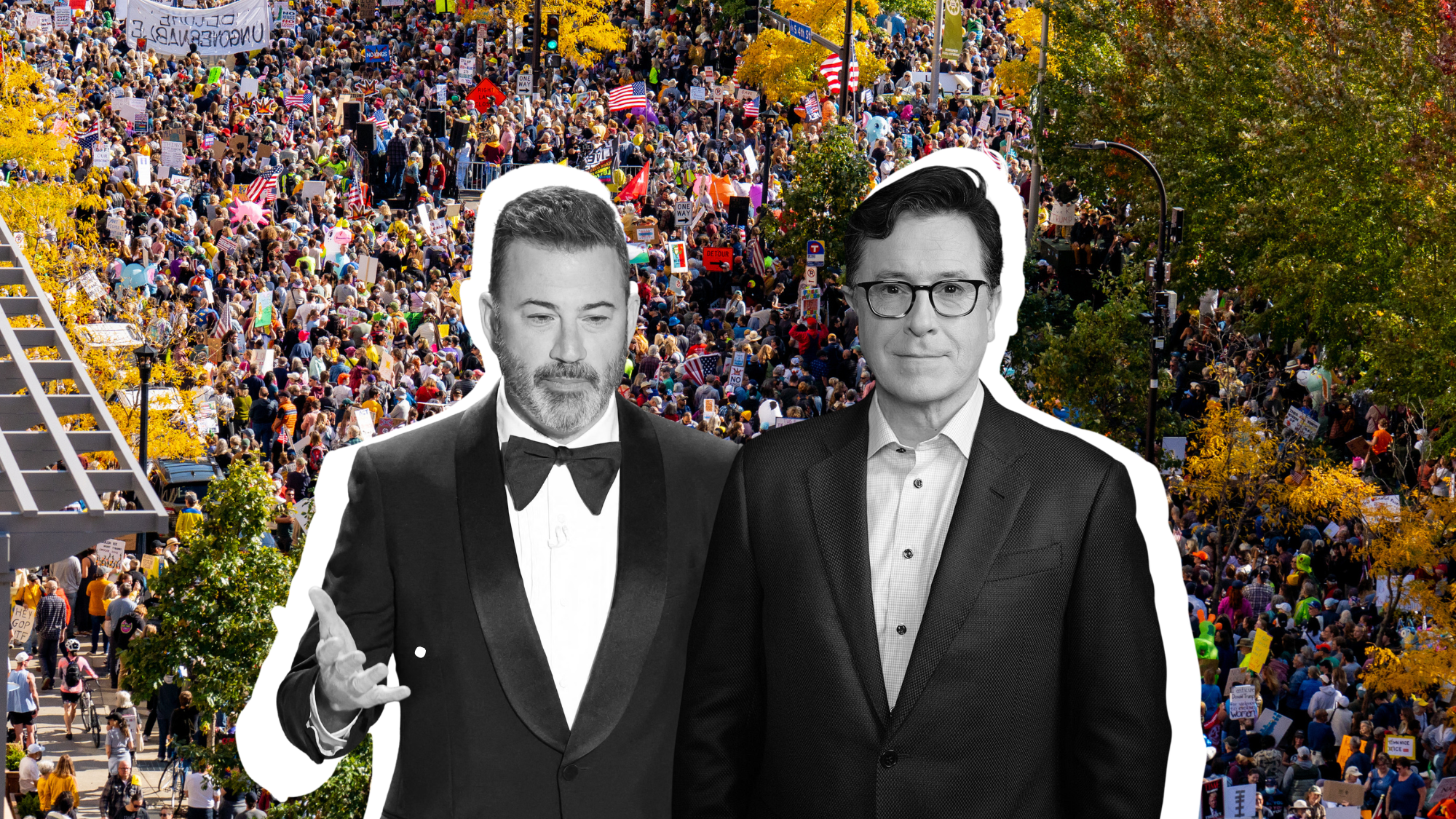
This convergence between late-night talk shows and politics perhaps became most apparent, however, once consequences arose. CBS canceled "The Late Show With Stephen Colbert" in July after Colbert criticized a settlement between President Donald Trump and Paramount Global, the parent company of CBS, over a "60 Minutes" segment (CBS claims the cancellation was “purely a financial decision”). Not long after, in September, the chairman of the Federal Communications Commission, Brendan Carr, pulled “Jimmy Kimmel Live” off air after Kimmel alleged Charlie Kirk’s shooter was part of the “MAGA gang” during his opening monologue (ABC has since reinstated Kimmel’s show).
These attacks revealed something larger beyond the anticipated volatile reaction from conservative media conglomerates — a genuine belief in the influence of political entertainment.
Naturally, many members of Gen Z may have questioned if these programs hold that kind of weight. When you only consume episodes in 10-second clips posted days after the air date, they can feel particularly distant.
Despite this, these shows appear more relevant in 2026 than ever. At a unique and valuable intersection between politics and pop culture, late-night hosts make political information accessible to the average viewer, having yet to be — at least completely — barred by streaming subscriptions. Even exposure to news through parody leads to acquisition of political knowledge — an asset growing scarce among younger audiences as they tune traditional media out and invest less in paid news content.
As the presidential administration continues to commit alarming attacks on the First Amendment, free speech is also at the forefront of national conversation. These programs have gained a symbolism for unbridled political conversation and wry accountability. Although just a small branch of political entertainment, they are now enveloped in the greater cause of maintaining free expression.
This friction comes to a point with the 2026 midterm elections. If the administration continues to threaten late-night shows, or hosts water down their political critique as a result, voters will take notice. Trump has already called for the additional cancellations of “The Tonight Show starring Jimmy Fallon” and “Late Night with Seth Meyers,” proposing an information vacuum ahead of a high-stakes election season.
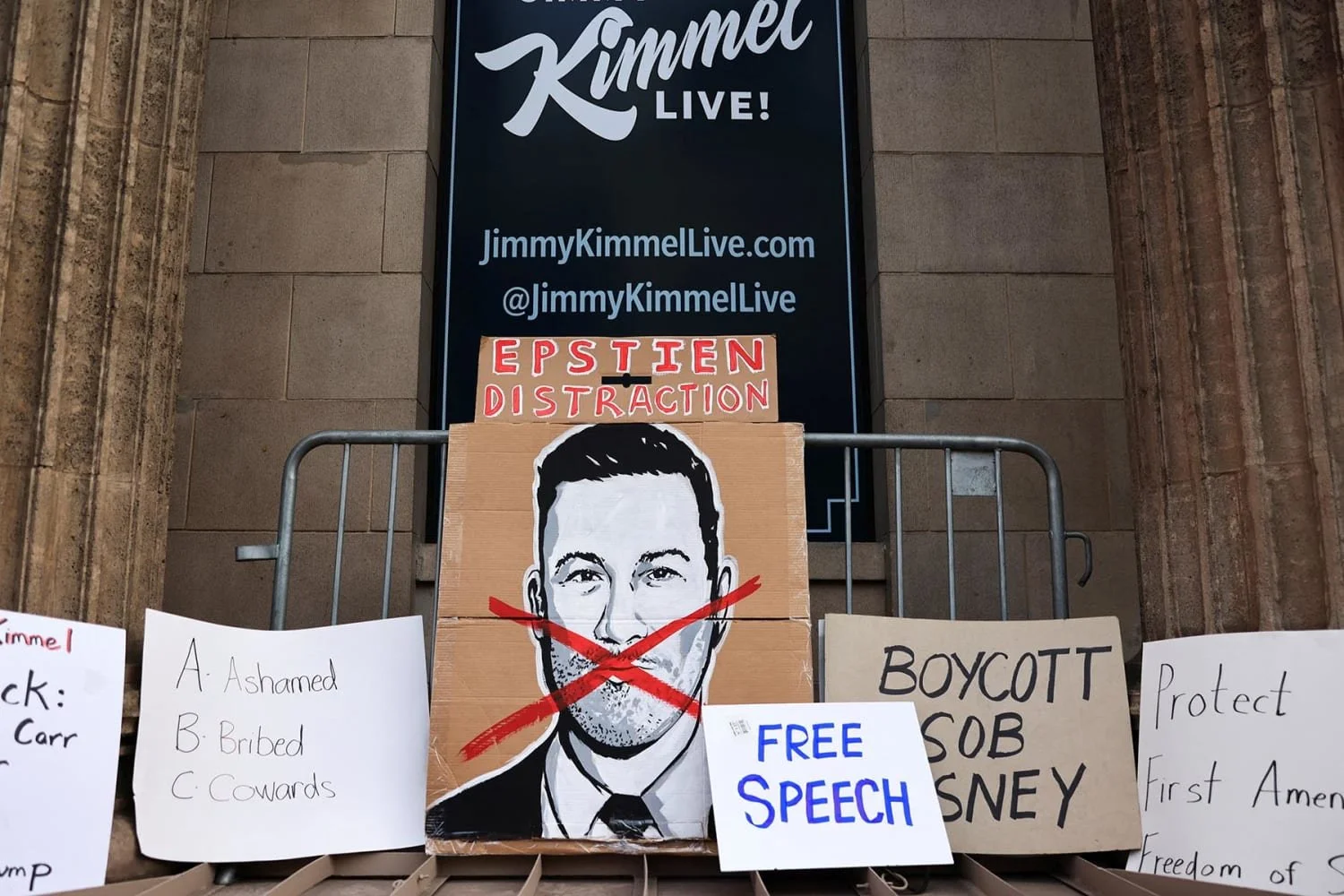
Image Sourced via David Swanson / Reuters
If the reaction to late-night show pushback is any indication, voters are aware of the implications. Hosts, too, appear to recognize the new influence they wield after fighting to keep their roles. In January, Kimmel stated, “We can’t have an election soon enough” — hinting at the crucial elections ahead.
It is yet to be seen the extent of Trump’s control over late-night programs and what consequences hosts will face. In the meantime, voters can advantage of the various ways to acquire political knowledge — including, yes, tuning into news parody programs — to equip themselves. Per the often-overused aphorism, knowledge is power; even if acquired by unconventional means.