Beauty Has Never Been More Political…or Exhausting
By Zoe CN Smith
In 1989, artist Barbara Kruger coined the slogan ‘Your Body is a Battleground’. Kruger’s artwork references all the meanings the female image has adopted in a consumerist age: a product to be advertised, a beauty object to be reproduced and plastered on bedroom walls, and a site for competing ideologies to stake their claim on. The slogan is both a call to arms and a statement of fact that the female body has long been treated as a site to be co-opted, policed, and projected on just for existing. In short: beauty has always been political. But lately, a new politics of beauty is emerging, one where your appearance has become a public-facing signal of your values. From the exaggerated cosmetics of the Mar-a-Lago face, to the performative nonchalance of the messy girl aesthetic, today, beauty doesn’t just lie in the eye of the beholder– it’s shaped by their politics, too.
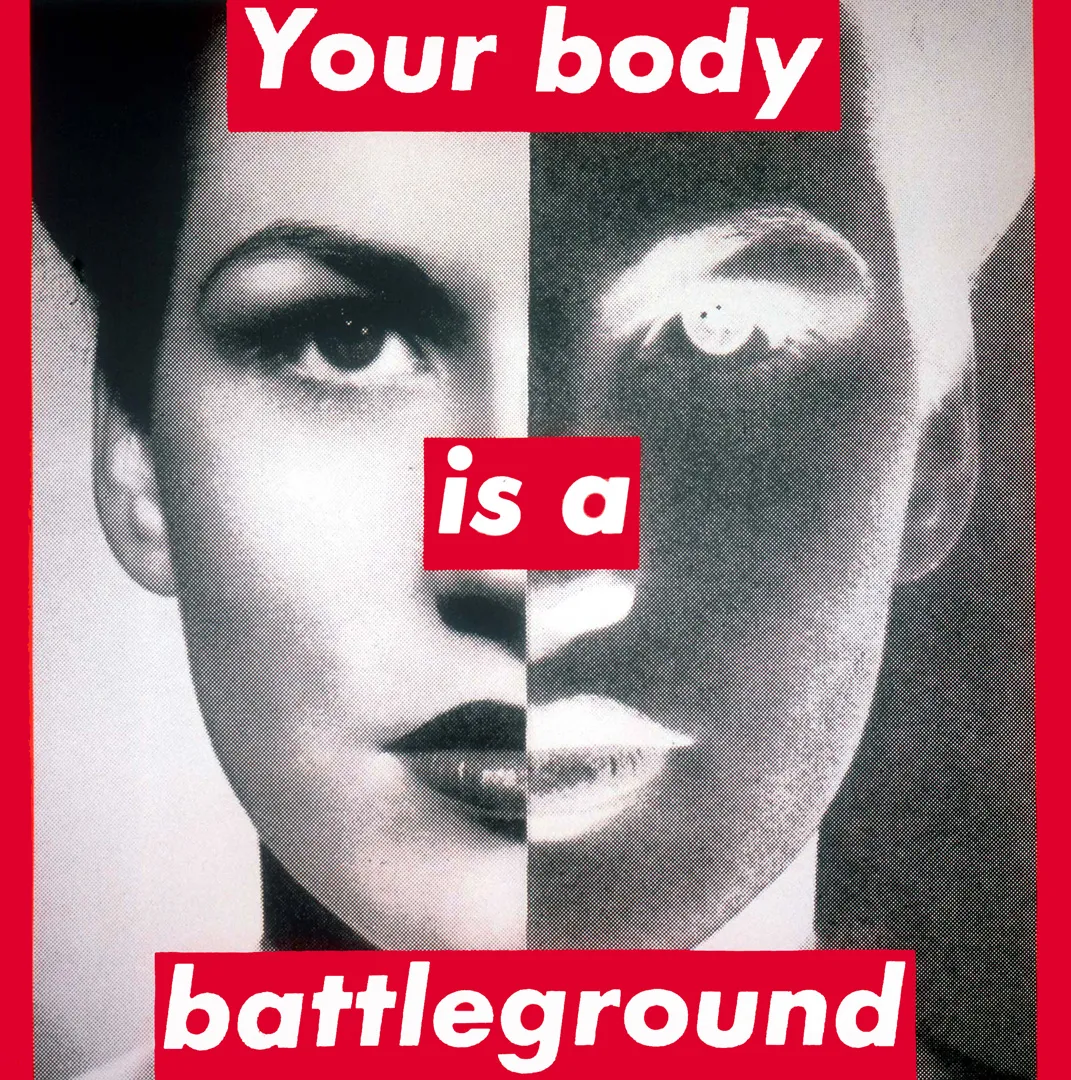
Barbara Kruger’s ‘Untitled’ (Your Body is A Battleground) (1989); Courtesy of The Broad
E is for Effort
We live in a hyper-literate culture that prioritises interpretation. Audiences are trained on a diet of teasers and Easter eggs to instinctively analyse detail and draw out references in every image they encounter, all while interrogating the effort it takes to construct them. Is she trying too hard? Has she had surgery? Does she look natural? It’s here, in attitudes to visible effort, where the ideological split between the conservative and liberal aesthetics is clearest.
Courtesy of Dimitrios Kambouris / Getty images
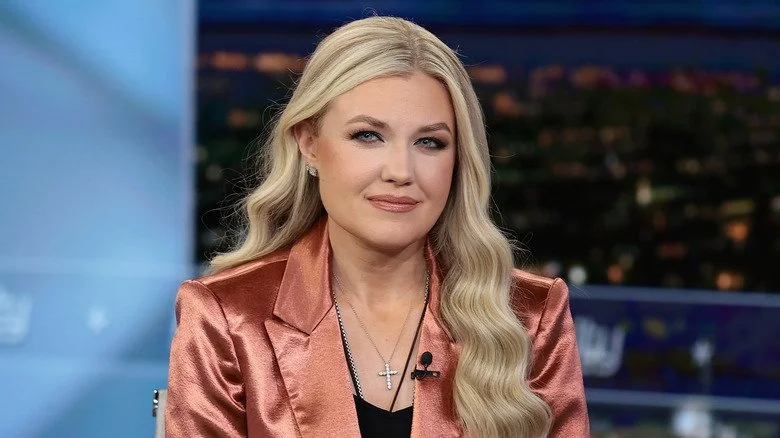
On the right, prominent Republican women steer towards a more-is-more philosophy, which signals visible effort. Based on an underlying belief in an objective fixed beauty ideal (read: Eurocentric), conforming rewards them with status amongst their community. This is why we’ve seen the rise of cosmetically plumped-up ‘Mar-a-Lago face’ in women like Kimberly Guilfoyle or Kristi Noem. Available only to those who can afford it, the look signifies the wealth and allegiance needed to adhere to an artificial standard of beauty. Likewise, the MAGA make-up trend sees figures like Erica Kirk weaponise heavy-duty glam makeup and blown-out hair as an unapologetic declaration of the conservative conception of femininity. This sense of effort remains true even for conservative aesthetics, which initially appear less ‘done-up’, such as the ‘trad-wife’ aesthetic, which, despite emphasising the lifestyle of homesteading and semiotics of ‘naturalness’, still centers on feminine, impractical clothing for home tasks, styled hair, and natural beauty looks. The effort central to this lifestyle is as much an expression of husband-pleasing devotion as it is one of superiority. All dressed up with nowhere to go— more than just for her husband, the trad-wife’s home becomes the stage where she advertises her ‘efforts’ to a waiting digital audience.
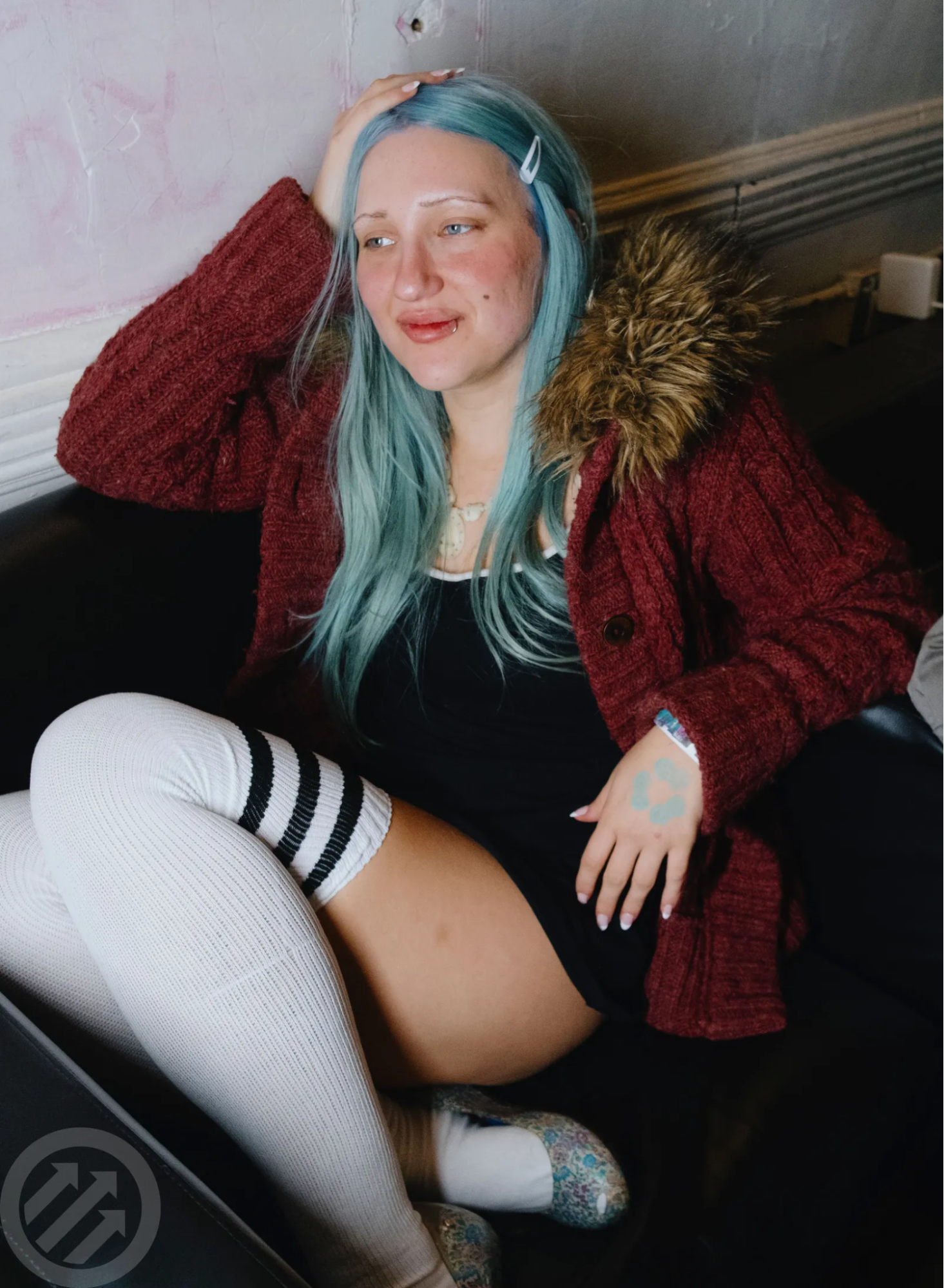
Maria Manow; Courtesy of Pitchfork
If conservative-coded beauty confidently signals effort, left-wing aesthetics are far more ambivalent. This is partly due to the sheer variety of aesthetics and approaches, which reflect the liberal belief that beauty is diverse and personal. For example, the recent blue hair revival embraced by esoteric figures like Cannelle and Maria Manow repurposes effort for subversive self-expression, communicating a refusal to conform. The messy/dirty girl aesthetic embraced by self-confessed progressives is similarly coy. Influenced by the recent indie sleaze renaissance, and dealing in codes of dishevelled hair, mismatched clothing, and slept-in eyeliner, the look performs an ironic nonchalance and studied effortlessness in stark visual contrast to the polished trad-wife. But far from the OG iteration of indie sleaze, which seemed to deal in maximalist spontaneity, today’s iterations of messy girl beauty are markedly more curated. It’s not that effort is missing, but rather, it’s been masked by winking self-awareness, or even an internet-coded Gen Z pout.
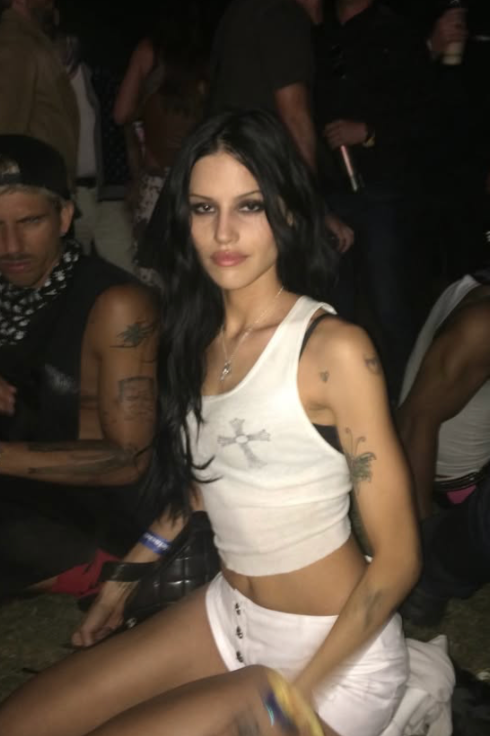
Courtesy of @gabbriette
But the line between ironising effort and pretending it doesn’t exist is razor-thin. If the right is all about visibly embracing it, effort in beauty remains a fraught issue for the left. This tension is visible in their enduring discretion around natural-looking tweakments, or in the way that the ‘clean girl’ and ‘quiet luxury’ aesthetic remain popular within mainstream media. Though framed as minimalism, these aesthetics have long weathered accusations of conservative reference, with their emphasis on natural-there-but-not-there makeup and polished femininity recalling trad-wife comparisons and purity culture codes. While this could be understood as a response to financial hardship and aesthetic fatigue, or even just a case of 'reading too much into it’, the resurgence of thinness and the rise of GLP-1 (weight loss medication) usage is more difficult to explain away. The body, as they say, always keeps score.
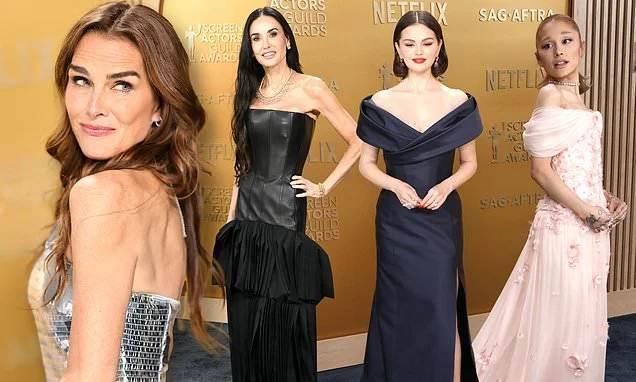
Courtesy of Shuttershock / Getty Images
The Body Problem
Thinness— more specifically, the desire to be tiny and achingly thin— presents a complex problem to the liberal conception of beauty as diverse and subjective. If self-professed left-leaning celebrities are speaking on body positivity but crash-dieting or using GLP-1s in extreme ways, which undermine their message, it becomes clear there’s a unifying beauty standard they’re following, and spoiler: it’s not a diverse one. You don’t need to look outside to see we’re in the midst of a thinness epidemic. Every other day, a once-vocal body positivity advocate suddenly drops multiple dress sizes, iconic athletes likeSerena Williams become faces of weight-loss GLP-1s, and models who were already thin get even thinner. At the most basic level, such a dramatic shift from the liberal (or liberal-performing) elite makes their prior celebration of the body positive movement feel performative.
We used to understand that chasing extreme thinness was conforming to a patriarchal standard, not empowering ourselves. Today, this understanding has dissolved. The justification of ‘her body, her choice’ is often brought up when it comes to discussions around celebrities’ newfound frailty. Weight (and the process of losing it) has been positioned as a kind of democratic right. Whilst this remains true for those who need GLP-1s for a whole host of medical reasons, many are ultimately doing so for aesthetic reasons, and they’re just too afraid to say it. Instead, figures position themselves as the exception: they gesture towards constant, pseudo-illness, prepare for roles or projects which require them to drop more weight (for a film they’re directing themselves), or they’re just suddenly really into fitness. This justification doesn’t excuse the reality that many of these figures are harming themselves and contributing to a dangerous cultural shift influencing generations of women. None of these celebrities asked to be role models, and they are as much victims of the system as they are its agents. But the impressionable women these figures profit from and harm in the process will attribute a sense of accountability to them anyway. The game is rigged, and no one wins.
Everything is Exhausting
Today, billion-dollar industries of health, wellness, fashion, and beauty are powered by our intense desire to exert more and more control over what we look like, fuelled by an aspirational promise that we too can optimise ourselves to a better life. The relationship between beauty and effort is as complex as it is political, because to acknowledge a desire to pursue the beauty standard is to acknowledge that possessing ‘conventional' beauty confers you with a privilege. While much of the frenzied discourse around looksmaxxing centres on its extreme methods and toxic rhetoric, part of its shock-factor lies in the blase-ness with which individuals share the unhinged lengths they’ll go to to ‘ascend’ the beauty ladder. Looksmaxxing resonates with a younger, jaded generation because the movement simply names the way our society works: that beauty is an investment with political ramifications. If beauty is a kind of power, it’s also a self-reinforcing one, both upholding and being conditioned by the dominant political structure.
And it’s exhausting. The vocabulary for aesthetics expands and changes online every day, introducing a new look to tap into or a new identity to adopt. On social media, we rush to categorise and label such choices, building vocabularies and reference points to help people find short-hands for specific vibes. Are you a messy girl, or are you a trad wife, or are you a femme fatale? Are you a Chad or a sub-human? Are you deer-pretty or bunny-pretty? Although much of this discourse plays out online, where image has become the dominant force of the attention economy, its influence extends beyond the screens of the chronically online and into our mirrors, our self-image, and our bodily health.
Just as Kruger recognised decades ago, that female appearance has always been a battleground for ideologies we haven’t chosen, and might not understand. Still, we get up, get dressed, and go out into the world.
The only question is: what exactly are we fighting for?