The Threat of Theatrics: How Conservatism Creeps In
By Anna Seger
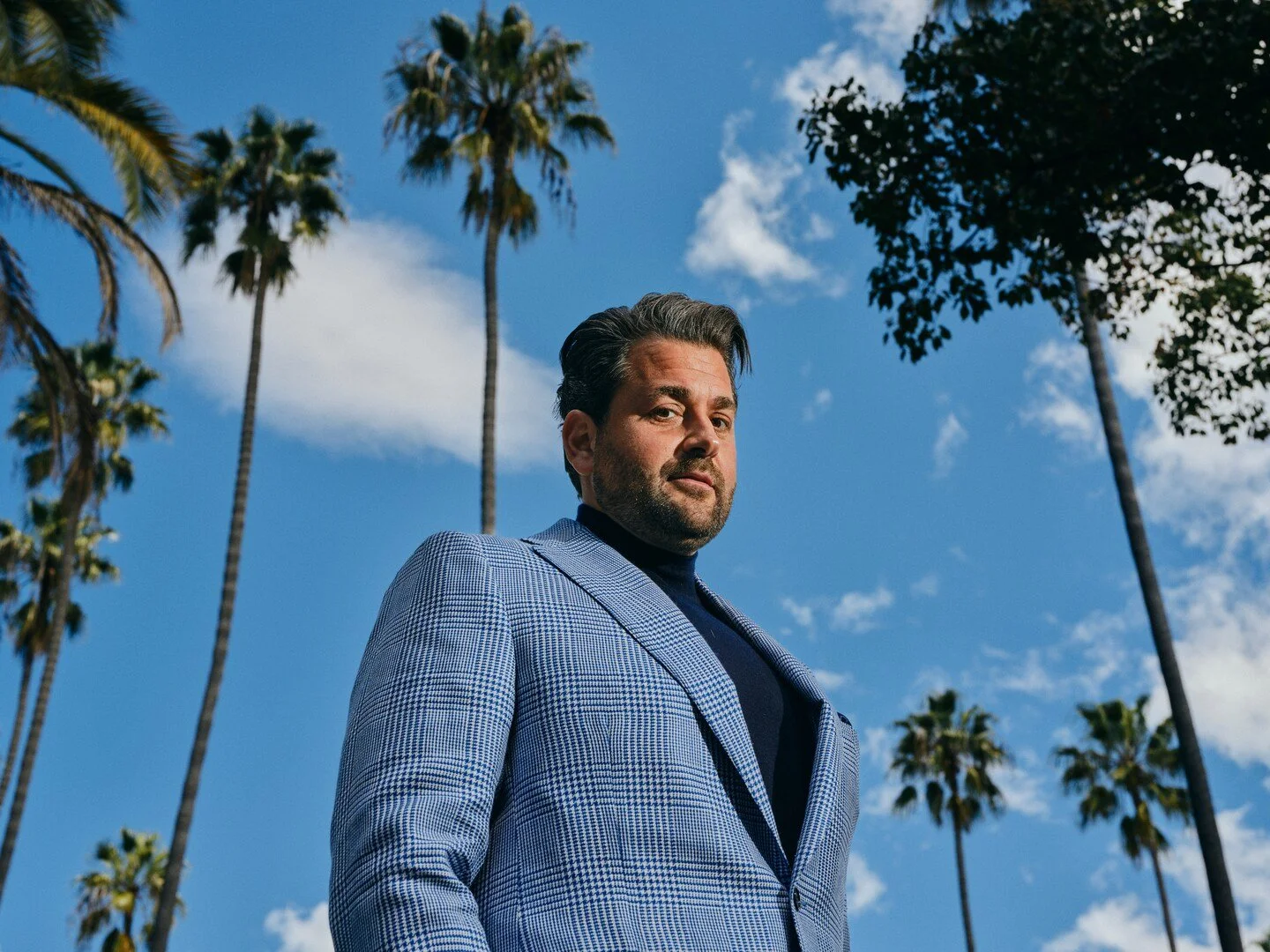
Credit: Philip Cheung/The Washington Post
Before waging a war on “woke,” Nick Adams waged a war on pigeons.
The Australian-born politician first entered public service as a kind of wunderkind. At just 21 years old, he became the youngest mayor of Ashfield, a suburb of Sydney, in 2005. One of his primary objectives was to eliminate pigeons from the town in the wake of a panic about the avian flu. To garner support for the cause, Adams staged a press conference for which he scattered birdseed across a parking lot, unsurprisingly attracting a huge crowd of birds and “proving” the extent of the town’s pigeon problem.
While his avian aspirations may have fizzled out, Adams remained in Australian politics until 2012. Over the course of his career, he became an increasingly polarizing figure as his persona became more flamboyant and his stances became more extreme, according to reporter Ben Terris. After resigning from Australian politics in 2012, he found a new political community in the pro-Trump movement burgeoning ahead of the 2016 U.S. election. Despite not yet being a citizen, Adams began to publicly express support for the Republican nominee, emphasizing his love for America, invoking his personal childhood experience receiving diagnosis and care from an American doctor for his neuroblastoma. He also publicly voiced his dislike of Trump’s opponent, Hillary Clinton. Since then, Adams has latched onto nearly every issue that enters the culture-war consciousness: illegal immigration, pronouns, modern women, “gender ideology,” and anything else the political Right labels “woke.”
Today, Adams lives in Texas and works as a conservative public speaker, author, and social-media personality. He has written books endorsed by President Trump, spoken on television and radio, and founded FLAG, the Foundation for Liberty and American Greatness, a nonprofit organization that “informs parents and students on the power of the American Dream.” His loud, hyperbolic, and unapologetic public persona has become central to his career.
For Adams, though, the primary battleground of the issues he cares about is not in the real world–it is on social media. He has a penchant for virality, which attracted the attention and approval of Trump himself back in his first term. Most recently, Adams went viral for an X post about seeing the Melania film. In the post, he recounts an interaction with a father and his two young daughters who allegedly asked Adams if he was seeing Avatar. To this, he replied, “I don’t watch woke movies. I’m here to see the groundbreaking documentary about our incredibly talented First Lady,” prompting the girls to beg their father to take them there instead. Adams then describes telling them the screening was sold out, but offering the girls and their father his extra tickets. Then, Adams divulged one last piece of parental advice: “Raise these girls right…Teach them to be classy, conservative women of faith like Melania, don’t let them become like Meghan Markle.”
At least, allegedly.
If Adam’s story sounds a bit far-fetched to you, you’re not alone. The comments on his social media are flooded with replies like “I’ll take stuff that didn’t happen for $100,” “this reads like fanfiction,” and general uncertainty about the post’s tone. Was it an earnest MAGA delusion? A brilliant satire? A performance? Perhaps, something else entirely?
When speaking with Ben Terris of The Washington Post, Adams insisted, “This is not a character. This is not a bit. It’s not trolling. Anyone who thinks this is not me, that I don’t drink ice-cold domestics, that I don’t repel woke beer, they’re wrong, they’re absolutely wrong.” Of course, this sounds like what a brilliant and committed satirist would say. Adam’s opinions are so overblown, so exaggerated and ridiculous that sincerity becomes difficult to parse. Still, his popularity, especially among young Republican boys–evidenced by his speaking roles at recent Young Republican events–reflects a shift in the brand of American conservatism in the second Trump era.
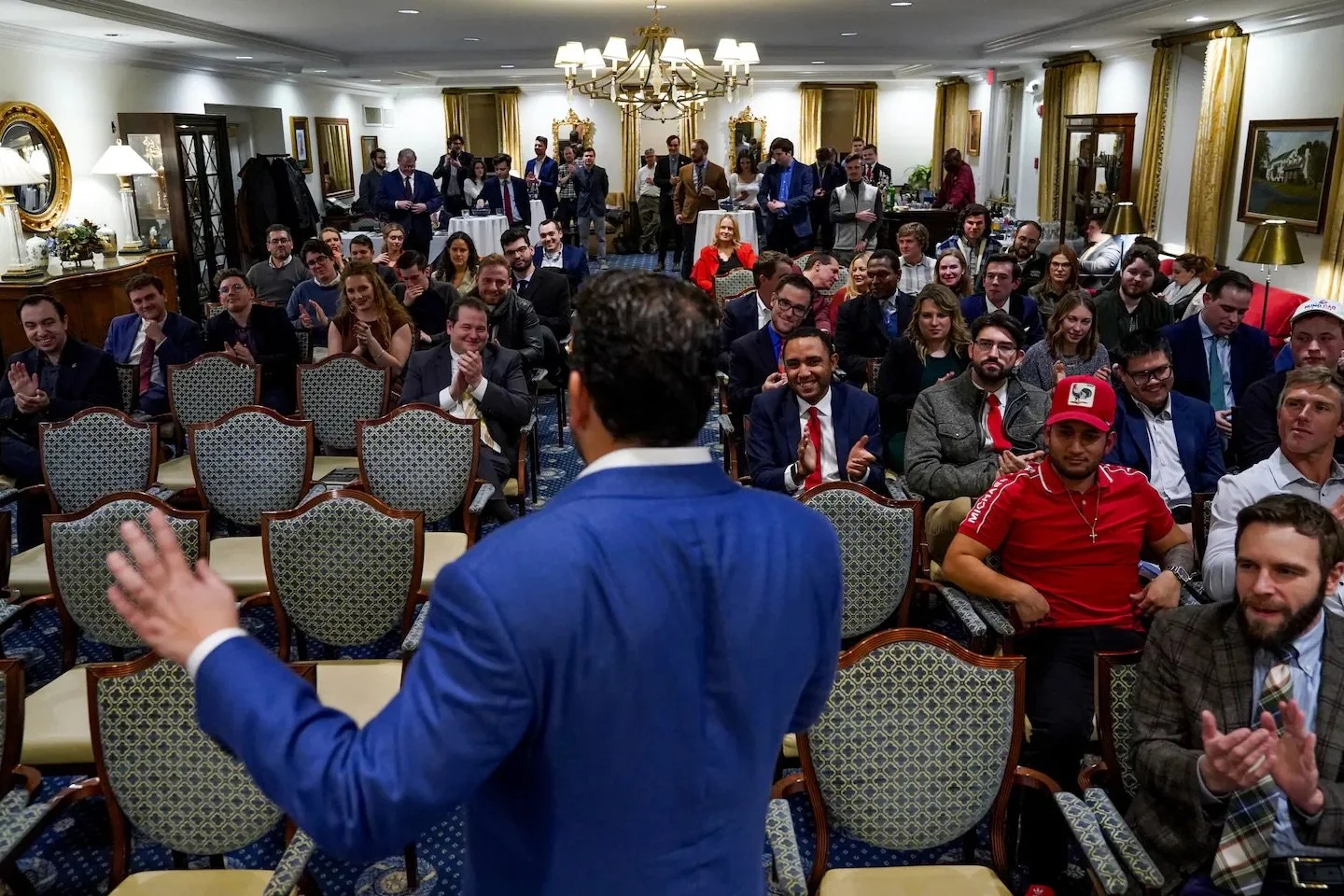
Credit: Jahi Chiwendui/The Washington Post
Conservatism in the United States was once associated with old money and families, wrapped up in lineages of influence, authority, and power. It used to be associated with snobbery, propriety, and strict social rules. Donald Trump’s rise to power has toppled that image completely, even though Trump himself comes from such a background. The new Gen Z conservatism is much more accessible through social media. In a piece for The Hilltop, Jalyn Cameron notes the rise of conservatism as 41% of Gen Z male Trump voters in 2020 grew to 56% in 2024. Among Gen Z female Trump voters, 30% in 2020 grew to 40% in 2024. Cameron attributes this growth largely to the fact that conservatism is no longer about mundane, complex political positions: it can be about getting in touch with your femininity or tapping into your masculinity, or eating steak and drinking domestic beer. Eventually, the algorithm enables these positions to escalate into full-blown, sometimes extremist conservative rhetoric.
In this environment, politics becomes less about actual politics and more about a kind of performance. In George Saunders’ 2020 short story “Love Letter,” a grandfather living under an oppressive regime writes to his grandson, reflecting on how the absurdity of the regime’s rise quelled resistance to it: “Because this destruction was emanating from such an inept source, who seemed (at that time) merely comically thuggish…we soon found that no genuine outrage was available to us anymore.” Adams–-in the tradition of Trump himself–can appear to many as one such “inept source,” someone whose theatrics overshadow the danger of the ideas he promotes.
This dynamic is precisely how radical conservatism spreads: through humor, exaggeration, and spectacle that make it easy to dismiss, even as it gains ideological and material influence. Treating conservative political positions and actions as merely ridiculous discounts their real-world consequences. After all, Nick Adams started with a war on pigeons and viral social media storytelling. Then, Donald Trump appointed him to serve as the Ambassador to Malaysia. Now, he has been appointed to serve as the Special Presidential Envoy for American Tourism, Exceptionalism, and Values. Adam’s trajectory illustrates how quickly online personas can evolve into tangible institutional power. Adams has come a long way since Ashfield, and this looks to be dangerous.