Can a Man Comprehend Creation’s Horror? On Del Toro, Shelley, and the Mistranslated Monster
By Hannah Ferguson
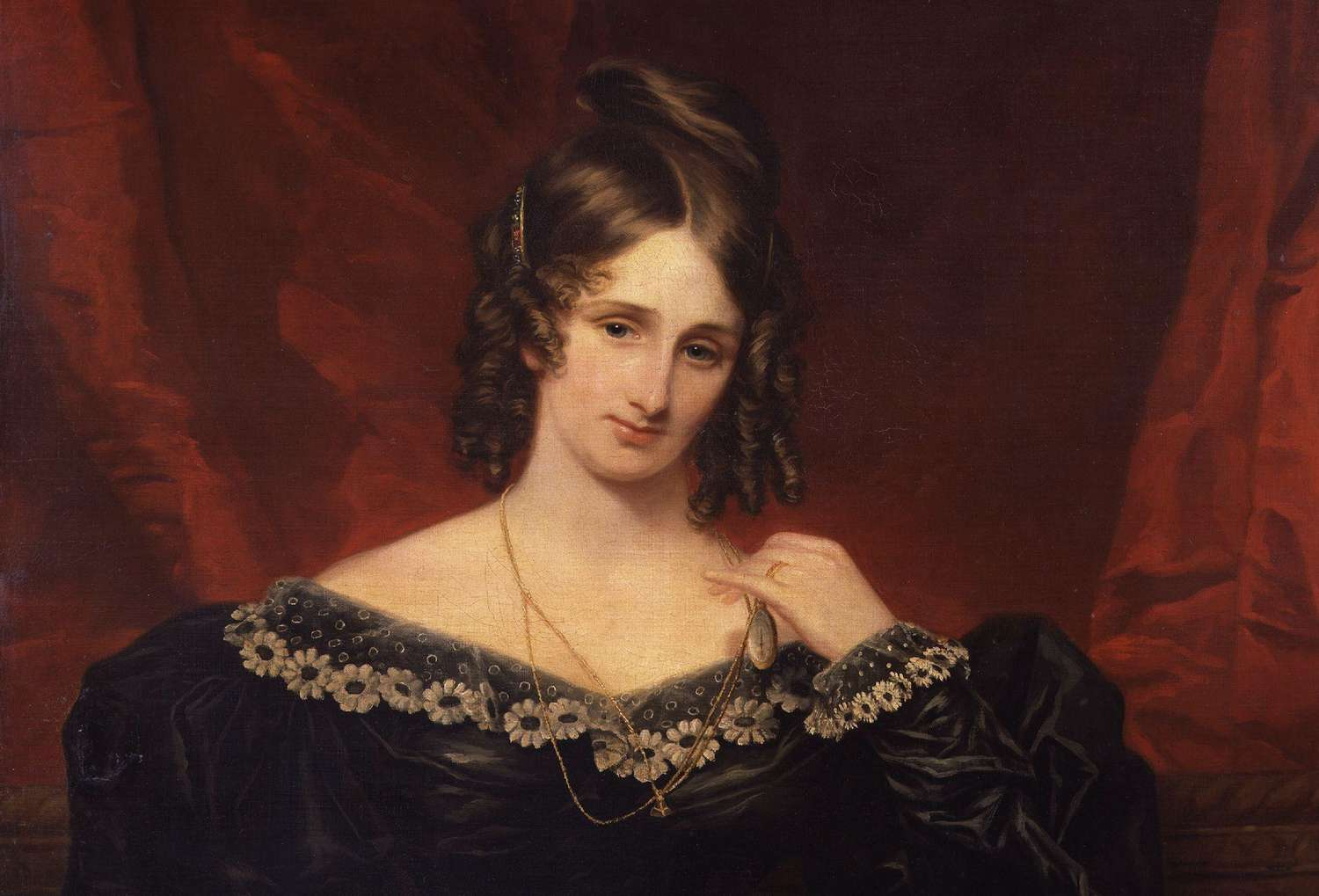
Mary Shelley: Image Sourced from Pinterest
I went into Guillermo del Toro’s Frankenstein with a kind of hopeful certainty. With Crimson Peak and Pan’s Labyrinth among my favorite films of all time, I trusted his ability to blend horror, beauty, and brutality. Few directors execute Gothic as Del Toro does. But as I watched his newest adaptation unfold, I felt not only underwhelmed but dissatisfied.
There was much to admire—Del Toro’s unmistakable aesthetic eye, the stunning costuming and production design, the strength of the cast, and Jacob Elordi’s astonishing physical and emotional embodiment of the Creature. And yet, despite all this, the film left me surprisingly unsatisfied.
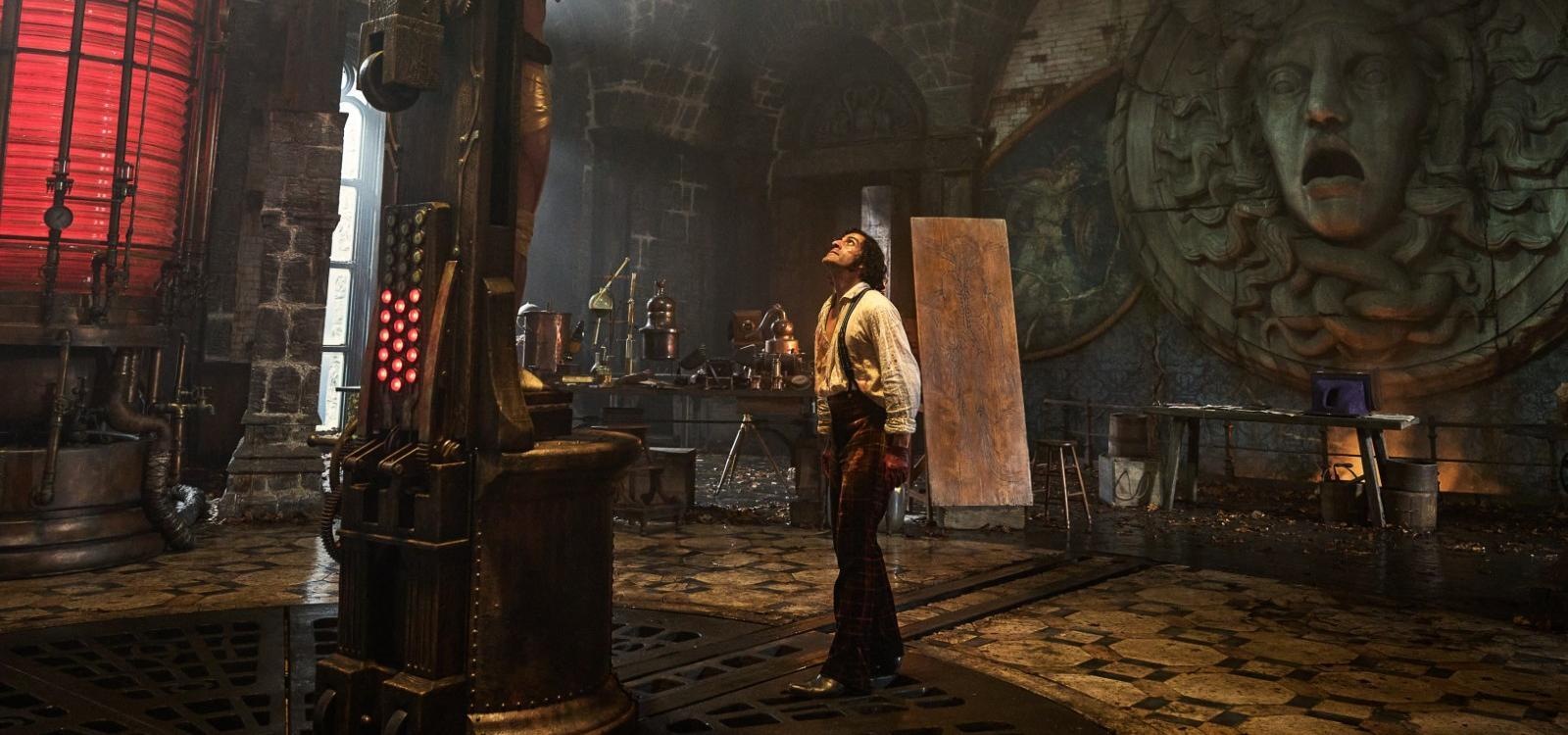
Frankenstein (2025); Image Sourced from Pinterest
What felt missing was the very element that animates Mary Shelley’s 1818 novel: her perspective. Her lived understanding of the physical and emotional cost of creation; the danger of unchecked male ambition; the devastation of emotional negligence. Without that lens, Del Toro’s version feels beautifully rendered but oddly hollow.
It left me wondering: Can any male-written, male-directed adaptation of Frankenstein ever fully capture the critiques Shelley wove so deliberately within it—of life, of pride, of the monsters men make and the ownership they refuse?
Frankenstein, published by a twenty-year-old Shelley, has long been misunderstood as a tale of mad science and a stitched-together monster (you can thank the 1931 film for that). However, Shelley was writing from a place far more intimate and daring. By the time she completed the novel, she had faced childbirth, child loss, parental loss, and the societal expectations of motherhood. Her horror is not hypothetical. It is alive. Her story is about creation, but even more so the unbearable burden of what comes after—the permanence of what it means to bring something into the world, and what to do when it takes on a life of its own.
When Frankenstein initially reanimates his creature, he does not shout triumphantly—he recoils. “I had desired it with an ardour that far exceeded moderation; but now that I had finished, the beauty of the dream vanished, and breathless horror and disgust filled my heart.” It is a moment defined not by victory, but by immediate abandonment; the birth he so obsessively pursued becomes the catalyst for his emotional negligence and moral failure. Unfortunately, the line most people associate with this scene isn’t from Shelley at all. The iconic “It’s alive!”—shouted with manic delight in the 1931 film—completely reverses the mood of the original text. What Shelley wrote as a moment of dread, the movie transformed into a spectacle, reshaping public memory of the novel for decades to come. While I think Del Toro’s adaptation captures Frankenstein’s revulsion and regret for his creation, I believe the film’s motivations are entirely misleading.
It is also important to note that Shelley’s work was also a type of political warning. Written at the height of the Industrial Revolution, Frankenstein investigates not only what man is capable of building, but whether he is equipped to face the consequences of what he creates. Mary Shelley wasn’t just imagining the horrors of modern science and technology—she was questioning the morality of the invention itself.
These two crucial components of the original novel are where I think Del Toro’s adaptation falters.
Enter Victor Frankenstein.
Del Toro takes significant liberties with Victor’s character. On screen, we see a childhood marked by an abusive father, the trauma of losing his mother, and a tidy chain of injuries that supposedly lead him toward scientific obsession. These choices streamline his descent into the “mad scientist” archetype—but they simply aren’t present in the novel. Victor has no tragic backstory. He is not a victim caught in some inherited cycle of violence. He is just a man.
And that is precisely what makes him terrifying.
By giving Victor a neat psychological explanation, the 2025 film softens him. It reframes his arrogance as ignorance, his negligence as the byproduct of pain rather than a deliberate failure of responsibility. But Victor Frankenstein doesn’t need a reason to be reckless—that’s the point. There is no traumatic chain reaction that explains Victor’s choices. He is designed to represent any man who possesses ambition and influence. Shelley’s horror is that a brilliant man can destroy the world simply because he wants to see if he can.
The longevity of Mary Shelley’s Frankenstein lies in the universality of its warning. As long as there are creators, there will be creations—and as long as there is ambition, there will be consequences, both intended and not. To narrow the story into something so singular and personal, as Del Toro does, is to strip away the very thing that makes it endure. Shelley didn’t write a tale about one damaged man; her story is a mirror we are expected to hold up time and time again, asking if we are ready to bear the responsibility of what we bring into the world.