Casting Stones in Aleshea Harris’ 'Is God Is' Adaptation
By Julia Krys
Revenge becomes mythology in Is God Is, where vengeance, dark comedy, and theatrical absurdity collide across the American South. We follow twins Racine and Anaia (played by Kara Young and Mallori Johnson) as they voyage through the American South in pursuit of a vengeful fate. The sisters bear sprawling scars of burn wounds from a crime their absent father (Sterling K. Brown) committed against their absent mother (Vivica A. Fox) before they were old enough to remember it.
Their journey begins with a letter from the twins’ mother, whom they had presumed dead from the fire that marked their bodies. An unlikely reunion with their dying mother sets them on a path to murder their father, who intentionally and violently started the fire that ravaged them. Racine and Anaia equate their mother’s dying wish with God’s will. Along the road to divine retribution, the twins encounter odd (and at times hilarious) characters, while discovering the consequences of their inextricable bond in the context of revenge.

Kara Young and Mallori Johnson in Is God Is (2026). Credit: Patti Perret / © Amazon MGM Studios/ Courtesy of Everett Collection
Is God Is is directed by and adapted from Aleshea Harris’ Obie Award-winning play of the same name. As a former playwriting student, Is God Is was always in the curriculum for challenging and exploring experimental formatting and near-impossible staging. Bringing a story from stage to screen presents unique challenges that stretch far beyond translating plot points. When watching a play, so much of its tension relies on sharing the same room as the performers. This is especially true for a story like Is God Is, which features exaggerated graphic violence.
In playwriting, violence is a purposeful choice because it subjects a live audience to the illusion of terrible acts unfolding in front of them. Harris leans into this to an absurd degree, connecting with the primal rage her characters share – rocks and fire become weapons wielded against one another. Fire and theater rarely appear together unless something has gone terribly wrong. In film, however, visual effects can effortlessly facilitate a raging blaze. Harris was therefore tasked with capturing the intended effect of hyperbolized bloodshed within the confines of the screen, a medium already saturated with gratuitous violence that does not carry the same audience implication.
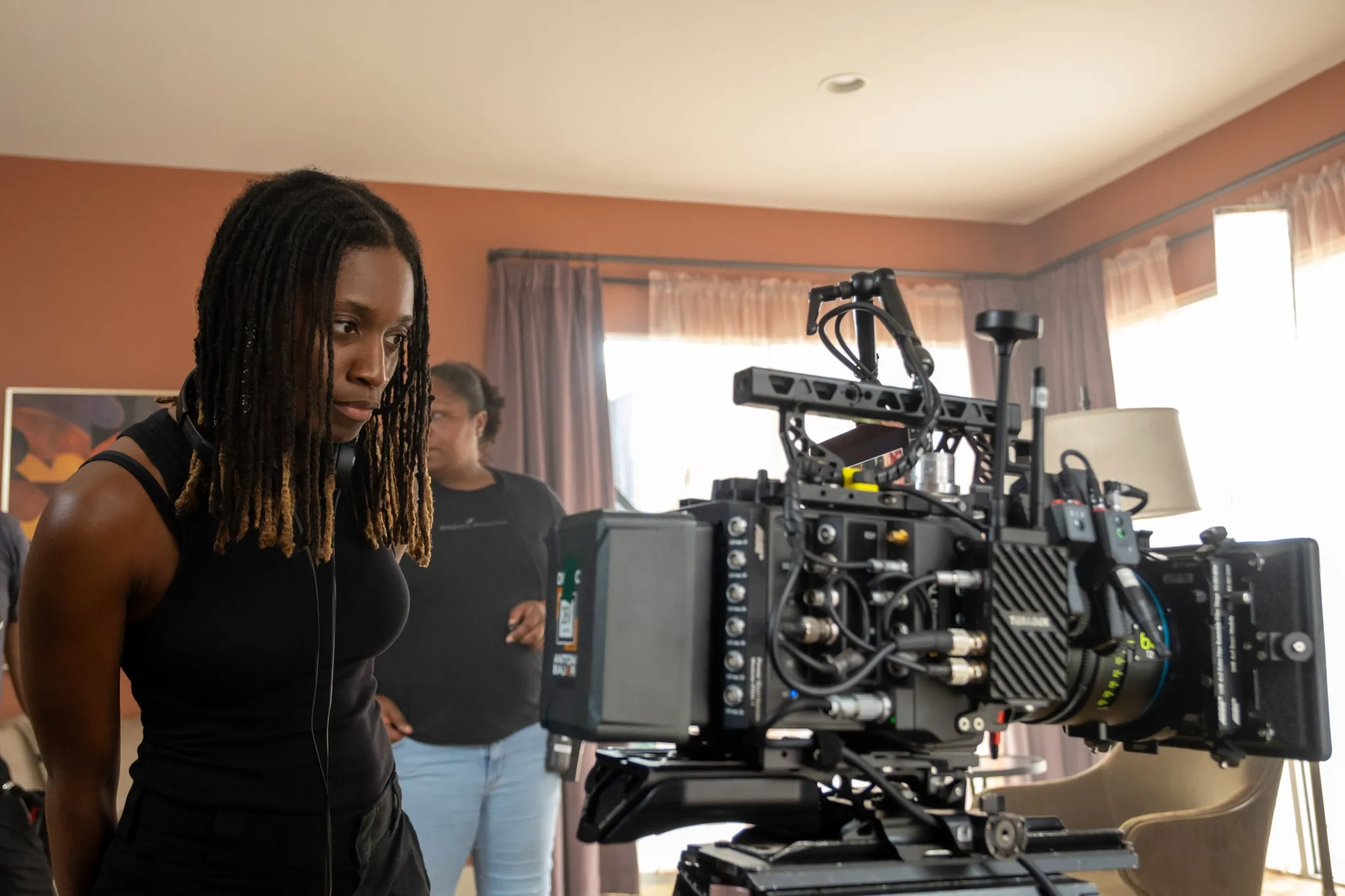
Is God Is director Aleshea Harris on set, 2026. Credit: Patti Perret / © Amazon MGM Studios/ Courtesy of Everett Collection
Wisely, Harris often leaves viewers to fill in the blanks, keeping some of the film’s most graphic sequences just out of frame. That omission creates its own form of tension. While this approach is not applied rigidly, it gives the shock and drama room to breathe, allowing the audience’s imagination to wander through the film’s violent landscape. Despite the brutality, the film still finds space for humor and emotional ache. Yet some stylistic choices, like moments of split screen, briefly pull the audience out of the abstract, absurd playground the film otherwise establishes so well. Those flourishes push the story into a more conventional action space, disrupting the heightened theatricality that makes the adaptation distinctive.
One aspect of the writing that translates exceptionally well to the screen is Harris’ experimental formatting. In the play, she employs varied spacing, sizing, and typography – devices far more common in stage scripts than screenplays. The result is text that visually spans the page, imbuing dialogue with meaning through placement and rhythm as much as through language itself. Though abstract on paper, the film makes these ideas accessible through graphics and subtitled nonverbal exchanges between the twins. Harris singularly achieves this vision because she is fluent in the language she pioneered in the original play. The format is integral to allowing the work to transcend its plot and speak to broader themes of sisterhood, rage, and revenge.
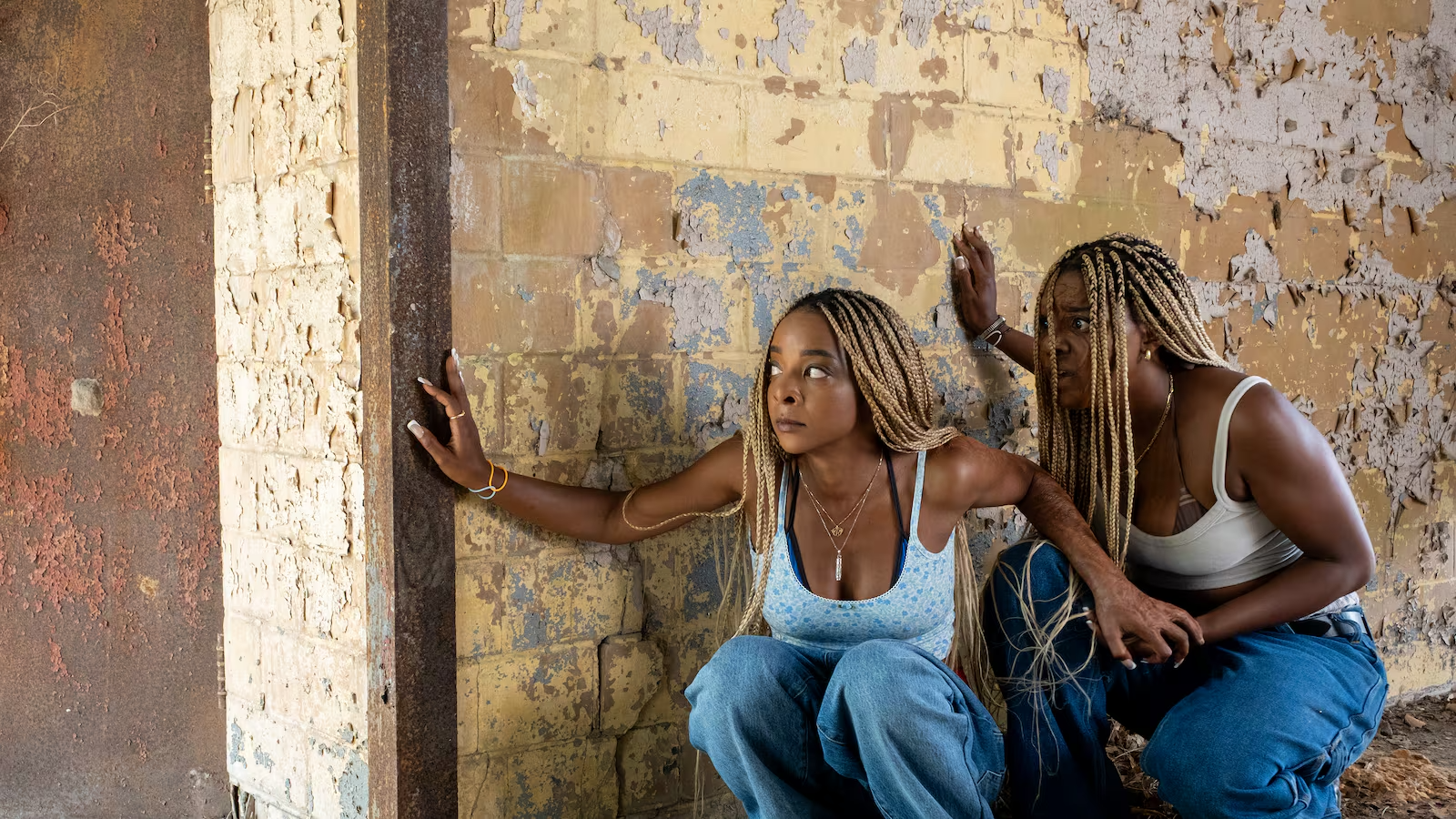
Kara Young stars as Racine and Mallori Johnson as Anaia in Is God Is. Credit: © Amazon MGM Studio (Patti Perret)
Is God Is offers the rare experience of a play adapted to screen by the playwright herself while maintaining its elevated, abstract language and experimental spirit. Anchored by strong performances and richly textured production design, the film immerses audiences in a version of the American South defined by disarray, violence, and mythic fury. Harris translates the play’s theatricality to the screen not by softening its extremes, but by embracing the tension between spectacle and omission, humor and brutality. The result is a film that is committed to the language of its stage origins while still taking advantage of the cinematic form. Even on screen, Harris explores ways to recreate the discomfort and communion of sharing a room with violence. Is God Is is one wild ride best experienced in a theater, where audience reactions recreate the communal tension and unease that Harris worked to preserve.