The 'UnREAL' Truth Behind 'The Bachelor' Franchise
By Stella Speridon-Violet
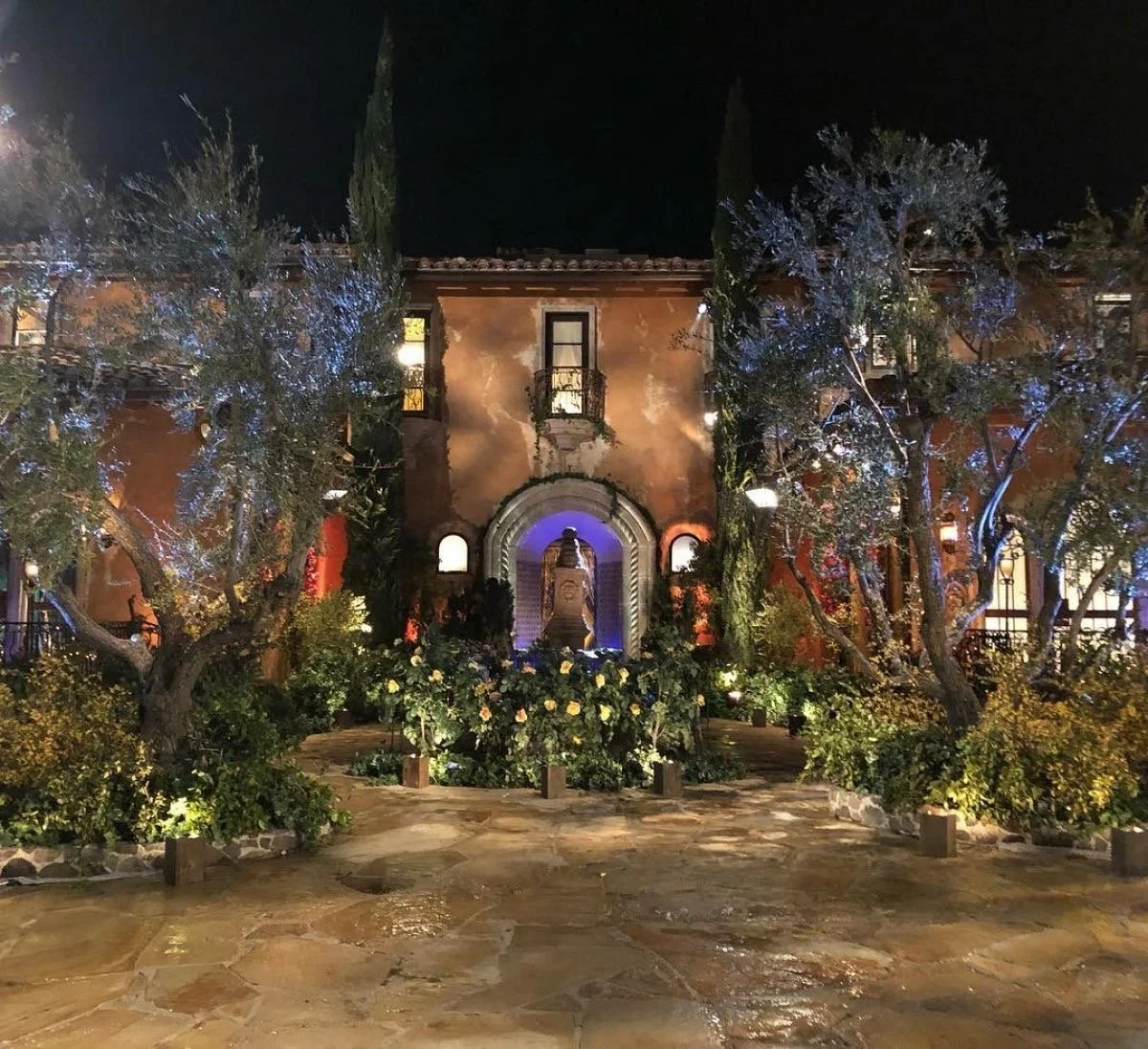
Sourced through Pinterest
Much like Wisteria Lane, The Bachelor and The Bachelorette seem picture-perfect on the outside, looking in, with beautifully designed sets, even more beautiful people, and drama that seems like it came straight from a script.
And while the leading ladies of Desperate Housewives are just playing a role, reading lines to perfection, The Bachelor franchise isn’t far off its trail.
For years, audiences have debated the authenticity of it all, much like most reality television shows. How much of it is real, how much is produced, and how much is outright manipulation?
But what if we’ve already been shown the answer? Not by ABC, of course, but by a scripted drama that feels way too on-the-nose to be fiction.
That is Lifetime’s UnREAL.
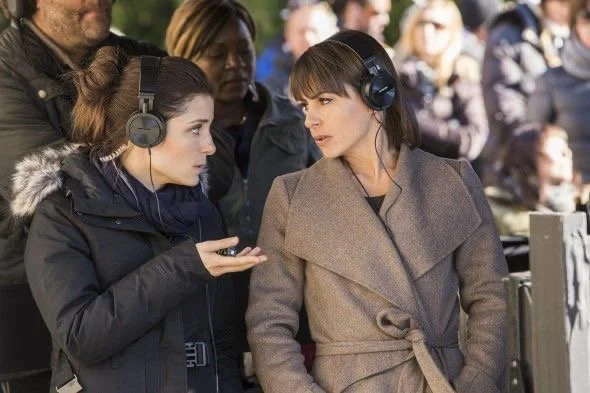
Courtesy of Lifetime
Premiering in 2015, UnREAL followed the behind-the-scenes chaos of a fictional dating show called Everlasting. It was messy, cynical, and at times, deeply uncomfortable to watch, not because it was unrealistic, but because it felt too real.
At the time, it seemed like an exaggerated, dramatized take on reality TV production. Now, it feels more like a warning that the audience didn’t take seriously enough.
And you want to know what’s even crazier? The show’s creator, Sarah Gertrude Shapiro, actually worked as a producer on The Bachelor. That context alone reframes everything. UnREAL wasn’t just inspired by reality TV; it was built from it.
The tactics depicted in the show—sleep deprivation, alcohol manipulation, emotional isolation, and strategic casting—are designed to provoke conflict and weren’t invented for shock value. They were certainly pulled from lived experience.
Once you understand that and rewatch The Bachelor through that lens, things start to shift.
As a girl who has only seen one season of The Bachelor, it was completely ruined for me after watching UnREAL.
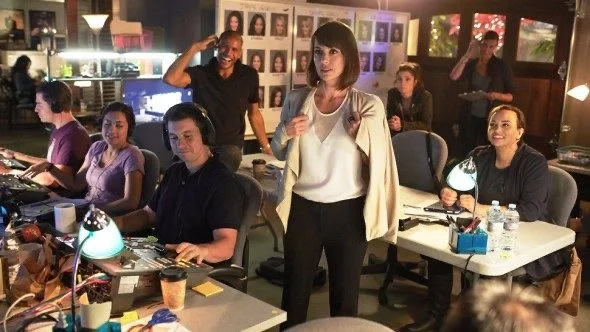
What makes UnREAL so compelling, and unsettling, is how explicitly it lays out the mechanics of manipulation. Producers in the show don’t just sit back and watch the drama; they completely manufacture it.
Courtesy of Lifetime
Contestants are often cut off from their support systems, no phones, no internet, limited contact with the outside world. They’re placed in high-pressure environments, competing for attention and affection while being filmed nearly 24/7.
Producers dig into personal histories, looking for trauma they can use to create emotional storylines. They assign labels, “the virgin,” “the cougar,” “the villain," and then push contestants to embody those roles, whether they reflect reality or not.
Add in long production days, producer-led conversations, and carefully edited narratives, and what you’re left with isn’t exactly “reality,” it’s a controlled emotional experiment—the same way The Bachelor franchise is laid out.
And perhaps the most disturbing thing UnREAL shows is the psychological toll this takes, not just on contestants, but on the producers themselves. The show doesn’t let anyone off the hook. Everyone is complicit.
At the time of its release, some viewers dismissed UnREAL as exaggerated for dramatic effect. But over time, as more former Bachelor contestants have spoken out, the parallels have become harder to ignore.
Reports of sleep deprivation, heavy producer influence, and manipulative editing tactics echo many of the scenarios depicted in UnREAL. Even the concept of the "villain edit” feels like it was lifted straight from the writers’ room.
The show also predicted the evolution of reality TV in a way that feels eerily accurate, an it was definitely before its time. In the later seasons of the show, it tackles issues like diversity casting, public backlash, social media scrutiny, and the pressure to stay relevant in an oversaturated media landscape.
These are all conversations that The Bachelor franchise has had to reckon with in real life, and especially now with the “Taylor Frankie Paul” of it all.
Because at its core, The Bachelor franchise isn’t really about love, it’s about good storytelling. It’s about the archetypes: the sweetheart, the underdog, the heartbreaker, etc. These roles are crafted and reinforced throughout the season, and UnREAL made this explicit.
Courtesy of Lifetime
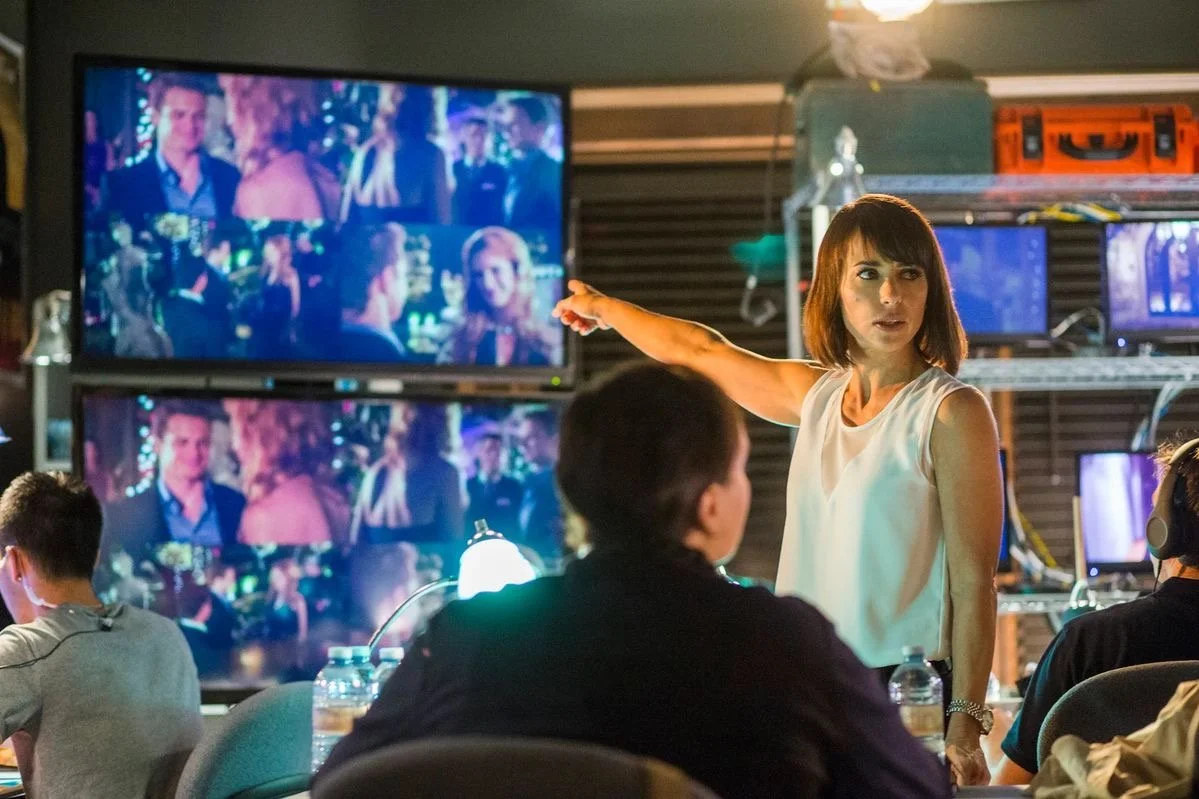
In the producers’ lair, surrounded by cameras, watching everyone’s every move, they referred to contestants not by their names, but by their “types.” It showed how trauma could be mined for emotional moments and how “romance” could be manufactured through timing, music, and editing.
What UnREAL does especially well is blur the line between exploitation and entertainment. It forces viewers to confront an uncomfortable reality; the very things that make reality TV addictive are often the result of calculated manipulation. The show holds up a mirror not just to the industry, but to the audience watching it.
This raises an uncomfortable question: if the emotions are real, but the circumstances are engineered, what are we actually watching?
Reality TV has always operated in this gray area, think The Hills. Love is inherently vulnerable, and when that vulnerability is placed in a highly produced environment, it becomes something else entirely. Feelings become content, and breakdowns become plot points.
This is why people gravitated so much towards YouTube, and even that has become manufactured. The Ace Family are using their children for clicks, and Piper Rockelle’s mother is fabricating fights between children for money.
But as viewers, we’re complicit in it.
Courtesy of ABC
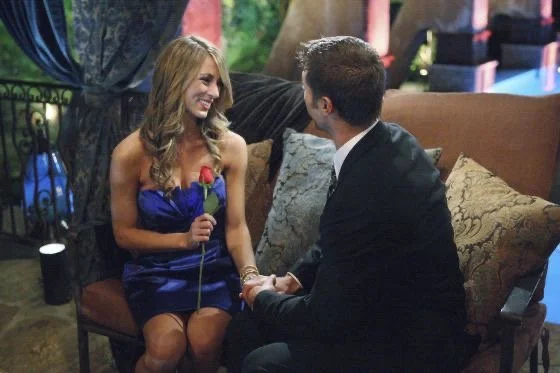
We tune in for the drama, the heartbreak, the spectacle. We pick our favorites and pick apart the ones we hate. We engage with the narrative exactly as it’s been constructed for us, even when we know it’s produced, we still respond as if it’s real.
That’s the magic, and the problem.
UnREAL pulled back a curtain for me, but it didn’t stop the show. If anything, it made watching reality TV a more self-aware experience. You start to notice the patterns: the ominous music right before a confrontation, conveniently timed interruptions, and confessionals that are a little too “spot on.”
It doesn’t necessarily ruin the experience, but it does change it.
And maybe that is the real (unreal) truth, not that The Bachelor is fake, but that it’s carefully constructed to feel real enough to keep us emotionally invested. It’s not a documentary, but a production.