By Alivia Stonier
In Reservoir Bitches, Dahlia de la Cerda writes about women who are tired of being reduced to statistics. They are not cautionary tales. They are not saints. They are not bodies pulled from headlines. They are alive in their wanting. They crave money, softness, status, devotion. They crave escape. And beneath that craving is a current of rage that feels almost holy.
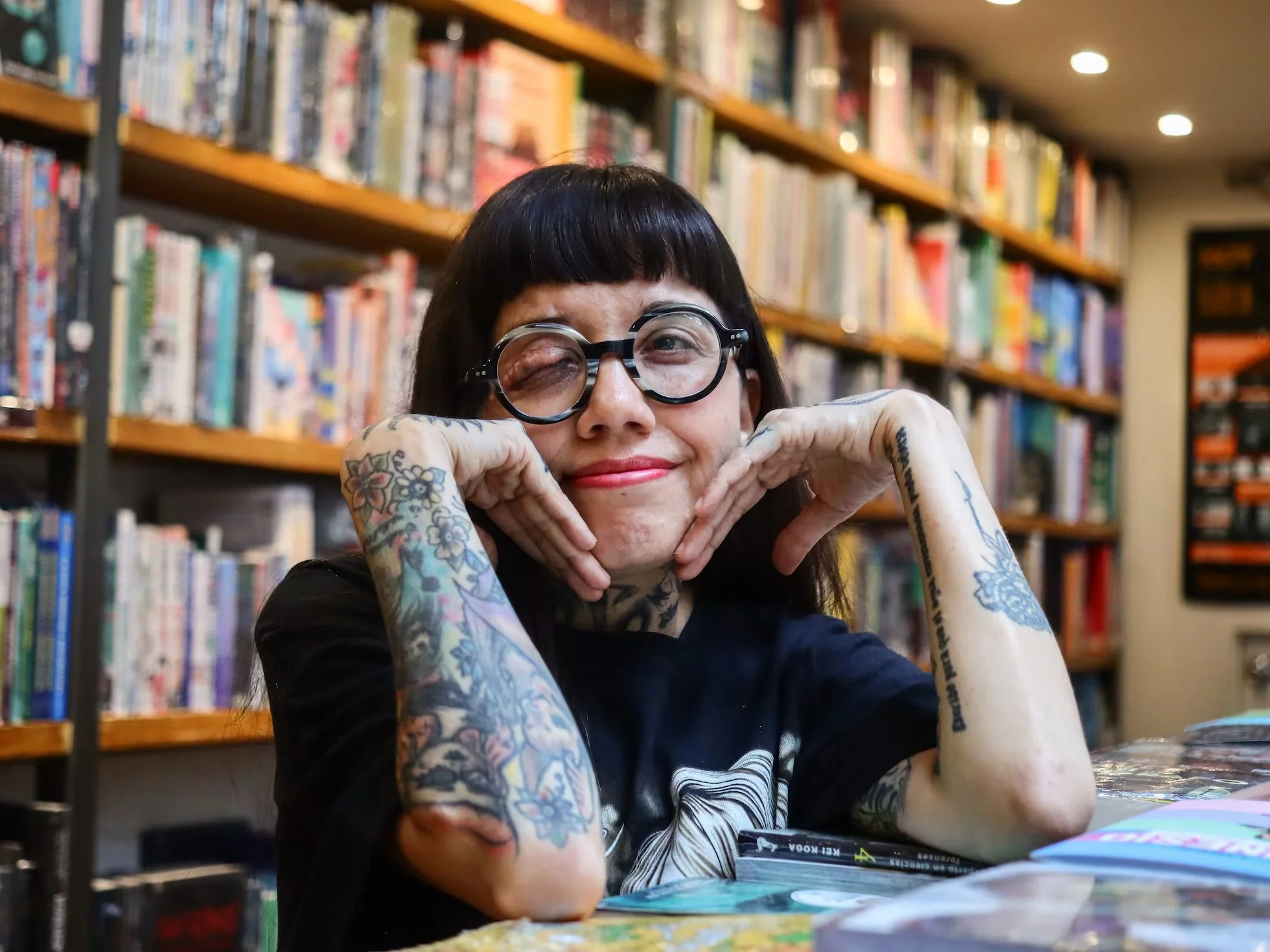
Credit: EL PAÍS
The stories unfold in a Mexico where femicide is not abstract and where narco culture bleeds into beauty standards, social media, and survival itself. Violence hums in the background of daily life, sometimes erupting, sometimes simply waiting. Dahlia does not look away from it. She presses her hand to the bruise. She lets her characters speak in voices that are sharp, funny, profane, and devastatingly self-aware. They understand the rules of the game even as the game is killing them.
For readers who have never encountered this book, Reservoir Bitches is less about spectacle and more about exposure. It reveals how capitalism feeds on insecurity, how patriarchy punishes ambition, and how religion can both wound and sanctify suffering. These women measure their worth against designer bags, against men with guns, against the algorithm. They know the cost of being desirable. They know the cost of being disposable.
What makes the collection unforgettable is its refusal to offer clean redemption. De la Cerda allows her characters to be complicit, hungry, contradictory. She writes them with a tenderness that does not soften their edges. The result is a chorus of voices that feel electric and uncontained, demanding to be heard in a world that would rather silence them. To understand how this took shape, I spoke with de la Cerda.

Courtesy of The Booker Prizes
What first compelled you to write Reservoir Bitches, and was there a particular moment, story, or experience that made you feel this book needed to exist?
I started writing Reservoir Bitches in search of truth and justice. And I soon realized that there wasn't going to be justice. Then I thought that maybe I could find the truth. In Mexico, the government has a habit of leaking information from investigation files to the tabloids, so I started searching on my own. I wanted to know what had happened; I wanted to understand. I didn't find anything concrete. The only thing I found was that seven other women had been murdered that same day. Of those seven, five had been killed by their ex-boyfriends, ex-husbands, or by some man who had once told them, "I love you." I searched for the day before, and the day before that, and the day before that, and I realized that in Mexico, approximately five or six women were murdered every day, and that most of them were killed by men who had once told them "I love you." What outraged me was that this wasn't generating cultural products. All major social problems produce literature, film, songs. The fact that femicide wasn't producing art at that time, we're talking about 2012, seemed unbearable to me.
The title Reservoir Bitches is striking and confrontational. What does it mean to you, and how does it reflect the women at the center of these stories?
It's intentionally uncomfortable. "Bitches" is a word historically used to dehumanize women who don't conform to docile femininity. I reclaim it as a fierce identity. These women are reservoirs of rage, memory, love, violence, and tenderness. They aren't isolated cases; they are a collective body. I wasn't interested in a conciliatory or elegant title.
Many of the stories depict extreme violence against women, but also moments of tenderness, humor, and survival. How did you navigate holding those realities together on the page?
Because that's life. In the barrios, people cry and laugh in the same breath. Violence doesn't cancel out tenderness or humor; they coexist. I didn't want to write a solemn or pornographic book about pain. I wanted to show that even in brutal contexts, women continue to love, to mock, to desire. That, too, is survival.
How do you see these stories reflecting the everyday realities women in Mexico face, especially those from working-class or marginalized communities?
They reflect the normalization of violence. For many women, living in fear is not exceptional; it's everyday life. My characters don't ask why the state fails, because they already know. They live in a country where precariousness, sexism, and impunity are part of the daily landscape.
Several characters seem trapped within systems that repeatedly fail them. Was it important for you to portray violence as systemic rather than isolated?
Yes. I'm interested in breaking down the idea of it being an isolated case. Femicide is not an anomaly or a systemic error: it's a logical outcome of a patriarchal, classist, and racist system. To portray it as systemic is to politicize the pain.
When discussing violence against women in Mexico, fear and a sense of insecurity often play a central role. Do you think this perception is influenced by class and race?
Absolutely. There are upper-class, white women who live in extremely safe areas, who statistically aren't at risk of femicide, but they live in terror. At a certain point, especially around 2019, feminism also created fears that weren't there before. I think it's a political mistake for a movement that seeks to emancipate you to end up paralyzing you. In the periphery, something different happens: you know you're at risk, you've always known it, but you learn to live with it. I live in a working-class neighborhood, I go out to take out the trash at three in the morning, I greet people who collect PET bottles, I feed stray cats. It's not that there's no fear; it's that you do things with or without fear, but you do them.
How do you hope women readers, particularly those who recognize themselves in these stories, feel when they read this book?
Accompanied. Not rescued, not lectured. Accompanied and named. So that they feel their experience has narrative and political value.

Courtesy of The Booker Prizes
Do you feel literature has a responsibility to document brutality, or do you see your work more as bearing witness?
More than documenting, it's about bearing witness. Documenting can become cold. Bearing witness involves body, position, risk. I write from within the conflict.
Some narrators speak from beyond death or from liminal, almost otherworldly spaces. What does the supernatural allow you to explore that realism alone cannot?
Realism falls short when reality is too violent. The supernatural allows me to give voice to the murdered women, to break the silence imposed by death and by failed justice. In Mexico, the supernatural is not escapism; it is cultural heritage and another form of knowledge.
How does allowing dead women to speak challenge the way society processes femicide and violence?
Because she ceases to be just a statistic. When a dead woman speaks, she makes people uncomfortable. She forces us to listen. To not close the case emotionally.
Did writing from these perspectives change the way you personally process grief, anger, or injustice?
Yes. It was a way to channel my anger without turning it into self-destruction. But I also had to do it with psychological support and self-care tools. In fact, my therapist forbade me from writing about femicide for a while. She told me: Write about something else. That's why I started writing about women in conflict with the law.
Each narrator has a distinct voice, often rooted in street language, humor, and intimacy. How did you develop these voices?
Listening. There's an enormous linguistic beauty in everyday Mexican speech. I'm very nosy; I like to meddle in things that don't concern me. I have a very good ear, and I spend a lot of time listening to how people speak. I didn't invent those voices; I refined them.
Despite each character having a very distinctive voice, you do a brilliant job of tying their stories together. What was it like fleshing out this continuity element?
Originally, there were going to be three books, written with state grants. My mental health got in the way, and I had to stop. In the end, I had fifteen stories, not thirty. Then I thought of the book as a shared territory. Lives intersect because that's how marginalized communities work: everything touches each other.
The stories are interconnected, with characters appearing across different narratives. Why was it important for these women’s lives to intersect?
Because no one survives alone. As Audre Lorde said, looking deep is a political act. And because, unfortunately, if we are not together, they will kill us separately.
Your work centers on women who exist in the margins. How do class, gender, and power shape the violence your characters experience?
They determine everything. The most emblematic femicides in Mexico, like those in Ciudad Juárez, weren't randomly chosen bodies. They were poor, racialized women, maquiladora workers. Even in the most brutal sexual femicides, class is present. The same is true with abortion: the protocol is the same, but we don't all have abortions under the same conditions.
How does your activism inform your fiction, and where do you see the line between storytelling and political action?
My writing is not neutral because my life is not. I'm not interested in drawing a rigid line between literature and politics.
What do you hope international readers understand about Mexico, womanhood, and violence after reading this collection?
Femicide is not an isolated problem in a “backward” country. It is part of a global matrix of oppression. We can relate it to ICE raids or the genocide of the Palestinian people. It is not simply the inherent machismo of Mexican men: it is an intersectionality of shared structural violence.
Have readers’ responses to the book surprised you in any way?
Yes. Many women tell me, "This happened to me, too." That confirms that the book touched on a shared wound.
What conversations do you hope Reservoir Bitches continues to spark, especially around women’s autonomy and survival?
Awkward conversations. I'm not looking for consensus. I'm looking for movement. And also to change the image of Mexican women: we are neither submissive nor helpless. We do what we can with what we have. Sometimes we fight back, even if we lose. Like good Mexican women.
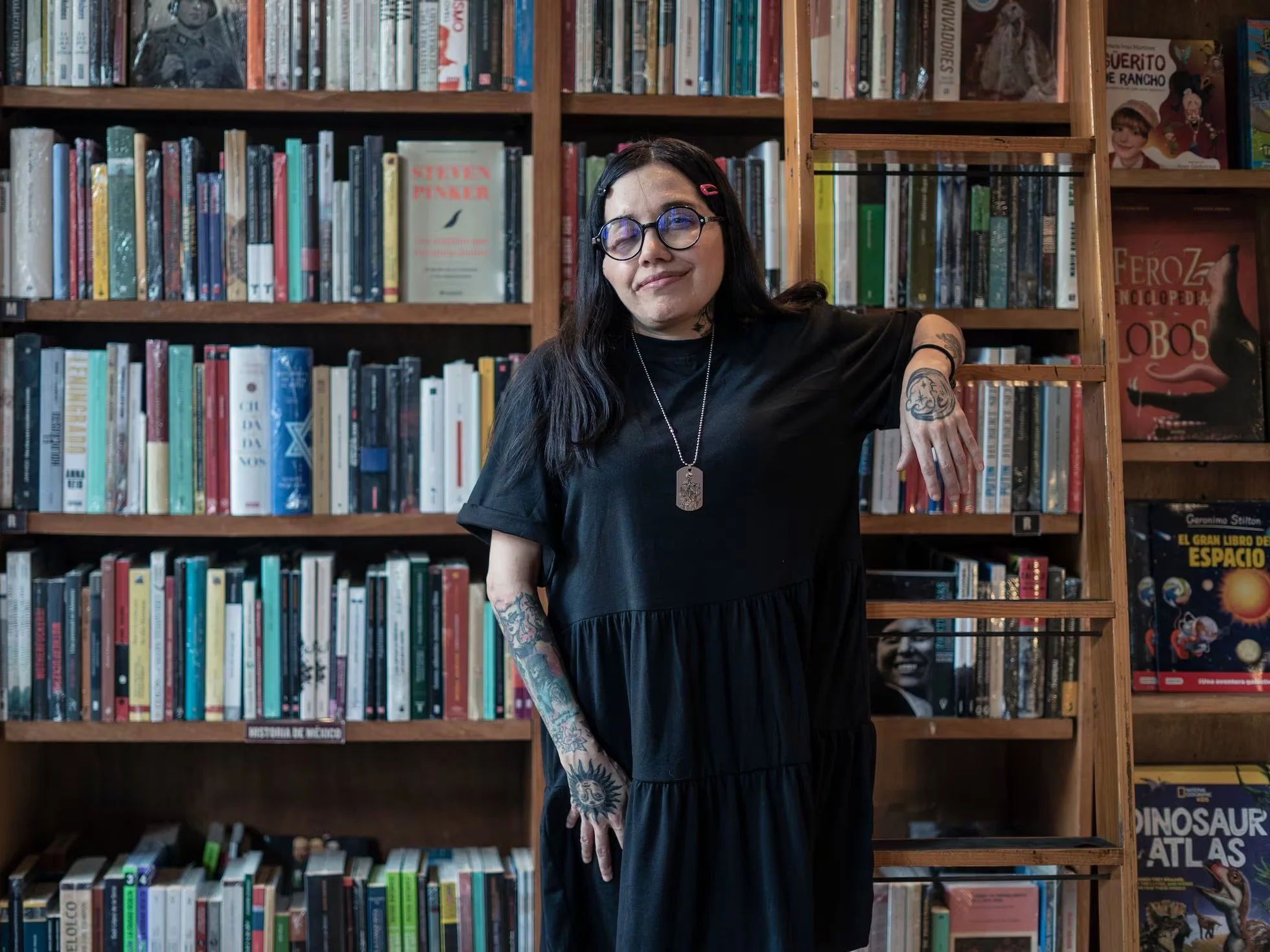
Credit: EL PAÍS
By the end of our conversation, it becomes clear that what makes Reservoir Bitches so unsettling is also what makes it necessary. Dahlia de la Cerda is not interested in polishing pain into something palatable. She writes toward the wound. She writes toward the women who are told they are too loud, too angry, too much. In doing so, she refuses the lie that survival must look graceful.
The world her characters inhabit is brutal, but it is also deeply recognizable. It mirrors the systems that commodify bodies, reward violence, and sell fantasy as freedom. What de la Cerda offers instead is clarity. A reminder that rage can be lucid. That humor can be a blade. That telling the truth, even when it is uncomfortable, is its own form of resistance, and that literature can be an echo of these voices in a way that is necessary more than ever.
Escribiendo hacia la herida: Una conversación con Dahlia de la Cerda
En Reservoir Bitches, Dahlia de la Cerda escribe sobre mujeres que están cansadas de ser reducidas a estadísticas. No son cuentos ejemplares. No son santas. No son cuerpos sacados de los titulares. Están vivas en su deseo. Anhelan dinero, suavidad, estatus, devoción. Anhelan escapar. Y bajo ese anhelo corre una corriente de rabia que se siente casi sagrada.
Las historias transcurren en un México donde el feminicidio no es abstracto y donde la cultura narco se infiltra en los estándares de belleza, en las redes sociales y en la supervivencia misma. La violencia zumba en el trasfondo de la vida cotidiana, a veces estallando, a veces esperando. De la Cerda no mira hacia otro lado. Presiona su mano sobre el moretón. Permite que sus personajes hablen con voces agudas, divertidas, profanas y devastadoramente conscientes. Entienden las reglas del juego incluso cuando el juego los está matando.
Para quienes nunca han leído este libro, Reservoir Bitches no se trata de espectáculo sino de exposición. Revela cómo el capitalismo se alimenta de la inseguridad, cómo el patriarcado castiga la ambición, cómo la religión puede herir y santificar el sufrimiento a la vez. Estas mujeres miden su valor según los bolsos de diseñador, según los hombres armados, según el algoritmo. Saben el precio de ser deseables. Saben el precio de ser desechables.
Lo que hace a la colección inolvidable es su negativa a ofrecer una redención limpia. De la Cerda permite que sus personajes sean cómplices, hambrientos, contradictorios. Los escribe con una ternura que no suaviza sus bordes. El resultado es un coro de voces eléctricas y desbordadas, que exigen ser escuchadas en un mundo que preferiría silenciarlas.
¿Qué te impulsó a escribir Reservoir Bitches y hubo algún momento, historia o experiencia que te hizo sentir que este libro necesitaba existir?
Empecé a escribir Reservoir Bitches en busca de verdad y justicia. Y muy pronto entendí que la justicia no iba a haber. Entonces pensé que quizá podía encontrar la verdad. En México, los gobiernos tienen la costumbre de filtrar información de las carpetas de investigación a la nota roja, así que me puse a buscar por mi cuenta. Quería saber qué había pasado, quería entender. No encontré nada concreto. Lo único que encontré fue que ese mismo día otras siete mujeres habían sido asesinadas. De esas siete, cinco habían sido asesinadas por sus exnovios, exesposos o por algún hombre que alguna vez les dijo “te amo”. Busqué el día anterior, y el anterior, y el anterior, y me di cuenta de que en México se asesinaban aproximadamente cinco o seis mujeres todos los días, y que la mayoría fueron asesinadas por hombres que alguna vez les dijeron “te amo”. Lo que me indignó fue que esto no estaba generando productos culturales. Todos los grandes problemas sociales producen literatura, cine, canciones. El hecho de que el feminicidio no produjera arte en ese momento, estamos hablando de 2012, me pareció insoportable.
El título Reservoir Bitches es impactante y confrontativo. ¿Qué significa para ti y cómo refleja a las mujeres que están en el centro de estas historias?
Es incómodo a propósito. “Bitches” es una palabra usada históricamente para deshumanizar a las mujeres que no cumplen con la feminidad dócil. Yo la reapropio como una identidad feroz. Estas mujeres son reservorios de rabia, memoria, amor, violencia y ternura. No son casos aislados, son un cuerpo colectivo. No me interesaba un título conciliador ni elegante.
Muchos de los relatos retratan violencia extrema contra las mujeres, pero también momentos de ternura, humor y supervivencia. ¿Cómo navegaste la convivencia de esas realidades dentro del texto?
Porque así es la vida. En los barrios se llora y se ríe en la misma frase. La violencia no cancela la ternura ni el humor; conviven. Yo no quería escribir un libro solemne ni pornográfico del dolor. Quería mostrar que incluso en contextos brutales las mujeres siguen amando, burlándose, deseando. Eso también es supervivencia.
¿Cómo ves que estas historias reflejan las realidades cotidianas que enfrentan las mujeres en México, especialmente aquellas de comunidades trabajadoras o marginadas?
Reflejan la normalización de la violencia. Para muchas mujeres, vivir con miedo no es excepcional, es cotidiano. Mis personajes no se preguntan por qué el Estado falla, porque ya lo saben. Viven en un país donde la precariedad, el machismo y la impunidad son parte del paisaje diario.
Varios personajes parecen atrapados dentro de sistemas que les fallan una y otra vez. ¿Era importante para ti mostrar la violencia como algo sistémico y no como hechos aislados?
Sí. Me interesa romper la idea del “caso”. El feminicidio no es una anomalía ni un error del sistema: es un resultado lógico de un sistema patriarcal, clasista y racista. Mostrarlo como sistémico es politizar el dolor.
Cuando se habla de violencia contra las mujeres en México, el miedo y la percepción de inseguridad suelen ocupar un lugar central. ¿Crees que esa percepción está atravesada por la clase y la raza?
Totalmente. Hay mujeres de clase alta, blancas, que viven en zonas extremadamente seguras, que estadísticamente no están en riesgo de feminicidio, pero viven aterradas. En cierto momento, sobre todo alrededor de 2019, el feminismo también produjo miedos que antes no estaban ahí. Creo que es un error político que un movimiento que busca emanciparse termine paralizándote. En la periferia ocurre algo distinto: sabes que estás en riesgo, lo sabes desde siempre, pero aprendes a vivir con eso. Yo vivo en un barrio popular, salgo a tirar la basura a las tres de la mañana, saludo a personas que recolectan PET, alimento a gatos callejeros. No es que no haya miedo, es que haces las cosas con miedo o sin miedo, pero las haces.
¿Cómo esperas que se sientan las lectoras, en especial aquellas que se reconocen en estas historias, al leer este libro?
Acompañadas. No salvadas, no aleccionadas. Acompañadas y nombradas. Que sientan que su experiencia tiene valor narrativo y político.
¿Sientes que la literatura tiene la responsabilidad de documentar la brutalidad, o ves tu trabajo más bien como un acto de dar testimonio?
Más que documentar, testimoniar. Documentar puede volverse frío. Testimoniar implica cuerpo, posición, riesgo. Yo escribo desde dentro del conflicto.
Algunas narradoras hablan desde después de la muerte o desde espacios liminales. ¿Qué te permite explorar lo sobrenatural que el realismo por sí solo no podría?
El realismo se queda corto cuando la realidad es demasiado violenta. Lo sobrenatural me permite devolverles voz a las asesinadas, romper el silencio impuesto por la muerte y por la justicia fallida. En México, lo sobrenatural no es evasión; es herencia cultural y otra forma de conocimiento.
¿Cómo desafía el hecho de permitir que las mujeres asesinadas hablen la forma en que la sociedad procesa el feminicidio?
Porque deja de ser una cifra. Cuando una muerta habla, incomoda. Obliga a escuchar. A no cerrar el caso emocionalmente.
¿Escribir desde estas perspectivas cambió la manera en que tú procesas el duelo, la rabia o la injusticia?
Sí. Fue una forma de canalizar la rabia sin volverla autodestructiva. Pero también tuve que hacerlo con acompañamiento psicológico y herramientas de autocuidado. De hecho, mi psicóloga me prohibió escribir sobre feminicidio durante un tiempo. Me dijo: escribe de otra cosa. Por eso me fui a escribir sobre mujeres en conflicto con la ley.
Cada narradora tiene una voz muy definida, muchas veces anclada en el lenguaje de la calle. ¿Cómo desarrollaste esas voces?
Escuchando. En el habla cotidiana de México hay una belleza lingüística enorme. Yo soy muy chismosa; me gusta meterme en lo que no me importa, tengo muy buen oído y paso mucho tiempo escuchando cómo habla la gente. No inventé esas voces; las afiné.
A pesar de que cada personaje tiene una voz muy distintiva, logras entrelazar sus historias. ¿Cómo fue construir ese elemento de continuidad?
Originalmente iban a ser tres libros, escritos con becas estatales. La salud mental se atravesó y tuve que parar. Al final tenía quince cuentos, no treinta. Entonces pensé el libro como un territorio compartido. Las vidas se cruzan porque así funcionan las comunidades marginales: todo se toca.
Las historias están interconectadas, con personajes que aparecen en distintos relatos. ¿Por qué era importante que las vidas de estas mujeres se cruzaran?
Porque nadie sobrevive sola. Como decía Audre Lorde: mirar profundo es un acto político. Y porque, desgraciadamente, si no estamos juntas, nos van a matar por separado.
Tu obra se centra en mujeres que existen en los márgenes. ¿Cómo influyen la clase, el género y el poder en la violencia que experimentan tus personajes?
Lo determinan todo. Los feminicidios más emblemáticos en México, como los de Ciudad Juárez, no fueron cuerpos elegidos al azar. Eran mujeres pobres, racializadas, trabajadoras de la maquila. Incluso en los feminicidios sexuales más brutales, la clase está presente. Lo mismo ocurre con el aborto: el protocolo es el mismo, pero no todas abortamos en las mismas condiciones.
¿Cómo influye tu activismo en tu ficción, y dónde trazas la línea entre contar historias y la acción política?
Mi escritura no es neutral porque mi vida no lo es. No me interesa trazar una línea rígida entre literatura y política.
¿Qué esperas que lectoras y lectores internacionales comprendan sobre México, la feminidad y la violencia después de leer este libro?
Que el feminicidio no es un problema aislado de un país “atrasado”. Forma parte de una matriz global de opresiones. Podemos relacionarlo con las redadas de ICE o con el genocidio del pueblo palestino. No es el machismo esencial de los hombres mexicanos: es una interseccionalidad de violencias estructurales compartidas.
¿Te han sorprendido de alguna manera las reacciones del público ante el libro?
Sí. Muchas mujeres me dicen: “Esto también me pasó.” Eso confirma que el libro tocó una herida compartida.
¿Qué conversaciones esperas que Reservoir Bitches siga generando, especialmente en torno a la autonomía y la supervivencia de las mujeres?
Conversaciones incómodas. No busco consenso. Busco movimiento. Y también cambiar la imagen de la mujer mexicana: no somos sumisas ni indefensas. Hacemos lo que podemos con lo que tenemos. A veces damos batalla, aunque perdamos. Como buenas mexicanas.
Al final de nuestra conversación, queda claro que lo que hace a Reservoir Bitches tan inquietante es también lo que la vuelve necesaria. Dahlia de la Cerda no está interesada en pulir el dolor hasta volverlo digerible. Escribe hacia la herida. Escribe hacia las mujeres a quienes les han dicho que son demasiado ruidosas, demasiado enojadas, demasiado intensas. Al hacerlo, rechaza la mentira de que la supervivencia debe verse elegante.
El mundo que habitan sus personajes es brutal, pero también profundamente reconocible. Refleja sistemas que mercantilizan los cuerpos, que recompensan la violencia y que venden la fantasía como si fuera libertad. Lo que de la Cerda ofrece, en cambio, es claridad. Un recordatorio de que la rabia puede ser lúcida. De que el humor puede ser un arma. De que decir la verdad, incluso cuando incomoda, es en sí mismo una forma de resistencia. Y de que la literatura puede convertirse en el eco de estas voces en un momento en que escucharlas es más urgente que nunca.