By Stella Speridon-Violet
There’s something special about M3F. It’s not just the sustainability mission or the art installations, it’s the way the lineup feels curated for people who actually care about sound.
This year, two acts stand out as perfect reflections of that ethos: Arizona-bred duo HOSTEL and high-energy selector Peachy Keen. Different styles. Different journeys. Same hunger.
Together, they represent the tension that makes a festival set unforgettable. A perfect mix of chaos and control.
I got to sit down with them both a few weeks ago, in preparation for the festival and talk about what it’s like to be an artist and a performer.
HOSTEL: No Rules, Just Evolution
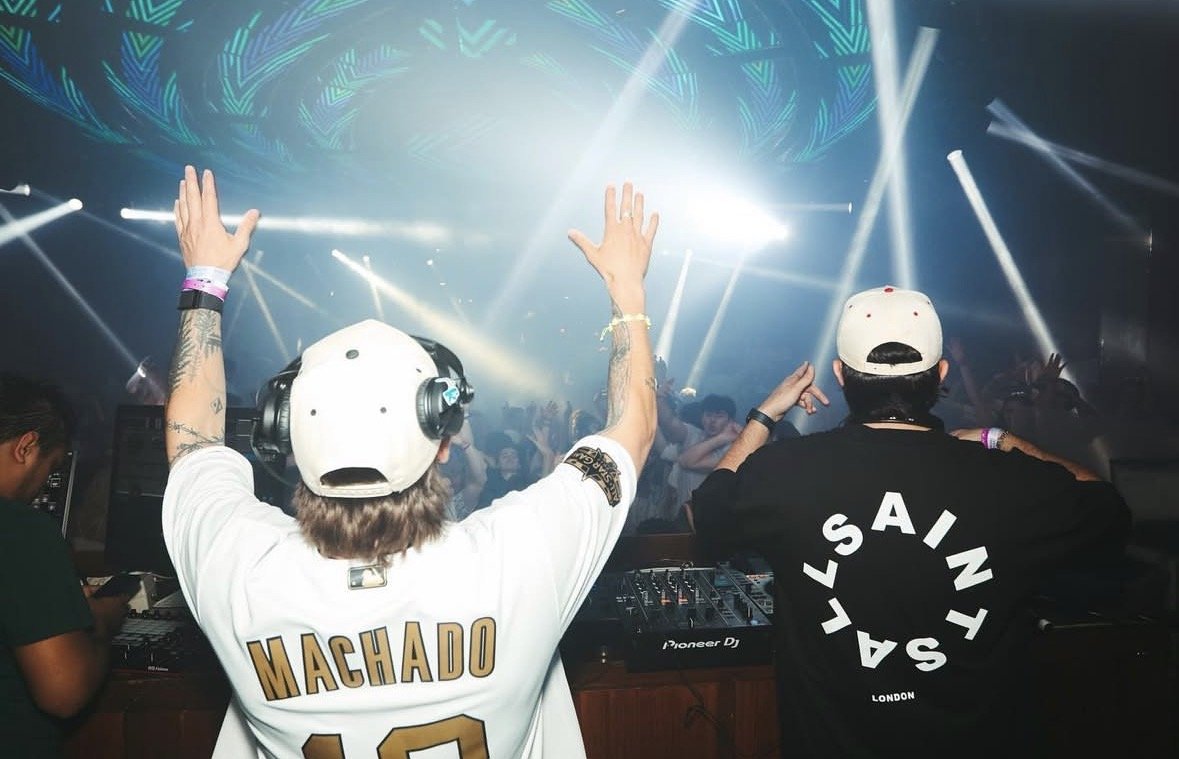
Credit: @hostelmusic_ x @saucegirlmedia
For HOSTEL, M3F marks something bigger than just another booking; it’s their first major festival stage.
Some partnerships feel manufactured, while others feel inevitable. This duo’s story starts the way a lot of real ones do: high school friends reconnecting in college, learning to DJ on outdated CDJ-900s with barely visible waveforms. No shortcuts. No sync safety net. Just ear training and obsession.
“We really learned how to DJ on some of the hardest equipment,” they told me. “You had to do everything by ear.”
What started as college parties turned into years of playing together, but like many creative pursuits, there were pauses. Life, doubt, different paths. The real turning point came in San Diego, during a conversation at a bar in Pacific Beach.
“We should really take this seriously,” they remember saying. “We’re good at it. We’re passionate. Let’s go all in.”
They hired a manager. They committed. HOSTEL was officially born.
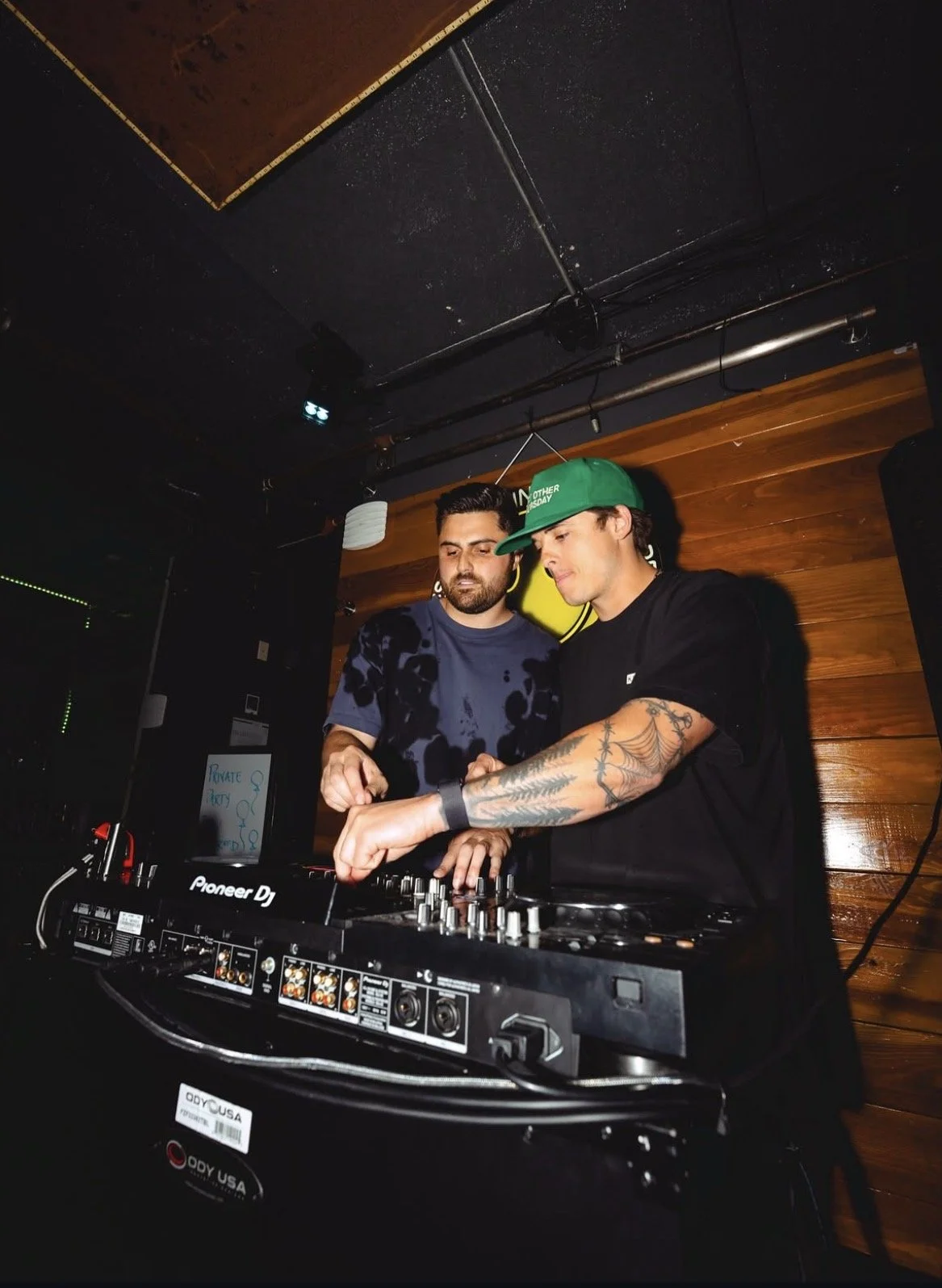
Credit: @hostelmusic_ x @saucegirlmedia
They describe their dynamic as yin and yang, almost telepathic. Brutally honest in the studio. No ego. If a track isn’t working, they scrap it and rebuild.
Their sets reflect that same philosophy. No genre loyalty. No predictable arc.
If you ask them to describe a HOSTEL set, they won’t give you a genre, they’ll give you a trajectory.
At a larger festival like M3F, expect the first 15–20 minutes to lean into unique tech house and deep house, slightly aggressive but intentional. Then comes experimentation. Then dance-driven, garage-infused, high-energy closers.
They pride themselves on never playing the same set twice.
“We curate every show to the specific vibe,” they told me. “People will never see the same HOSTEL show.”
Crowd reading is essential. They come prepared with a plan but pivot if something hits harder. It’s not about playing the obvious hits, it’s about playing what people didn’t even know they wanted to hear.
“A good DJ plays music you want to hear,” they said. “A great DJ plays music you didn’t know you wanted to hear.”
That philosophy fuels their relentless crate digging and obsession with finding tracks that feel new.
When it comes to inspiration, they pull from both pioneers and modern innovators.
Old-school influences like Bingo Players and early electronic MySpace-era acts first pulled them into the scene. Today, they look toward artists pushing experimental boundaries, from genre-bending innovators to producers redefining live energy.
They admire artists who built careers off one track that felt completely different at the time, the kind of sonic shift that creates its own lane rather than fitting into one.
That’s what they’re chasing: evolution, not replication.
If they could rewind to college?
“Take it serious immediately,” they told me. “Start producing sooner. Take every show, even if there are five people in the room. Play for five like it’s five thousand.”
They’re candid about a common early mistake, assuming one big show meant they had “made it.” After that Cabo break, momentum slowed. Reality hit.
“It was almost one of the biggest blessings and curses,” they admitted.
Now, there’s no illusion. Just work.
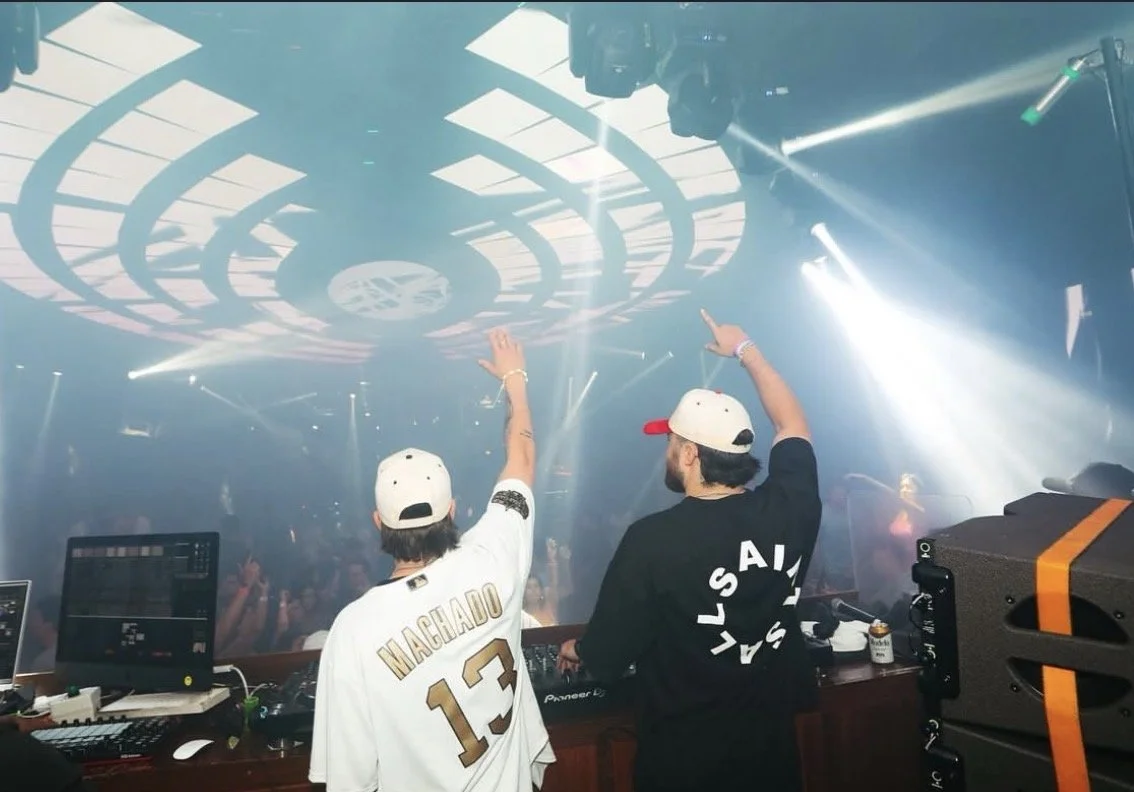
Credit: @hostelmusic_ x @saucegirlmedia
They’re especially excited about performing on a large-scale stage, curating something experimental and art-forward in a setting known for creativity and community. For them, it’s not just about the set, it’s about the walk onto the stage, the look at each other before the first drop.
“We’ve thought about this moment for so long,” they said. “We’re about to go tear this up.”
Expect new music. Expect experimentation. Expect a vibe that refuses to follow the beaten path.
The next year is heavy on production, originals, edits, live reworks. They know sustainable careers are built on music, not just bookings. More festivals, more unique environments, more stages that push them forward rather than sideways.
Stepping onto the M3F stage feels like the first chapter of something much bigger.
Peachy Keen: Dancing Into Her Own Light

Credit: @djpeachykeen
If HOSTEL thrives in calculated evolution, Peachy Keen thrives in electricity.
For DJ Peachy Keen, what began as a casual encouragement from friends in the local scene has evolved into a rapidly rising career rooted in rhythm, intuition, and fearless self-expression.
Ahead of her upcoming set at M3F, I sat down with the Arizona-based DJ and producer to talk about her evolution, musical roots, unforgettable stage moments, and what it really means to carve out space as a woman in electronic music.
Like many artists, Peachy Keen’s entry into DJing was organic. After spending time around local DJs and getting nudged to try it herself, she began practicing during the pandemic, a period that forced stillness but sparked creativity.
Then came a turning point: she entered a DJ competition for Goldrush Music Festival and won. The prize? A main stage performance.
“I was just like, wow, this is crazy,” she told me.
Growing up as a dancer, performing on stage had always been part of her identity. But after losing that outlet in college, DJing brought that feeling rushing back. “It felt really good getting that feeling back,” she said. And she hasn’t looked back since.
Before decks and production software, there were instruments: piano, flute, and harp. Peachy Keen’s musical foundation was built on years of formal training, something that still shapes how she hears and builds tracks today.
“Music theory, having an ear for something being in key, that really helped,” she explained.
Though she doesn’t perform instruments live (yet), she uses a mini keyboard while producing and hopes to eventually incorporate live instrumentation into her sets. The idea of blending electronic energy with something tactile and organic excites her, adding dimension beyond “just standing there DJing.”
It tracks. Her sound itself refuses to stay in one lane. Tech house, bass house, drum and bass, it all depends on the room. A daytime festival set like M3F calls for lighter, groove-forward energy. A headline slot? That’s when she leans into her basshead roots.
“I kind of grew up listening to a lot of bass and trap,” she said. “So sometimes I’ll go heavier. It really depends on the event.”
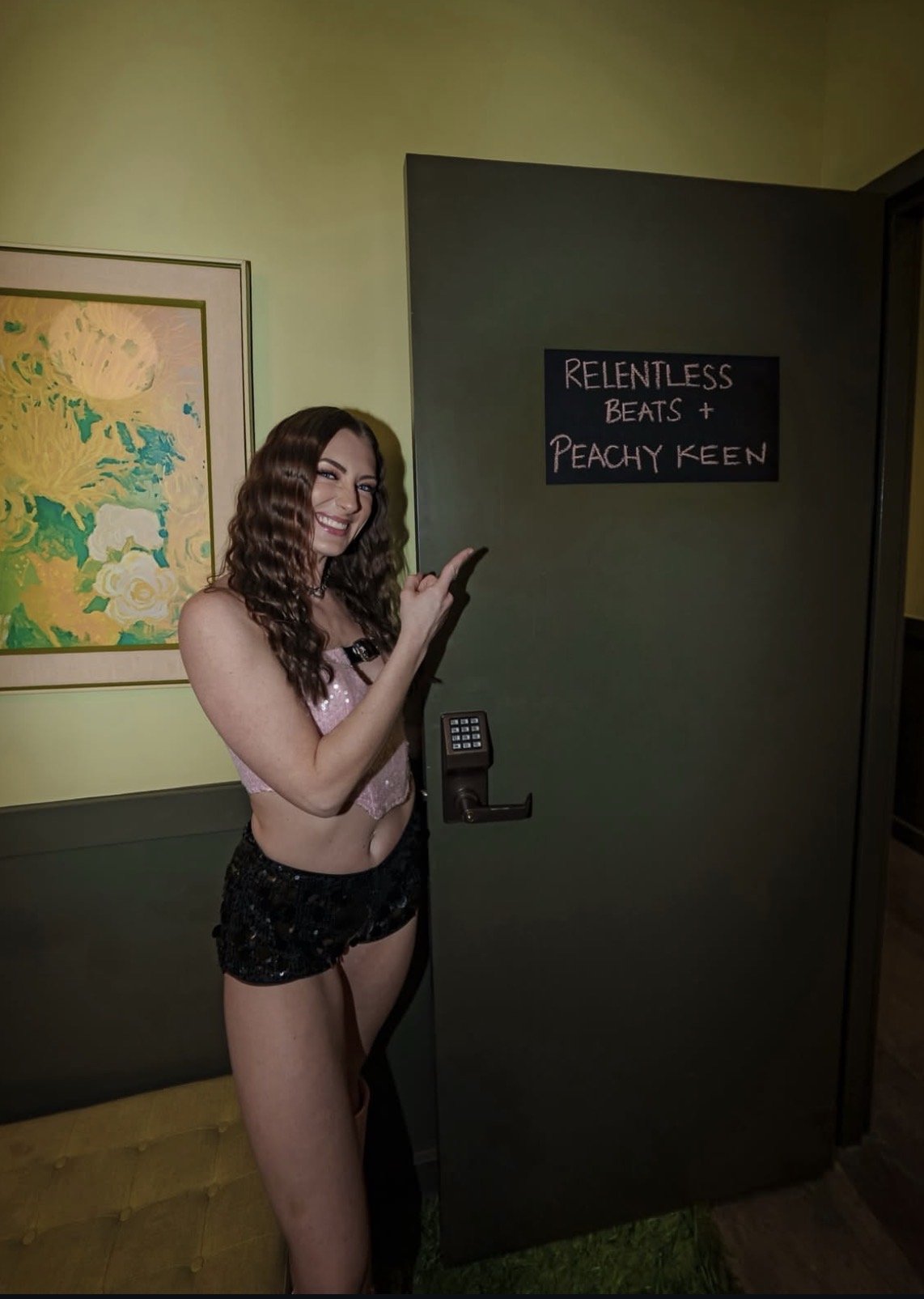
Credit: @djpeachykeen
Peachy Keen doesn’t operate on strict rituals when creating. Inspiration hits anywhere, and when it does, she captures it.
Her track Everything Dances was born from a weekend in Flagstaff, after reading a quote about universal rhythm. “Everything in the universe has a rhythm, everything dances.” She went home and built the track in a single day, even recording her own vocals.
Other ideas come from nostalgia, like her upcoming release, Fuck Mary Kill, inspired by the childhood game. When she tested it live, she watched the crowd start playing along together.
“I love that,” she said. “When something in a set makes people start interacting with each other, that’s so special.”
For her, music isn’t just sound. It’s a catalyst.
Her sets feel like a rush, playful but punishing, confident but unpredictable. She doesn’t just mix tracks; she builds moments.
When I talked about her approach to festivals like M3F, she emphasized energy above all else. Reading the room. Knowing when to twist the tempo. Letting the crowd feel like they’re in on something exclusive.
When I asked about her most unforgettable stage moment, she didn’t hesitate: opening a tent at Decadence Arizona.
She started her set with essentially one person in the crowd, a security guard. By the end, the entire tent was packed.
That same set featured a choreographed shuffle routine she performed mid-set, stepping away from the booth (terrifying, she admits). She closed with the first original track she ever produced, unreleased and imperfect, but deeply personal.
And in the crowd? Her mom, holding a homemade light-up sign.
“I had no idea she even made that,” she said. “I was just like, what is going on?”
Full-circle moments don’t get sweeter than that.
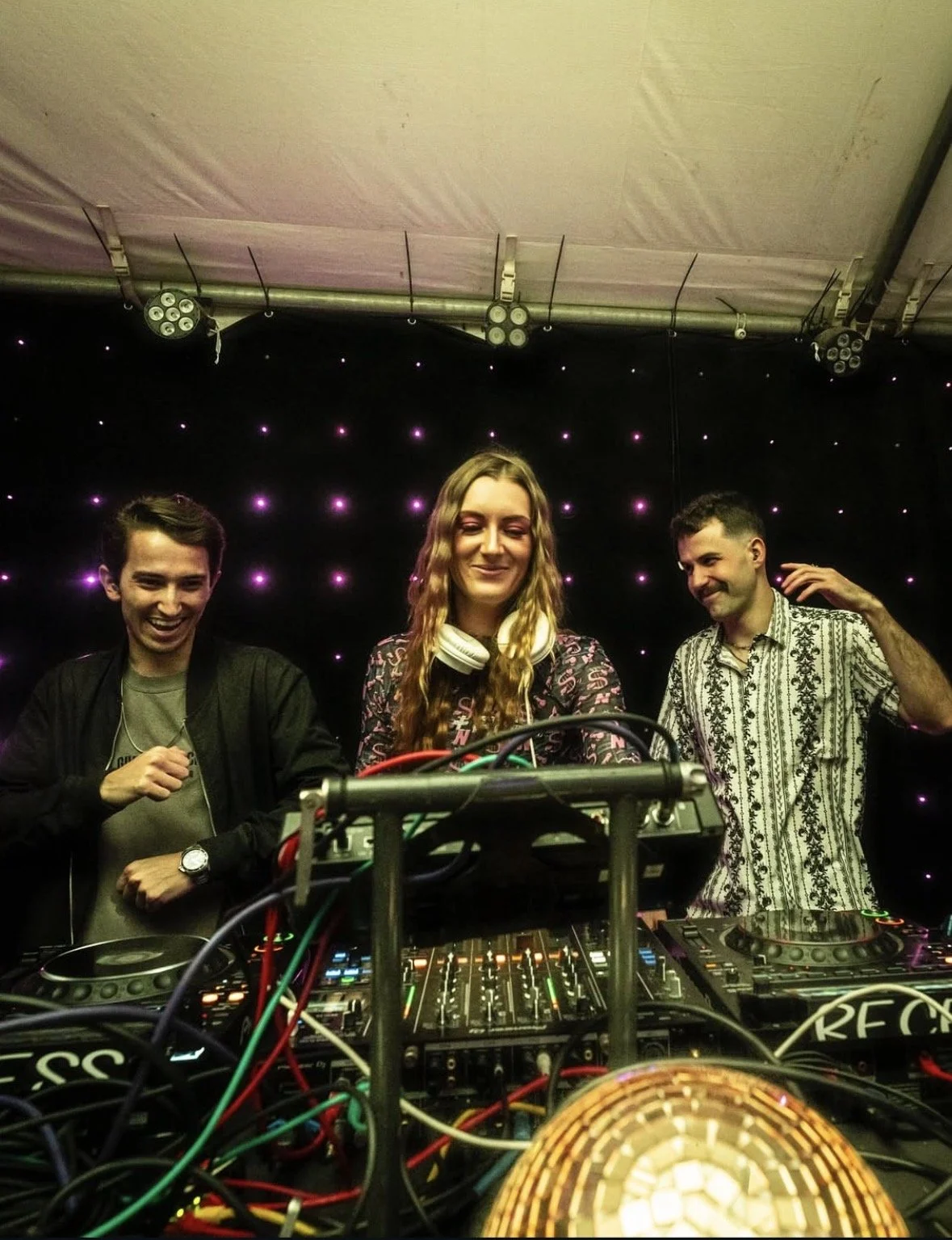
Credit: @djpeachykeen x @eyelevel_az
Electronic music still leans heavily male—from promoters and bookers to managers—but Peachy Keen has watched more women enter the space since she started, and she welcomes it.
“It can be intimidating,” she admitted. “But you just have to go for it.”
There’s always noise, questions about being booked because of gender, and commentary from the sidelines. Her advice? Block it out. Stay true to yourself. Take the opportunities. Keep pushing.
If she could give her younger self one piece of advice? “Start producing sooner.”
DJing opened the door, but producing solidified her place. Once she pushed past the intimidation factor, she fell in love with the process.
There’s a boldness in her curation, a refusal to shrink or sand down her taste to make it more digestible.
Where some DJs aim for seamless perfection, Peachy leans into texture. Grit. Personality. A wink behind the decks.
Recently, she’s opened at Walter Where? House for Truth x Lies and Walker & Royce, and she has a Miami Music Week show lined up. More releases are on the way. More bookings are the goal.
But first: M3F.
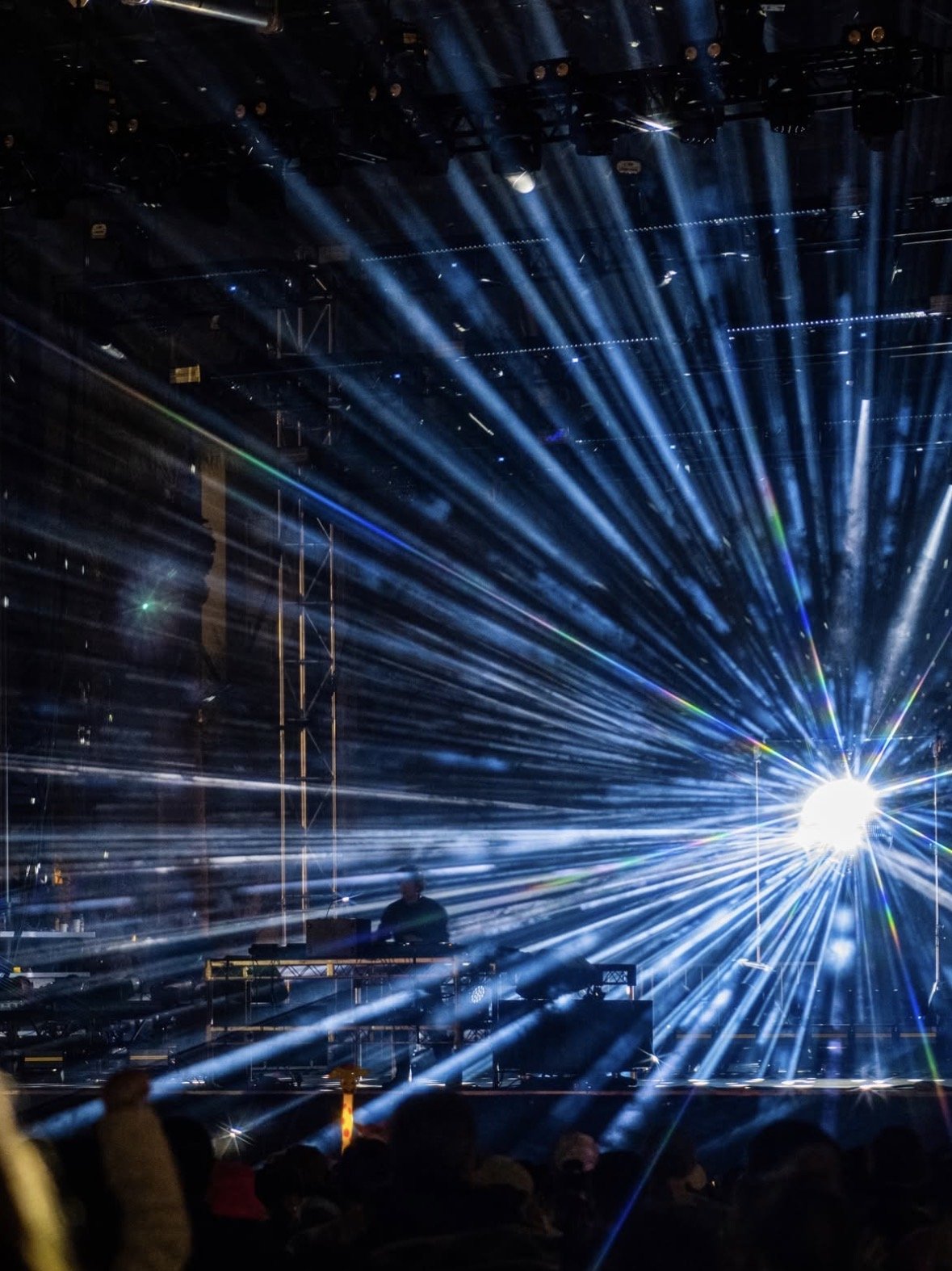
Courtesy of M3F
What makes this year exciting isn’t just individual sets, it’s what they symbolize.
M3F has quietly become a proving ground for artists on the brink. A space where experimentation isn’t punished. Where emerging acts can test bigger ideas in front of a crowd that actually listens.
For HOSTEL, it’s their first large-scale festival validation. For Peachy Keen, it’s another step in solidifying her presence as an undeniable force.
Both acts understand something essential: momentum isn’t magic. It’s built.
Hours in the studio. Empty rooms. Risky transitions. Reworked edits at 2 a.m. Doubt. Then believe again.
M3F isn’t the destination. It’s the ignition point.