By Natalie McCarty
Hope and optimism aren’t exactly in heavy rotation right now within the current cultural climate, but Illuminare Productions is leaning into that anyway—building human-first stories grounded in empathy, connection, and emotional honesty.
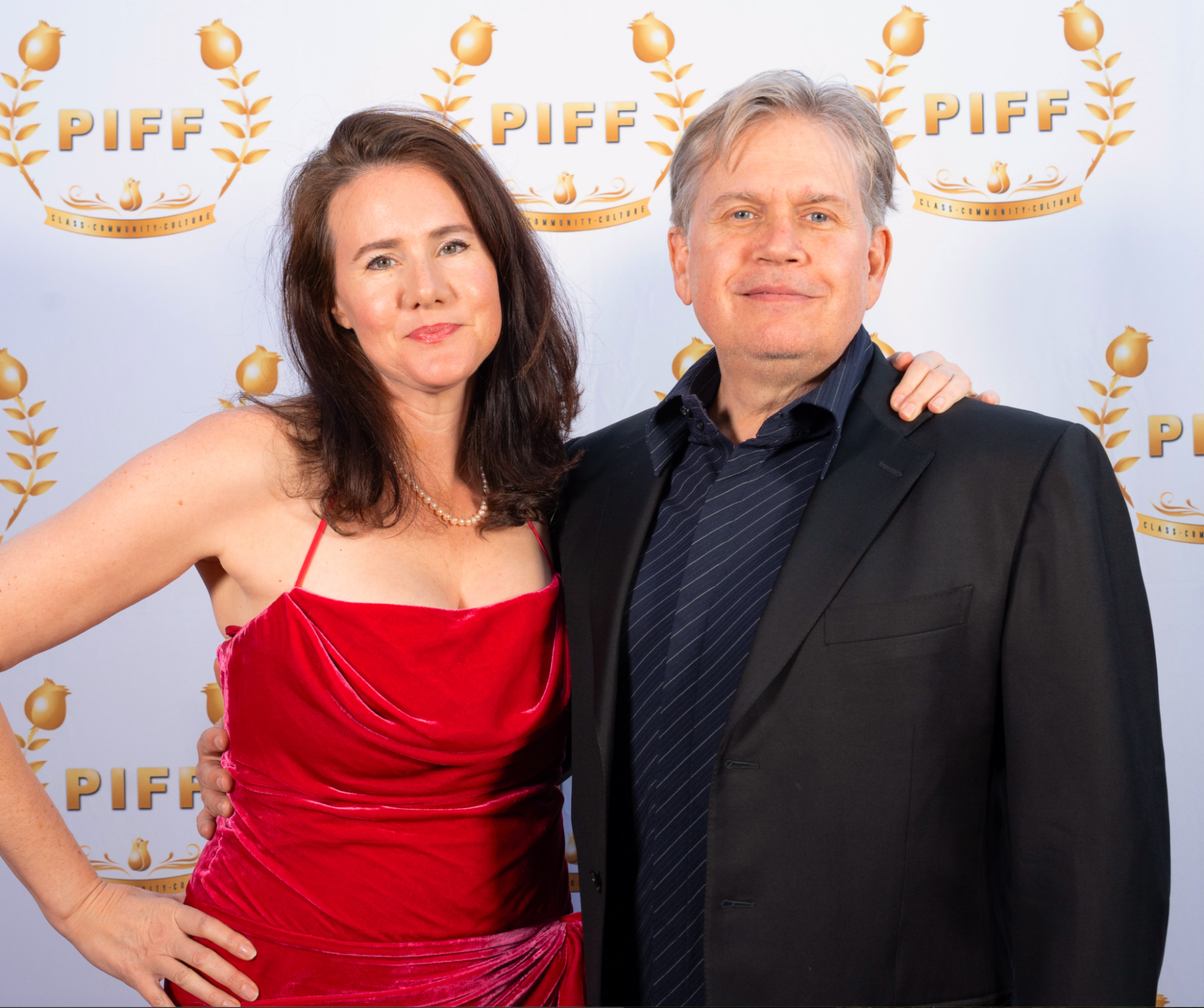
Founded by Emma Cameron and her husband and creative partner Mark Cameron, Illuminare isn’t built around chasing trends or engineering emotion; it’s built around character.
Courtesy of Illuminare Productions
The two are a perfect duo, where Emma leads with instinct and emotional truth, building stories from the inside out, while Mark brings structure, visual scope, and an editor’s precision. Together, they shape films that feel grounded and human—moving between humor and heartbreak, letting both exist without cancelling each other out, and allowing optimism to emerge naturally through character rather than intention.
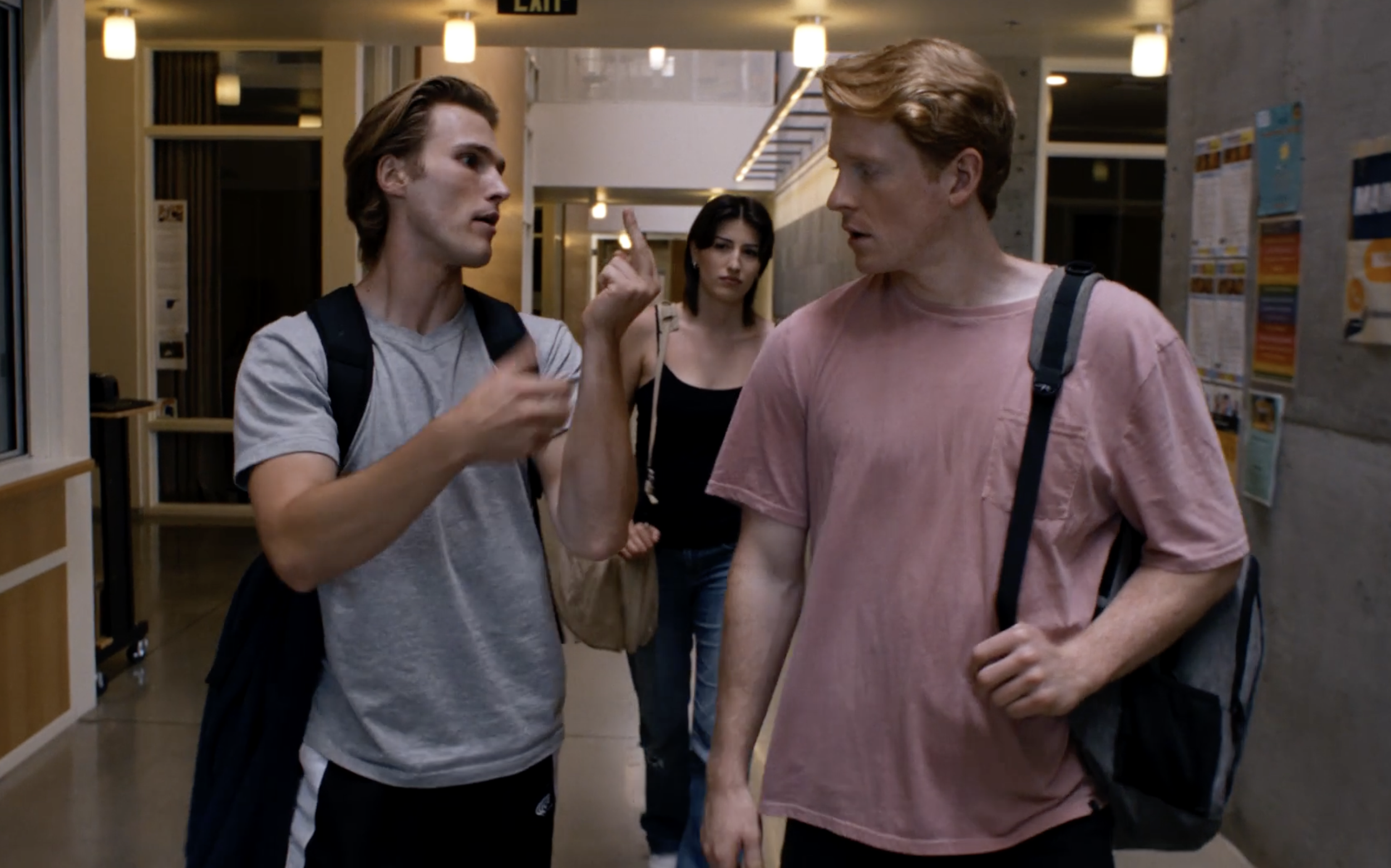
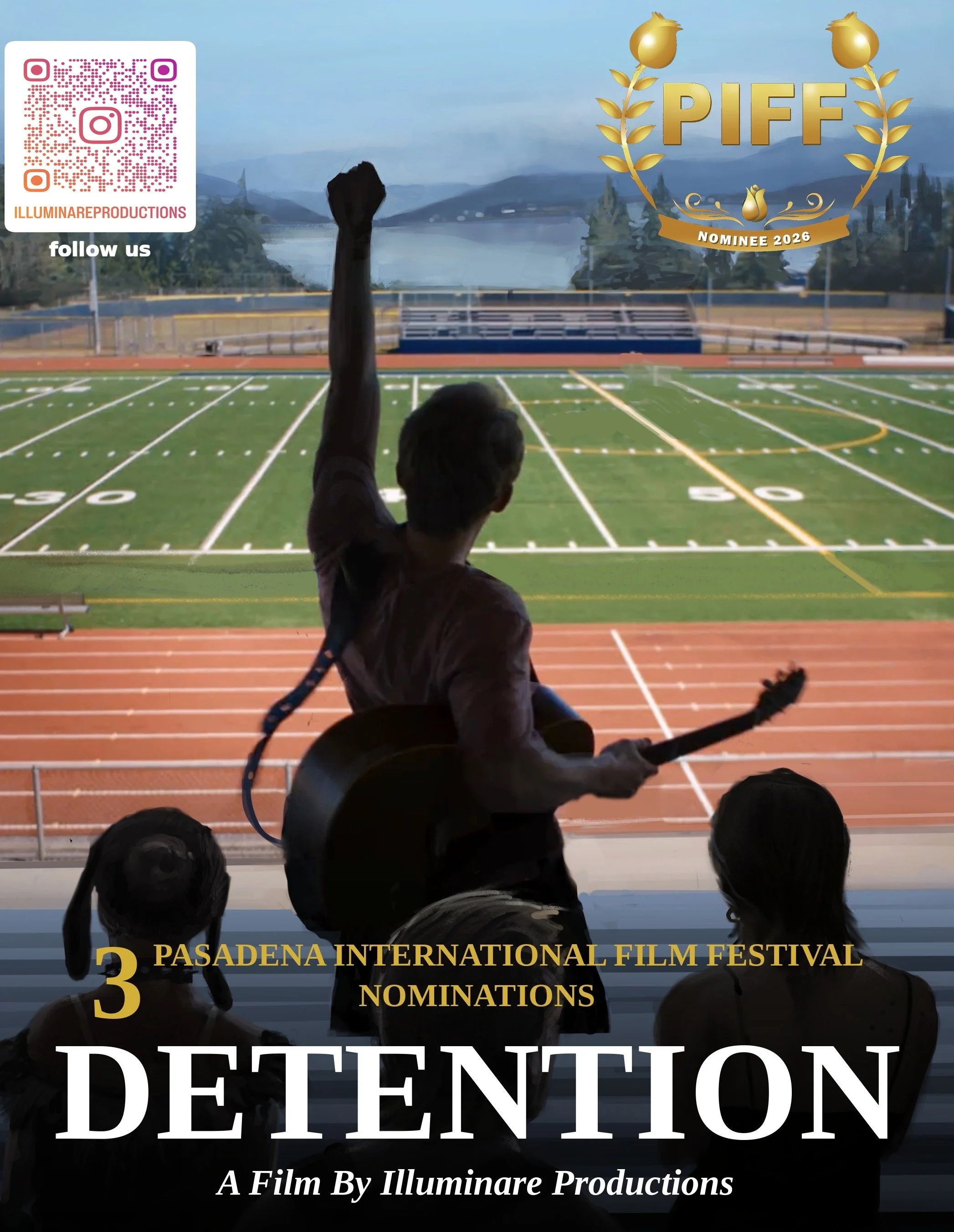
Their latest film, Detention, feels like a new-era Breakfast Club—not in imitation, but in spirit. A coming-of-age story grounded in teen mental health, empathy, and connection, it trades caricature for complexity and nostalgia for something more immediate. The film recently had its world premiere at the Pasadena International Film Festival, where it received three nominations and has already attracted five distribution offers—an early signal that its emotional clarity is resonating beyond the festival circuit.
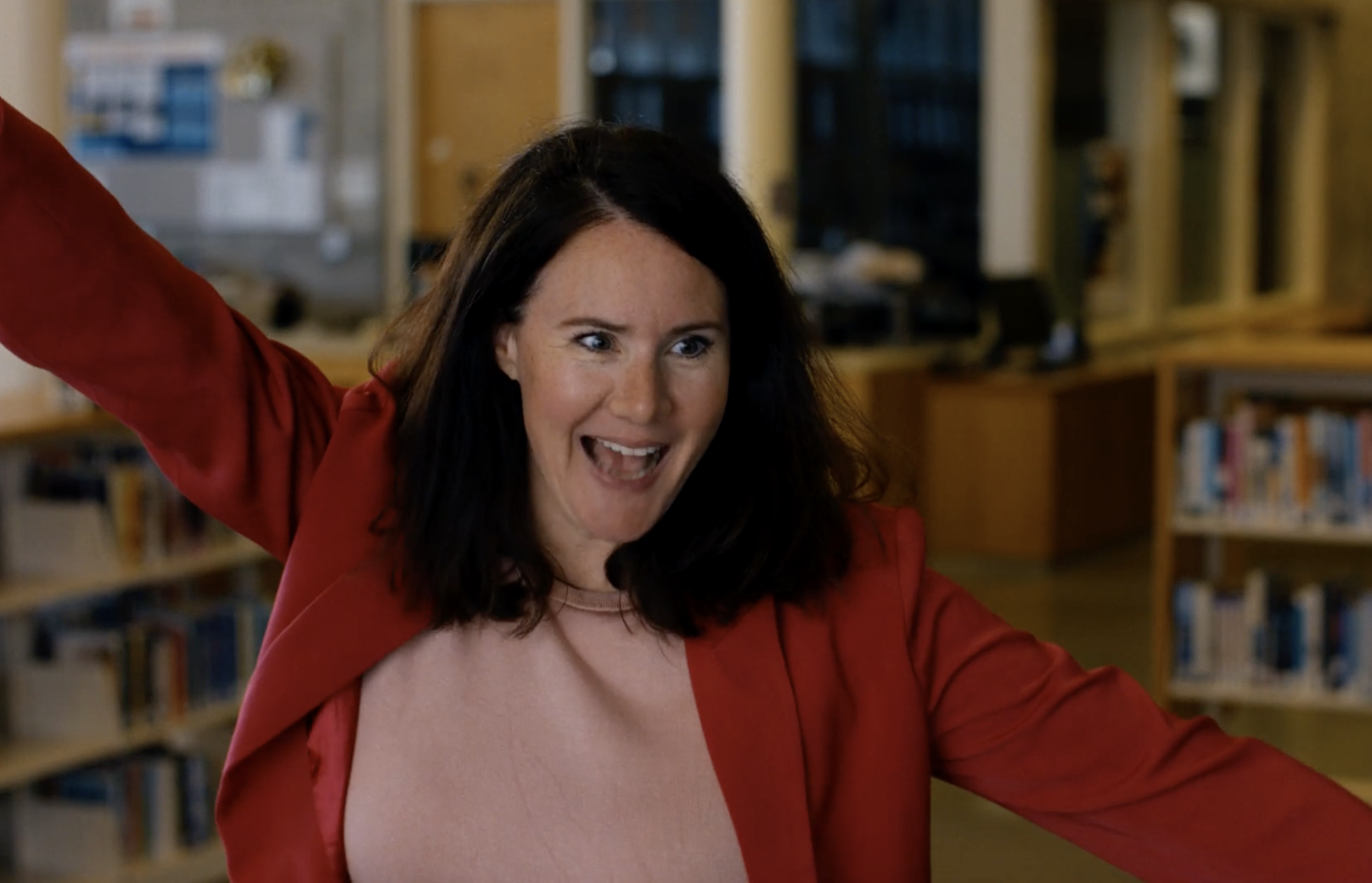
But for Emma Cameron, none of this started with a grand mission statement. It started, as most things do for her, with characters. “For me, it's less clear-cut,” she says. “There is no defining moment where I consciously commit to a mission or ideology. It's an unfolding and an unraveling of what is happening in my subconscious. The characters are sacred. I start with creating characters, and then I see where these characters lead me.”
Courtesy of Illuminare Productions
That idea—of not forcing meaning, but discovering it—shapes everything she writes. There’s no rigid outline, no attempt to anticipate what an audience might want.
“I try not to second-guess what the industry wants, what people will gravitate to, or what will sell,” she continues. “Just on writing interesting characters rooted in authenticity and letting them lead me on an adventure.”
It’s a process that is as intuitive as it is immersive. She describes getting to know her characters so deeply that they begin to speak on their own, guiding the story in real time. “I don't have it all figured out before I start writing… Sometimes it feels like I have multiple personality disorder as they chat to each other and I write down what they're saying.”
That instinct-driven approach is balanced by Mark’s more structured way of thinking, and it’s in that contrast that Illuminare finds its footing. “Mark and I are complete opposites in every way. We very much divide and conquer,” said Cameron.
Courtesy of Illuminare Productions
On set, that division becomes tangible. Mark, with a background in editing and cinematography, focuses on mechanics—coverage, pacing, and how scenes will ultimately cut together. Emma, meanwhile, is locked into performance. “I am laser focused on the actors and whether their performance is grounded in authenticity and that they are bringing the energy from the previous scene with them,” she explains. “Sometimes we shoot scenes out of sequence, so it's important that the actors really feel what they were feeling in the scene before.”
That attention to emotional continuity is essential in Detention, a film that moves fluidly between humor and something heavier underneath. Emma is deliberate about that balance, but not in a way that feels forced. “If the characters are 100% authentic and they make you laugh, you are trusting them and investing in them on a subconscious level,” she says. “When you are invested in these characters, you will hopefully be fully captivated in their story and will cry along with them when bad things happen.”
What she avoids is anything that feels imposed. “I absolutely hate it in a movie when the violins come in too early to tell the audience how to feel,” she adds. “If the writing is solid and the performances are rooted in truth, you want to be on the verge of tears before the music prompts you.”
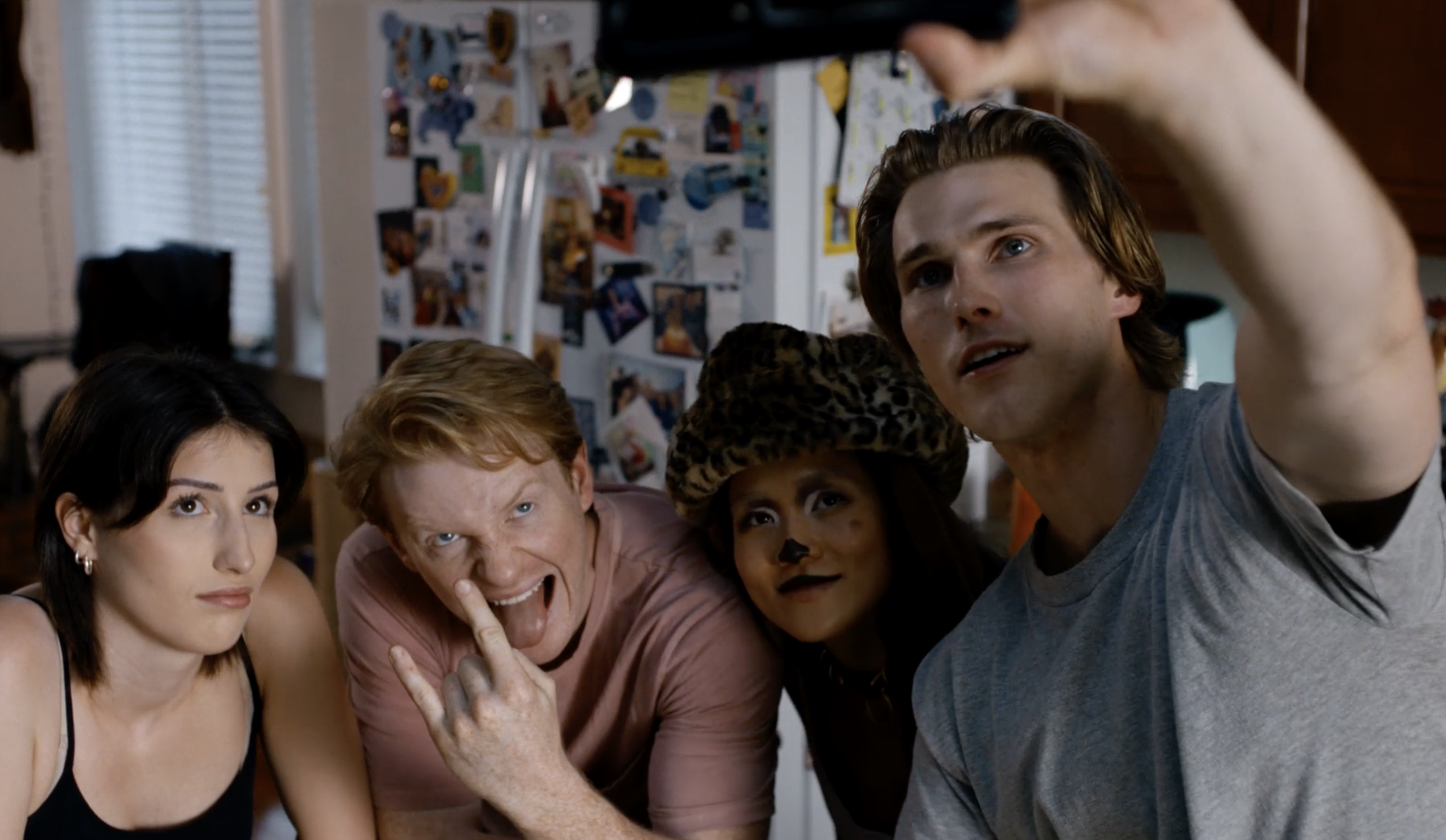
That philosophy extends into how Detention came to life. The film wasn’t born from a pitch, but from overlapping experiences—moving to Bainbridge Island, reflecting on the teen films she grew up with, and working with teenagers during COVID. “All of this inspired me to create a modern-day Breakfast Club,” she says. “And although in the film I am poking fun at SEL gone wrong, the real undertone for me is the importance of teen mental health and how important it is to get it right.”
Courtesy of Illuminare Productions
For, at its core, Detention is about empathy through looking beyond appearances and recognizing the complexity of other people’s lives. “To have empathy for people, because you don't know what their life is really like, no matter how perfect it might look,” Emma says. “Social media shows us one side, and behind every perfect picture and funny caption is another story.”
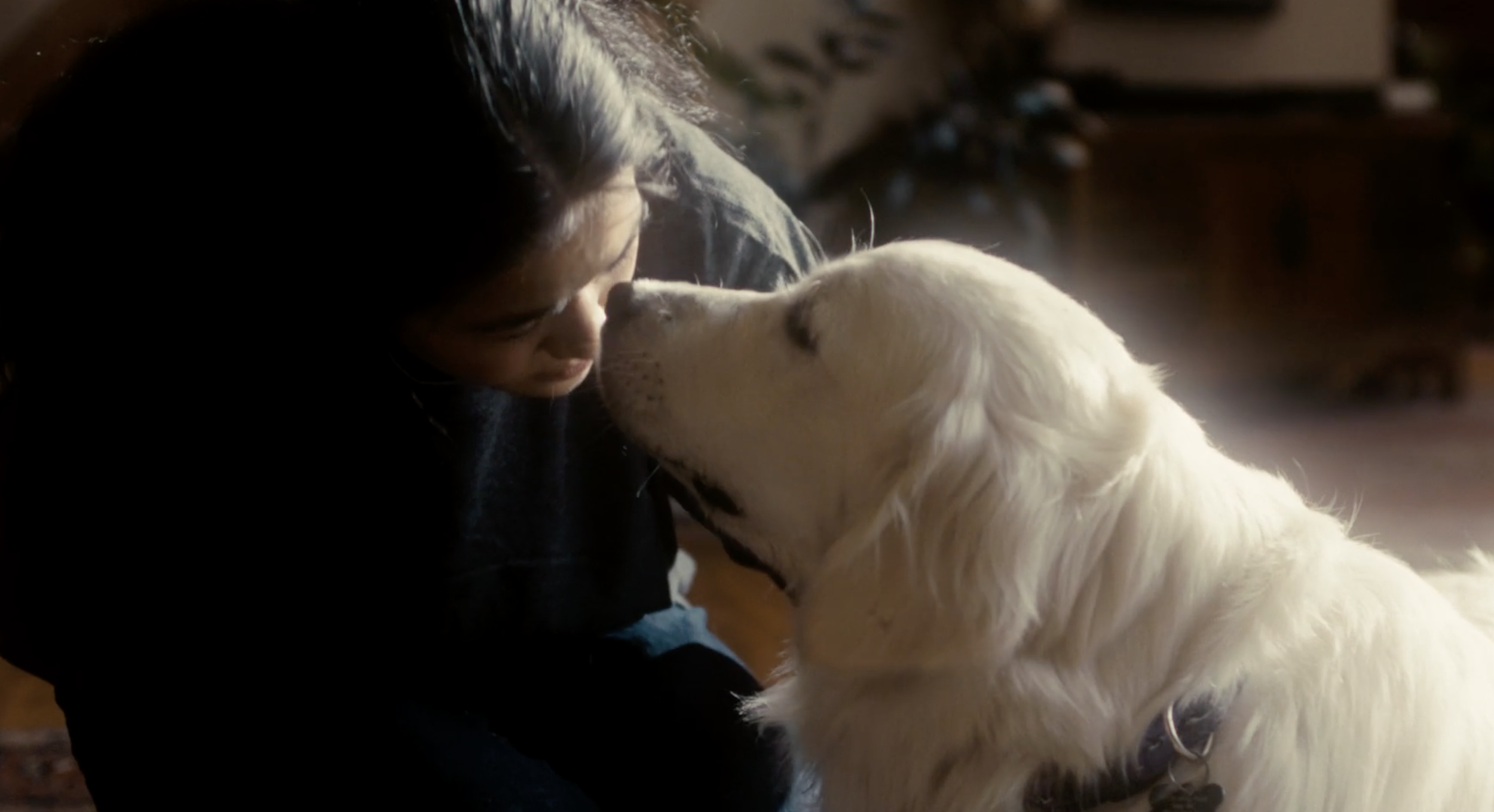
That idea comes into focus through the character of Mary-Beth. “The character of Mary-Beth… has dealt with a serious, life-altering event, and as a result, doesn't speak. The moments in the film when she is compelled to talk are the points at which she wants to help someone who is suffering. For me, this act of kindness sums up the essence of the movie.”
Even the film’s emotional tone is carefully considered. “It’s important to me to keep everything real and to not be tempted to get cheap laughs or easy tears,” she says.
“I just know that for what I'm trying to achieve, I want the actor's performance to guide your emotional journey first and foremost.”
Courtesy of Illuminare Productions
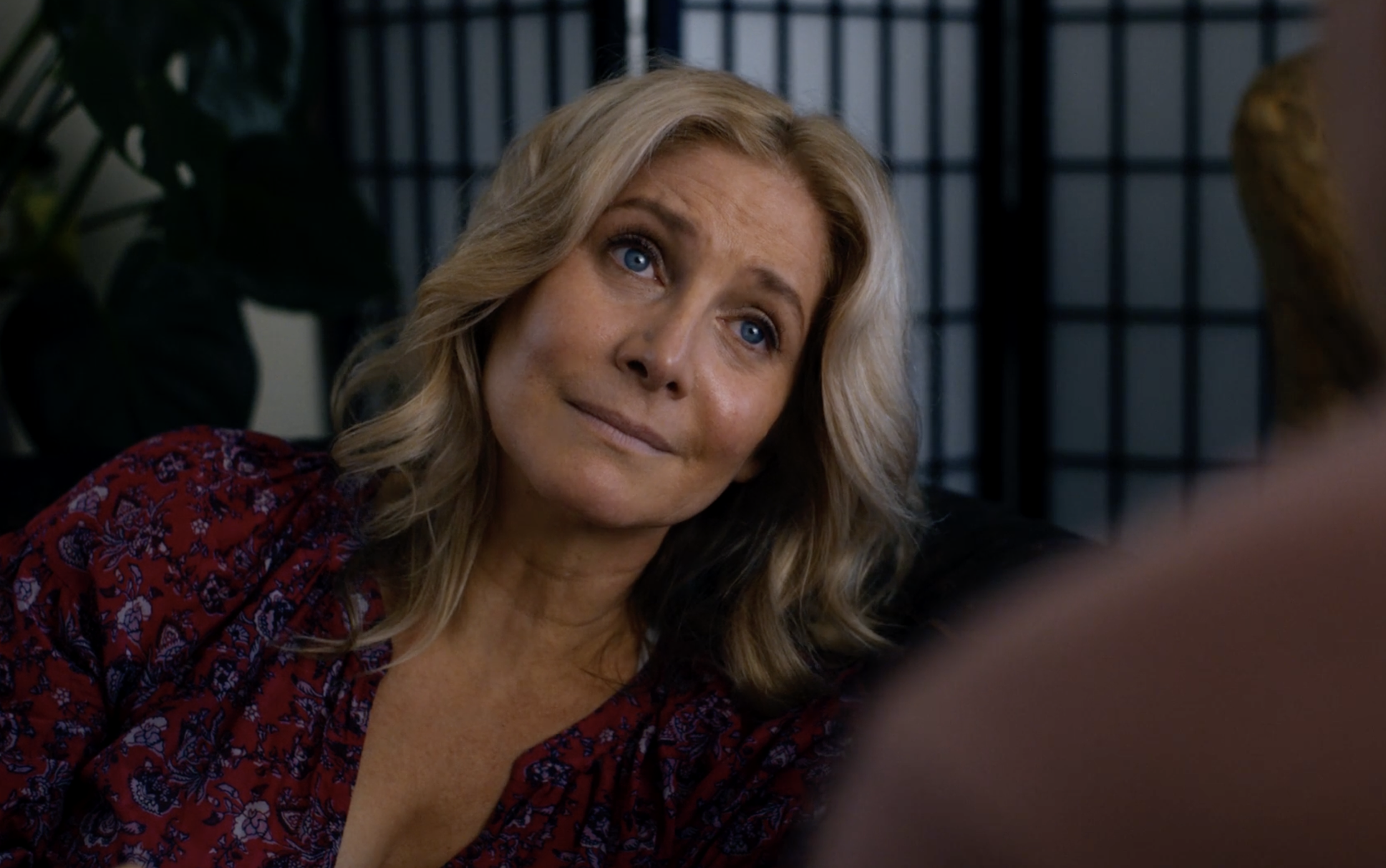
That approach is especially evident in one of the film’s key scenes between Elizabeth Mitchell (Grace) and Ricky Spaulding (Corey). “The actors knew their characters well and felt relaxed enough in the scene to add a little improv before the scene,” she explains. “It was a simple little moment that helped bring a richness to what followed and helped with the lead-up and anticipation to a very difficult and sad moment. I was so grateful to both of them for adding that little bit at the beginning and for feeling free to see where the improv would take them.”
She also points to the collaboration with composer Bill Wandel as essential in shaping the film’s emotional tone. “In this scene, our composer kept it subtle, allowing you to feel like you are in the room with them. Working with Bill was awesome. It felt like my birthday every time he sent me new tracks… That goosebump feeling when you listen to music with a scene and think ‘Holy shit, he nailed it.’”
That commitment extended into one of the most challenging parts of production: the music. “Sourcing eclectic music for the film was going to be challenging, and I was extremely ambitious,” she admits.
“Finding Tiger La Flor’s music was like discovering a pile of presents under the Christmas tree. I wanted to create a movie just to put all of her songs in it. But there was one song that lined up perfectly. It was the right beats per minute, it had a modern feel with a throwback edge, and to top it all off she went to school with Anna, who plays MB in the movie. She told me at the screening that it felt like a full circle moment—hearing her music in the film alongside a girl she knew from school—and that the song was written based on that exact time period. The coincidence and authenticity of it was magic, and I am so grateful for how it all came together.”
“I'm making it sound easy, but to be honest, it was 100 emails, 200 Instagram messages, stalking various people who knew people who could connect me, researching music law, getting contracts, listening to thousands of songs, and struggling for five months until I got to hear the word ‘yes’,” Cameron continued. Ultimately, “Blood, sweat and tears equal magic.”
Courtesy of Illuminare Productions
Now, as Detention begins its festival run, the response has been immediate and varied. “People who have seen the movie all tell me different things about how they felt watching it,” she says.
“From the younger Gen Z crowd, I get a happy, energized response, and they often talk about the soundtrack and the music choices in certain scenes. I’ve also heard reactions of feeling an ownership over the characters, a feeling of relating to them, or being ‘seen.’ Or maybe that’s because they know they are the heroes of the film and can sense the underlying message of love and empathy.”
“From Gen X parents, I tend to hear more about the comedy and how they relate to being sleep deprived and hormonal, or balancing divorce and trying not to screw up their kid while navigating the dating world after a separation,” Cameron added.
And while “hope” can feel like a loaded word, she doesn’t avoid it. “My hope is that this film can ignite a little positivity and, with that flicker of hope, who knows what it might inspire.”

Courtesy of Illuminare Productions
Looking ahead, Illuminare Productions is expanding that vision. Detention is the first in a duology of coming-of-age stories, with another project already in development in the Pacific Northwest. Larger-scale projects are also in motion—a fantasy romance and a sci-fi film—each grounded in the same character-first approach.
Beyond the films, Cameron is also focused on building something more lasting. “We also have a mentorship program that will be a curated group of filmmakers seeking connections, community, and support on their journey as a filmmaker,” she says. It’s an extension of everything Illuminare stands for—not just telling stories, but creating space for others to tell theirs.
Courtesy of Illuminare Productions
As Detention continues its festival run, that idea feels central to what Emma Cameron and Mark are building. Not a rigid blueprint or strict formula, but there’s something still unfolding here, something others are being invited into.
The film is currently screening as part of a limited theatrical release, with upcoming stops including Seattle, Kingston, Bainbridge Island, Vancouver, Los Angeles, Las Vegas, and Chicago. As it moves through its festival and theatrical journey, Cameron is actively looking to connect with programmers, exhibitors, and community partners who feel aligned with the film’s themes and are interested in championing additional screenings.
The goal, she notes, is to continue expanding its reach through collaborative, community-driven exhibition—finding new screening homes, independent theaters, and audiences who connect with its message. In many ways, Detention is still on its way toward finding its broader theatrical life, and that process is intentionally open to those who want to be part of it.