Inside Wax Heads: The Cozy-Punk Record Store Game Built for Music Lovers
By Alivia Stonier
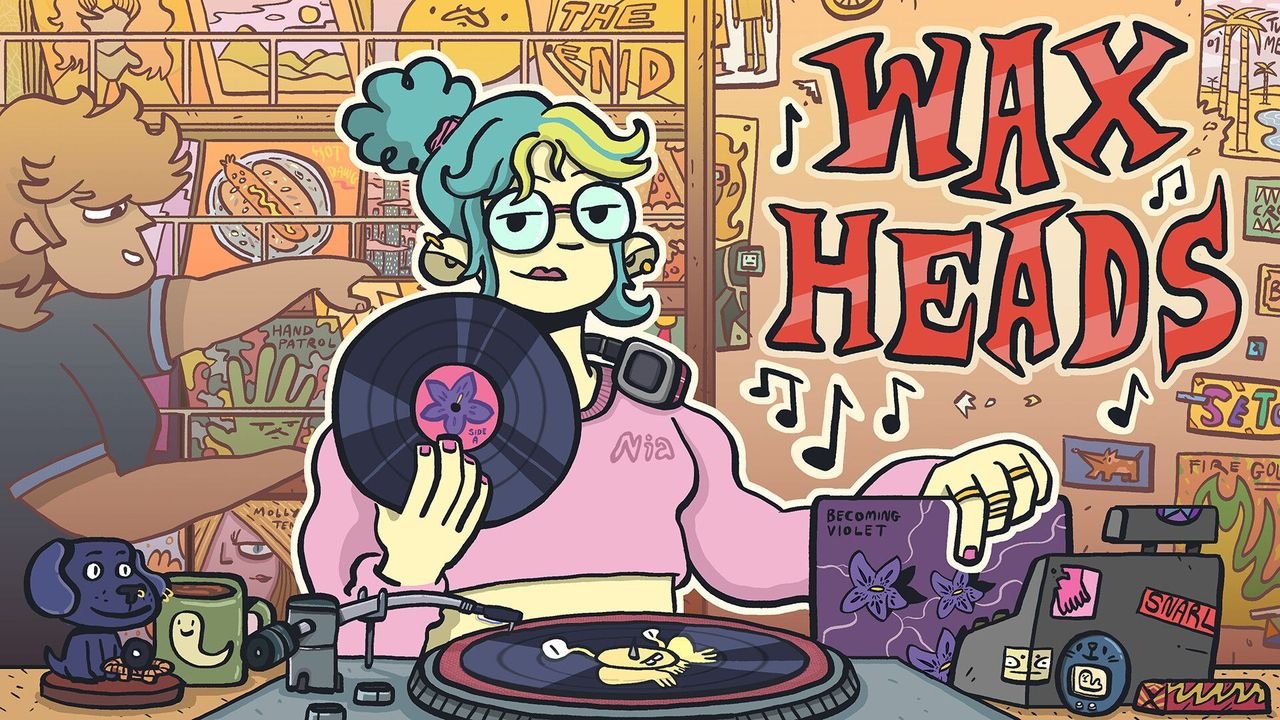
Have you ever wanted to run your own record store? Or are you the tastemaker of your friend group and wish you could live out your dream of recommending music to the masses? Then the brand-new game Wax Heads has you covered.
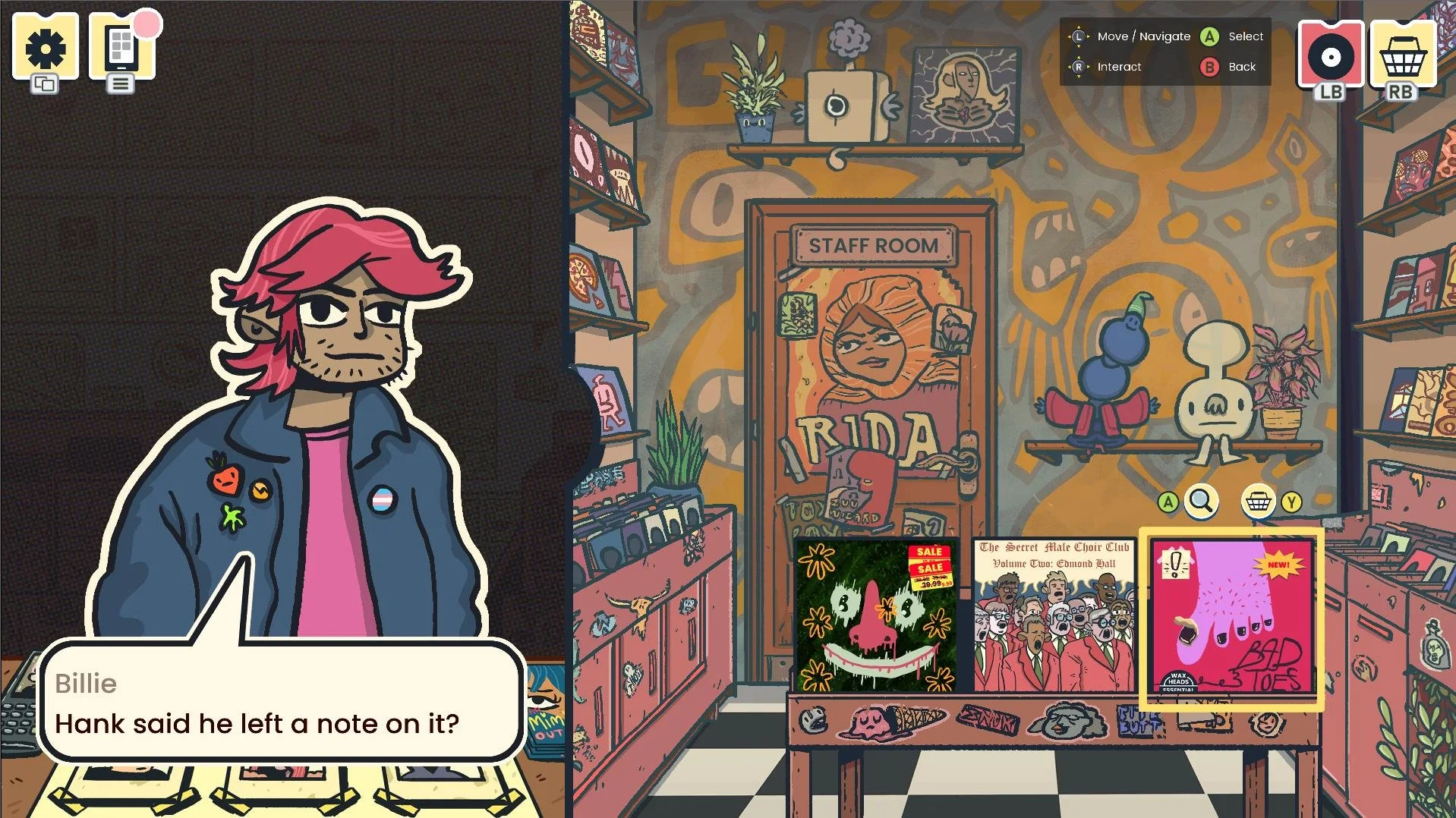
With over forty fictionally designed artists and completely self-made records, the game allows you to help customers find exactly what they're looking for as you take on your new job at a Repeater record store. The fun doesn't stop there, as you also help design posters and hear the stories of the customers who come in.
Credit: Wax Games
Gut Instinct sat down with Murray Somerwolff and Rocío Tome, the creative directors behind Wax Heads and owners of Patattie Games, to discuss how this idea came to life.
“Murray has a long-lasting affection for music, from playing in bands, going to countless gigs, and buying too many records. That was the motivation for making Wax Heads, but the actual construction of it being a record store came from when Murray played Wilmot's Warehouse, and he thought all the little squares looked like records.” They explained by digging into the origins.
Stemming from this affliction, what would result is a cozy-punk game that captures how this love of music can spread across a community. I wondered how they landed on the aesthetics of the game, as they are very central to its identity and the feeling you get while playing. The creative directors shared some insight.
“Murray coined the term as a marketing beat when we were trying to pitch the game. It’s quite tongue-in-cheek and has caused the odd upset (which we can understand the skepticism).
The hope was that the term would work as a Trojan horse to introduce people to punk sensibilities from bands like Fugazi, Minutemen, Bikini Kill, Mannequin Pussy, and Priests—all bands who tried to be approachable while uncompromising and make it possible so that anyone, regardless of age, gender, or identity, could find a place to enjoy music and not afraid to express themselves.”
“So, although its origin is quite cynical as a marketing term, the authenticity behind it is our hope to inspire people to join a community where they are welcome and free to express themselves.”
The game also brought in some other real-world inspiration outside of the music itself.
“Flashback records in London, Sound Station in Copenhagen, and Rough Trade in Nottingham have all been special places where Murray has bought records, so all influenced Repeater in one way or another.”
Credit: Wax Games
As mentioned, the game goes beyond this love for music, not only in the locations it's inspired by but also in the connections you make with people through places like this. The game allows you to hear the backstories of its characters, including why they're looking for a record, and this is what brings heart to the story. When asked why it was important for the player to not only listen to the customers but also interpret them to make the best decisions on what to recommend, the team had this to share.
“Because it’s about the connections that tie music to people, that’s so interesting. The way a song can capture someone’s childhood, another being a cathartic tune to listen to when feeling low, or a song that represents a special moment between friends. We wanted to make that implicit by making players focus on the people as much as the music.”
I wondered with this goal in mind how they approached making the in-game catalog, including designing the bands that are behind these recommendations you're making to the customers.
“It’s a mix," said the designers.
“Some came from story ideas that were reactions to other story beats, or some were direct responses to what a puzzle required to be there. The most important part was that any band invented had to be invented with conviction and not for the sake of it; to make a band believable, you have to actually give them agency and a reason to exist beyond the mechanics of a puzzle or piece of dialogue.”
“We wanted the game to be broad, so it wasn’t off-putting, while not trying to be too sterile that the game appeared superficial, so most of it came from a personal place of Murray’s interests. What’s been great is people get enough of a familiarity, but because the bands are fictional, they bring what they want to see into it, meaning people with a diverse range of tastes can play and enjoy the game.”
This attention to dynamics and making sure that the mechanics flowed well also tied into the way that the characters were designed and their identities.
“It varied; we never wanted to be too typecast as a music identity = a defined character archetype. But it would usually play as a building block, like ‘okay, this person likes metal music, what kind of metal do they like, what do they like, how do they express that outwardly, etc,’” explained the directors as they shed light on their thought process.
Of course, I wanted to know their favorite artists that they created; for Murray, it was Gecko Jester: Absurd Realities, and for Rothio, it was Mimi: Mimi (because of “Unstoppable”).
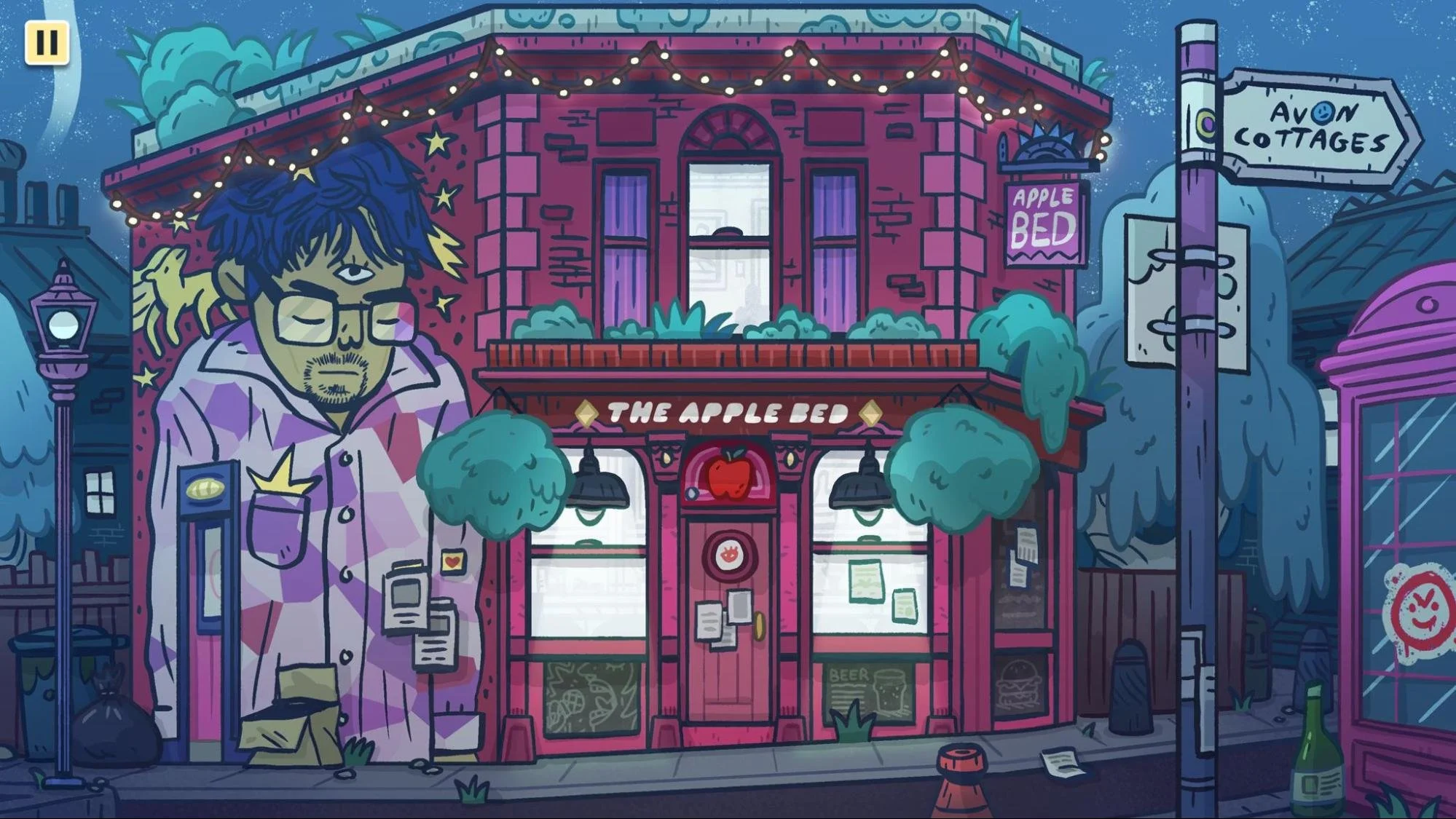
Credit: Wax Games
We continue to delve more into the game mechanics by talking about the balancing of puzzle elements with narrative immersion. I asked how they ensured that the game didn't feel repetitive: “By trying to have the stories and characters be front and center." If you were invested in the customer, then we felt that motivated you in the puzzles.”
They then revealed some final mechanics that ultimately didn't make the final cut of the game as we know it today. “We had a few that didn’t work either due to time or the design not panning out. The earliest was the “kicking out banned customers” mechanic. In the originalitch.io version Murray made, you could refuse to serve customers, with the idea being it was correct to kick out banned customers shown on the front desk. However, we realized that at most, there would be like 3 puzzles where you ban the customer, so having another 77 where that’s the wrong answer felt weird.”
“Another one was having lunch, so there would be the opportunity for a QTE-type lunch game where each day you devoured a different snack. [It] was a fun idea, but just out of scope.”
Another way that the game expands itself while still remaining deeply ingrained in music culture is through the DIY culture and zine in the game. “A blend of 90s cartoons (Daria and Rocko’s Modern Life) and, most importantly, Bryan Lee O’Malley’s 'Scott Pilgrim' comics" were revealed to be some of the inspirations.
“It was super important to try and capture the analog, tactile experience of going to a record store. So we wanted the game to really boast the quality of handmade, and in terms of storytelling, we both have backgrounds in alternative subculture; it’s very much in our DNA to want to bring out that DIY approach.”
The space of the game also feels very lived in itself as you explore the store, and this is not an accident. “It’s a mixture of our sensibilities for enjoying putting in details and also being inspired by record stores we love." Record stores are usually plastered with knick-knacks and weird oddities, all with a story to tell. We wanted to capture that energy, so we took the same approach to our environments as the albums and people in the game, cramming them with story.”
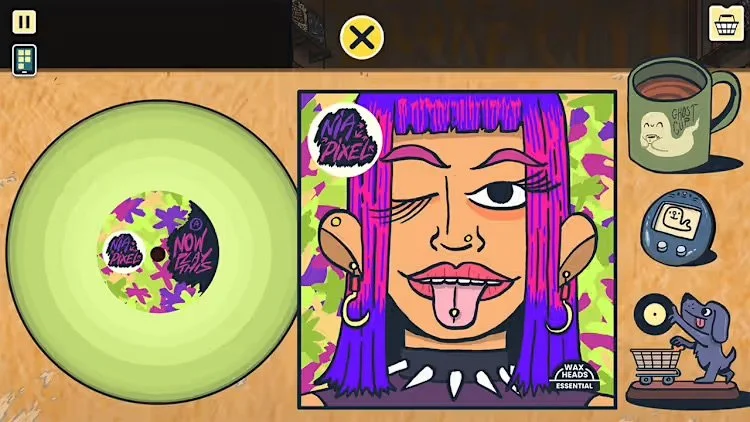
Credit: Wax Games
“There is a very impersonal and cold approach to how we now 'consume content,' and we didn’t want to feed that—it was important for us to emphasize the way music fosters communities and connections between one another... Not just music, but the way we interact with a lot of media and art.”
The game also includes some commentary on elitism and gatekeeping that can occur within the community: “We think we’ve probably all experienced some form of gatekeeping, right?" Someone’s attempt to wall off and segregate tastes [based] on who they believe is allowed to enjoy what and why. We don’t abide by that kind of thinking.” They shared this outlook, allowing everybody to have a space to find themselves in their interests within the game.
I myself lost myself within the game very quickly as someone who gravitates naturally towards this aesthetic and towards the community being highlighted within the game. But, especially as an indie game company, the game did not come without struggles, and both partners opened up about their fears while creating the game.
“[We feared] stretching ourselves a little too thin. Both of us have 9 years of experience in games, but this was the first time working together as our own studio, Patattie Games, and we’re both very ambitious, so we both tried to do too much. And that’s even with the help of our fantastic and talented dev team, but even still, trying to fight the desire to expect more of ourselves was definitely a challenge.”
“We hope that this game is less a direct conversation of physical vs. media, but instead more a focus on the value of albums and music having intrinsic value instead of feeling disposable, which is how they feel on streaming. Albums can be dissected, and songs plucked with no real connection or understanding of where they came from. So the important factor for us is that the people who make music have value and that we should champion their artistry as they originally intended.”
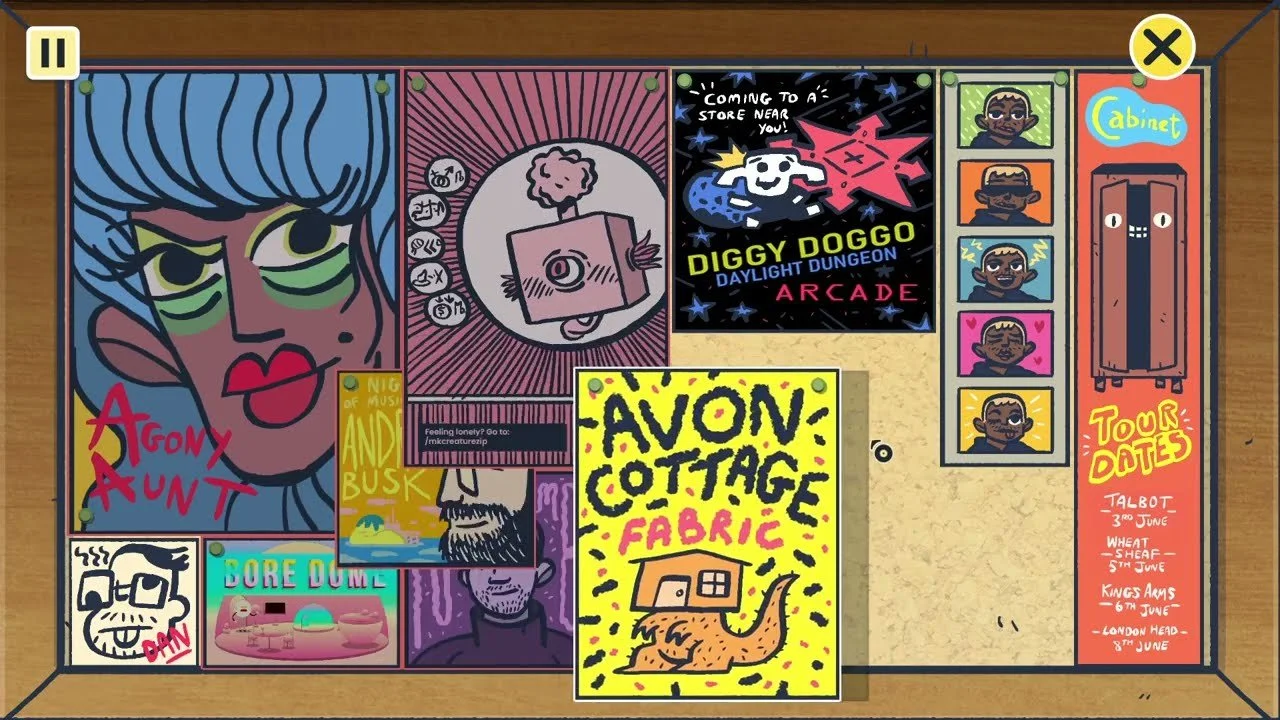
Credit: Wax Games
Given these struggles in the amount of love that went into the game, I wondered what they ultimately hoped players would take away. “The joy of celebrating art and the humans who make it. Music is made by the spectrum of humanity and covers every flavor of what it means to be alive; there’s so much to discover, connect with, and cherish, and so we hope players who play our game take away a sense of enthusiasm for championing what matters to them and sharing that with others."
And finally, given that the world behind the game is so rich with many characters and stories to be told not only through the people looking to buy records but also the people making them within the game, we discussed the possibility of this world expanding.
“We wrote Wax Heads to be in and of itself… but in such a world, there are, of course, many stories that didn’t make their way into the finished game. We do have some fun ideas of how some of those stories could be expressed if a future opportunity ever allows us.”
The game is now available for you to check out across multiple platforms, including Switch, Steam, and PlayStation. It's one that you don't want to miss.