The Politics of Being Heard: Grenfell, Nine Years On
By Nomi Makin
Nine years after Grenfell claimed 72 lives, the struggle over who has a voice and who does not remains central to understanding the disaster and the neglect that surrounded it.
Sourced Through Pinterest
In the immediate aftermath of the fire, media coverage quickly shifted towards finding someone to blame. The Daily Mail published photographs of the man whose flat the fire was believed to have started in, and much of the British media amplified a narrative of individual blame. Some even framed Grenfell as an "Islamic attack" or the "9/11 of London." Millions of people labelled him an Islamic terrorist.
He was not a terrorist. He was a victim. He had lived in Grenfell for twenty-five years; it was his home.
He survived a life-changing disaster, yet instead of receiving support and compassion, he became the target of public suspicion. He lost his home and community, but media attention transformed him from a survivor into a suspect. Even more disturbing was how readily this narrative was accepted. It was easier to blame one individual than to ask how a residential tower block in one of the richest boroughs in Britain had become a death trap in the first place.
The relationship between race and class in Britain has become increasingly strained in recent years, and Grenfell exposed how easily existing prejudices can shape public narratives. Rather than focusing on the institutions and systems whose decisions contributed to the disaster, attention was redirected towards an individual who had already lost everything. Once again, much of the media found it easier to point its finger at a brown Muslim man than at the systemic neglect that placed hundreds of lives at risk.
For many people, it is easier to attribute blame to one individual than to confront institutional failure. Localising responsibility through assumptions about race or religion provides a simple answer to an uncomfortable question. It creates the illusion of certainty while reinforcing existing divisions.
Looking at the structures that create these disasters demands something much more difficult. It requires acknowledging that the places we call home are not always safe, that regulations can fail, and that governments and corporations can prioritise profit over people. The images of destruction and neglect that many associate with distant places suddenly existed on the doorstep of one of the wealthiest cities in the world.
Grenfell forced Britain into that reality.
It demanded a reckoning with class, inequality, and institutional failure. It exposed the fragility of life and the devastating consequences of decisions made by those with power. The disaster was not simply the result of unfortunate circumstances. It was the consequence of corporate greed, government failures, and repeated warnings being ignored by institutions that found it easier to silence communities than to listen to them.
It has always been easier to blame those at the bottom than to hold accountable those protected by wealth, influence, and hierarchy.
Grenfell remains one of the clearest examples of the politics of being heard.
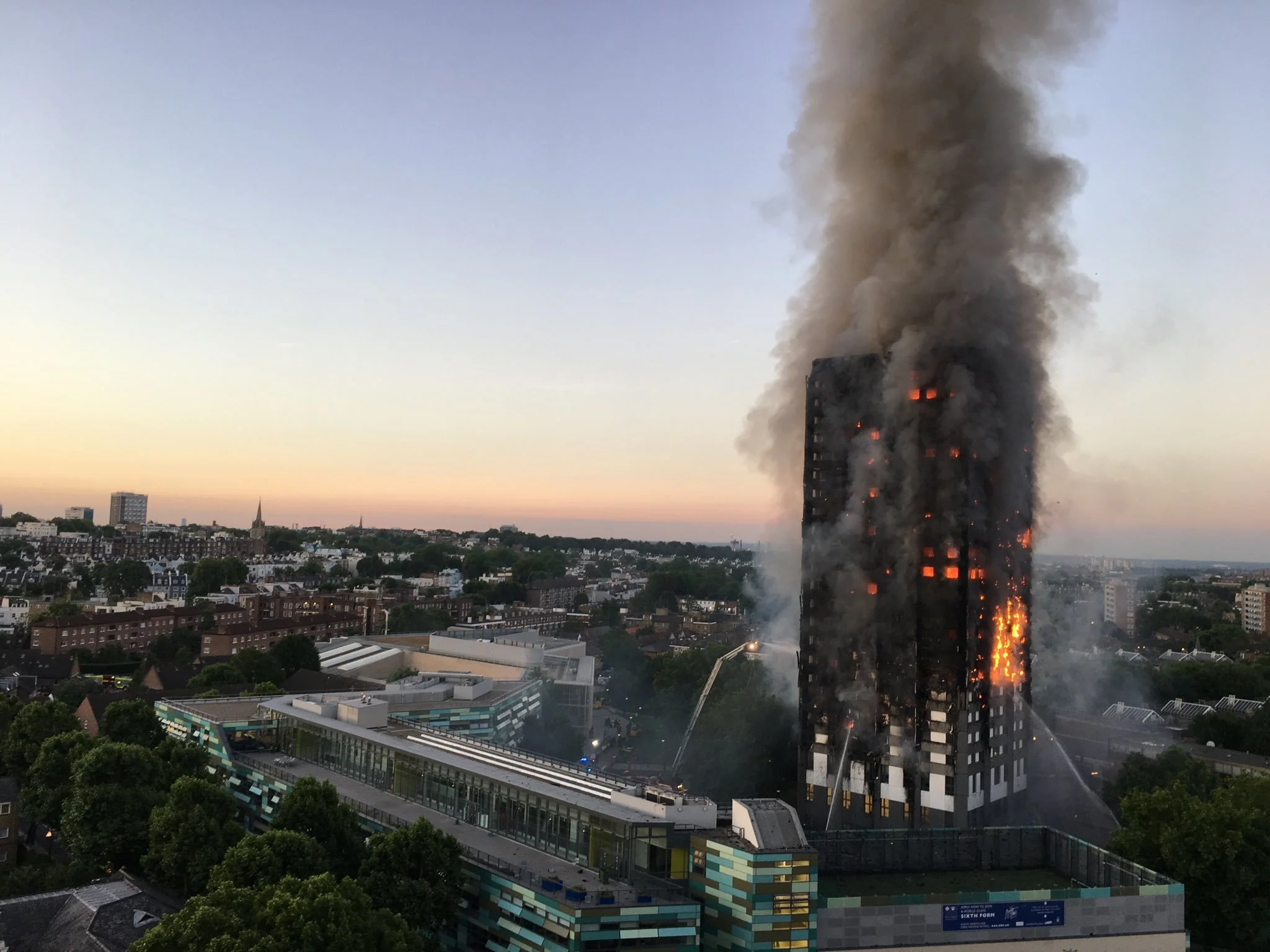
Next year marks the tenth anniversary of the disaster: the catastrophic by-product of systemic neglect, greed, and silence. Seventy-two lives were lost. Hundreds of homes, families, and futures were destroyed. A tower block that housed an entire community burned to the ground while many residents remained trapped inside.
Grenfell Tower stood in Kensington and Chelsea, London's wealthiest borough. Like much of London, it sits at the intersection of extraordinary wealth and profound poverty. Multimillion-pound homes exist just moments away from social housing estates and working-class communities.
Because of this stark divide, Grenfell came to be viewed as an eyesore by some of the borough's wealthier residents. One email referred to the tower as the "poor cousin" of surrounding buildings. A home to hundreds of people was reduced to an aesthetic inconvenience. The lives within it became secondary to the appearance of the neighborhood.
London has long been defined by contradiction. Despite its image as a prosperous global city, wealth and opportunity remain deeply unequal. Grenfell became one of the clearest examples of what happens when those inequalities shape political and economic decision-making.
The tower was never just a building. It was a home. Families raised children there. Friendships flourished there. Communities built lives there over decades. Yet the concerns of those living inside mattered less than the concerns of those looking at it from the outside.
Without meaningful consultation with residents, the decision was made to refurbish the building and improve its appearance. The redevelopment was designed to satisfy developers and wealthier neighbors in an increasingly gentrified area. The people whose lives depended on those decisions had little influence over them.
With cost-cutting at the centre of decision-making, the people of Grenfell became invisible.
The cladding chosen for the refurbishment was known to be highly flammable. It has since been compared to wrapping a building in petrol. The manufacturer had warned developers about the product years before the fire, yet nothing changed. No action was taken. More than one hundred homes were covered in combustible material despite repeated warnings. Money was valued above human life.
The tragedy becomes even more devastating when considering that a safer material could reportedly have been installed for approximately £5,000 more, around £40 per flat. An almost insignificant amount compared with the value of human life. Yet even that additional cost was considered too much.
Grenfell was not the first warning. Eight years earlier, six people, including two children and a baby, died in the Lakanal House fire in South London. That disaster exposed many of the same concerns surrounding building safety and combustible materials. It should have prompted urgent reform. Instead, many of the same failures were allowed to continue.
Sourced Through Pinterest
Grenfell was not an accident. Accidents happen without warning. Grenfell was the predictable outcome of systemic neglect, institutional failure, and repeated opportunities for intervention being ignored. Nearly ten years later, not a single arrest has been made.
Lives were lost. Families were destroyed. Survivors continue to live with unimaginable trauma. Entire communities were permanently changed, while many of the organisations and individuals whose decisions contributed to the disaster continue their lives largely unaffected.
For those who lost loved ones, justice remains painfully absent. Systemic neglect continues to shape London.
Grenfell was never an isolated tragedy. It was a warning about what happens when communities without political power, wealth, or influence are ignored. It forced Britain to confront uncomfortable truths about class, inequality, and whose voices are considered worthy of attention.
It is impossible not to think about the lives that might have been saved had warnings been taken seriously. Parents would still be with their children. Children would still have their parents. Friends, partners, and neighbors would still be here. Entire futures were erased through avoidable negligence.
Even the response after the fire reflected the same patterns of neglect.
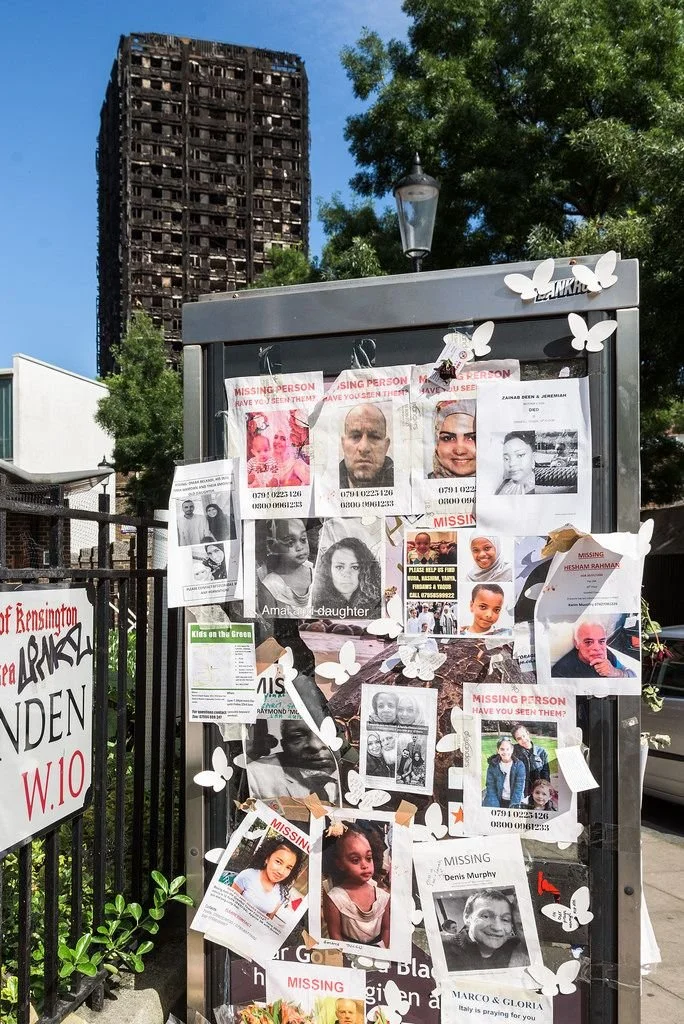
A week after the disaster, many survivors were still struggling to access basic support. Some slept in local sports centres, while others slept in their cars. Families desperately searched for missing relatives while trying to navigate unimaginable grief.
Communities organised themselves.
Residents printed missing-person posters. Volunteers collected donations. Ordinary people stepped in to provide the support that official systems appeared unable or unwilling to deliver.
The same people who had been ignored before the fire found themselves fighting to be heard afterwards. The neglect did not begin with the fire, and for many it did not end there either.
So, nearly ten years later, what has changed?
Grenfell exposed class divisions that many people prefer to ignore. Wealth and poverty continue to exist side by side. Social housing residents still struggle to have their concerns taken seriously. Communities continue to face displacement through redevelopment and rising costs.
Grenfell revealed what happens when people stop being seen as human beings and instead become obstacles, statistics or financial liabilities.
Remembering Grenfell cannot simply mean remembering the fire. It must mean committing to a future in which no community is treated as disposable. If that lesson has still not been learned, then the politics of being heard remains as relevant today as it was in 2017.
In recent months, Britain has experienced renewed social and political division. At moments like these, it becomes even more important to recognise the humanity of those who live alongside us.
Grenfell embodied that possibility.
People of different religions, races, and backgrounds lived side by side, creating a community built on care, understanding, and shared experience. Their lives remind us that solidarity is not an abstract ideal but something practised every day.
It is important to educate ourselves about the systems that shape our lives, often without our awareness. They influence what we see, what we believe, and how we are encouraged to understand one another. We should question the narratives we are given and choose compassion over suspicion, community over division, and empathy over fear.
The lives of those lost and affected by Grenfell will never be forgotten.
The fact that, nearly a decade later, so little has fundamentally changed only reinforces the deep lack of trust between communities and those in power. Accountability remains slow and incomplete. Justice has yet to be realised.
Looking back over the past decade, Grenfell teaches us not only about institutional failure but also about people. It reminds us that we cannot always rely on the systems designed to protect us, whether in matters of equality, justice, or safety. Instead, it highlights the strength of community and the importance of valuing those around us.
Despite political division and growing inequality, there remains a choice: to lead with love, understanding, and compassion. To invest in our communities and in one another. To recognise the value of every human life.
We are still here with the gift of life, unlike the seventy-two people who lost theirs on June 14, 2017.
That is precisely why Grenfell must continue to be remembered—not only as a tragedy, but as a call to listen more carefully, to question more deeply, and to ensure that no community is ever ignored again.