Evie Dyer Knows There’s More to a Pretty Picture
By Natalie McCarty
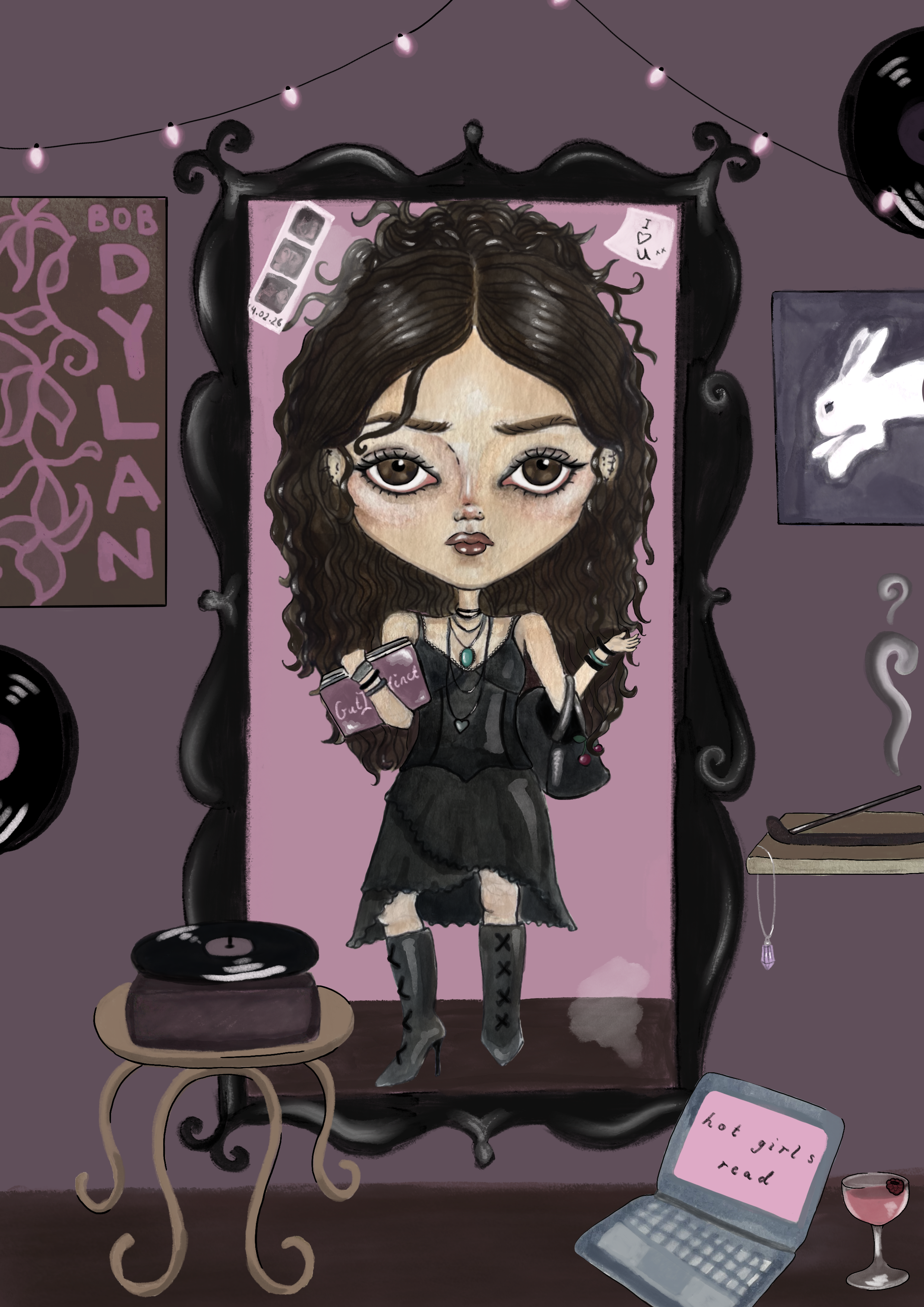
Upon first impression, Evie Dyer’s creations feel like a beloved doll you wish you could hold.
Something about them feels instantly familiar: the wide eyes, tiny expressions, clothes, and almost collectible sweetness of Bratz or Lalaloopsy. But Dyer’s girls, beyond nostalgia, feel fresh, a little strange, pretty, but never entirely innocent. There is something in their faces that suggests a whole life happening just outside the frame, as if the girl you are looking at has a story you haven't been told yet. As if she belongs in a dream.
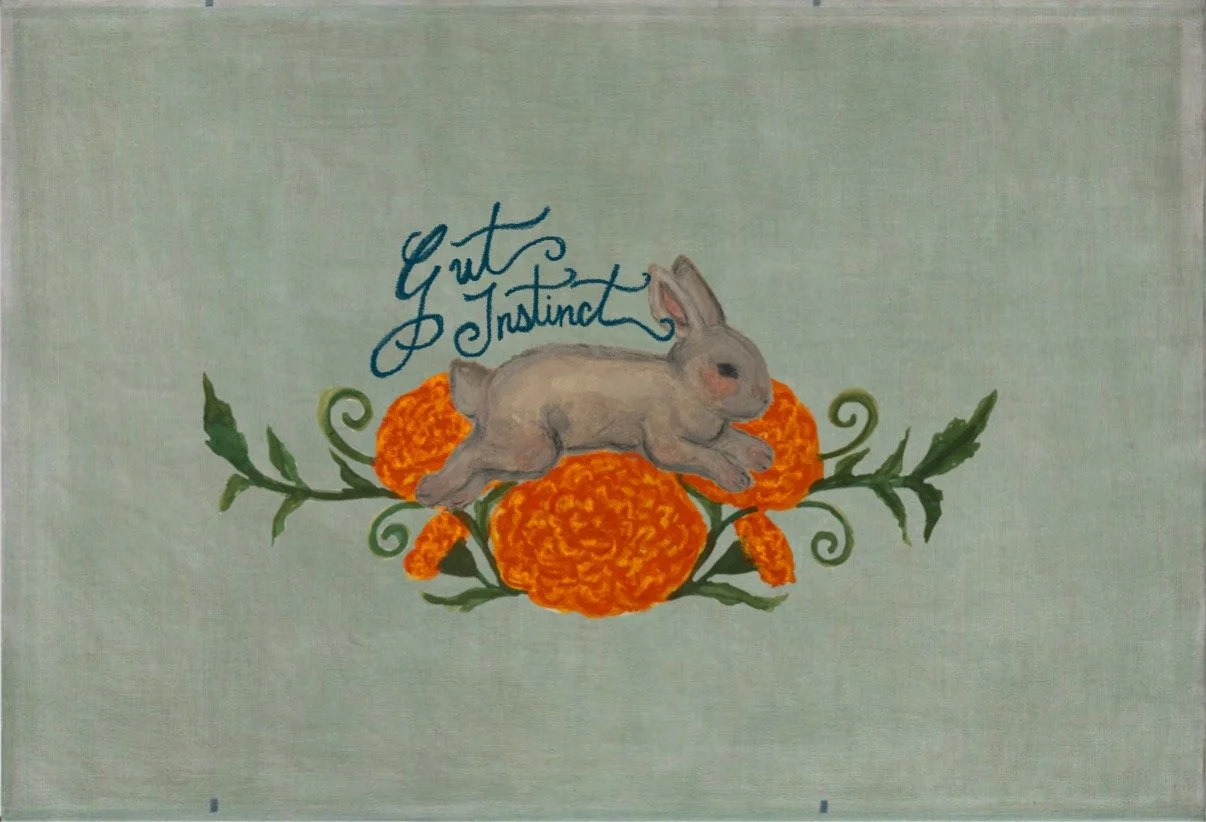
@shebel0ngsinadream x Gut Instinct Media
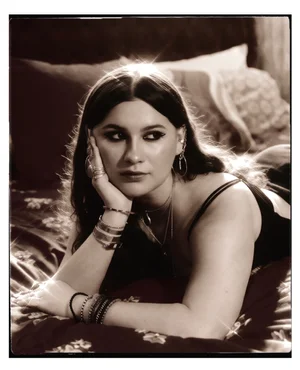
Geneva (Evie) Dyer, a 25-year-old artist and illustrator from Manchester, England, works across analogue and digital mediums, creating illustrations focused on femininity and fashion. She is a Fashion Imaging and Illustration graduate from London College of Fashion, and describes her aim simply: to create her own “moody, atmospheric, and lived-in worlds and characters.”
Dyer has been drawing for as long as she can remember. As a child, she would sit on the carpet in her living room at the coffee table, watching Disney Channel and drawing for hours. Her characters lived in a place she called “Evie Land,” where she gave them personalities, histories, and backstories. She was a dancer, a performer, a writer, a choreographer. She loved clothes and customizing herself. She loved being inside her imagination.
“I have just always loved living inside my imagination and expressing myself creatively; it’s been really important to me since I can remember.”
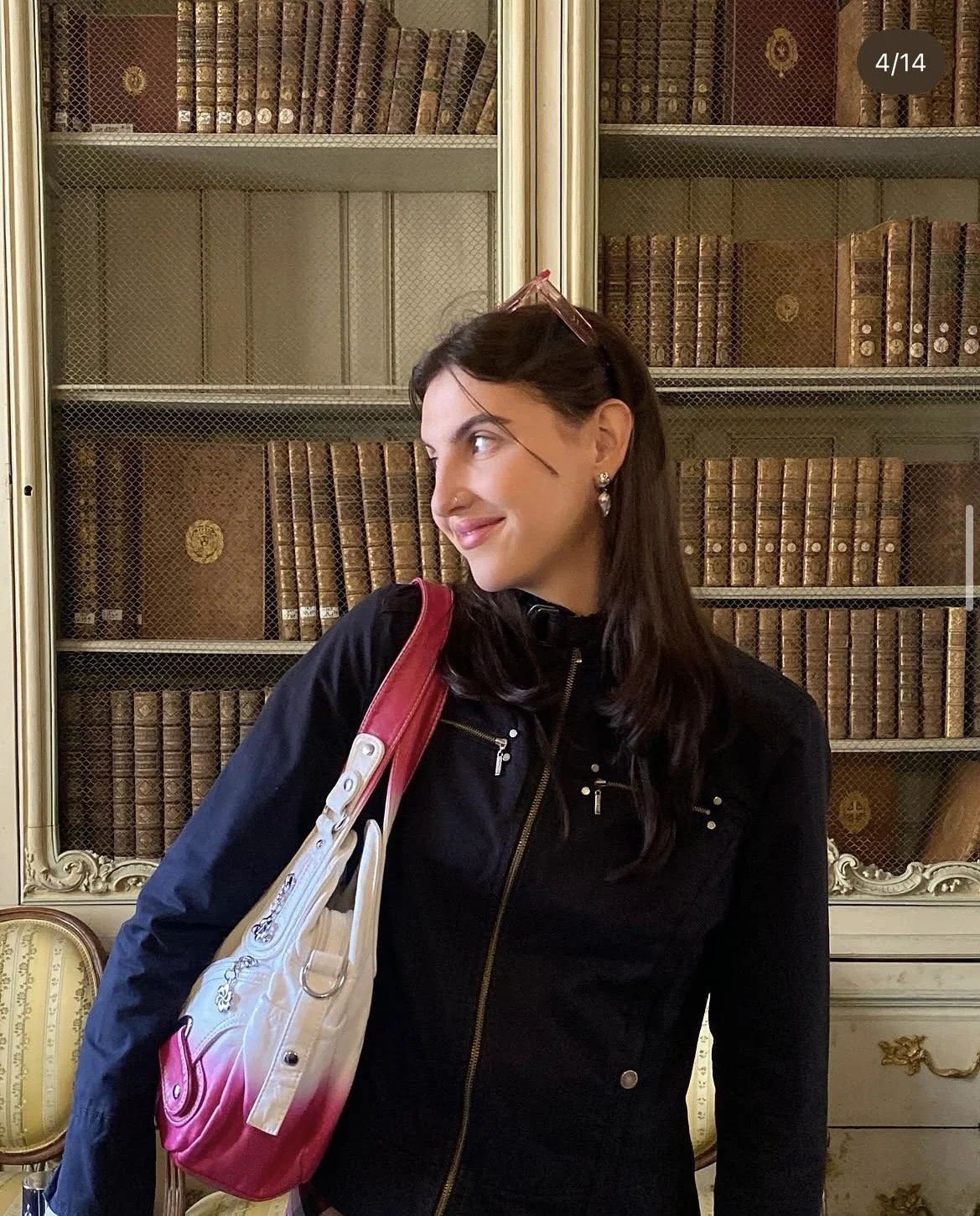
Evie Dyer (@shebel0ngsinadream)
In childhood, her favorite book was The Wolves in the Walls, whose illustrations she remembers as beautiful and uncanny. She watched Edward Scissorhands on repeat even though it scared her, and Coraline still remains her favorite movie. “I have always had a fascination for and been drawn to creepy things,” she says. “But I also loved things like Bratz, Hannah Montana, Lauren Child, and hyper-feminine visuals, so I think my own desire for creating was born with my love for the creepy and the cute.”
Dyer's relationship with art became particularly important during her teenage years. “I have always loved drawing, and it has definitely followed me through life, but during my teenage years I began to struggle with the world and my mind in various ways,” she says. “And whether it was taking elaborate ‘Tumblr grunge’ pics for my Instagram, cutting up random articles of clothing from my wardrobe, or painting scary watercolour portraits of sad girls, art was an outlet for my feelings.”
“Having art inside my mind to create was one of the main things that kept me going.”
She calls what developed from that a “soul tie,” a relationship with creativity that helped her discover herself, cope with difficulty, and eventually become one of her favorite things about herself.
By the time Dyer was around 16, her style was beginning to take a more recognizable shape. She had moved to a very small school, where an art teacher noticed her interests and encouraged them rather than steering her toward something more conventional. He introduced her to Pinterest, taught her how to use watercolors, and helped her find artists she still feels in her work today, including Tomasz Mro, Lucas David, and Mark Ryden.
“I think my style was always with me; the main thing that is represented through my art at all stages of life is my emotions, and that naturally grew into my style. As I brightened up internally, my art did too.”
She began looking back at childhood and adolescence through a “‘grown up but still her’ lens,” trying to express old feelings without abandoning the girl who had first experienced them. Somewhere in that process, the pieces began to settle into the particular mixture that now feels so recognizable: pretty and feminine visuals paired with moody, dreamlike elements.
Then came London, where Dyer studied Fashion Illustration at London College of Fashion. But when she talks about university, the course itself is only part of the story. Moving to London alone changed her; the city itself helped her find a new sense of independence and a renewed passion for life, art, and herself.
“I love cities and finding new places that feel like they fit you and bring out new parts of you.”
She describes confidence as essential to her creativity, and says cities give her access to a sense of independence that she does not always feel in her hometown.
After graduation, that need for a new environment became impossible to ignore. Last year, her life seemed to be moving toward a familiar post-university script: find a full-time job, rent a flat, begin the next stage. Instead, she abandoned the plan and went to Paris for a month with her partner.
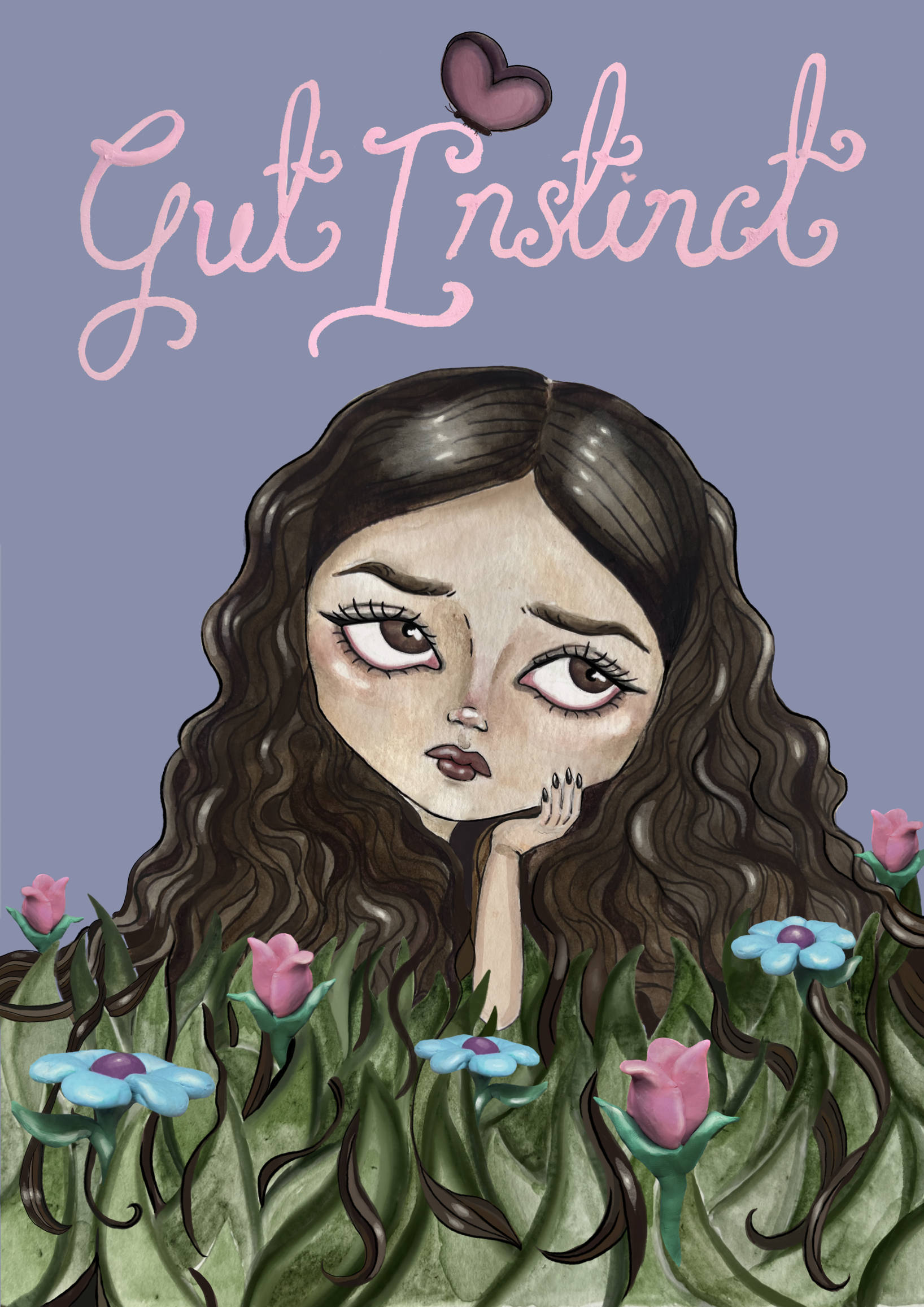
They went to galleries, visited fashion week locations, and lived like locals; most importantly, she drew and grew as an individual and as an artist. During that month, Dyer developed the style she used for our collaboration. Paris became a turning point because she had made a decision about what she was willing to prioritize. “It was ultimately a choice to believe in myself and my art,” she says.
@shebel0ngsinadream x Gut Instinct Media
Since then, she has continued down that same road, consistently creating and pursuing the things she wants to make. She has seen the difference in her work.
“It usually begins with daydreaming, and I tend to imagine and ruminate a lot on an idea and just see it unravel and come to life in my mind.”
An idea might begin with a person, a book, a song, a movie. She lets it sit in her head until it starts to unravel into something she can see. Once it feels close enough to capture, she writes fragments into her notes app, leaving herself words that will bring the idea back when she is ready to draw.
Sometimes, she admits, she thinks about an idea so much that she kills it. Sometimes too many new ideas arrive, and she loses interest in the first. Once she actually starts making something, the process changes depending on the piece. Drawing, watercolor, and Procreate are the constants.
“Watercolor is a really important medium to me; it has been the main constant throughout my development as an artist,” she adds.
Dyer likes what the medium refuses to control: the paint settles into the paper, texture remains visible, light comes through, shapes happen naturally. The imperfections become part of the image rather than something to correct. “They are definitely my safe space, and I love working with them.”
Animation gives her another way to watch those worlds move. She works in Procreate and loves the effect of even a tiny amount of movement. After spending hours or days animating, she gets to watch the girls and worlds she has been carrying in her head move for a few seconds.
“I get so happy when I work for hours or days on an animation and then see my girls and worlds come alive for a few seconds; it’s so rewarding.”
That fascination with movement is tied to another major part of Dyer’s visual vocabulary: dance.
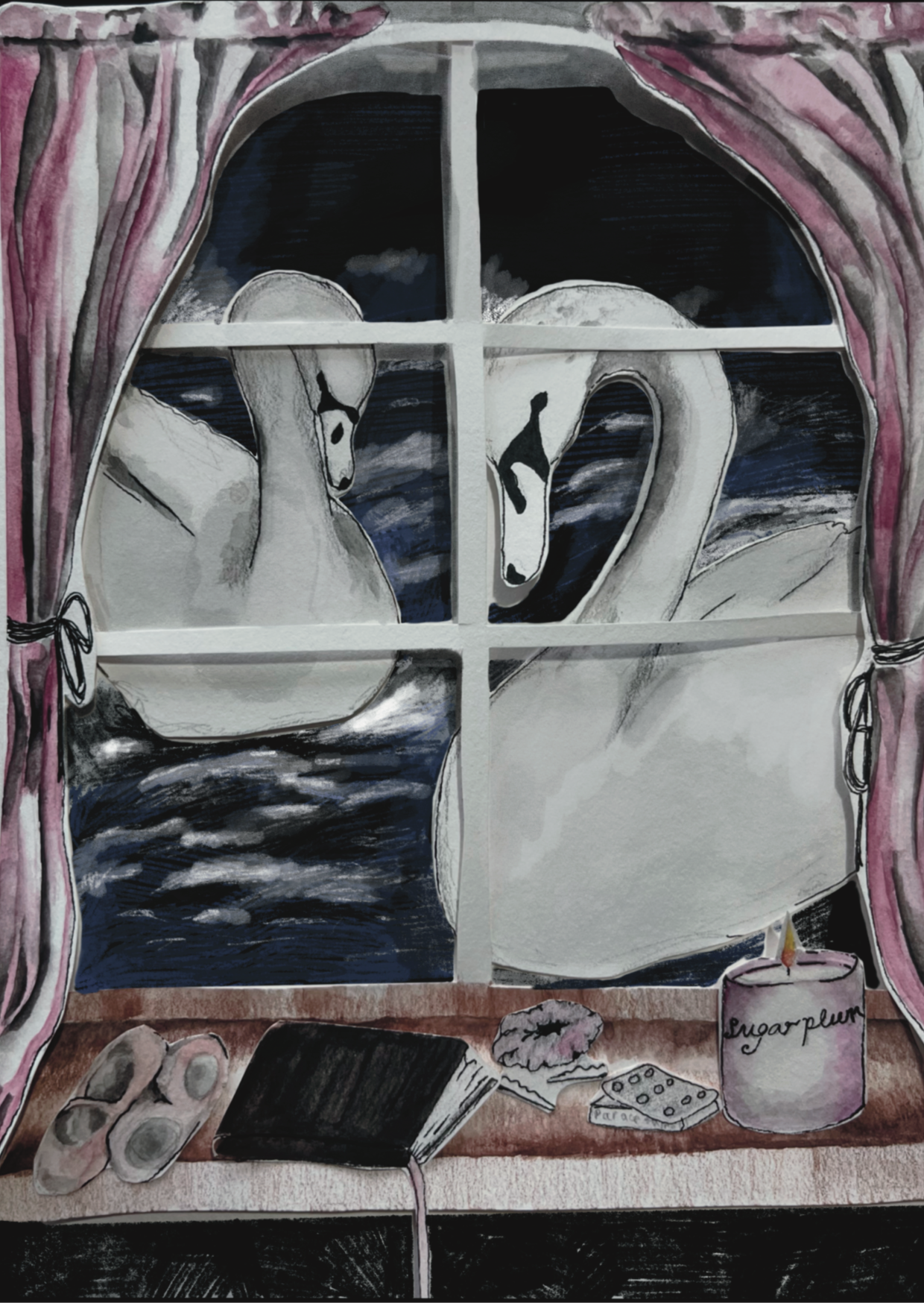
She grew up as a dancer, and the experience has stayed visible in her work through ballet imagery, bodies, swans, mirrors, and the particular beauty of something that is both controlled and physically demanding.
‘Self-reflection: From the Dance Studio Mirror to the Screen’ by @shebel0ngsinadream
Her final university project, Self-reflection: From the Dance Studio Mirror to the Screen, examined the aesthetization of ballet, its relationship to social media and online subcultures, and the effects those things can have on women’s minds and bodies. She made work about mirrors, bodies, reflections, perfection, and pain, drawing on personal experience.
The mirror appears again and again in Dyer's work because it offers exactly the kind of contradiction she seems drawn to: reflection and distortion, beauty and pressure, the body as it is and the body as it is expected to be.
For Dyer, clothes have never been just clothes. She has always loved them as a creative medium, as a way to communicate something or even become something else. She loves drawing clothing and bringing fashion into her illustrations. The 1990s Alexander McQueen runways were what made her want a career connected to fashion in the first place.
“How he could invoke such intense emotions and stories through clothes and creative direction will always inspire me.”
Today, she looks to Vivienne Westwood, Sandy Liang, and Ashley Williams. But the attraction remains the same: clothing that does more than decorate a body, but rather creates a character.
Dyer says people have told her that she looks like her art, or that they can immediately tell when something is hers–she loves that! What she cannot explain quite as easily is how her feelings make their way into the work.
“As I touched on earlier, the main part of myself that’s in my work is my feelings and imagination.”
That is the part she finds difficult to elaborate on. She does not know exactly where it comes from or how the translation happens. She only knows that everything she makes feels like a representation of her inner world.
Her hope for the viewer is surprisingly simple: “I just hope people feel something!”
At markets and exhibitions, she has noticed that some people immediately connect with her work while others do not. She describes it almost like a secret language, one that some people understand and others miss (she does not mind the latter).
“It doesn’t need to be ‘for’ everybody, and when people think my work is weird, I like that too. At least they have felt something!”
Her graduate project, Dear Diary, Is This Girlhood?, might be the clearest place to see what happens when all of these interests collide. The series of animations is deeply personal–one character was based on her best friend; another was based on herself. Together, the pieces explore the strange coexistence of the mundane and the dramatic in growing up, and the many feelings Dyer associates with girlhood and womanhood. Or, as she put it, “All of the pieces feel like pieces of me.”
The project also solidified her interest in moving image and animation and showed her what could happen when her drawn worlds were allowed to move.
But beneath the fashion, the characters, the girls, the eerie references, the watercolor, and the animation, Dyer's reason for making art is aptly put: “I live to create.”
She says creating makes her life richer and helps her understand herself and the world. It gives her an outlet that sustains her.
“I also do feel that it saved me, and I want that for others.”
She wants people to feel seen. She wants other people to create for themselves. She wants them to know that making something can be an option.
It is also why the physicality of human-made art matters so much to her. As AI-generated imagery becomes increasingly common, Dyer is not interested in arguing that human art is valuable simply because it is handmade.
“Human-made art offers literally everything that AI-generated art cannot. In my opinion, the whole point of art is that it’s been made by brains and bodies and souls; that’s what gives it feeling and makes it exist.” She loves the evidence of the person who made it: brush strokes, paper texture, shaky lines, the traces of a human experience.
It feels especially relevant coming from an artist whose work is so interested in making the intangible visible. A feeling cannot be photographed. A memory cannot be held. Girlhood is impossible to return to. A private fear does not have a shape.
So Dyer draws one.
“My goal is to represent feelings and experiences of femininity, and to capture things that can’t be seen, taking things that can only be made in art and can only exist in our imaginations and making them real, making feelings tangible and touchable and accessible to others.”
But there is another part of her legacy she is already thinking about, and it has less to do with what other people think of her work than with whether she keeps making it at all. She wants to be an artist who creates regardless of the outcome. Someone who believes in her own work regardless of the response. Someone who keeps going long enough to let every stage of her life become part of the record.
“I want to be an artist forever and have all my stages of life documented through my work, so I hope that is a part of my legacy too.”
When Dyer was a child, the girls in Evie Land existed entirely in her imagination. They had personalities, histories, clothes, and stories. She made them because she could.
Now those girls have followed her into adulthood. The scary watercolor girls became dreamy ones. The dancer found the mirror, then warped it. The child who loved Coraline and Bratz grew into an artist who can put both instincts on the same page and let them belong there.
That is what makes Dyer’s girls feel so alive: they are growing up alongside her.