'Give Me Everything You’ve Got' Is the Incendiary New Novel About the Cost of Being a Female Artist
By Zoe CN Smith
Though her fiction feels fiercely contemporary, Imogen Crimp has an unmistakably classical sensibility. Somewhere in a cafe in Kentish Town, Crimp tells me, “One of my favorite pieces of writing advice comes from Lydia Davis, who said to read the best writers from all periods, rather than just reading contemporary literature, because ‘you already belong to your time’”. This instinct comes naturally to Crimp: with a background in English Literature and a brief stint studying singing in a conservatory, the London-based author is no stranger to traversing between traditions. It’s no surprise then that old, new, and the surreal combine in Crimp’s hotly anticipated second novel Give Me Everything You’ve Got, which feels as refreshingly modern as it does timeless.
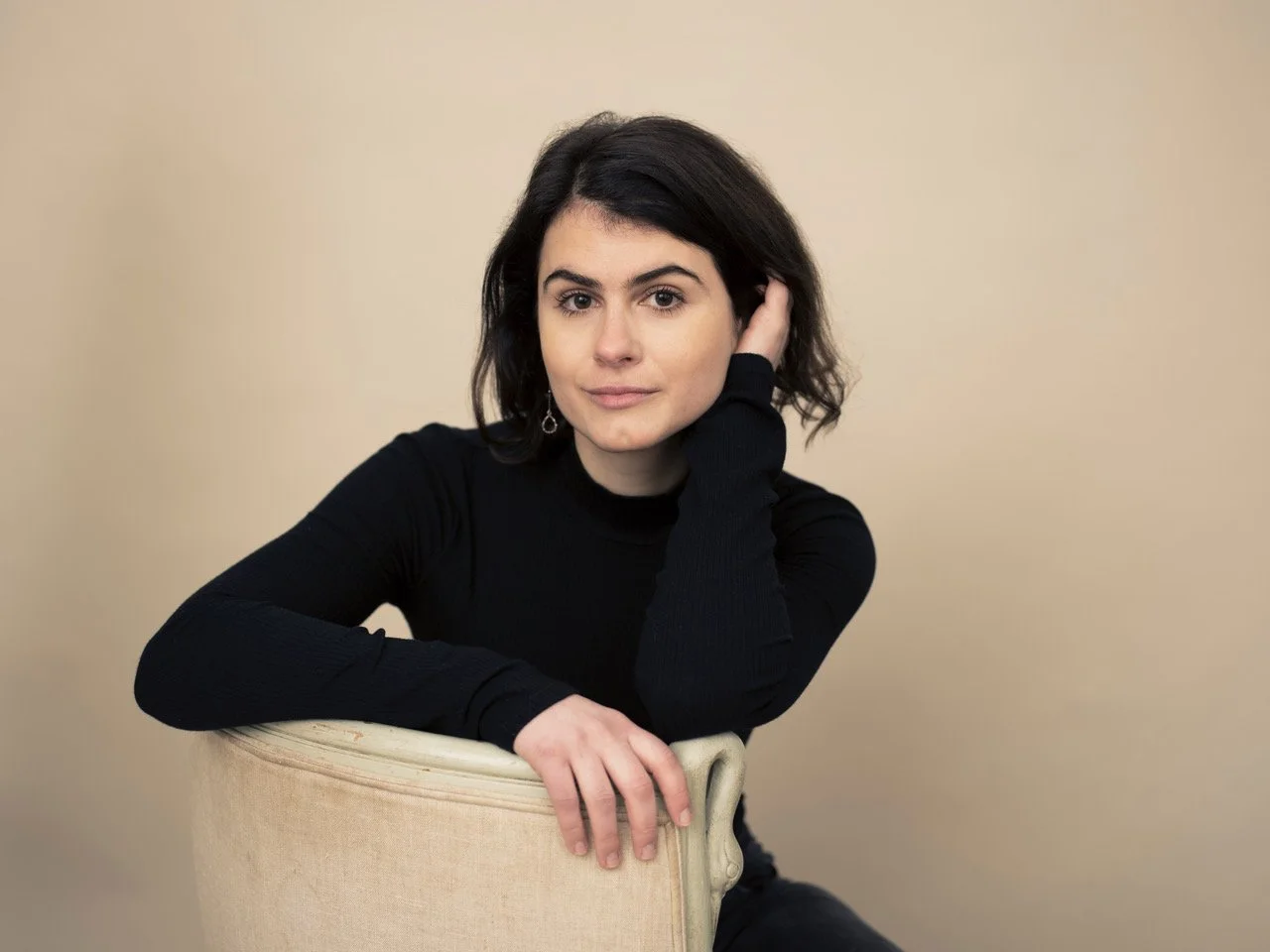
Imogen Crimp Author Image. Copyright: Jillian Edelstein
Dubbed “Rebecca meets Brideshead Revisited meets Saltburn” by Stylist, the novel follows a promising young filmmaker called Ruby who is invited to stay with her filmmaker idol Ellen and her daughter Lara at their country house over the summer. As Ruby finds herself becoming more and more entangled in Ellen and Lara’s dynamic, it becomes increasingly clear that Ellen’s promise of helping Ruby with her screenplay obscures darker, more complex desires. Following up Crimp’s breakout debut novel A Very Nice Girl, Give Me Everything You’ve Got is a hypnotic meditation on female artists, power, and the underbelly of the creative process. Gut Instinct spoke with Crimp about the Gothic, generational feminism, and the trials of being a female artist in the influencer age.
Gut Instinct: I'm really fascinated by the title of this book, Give Me Everything You’ve Got – where did it come from?
Imogen Crimp: The title is a quotation from the book: when Ellen asks Ruby to share work with her, Ruby says her script’s not quite finished, and Ellen replies, ‘just give me everything you’ve got’. I chose the line as the title because it ties into ideas about female art and the kind of work female artists are expected to create. Ruby is under pressure from various sources in the book to give everything to her art. Her producers want a sexy female story where she's laying everything bare in an autobiographical way. And Ellen’s also wanting everything from her, but from a slightly different angle– she accuses Ruby of holding something back emotionally, of not being emotionally honest in her art.
Where did your initial inspiration for the book come from?
I started writing the book over COVID. I was re-reading a lot of Gothic novels over that first lockdown, which felt appropriate to the atmosphere of the time – things like Rebecca, The Turn of the Screw, Jane Eyre. I became interested in the Gothic governess trope, and wondered about updating it. So the initial idea for the novel was that it was going to be a residential tutoring trip. I'd done some of these residential tutoring jobs in my 20s, and I found them really fascinating. You have such an interesting relationship with the family because you're kind of staff, but you're also kind of a guest, and depending on the age of the child, you also have quite an intense relationship with them because you spend so much time with them doing hours of teaching. It’s quite a weird, blurred role. The book’s developed a lot since then, but that was the initial spark of inspiration – a woman goes to stay with a family and is drawn into a complicated and ambiguous dynamic both with the child and the parent.
Your last book A Very Nice Girl, partly came about from your experience studying at a conservatory, but there's also a theme throughout the book about Ruby being pressured to use her own experience even though she says that's not what she wants to do. What is your relationship with using your own experience?
I think there are different ways of using your own experience. Firstly, there's writing something that’s straightforwardly autobiographical where it's like, “this is the story of my life”; this is what Ruby is being pressured to do. And then there's mining your own experience, using details about worlds that you understand; this is what I did with my conservatory experience in A Very Nice Girl. Finally, there’s using your own emotional experiences to create work that feels emotionally true. Neither of my books is based on my experience in any way that is directly autobiographical. You couldn’t line my life up with these books. But they are about emotions that I understand and have experienced, and I think you have to have that willingness to explore your own inner world as an artist. In the book, Ellen claims that Ruby’s work is shallow because she doesn’t have this willingness. Whether or not Ellen is right remains an open question!
Have you had experiences of people assuming your work is autobiographical?
People want to be able to use you and your image in marketing, and I think this is particularly the case if you’re a young woman. It’s much easier to promote you if you’re willing to say “this was my experience!” or to talk about things that have happened to you in first-person pieces, and… I find this aspect of being a writer quite difficult. It's so not me at all. I’m a very private person, as I think many writers are. But at the same time, of course, you want and need publicity, so it’s something you need to learn to navigate.
It’s funny because in the nineteenth century, to be taken seriously as a female writer, you had to write anonymously or under a male pseudonym. Whereas today, to be a woman and to be published, it seems like we need to be hyper-confessional. And I think it’s all part of a tendency to see work by women as unintellectual. I found this quite frustrating with my first book. In the reception of it, there was so much focus on the sex in it, and so little interest in, for example, the fact it was based on a novel by Jean Rhys. I had a couple of reviews that were almost entirely about the sex in the book – which was bizarre, as there really wasn’t that much sex in it!
I feel there's been a reckoning with a certain type of young, destructive female protagonist in the past few years– you write Ellen saying something which feels both true and in some ways misogynistic. She says, “I just kept thinking to myself that it's funny, isn't it? That now women have finally been liberated, now we're finally free to figure out what we really want and to go after it without judgement, it turns out that what we really want is the exact same thing that men have been wanting from us for millennia”.
I feel like I’ve read so many books where self-destructive sex is used to shock – it’s there to up the emotional stakes, and to be provocative, and you don’t get much of a sense of what is happening emotionally for the character at all. I started to find this quite a cheap way of writing about relationships, and I think it maybe relates to what we were saying before about the expectations on women to write very revealing narratives.
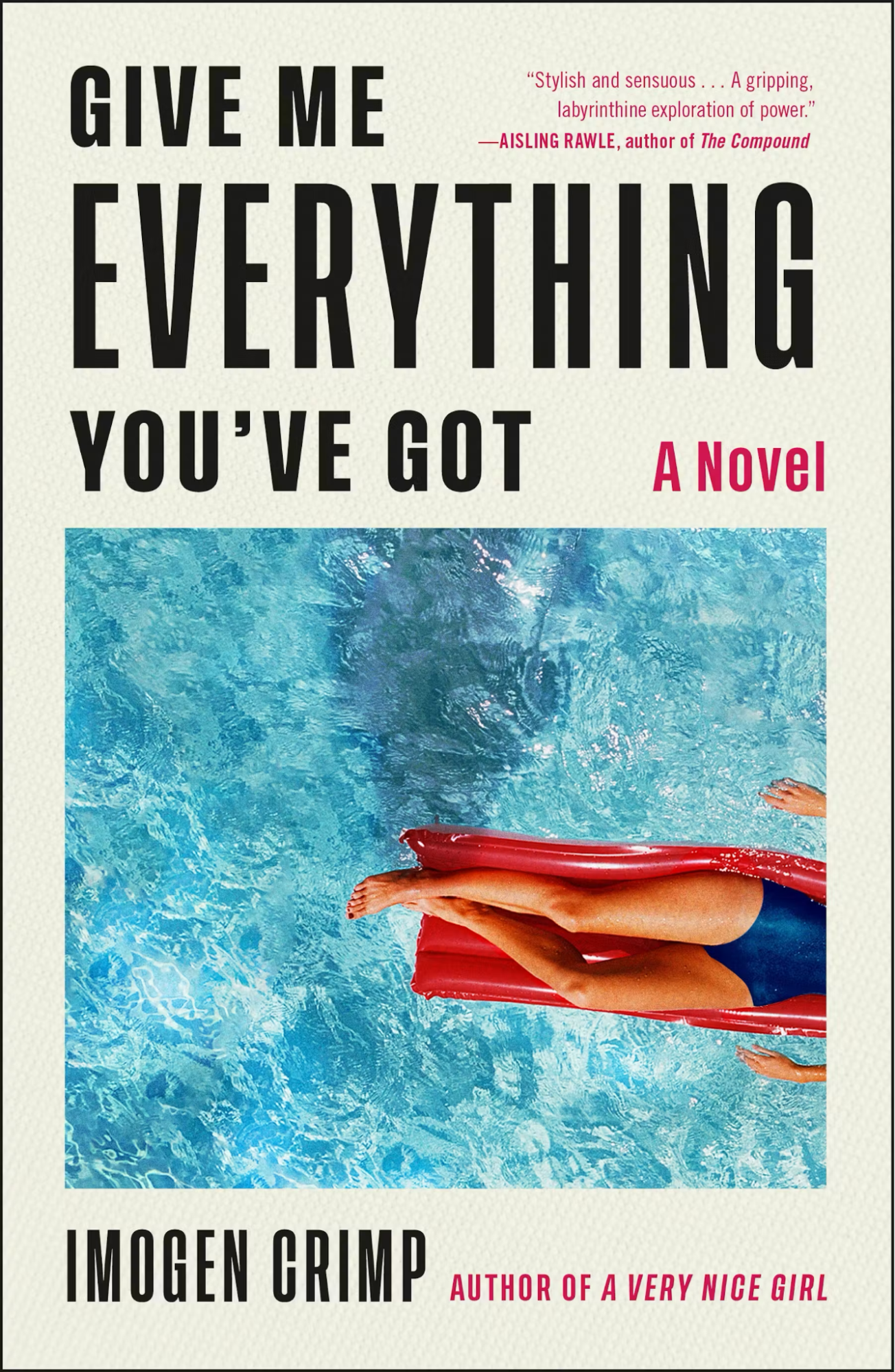
US Edition ‘Give Me Everything You’ve Got’; Macmillan Publishers
While the focus on sex in my first novel did frustrate me, I did also reflect on it. I think moments in that book did unconsciously fall into some of these, I suppose, “millennial” tropes – this way of writing about sex with a self-destructive edge. So in a way, Give Me Everything You’ve Got was my response to this; through Ellen’s character, and her conflict with Ruby, I interrogate some of these narratives.
In light of that, what was your perspective on writing these different generations and how much you felt you were reckoning with your own?
Something I find really interesting about different schools of feminism is the fact that we seem to feel the need to completely dismiss everything that the generation before us has said in order to be modern. If you always do that, then you have to start again with every generation, and there's never any progress. But women are so often set against each other. I wanted my three characters to all have valid perspectives – that as the reader you perhaps begin by inhabiting and believing Ruby’s perspective, and then gradually this certainty starts to be undermined. I feel like there’s quite a lot of moral whitewashing of women in fiction – young female characters having to ultimately be morally good and nice to each other (often contrasted with bad male characters). On the other hand, there’s the equally morally flat trope of the evil older woman. I really wanted to challenge both these ways of writing female characters.
I'm interested in what you wanted to do with the character Lara as a Gen Z character, and what she may or may not symbolize?
Lara is somebody who's grown up in a privileged world with a very adult relationship with Ellen from a very young age. In some ways, she’s had everything, and appears way older than she actually is – but what she is lacking is emotional security and attention from her mother. She's a character who has a lot of emotional need and wants attention from whatever sources she can get it from.
I think something that reflects her generation is her relationship with how she comes across. Where Ellen and Ruby are both filmmakers and are obsessed with controlling narratives, Lara wants to be a photographer – she’s interested in the image. At one point in the book, Ruby discovers some photographs Lara has taken in direct imitation of Nan Goldin; there’s an irony here, as Goldin is known for her authentic real-life portraits… So it’s like Lara is imitating authenticity. Do these photos expose something about her, or are they pure posturing?
Did this interest in different mediums manifest consciously in your style? To me, so much of this book feels like a one-take film, with every scene moving fluidly into the next.
It was really bad, the process of writing this book. As you know, it took me many years, and I wrote about half of a draft, which I ended up scrapping. So writing this came from a place of being very, very stuck. I’m a huge overplanner, and I do a lot of writing down sentences and jotting down notes in a folder per chapter. The way I hit upon this style was just going back to paper and pencil. Basically, I put all my notes away, and I decided to just write down what happens from memory. I wrote down the first few pages– literally like a descriptive narration of what was happening– and when I finished it, I realised that there was no interiority at all and it was all observation. I felt that was a really compelling voice for a filmmaker who sees everything really vividly, but is obsessed with the exterior and not very in touch with themselves or emotionally honest.
Do you have any advice for aspiring writers?
I always wanted to be a writer, but I stopped for a few years before starting again during my mid-to-late twenties. People always told me I had to write every day, and I hated that so much because I don’t write every day. I always found it really inhibiting; it made me feel like I was always failing because I couldn't find the time, and I felt like there was this narrative that if you didn’t do that, you weren’t a proper writer; you didn’t deserve to be a writer. It’s such an unhelpful narrative. So one piece of advice would be: there are no rules! And if any piece of writing advice puts you off, then ignore it.
And like Lydia Davis, I would always recommend reading older fiction rather than just contemporary fiction. I think there’s a risk of falling down a rabbit hole of the things we think we should be writing, the way we should be writing female characters in a contemporary world, and the concerns we should be writing about. It’s very refreshing to read books written in different contexts; it helps to break the feeling that you should be writing in a particular way or about particular themes.
Give Me Everything You’ve Got is Out Now in the US and can be purchased here.
Note: This interview has been edited for length and clarity.