What Makes Something Iconic?
By CG Morand
After a 6:30 am therapy session, a large iced coffee, and far too much on my mind, I began the ordeal of an impromptu closet clean-out. While excavating my many (and I, unfortunately, must stress many) band t-shirts, half-finished sewing projects, and sentimental clutter, I thought to myself, how could I possibly part with any of this?!
During my digging, I, like so many who have come before me, rediscovered a slew of shit I had not seen in ages. One shirt in particular stood out to me; a black baby tee with a mouth on the front biting its bottom lip. A suggestive symbol, and dare I say, indicative of something larger. Coated in red lipstick and glitter, it might be clear to some people that those lips are a reference to The Rocky Horror Picture Show, a campy cult classic where, at the heart of the film, lies the celebration of self-expression and nonconformity.
This shirt, among the many other clothes wedged into the deepest crevasses of my closet, is an extension of my identity; the way I choose to present myself to the world.
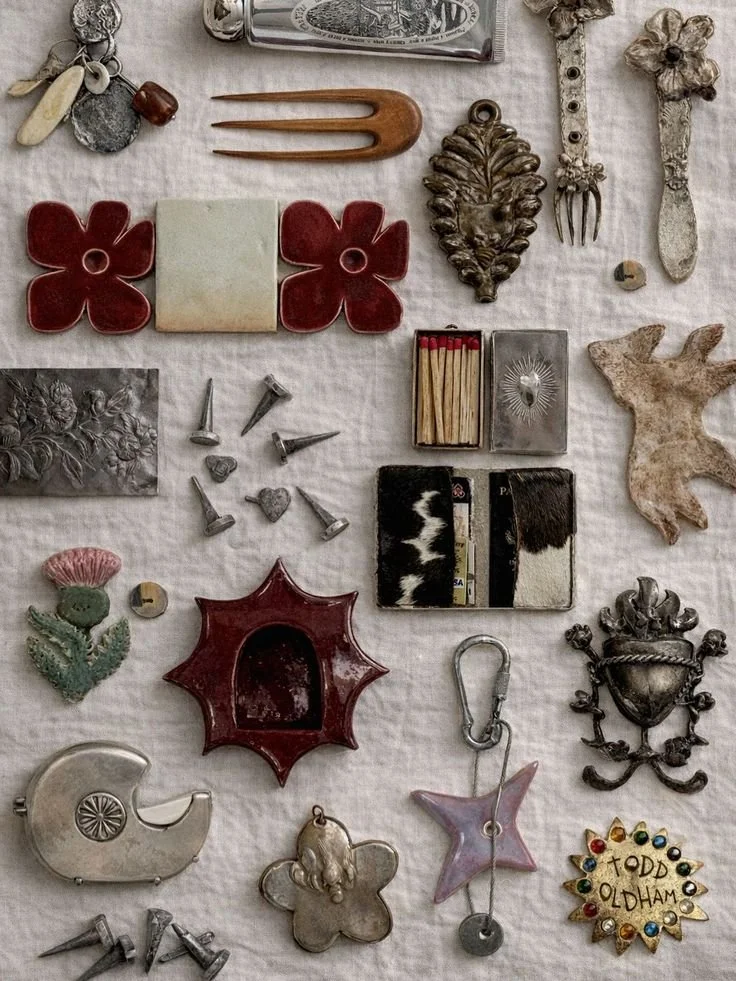
Littered on top of my dresser are photographs, drawings, books, generational jewelry, and mini ceramic vases. All of which, along with my bawdy t-shirt, not only reveal my taste and interests but inform others of the values, influences, and lessons I absorbed throughout my life, both explicitly and implicitly.
When a friend sends me a song with a thoughtful anecdote, this reminds me of you, and I begin listening to the brilliant belts of Maggie Rogers; or when I receive a photograph of a stained-glass Tiffany lamp and am told, "thought of you," I wonder what makes my taste so predictable? Additionally, why are some visuals held in higher regard than others?
While taste in movies, music, literature, and aesthetics is thought of as subjective—dependent upon one’s own appetite for such preferences—our tastes rarely cultivate in isolation. They are constantly being informed by the people and places around us, long before we even realize their influence. With that, there have always been objectified tastes that society holds in higher esteem.
The 20th-century French Theorist and Sociologist, Pierre Bourdieu, provides a framework for the more subdued influences that shape our lives. He argues that our preferences are never merely personal; they are cultivated through upbringing, education, and environment. More importantly, certain objects, references, and even habits communicate to the world the opportunities we have access to and establish social signals that others instinctively recognize.
This is known as cultural capital.
Cultural capital’s definition begins with our varied levels of exposure as children (what books we read, what parts of the world we saw) and culminates over the course of our lives. The proficiency of what we learn and retain packs our trunks of knowledge with values and symbols that are unique to our environment.
Bourdieu writes that cultural capital exists in three forms: in the embodied state: the forms of knowledge that live within us. Knowledge that exists in this state is instilled in us as early as learning the ABC’s, or recognizing certain shapes. The objectified state: material objects that indicate one’s social class—Bourdieu uses examples of pictures, books, dictionaries, instruments, and machines.
And in the institutionalized state: how society measures one’s social capital. For example, someone who holds a Doctorate has a greater social capital than someone with a Master's degree, who has a greater social capital than someone with a Bachelor's degree, and so forth.
While cultural capital is distinct from economic wealth, the two reinforce each other. Studying at an Ivy League university or being tagged with the surname Vanderbilt signals access to cultural experiences. These experiences enable certain individuals to navigate institutions more fluidly and secure opportunities unavailable to others. This, in turn, increases their financial status, simultaneously continuing to elevate their cultural capital.
Historically, the tastes of higher socio-economic classes are more revered as they signal education, leisure, and status. Appreciating Bach’s symphonies, discussing Monet’s Lily Pads, and understanding Shakespeare are not simply preferences; they are read as indicators of intelligence and sophistication. Furthermore, they exclude those who lack the knowledge or technical language to discuss them properly, yielding a hierarchy of taste where some forms of culture are elevated while others are dismissed.
Culture is therefore guarded, in one way or another, to keep it superior, and cultural capital, in many ways, is about fluency. This fluency requires time, money, and effort to gain familiarity with the codes, references, and expectations that signal belonging to a certain group. Yet, fluency requires access that is never equally distributed. So what happens when enough people do not reflect a well-embodied or objectified state that is not perceived as sufficient by the institutionalized state? They create their own culture.
Out of a shared struggle and collective synergy, communities develop new symbols, traditions, and ways of belonging that reflect their own histories rather than those sanctioned by more dominant institutions. And thus, a unique culture emerges, not from a lack of sophistication, but
out of necessity to reflect their environment, their values, and their distinctness. This way of creating and curating, born out of alienation, could have only come from people whose experiences existed outside of what society considered acceptable or sophisticated.
That little black t-shirt, buried beneath years of forgotten clothes, isn’t valuable because it references a cult classic film. Rather, its value is embedded in the reminder of the communities that taught me there was beauty in the unconventional. The shirt became more than a piece of fabric; it became evidence of the culture that shaped me, and shaped an entire community of queer voices that continue to speak their own language.
In understanding that every community, regardless of how much recognition or prestige society grants them, develops its own symbols of belonging. The same institutions that elevate museums and symphonies also give meaning to punk and drag shows. One is not inherently more cultured than the other; they are recognized differently.
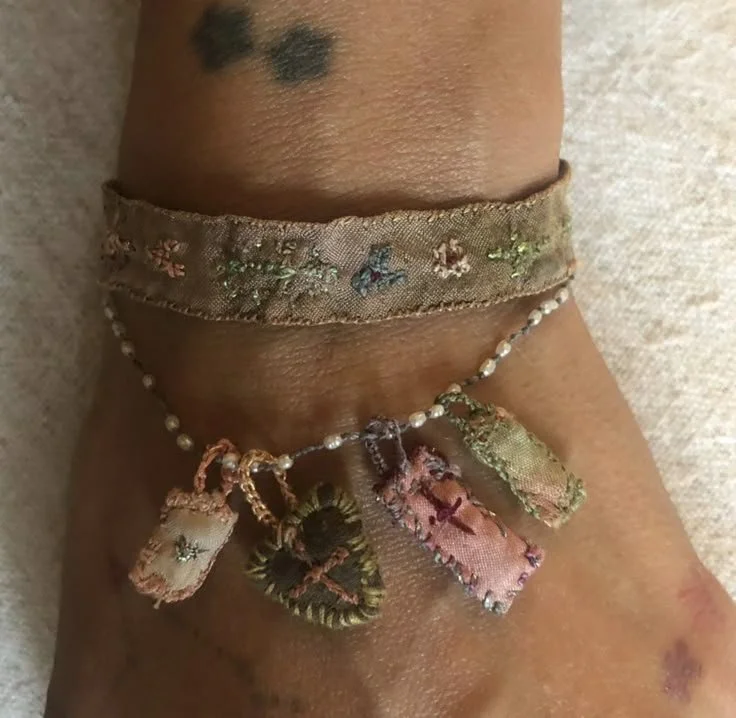
Perhaps this is why cleaning out a closet feels strangely impossible. We are never just sorting through possessions; we are sorting through the artifacts of every version of ourselves. Every concert t-shirt, dog-eared novel, inherited bracelet, and handmade trinket tells a story about the people and places that influence us and the worlds we are invited into. Throughout our lives, we expound upon these influences, continually adding new symbols and stories that shape not only how we understand ourselves, but how others come to understand us for generations to come.