Farewell, Male-Centered Summer!
From Casa Amor to a Massachusetts courtroom, a summer of asking what women did wrong before asking what happened to them.
By Reese Villella
From Casa Amor to the T&T wedding to a courtroom in Plymouth, Massachusetts, we’ve had an overwhelmingly male-centered summer. Maybe it’s Trump’s America, maybe it’s Sydney Sweeney, or maybe we’re all just absolutely losing it, but it seems the patriarchy and pick-mes are more in than ever. You might be asking yourself: how the hell is this girl gonna connect the Clancy trial to Taylor Swift’s wedding and Kenzie from Love Island? Well, reader, you underestimate the crazy and illogical ways my brain works.
With the summer of 2026 coming to a close, I’ve been reflecting on the season’s defining cultural obsessions. Of course, we all remember where we were when the Knicks won the NBA Championship. And sure, you may have spent a night or two at a bar pretending to care about the World Cup with your friends. But for me, Love Island USA season 8 defined the zeitgeist of June and July.
If you know anything about me, you can probably imagine that I previously considered Love Island beneath me, and you would be correct. I’m not into reality TV or competition shows (with the exception of Is It Cake?), and I typically prefer entertainment that is deeply depressing or nihilistic. To each their own! It took a lot of convincing from my friends to even turn on the show, let alone get past the egregious lavs they put on the Islanders. But once I was in, I was in. I’ve been quoting “momma happy,” “big night for Gal,” and “Me-La-Nie!” like a maniac all summer. I’m ashamed of the person I have become, and I can’t wait for next season.
One of the many subjects of Love Island discourse this season was contestant Kenzie Annis, whom viewers and some of her fellow Islanders dubbed the “female Sincere.” If you watched the show, you know that’s like being called “the female West Elm Caleb”. If you didn’t, allow me to explain.

Elite Daily
Sincere’s relationship with Melanie became one of the season’s most exhausting focal points. He repeatedly expressed how much he cared about her while acting in ways that undermined those assurances. Simultaneously, he led Sol (a short-lived bombshell who was only pied twice, contrary to popular belief) to believe he wanted to be with her before choosing Melanie in the love-letter challenge. In Casa Amor, he told Amora he would have picked her if they’d had more time, then returned to Melanie, undermining his connection with Amora. Exploring connections is the point of the show, but that doesn’t excuse misleading multiple women about where they stand with you.
People mainly took issue with his mistreatment of Melanie, who cried and slept in Soul Ties more times than Sincere managed to string a sentence together. But as viewers grew attached to her and rooted for her through the breakdowns, crashouts, and repeated disappointments courtesy of Sincere, they kept voting to keep her on the show. Unfortunately, he came as part of the package.
And if viewers kept voting for Melanie, they were keeping Sincere there, too, regardless of how he treated her. Supporting Melanie became indistinguishable from supporting her relationship. Islanders and America kept encouraging Melanie to stay in the relationship, hoping things would get better. Can’t we want something (or someone) better for Melanie, instead of hoping this particular man eventually gets it together?

Parade
Then there’s Kenzie, whose supposed equivalence to Sincere became its own subject of debate. Kenzie was originally coupled with Corbin before America voted to couple Kenzie with bombshell Caleb. Despite this, Kenzie continued pursuing Corbin without being forthcoming about it. Of course, this was unfair to Caleb. Still, I think Kenzie gave it as much of a shot as she could, considering Caleb’s lack of personality or chemistry with literally anyone in the Villa, and the fact that she didn’t choose that couple to begin with. Corbin, however, quickly moved on during Casa Amor and, upon seeing this, Kenzie coupled with Dylan and, aside from a kiss with Gal that produced her now-infamous “a kiss is like a handshake” defense, continued that relationship through the remainder of her time on the show. At the reunion, she and Dylan confirmed they were still together.
Now, would I recommend comparing a kiss to a handshake when explaining yourself to someone whose feelings you may have hurt? Probably not. But if there has ever been an environment in which to kiss someone because you’re curious about them, surely it is Love Island. They constantly introduce new hot people and ask everyone whether their existing relationships can survive the experience. I cannot personally imagine what it would be like to feel attracted to Gal, even briefly, but I respect that Kenzie was navigating circumstances beyond my comprehension.
She certainly handled parts of it badly, but I remain unconvinced that her choices add up to the same pattern people criticized in Sincere. You can tally up how many people she kissed all you want, but it doesn’t exactly measure up to Sincere’s repeated indecision and continued pursuit of women even after choosing someone else at a recoupling.
I’ll admit that Sincere received plenty of criticism himself. The double standard still stands, though: Islanders and audiences alike continually encouraged Melanie to hold out hope for a better version of him, while treating Kenzie’s mistakes as though they carried the same emotional consequences as his.
This double standard became even more evident at the reunion, particularly in an exchange involving Kayda, a contestant whose commitment to “telling it like it is” was sometimes overkill, but whose directness I generally appreciated. The exchange involved Jaiden, a Casa Amor girl who coupled up and left the show with Caleb. At the reunion, Jaiden and Caleb offered different accounts of their breakup, but essentially, Jaiden believes Caleb misled her about his involvement with other women before sleeping with her outside the Villa. Kayda’s response, of course, was that “hooking up is a two-way street.”
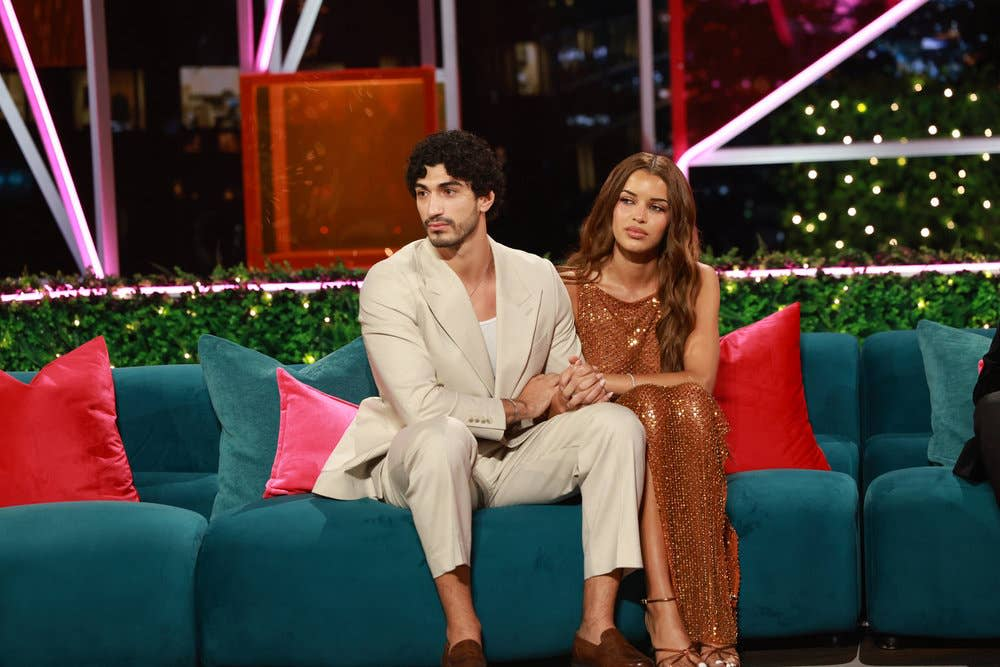
What bothers me about this response is the implication that Jaiden’s decision to hook up with Caleb made her partly responsible for being misled. Kayda suggests that because Caleb had been acting distant, Jaiden choosing to sleep with him was some sort of demoralizing act. You can wish a woman had walked away sooner without implying that staying made her deserving of what happened next. Because then, the burden falls on her twice: first to detect the deception, then to defend herself for having believed him.
Kenzie was criticized for exploring connections, while Jaiden was judged for continuing to invest in hers. Meanwhile, Melanie was encouraged to keep believing Sincere could change. The expectation for women remains consistent, as they are supposed to manage the emotional consequences of everyone’s decisions, including the men’s.
Which brings me to Taylor Swift and Blake Lively…
I’m a long-retired Swiftie who will admittedly tap my toe to some Folklore or Evermore when I’m in the right mood. I think Taylor is an exceptionally smart businesswoman and a writer who has demonstrated real talent, even if her recent work has, for me, entered a previously unimaginable realm of Dubai-chocolate, cash-grab soullessness. I’ve already subjected readers to my thoughts on The Life of a Showgirl, so I’ll spare you a second dissertation.

Swift and Lively via Instagram in 2022
What interests me is not the tacky nature of an MSG wedding or even the corniness of “JUST&T MARRIED,” but Blake Lively’s apparent absence from the wedding. The assumption is that their friendship fell apart because Lively dragged Swift into “drama.” That drama, for anyone who has managed to avoid it, concerns Lively’s allegations of sexual harassment, workplace misconduct, and retaliation surrounding the production of It Ends with Us. Justin Baldoni, her director and co-star, denied the allegations and accused her of attempting to take control of the film. The ensuing litigation involved competing claims, a dismissed countersuit, and ultimately a settlement before trial.
But somewhere in the endless discussion of who was difficult, who was calculating, and who was ruining whose career, the actual working conditions Lively described became easy to overlook. According to People Magazine, Lively’s complaint alleged that she filmed a birth scene largely nude, with her legs in stirrups and minimal coverage, without standard industry protections. That is an allegation about someone’s body and safety at work, and it deserves more consideration than whether you found her annoying during a press tour. I’m inclined to believe Lively’s account, but I am oft inclined to believe that a man is more likely to be capable of workplace harassment than the woman is to be a conniving mastermind.
You do not have to like Blake Lively to take her allegations seriously. You do not have to approve of her marketing choices, her interviews, her husband, or her personality. None of those things determine whether she was entitled to a safe set. An actor’s willingness to perform intimate material is not blanket permission to disregard her boundaries. This is part of what interested me when I wrote about James Franco: how quickly a woman’s allegations can be recast as evidence that she was difficult to work with, or that she wanted a man who didn’t want her back and decided to get revenge. And then we end up scrutinizing her supposed motives instead of the conduct she reported.
Swift became involved in the litigation herself. Forbes reported that she was subpoenaed in May 2025, though Baldoni’s lawyers later withdrew it. Private messages between Swift and Lively also became public through legal filings. Forbes described Lively identifying Swift as an important source of support during the experience. We do not know everything that happened between them afterward, and a wedding guest list cannot tell us, but we can examine the surrounding narrative, which presents Lively’s allegations as an inconvenience inflicted on other people.
I understand why someone would be upset about being subpoenaed or having private conversations made public. But calling it ‘dragging her friends into drama’ makes speaking up sound like an unacceptable disruptive act. This is why I find this whole situation and Swift wedding so male-centered. A man’s reputation and the social consequences of an accusation become the story, while the woman’s account becomes something everyone wishes she had handled more conveniently. We start asking why she involved people before asking why she needed support.
Feminism cannot depend on the woman in question remaining easy to defend. It has to accommodate women who are irritating, powerful, imperfect, and capable of making mistakes themselves. Taking their allegations seriously does not require approving of every other decision they have ever made. Solidarity is sometimes inconvenient, but that inconvenience doesn’t warrant no invitation to your wedding with 1,000 guests. If your feminism only works when your reputation, schedule, or social standing is undisturbed, when exactly is it supposed to do anything? I thought you liked your friends canceled, Taylor. Or is that only if they’re MAGA?
Women are allowed to need support, provided that supporting them doesn’t ask too much of anybody. Be hurt, but remain likable. Speak up, but don’t make a scene. And whatever you do, make sure your response doesn’t become harder for people to stomach than what happened to you. Those expectations become dangerous in women’s healthcare--ask for help, but you’ll only get it if someone listens, if appropriate care is actually available, and, worst of all, they have to believe you. Support has to mean more than encouraging women to speak up and then leaving them to manage whatever happens next.
Yes! We are at that part of the article. My goodness, you say, what could all this possibly have to do with Lindsay Clancy?
The distance between a celebrity wedding and a courtroom in Plymouth, Massachusetts, is considerable. Three children are dead, and their lives cannot be reduced to a point in an argument about feminism. But the public’s response to their mother absolutely does.
The Guardian
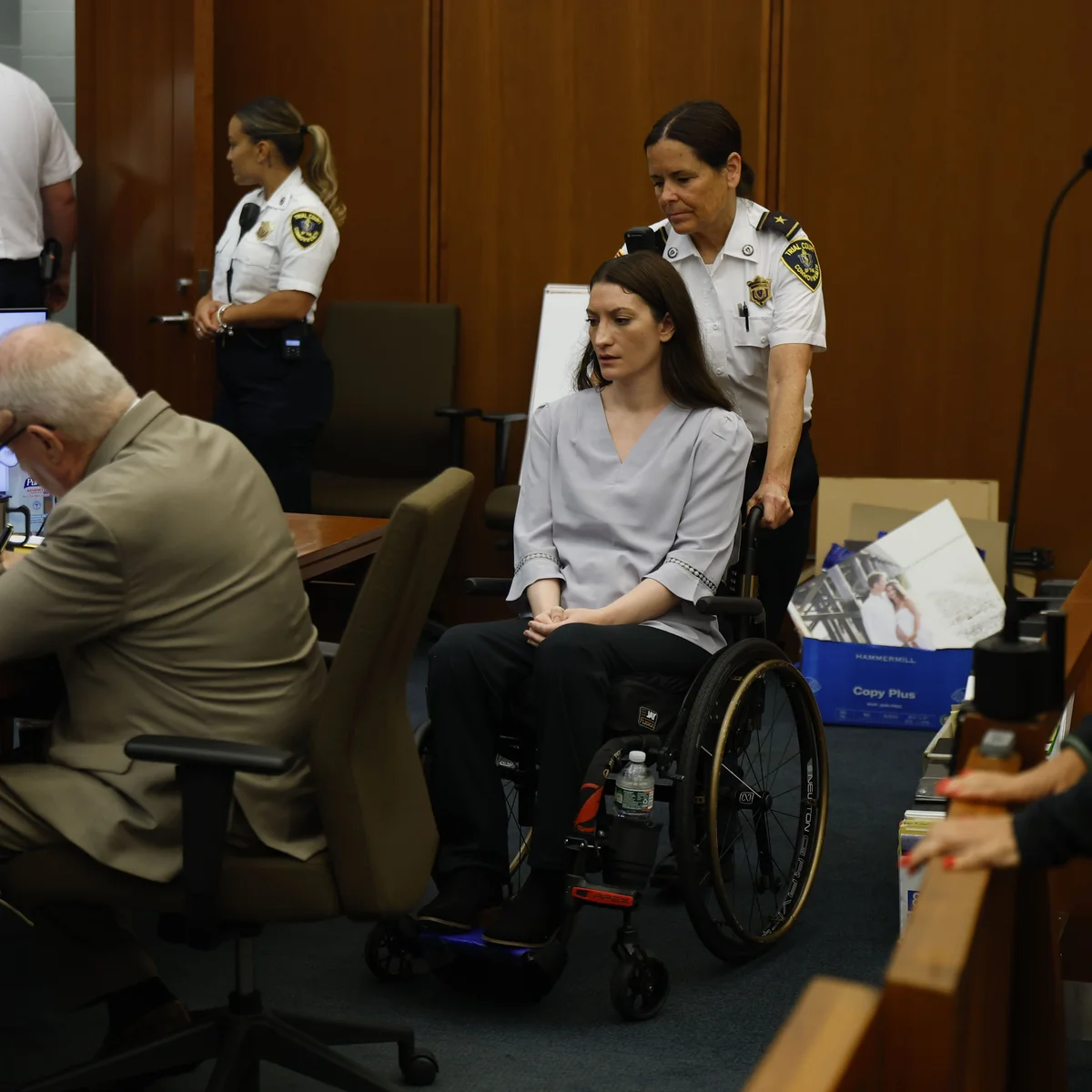
If you somehow haven’t heard about the Clancy case, first of all, I’m shocked and somewhat honored to be the first person telling you. Second, I recommend taking the time to look into it beyond the headlines. I won’t get into every detail of her treatment or every competing interpretation of the timeline, but the questions it raises about postpartum mental healthcare deserve more attention than a quick scroll and a verdict from the comments section.
In January 2023, Clancy killed her three children at their home in Duxbury, Massachusetts, before attempting suicide. The central question of the trial was whether Clancy was criminally responsible--her defense argued that she experienced postpartum psychosis, compounded by prescribed medications, while prosecutors argued that the killings were premeditated. Eleven jurors favored acquittal on grounds of lack of criminal responsibility; one holdout juror disagreed. After what felt like weeks of deadlock, the judge declared a mistrial. As of September 18, prosecutors had not announced whether they would retry her.
Some jurors have explicitly raised concerns about the care Clancy received. People reported that juror Paula Devlin believed the children’s deaths might have been prevented had Clancy received the help she needed. The case has even prompted a concrete policy response: Massachusetts Governor Maura Healey proposed additional funding for postpartum support, including voluntary home visits and maternal mental-health services.
The trial became the subject of political commentary extending well beyond the evidence presented in court. In a September 14 article for The Nation, Jeet Heer described online responses that used the female jurors’ positions to argue against women’s voting rights. His article cited Fox News reporting on calls to repeal the Nineteenth Amendment.
Whether Clancy met the legal standard for criminal responsibility depends on the evidence and applicable law. Whether postpartum care could better identify and respond to severe illness is a broader healthcare question. Neither can be answered by treating the case as a referendum on women generally.
As unusual as Clancy’s case may be, that does not make it irrelevant to the urgent need for better postnatal mental healthcare. But the right will call Lindsay Clancy an outlier, just like they did when we pointed to Renée Nicole Good’s death as evidence of corruption and unchecked violence within ICE. They’ll say cases like hers are uncommon, just as they dismissed women like Emily Waldorf, who was forced to spend days facing hemorrhage, infection, and life-threatening complications because Arkansas’ abortion ban prevented her doctors from treating her miscarriage. They’ll reduce Clancy’s mental-health crisis to laziness or an attempt to take the easy way out, just as they reduced E. Jean Carroll’s allegations against Trump to a ploy for money, even after a civil jury found him liable for sexually abusing and defaming her.
Maybe this all sounds unrelated. Maybe it sounds deranged. Maybe I’m lending these things way more weight than they’re worth. But summer is coming to a close, and Sydney Sweeney is selling sports betting with strategically placed athletic equipment covering her naked body. The right wants to take away our right to vote and reduce us to tits and ass.

And if I may add one more tangent on the Sydney Sweeney front, I want to correct the narrative that those who critique these ads are merely jealous of her looks. Her Euphoria co-star Zendaya is outrageously gorgeous, yet you don’t hear me saying her face card is setting feminism back. I take no issue with the nudity, nor her beauty, nor her rack. I take issue with what’s become of her brand: an actress whose performances once excited me is trading any chance at a respectable career for the cash she’s getting for showing her cleavage to advertise a Kalshi competitor no one can remember the name of.
Agency doesn’t equate to liberation. Sydney Sweeney chose to do that ad and presumably was paid very well for it. But neither her choice nor her compensation negates objectification. An individual woman benefiting from an arrangement doesn’t mean that arrangement benefits women. Sure, she got her bag, but what’d the rest of us get out of it?
None of these things, individually, prove that feminism is disappearing, but the midterms are approaching, and if this summer has shown us anything, it’s that the erosion of feminism rarely announces itself as such.
I don’t think watching Love Island is a political obligation, and I don’t think disliking an advertisement constitutes activism. But I do think our everyday judgments are worth examining, especially when we keep giving men the benefit of complexity while demanding that women earn basic decency.
So yes, it is that serious.