'Frankenstein', 'Nosferatu', and 'Wuthering Heights': Classic Adaptations and Their Problem with Faith, Time, and Truth
By Carolina Dionísio
From Austen, to Shakespeare, to Mary Shelley and Shirley Jackson — bringing classic titles to the big screen isn’t particularly new, and is definitely a great technique to attract avid readers to the cinema.
Gothic imagery in movies has been done ever since the 1890s, starting with a French 3-minute film called Le Manoir du Diable (The Haunted Castle), usually known as the first horror movie. This was in the Silent Era of cinema, when noir, voiceless movies with dramatic physical expressions and live-sounding music started to gain popularity.
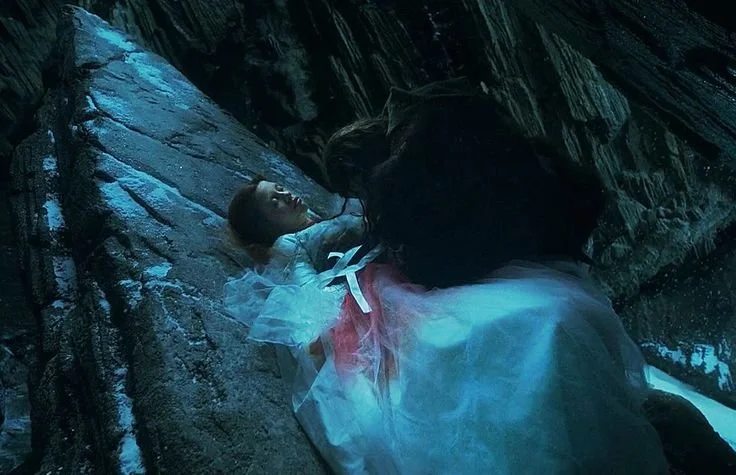
Still from Frankenstein (2025)
Then, in 1908, we were introduced to the first official major Gothic adaptation, Dr. Jekyll and Mr. Hyde, by pioneer director Otis Turner (also known for directing the first Wizard of Oz film). Although this is now a lost film with no surviving copies, it is still considered to have established roots for the genre. Other foundation movies are Nosferatu (1922), Frankenstein and Dracula, both from 1931, Hitchcock's Rebecca (1940), and Sleepy Hollow (1999): Tim Burton’s first major movie of the genre, which followed his signature style, previously seen on Beetlejuice or Edward Scissorhands.
Gothic Classic adaptations bring chills to the screen and often feature the same key elements: doomed romance, supernatural activity, a haunted house, a sneaky ghost, or any other form of ancient monster. Always accompanied by a dark atmosphere and thrilling soundtrack, the genre has cemented a generational passion for this kind of unique horror. So why is it that some adaptations are so poorly received?
Like always, it all begins with the principle of the thing. In this case, the script.
Nowadays, a movie’s hype is built before said movie is even out. After a few leaks, which usually include a couple of pages of the script, the general public already formulates an overall opinion. The main factor is, of course, the scale of accuracy when compared to the original piece of media. But this bias can also be determined by the director or the rumored main cast.
An example of this is the most recent Frankenstein, by Guillermo del Toro. The director, born in Guadalajara, Mexico, was already acclaimed for his 2018 multiple award-winning movie The Shape of Water, but his most recent work wasn’t always well-received.
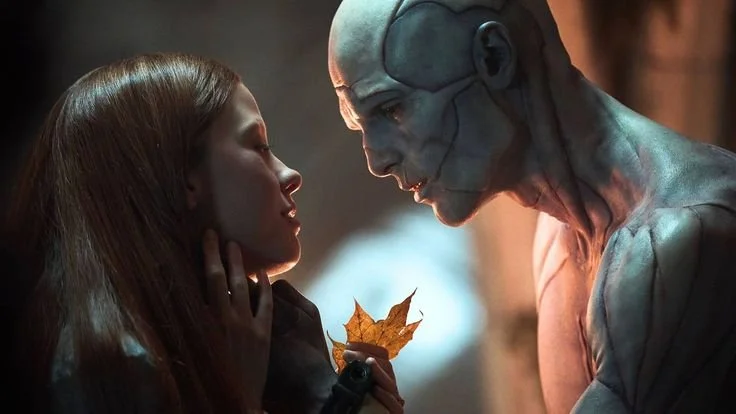
Still from Frankenstein (2025)
Many commented on the casting choice for The Creature: Jacob Elordi, who rose to stardom after his bad-boy role on the YA Netflix trilogy, The Kissing Booth, and following typecast in the hit series Euphoria. There was a lot of discourse around his ability and fit inside the general range of actors, which includes scream-queen Mia Goth and Emmy-nominee Oscar Isaac.
Frankenstein, the original 1818 novel written by 19-year-old Mary Shelley, speaks of unchecked ambition and knowledge, isolation, revenge, parental responsibility, and social acceptance — but that’s not how most adaptations go.
The problem with Frankenstein movies is that they often fail to incorporate the novel's complex themes by ditching them for more action-packed scenes, creating dull plots and inaccurate characters. I, Frankenstein (2014) is frequently cited for its nonsensical plot and low ratings, alongside other misfires like Victor Frankenstein (2015) or the generic horror sequels like Frankenstein Must Be Destroyed. These adaptations prioritize gore and stray too far from the core tragedy of creation and rejection.
So it’s understandable why del Toro didn't immediately earn the trust of septic gothic lovers, but that quickly changed after Netflix dropped an exclusive first-look at the film, all the way back in January.
Fans were automatically excited after the first official images of Isaac as Victor were made public, and complimented the cinematography and use of colors and symbols, calling the visuals “stunning”. Many also began begging for a theatrical release, saying “the movie deserved the big screen”.
Upon release, the movie entered the “most-watched” lists of 132 different countries. Even Elordi and his 40 prosthetics definitely made an impact, and the public is calling for any sort of award nomination following his amazing performance.
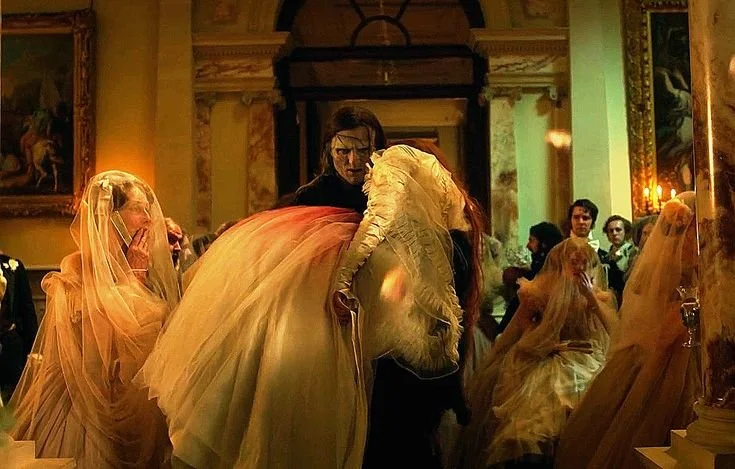
Still from Frankenstein (2025)
Faithful, beautiful, and cautious, del Toro’s creation is officially a success. Even if it’s not a direct “page-to-screen” translation, it still deeply honours the spirit of Shelley’s novel and its core elements and philosophical/existential questions.
On the other hand, we can also innovate and add our own twist to things. If this works out, we’re left with a movie like Robert Eggers’ Nosferatu (2024), for example.
Although it is often associated with Dracula, the original novel by Bram Stoker, this movie carefully diverges from it, and instead dapples into the long tradition of reinterpreting/reimagining the source material — just like the first Nosferatu, released in 1922, which was always considered a very “loose” adaptation.
Naturally, this kind of pathway has its ups and downs. Critics valued Eggers’ Nosferatu because it focused way more on the horror instead of the habitual romantic approaches, portraying the vampire as a mythic evil and not an almost erotic figure. Even if it is not an exact characterization of Count Dracula, the film uses Count Orlok as a predatory being, more akin to early-20th-century vampire folklore than modern tropes.
Additionally, just the overall atmosphere delivers a haunting, skin-crawling vibe, equally repulsive and seductive, which evokes the dread associated with early vampire lore — similar emotional territory to parts of the novel.
However, other reviewers weren’t so happy.
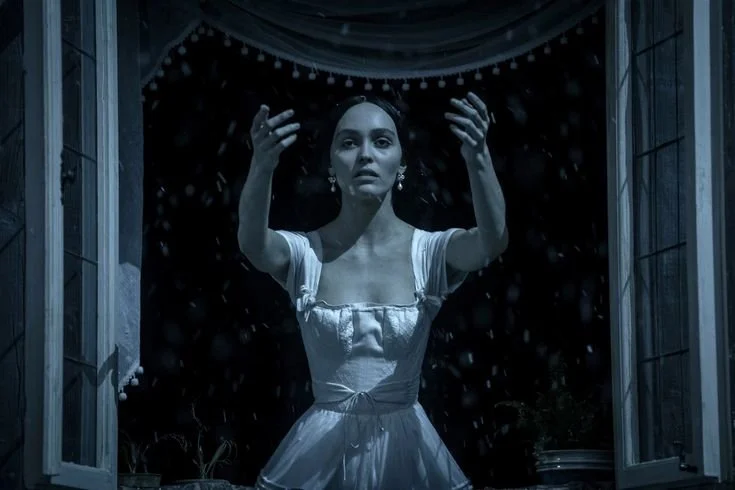
Still from Nosferatu (2025)
Nosferatu significantly reshapes the motivations and dynamics of the plot. The lineage of the film was moved, with some important characters being omitted or completely transformed, whether in name or significance. For example, the role of the protagonist’s employer (Herr Knock) was reworked in a way that borrows partly from one of the novel’s side-characters (the asylum-inmate Renfield) and partly from the novel’s original employer figure.
Some thematic elements from Stoker’s book, especially the subtleties of psychology, social interactions, Victorian-era mores, and power dynamics, were also lost or transformed. As one critic puts it, Orlok is “more stylised, more studied, but less insidiously frightening than he needs to be” to match the novel’s psychological horror.
One can say Eggers’ Nosferatu isn’t entirely a true adaptation of Dracula, despite being inspired by it. Regardless, it still has a score of 85% approval and many nominations, including in 4 Academy Awards categories, for photography, cinematography, production, and character design (hair and makeup). The leading cast, composed by Lily-Rose Depp (Ellen), Nicholas Hoult (Thomas) and Bill Skarsgård (Count Orlok), also got a Best Acting Ensemble nomination at the Critics' Choice Awards in 2025, with Depp receiving an additional Best Actress in a Motion Picture – Drama nomination at the Satellite Awards 2025.
Like Nosferatu, I believe an adaptation doesn’t have to be 100% accurate to be good. I personally loved the film, and I understand some changes are needed when bringing the page to life on the big screen. But I can also argue that some changes aren’t entirely necessary and, to some extent, even understood or justified — on this opposite edge of the spectrum, we have the category “trying to innovate and failing miserably”.
One example of an adaptation that is already facing deep criticism, even though there are still 3 months left until its premiere, is Wuthering Heights by Emerald Fennell. After an August screening, many watchers left with mixed feelings, while some called it “aggressively provocative and tonally abrasive”.
Emerald, who won a Best Original Screenplay Academy Award for her 2020 movie Promising Young Woman, gained popularity for her roles in period dramas such as Albert Nobbs (2011) and Anna Karenina (2012), though her directing work has always been way more thought-provoking. Driven by her “love of mordant envelope-pushing”, Fennell’s work aims to extend the boundaries of usual adaptations — but that practice isn’t always well-received.
I think that not every director is meant for all genres. Sometimes, your personal visions and styles simply do not match the overall necessities of the watcher. And other times, your personal visions and styles are so transcendent that you cannot even call your work a “loose” adaptation (like Nosferatu), because it’s just not an adaptation at all: Wuthering Heights is suffering from this exact syndrome.
Fennell took a book about destructive passion and social class that supposedly "cracked her open” at the ripe age of 14, and transformed into an erotica in which, in instance, a doomed man ejaculates mid-execution.
Then, there’s also the issue with the casting. If Robbie is way too old to play a “young maiden” or not, I digress. But with Jacob Elordi’s casting as Heathcliff, the character’s dark-skin and ethnicity (presumed to be Romany or Gypsy) are nowhere to be seen, even though these were key elements of his history and development. Because, although Brontë does not directly tell the readers Heathcliff's race, she still successfully depicts him as a victim of racism and stereotyping. How is Elordi supposed to be victimized if he’s as white as the average white boy?
Wuthering Heights is a novel known for having average adaptations that always leave the fans rather disappointed and fanning for more. The most acclaimed is still the original 1939 movie, directed by William Wyler, which received an Oscar for Best Cinematography and a nomination for Best Picture.
The strongest portrayal of Heathcliff is oftentimes considered to be Ralph Fiennes’ in 1992, notwithstanding that the overall movie lacks depth and intensity. Also, like Elordi, Fiennes is white.
The most recent adaptation (Andrea Arnold, 2011), starring Kaya Scodelario and James Howson, was “bold but boring and so bleak”. The imagery and cinematography were applauded and awarded, but most written reviews vary between 2 and 3 stars, with many calling out the “stripping of the intense emotion from the original material” factor.
In the middle of all this, we had some attempts at shows and mini-series, but everyone just pretends those didn’t happen.
Fennell’s announcement, somewhere mid-2024, raised enough commotion to bring the future movie to the trending topics. After the success of Saltburn (2023), the hype was high, and many wondered about the director’s unique take on the classic. According to Variety reports, a significant marketing push and theatrical release were secured after a major studio bidding war, with Valentine’s Day weekend being the chosen option, reinforcing the romantic atmosphere.
But then the casting was issued, then the usual “exclusive first-teaser”, then the official trailer a couple of weeks ago — and the internet was once more disappointed.
“I wish there was a movie actually depicting the characters the way they are”, reads one comment.
“It’s a complete middle finger to the source material”, says another.
The quote “with great power comes great responsibility” was popularized with the release of Raimi’s Spider-Man in 2002, and I think the exact same feeling applies to movie adaptations: the greater the title, the greater the pressure to properly adapt it.
This brings me to my final point: depositing way too much confidence and trust in a tagline or name.
Unfortunately, in the entertainment industry of today, you need someone else’s name to be able to make a name for yourself. Call it nepotism, call it connections and networking, the correct term really doesn’t matter because the core idea is still there. We keep casting the same actors in blockbuster movies, like Christopher Nolan’s forthcoming The Odyssey (2026), the same way we keep attaching ourselves to already known titles to generate some sort of “must-watch” clout.
We can’t keep blatantly using centenary classic taglines as marketing neon signs, but if we do, the least we can do is deliver a good final product.
Outside of the gothic bubble, The Hunger Games (2012) cast a pair of mildly unknown actors and delivered exactly what it needed to deliver, opening a whole new door for YA dystopian worlds. The following titles of the same genre, like The Maze Runner or Divergent, both from 2014, piggybacked on the hype of Mockingjay — Part 1’s release while maintaining the care and accuracy needed for a fair share of individual success.
Avengers: Endgame (2019) was a total box-office monster, but that didn’t happen overnight. The penultimate installment of the Infinity Saga had more than a decade of insatiable work and passion behind it, and a fan base of loyal, satisfied comics-lovers that was built through generations. The Marvel Universe not only relied on amazing CGI, exceptional people, a cast of diverse superheroes, and the minute-long appearances of Stan Lee, but also, and most importantly, appropriate timing.
Nowadays, I feel like the movie industry has become a one-size-fits-all mold. We follow the same archetypes and the same tropes that we know will sell, and we build a slightly different story on top of it. The movie can take either a year to be made, or 3, like Dune: Part Two (2024), another very well received adaptation (it holds a 92% Tomatometer rating).
But the problem with time is that it’s extremely hard to dictate, and oftentimes, not even a renowned title — despite how classic and loved it is — can save us from it. Sometimes, many years in the making doesn’t automatically equal top-level quality. And quality has definitely decreased over the ages.
Pride and Prejudice (2005), based on the novel by Jane Austen, is probably one of the most famous adaptations ever, and it took 3 months to shoot and less than a year after that for postproduction, up until its release. Today, we wait and wait for movies that end up being more of the same, or nothing unusual at all, in the worst way possible. The average total production time of a movie in the 2020s is roughly 2-3 years, or more.
The same thing happens with shows, which are now taking double the time to produce half the episodes per season, when compared to the 2000s. The Vampire Diaries (2009) dropped 20-episode seasons yearly, while Bridgerton (2020-today) drops 8 episodes every 2 years.
The exaggerated waiting time, once added to the bait of a great novel, is the perfect recipe for disappointment or just a lack of general interest.
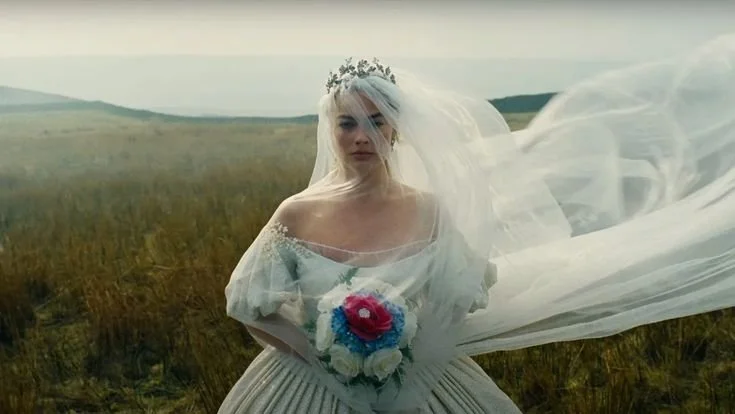
Still from Wuthering Heights (2026)
Fennell’s Wuthering Heights depended on the legion of English Literature readers who are tired of seeing superficial adaptations, and in the end, we’re getting half the book brought to screen with an inaccurate cast and a couple of eccentric sex scenes. And although the original novel dribbles into themes of untamed, intense love and sexual tension, there aren’t any graphic scenes, which emphasizes the deeper emotional connection and physical intimacy between the characters.
The film romanticizes the true nature of the couple’s relationship — destructive passion and systemic cycles of revenge and abuse — and transforms the story into yet another doomed love with polished characters that ditch the gothic rawness of Brontë's work.
Overall, I truly don’t believe in maintaining every single word of a book in a script, but I also can’t ignore nonsensical imagery and unfaithful characterizations. If you’re doing any sort of adaptation, especially of gothic classics, you can’t lose the core symbols, themes, and motifs that are needed in order to keep the essence of the genre alive.
I’m all in for creative freedom, to the same extent I am for valid critique, and it’s okay to admit when something is poorly done, despite it being original. We can’t keep justifying bad takes under the pretext of a director’s “unique vision”, because the source material is equally important when it comes to passing down the knowledge of these impactful classics.
We have cases in which a loose adaptation becomes a masterpiece, and we have cases in which following rules is just the best pathway to take — but in every and any case, let’s not forget the people who created these pieces in the first place, and let’s at least try to do them justice by keeping their vision and soul eternalized.