'The Housemaid' is a Haunting Thriller Worth the Hype
By Alivia Stonier
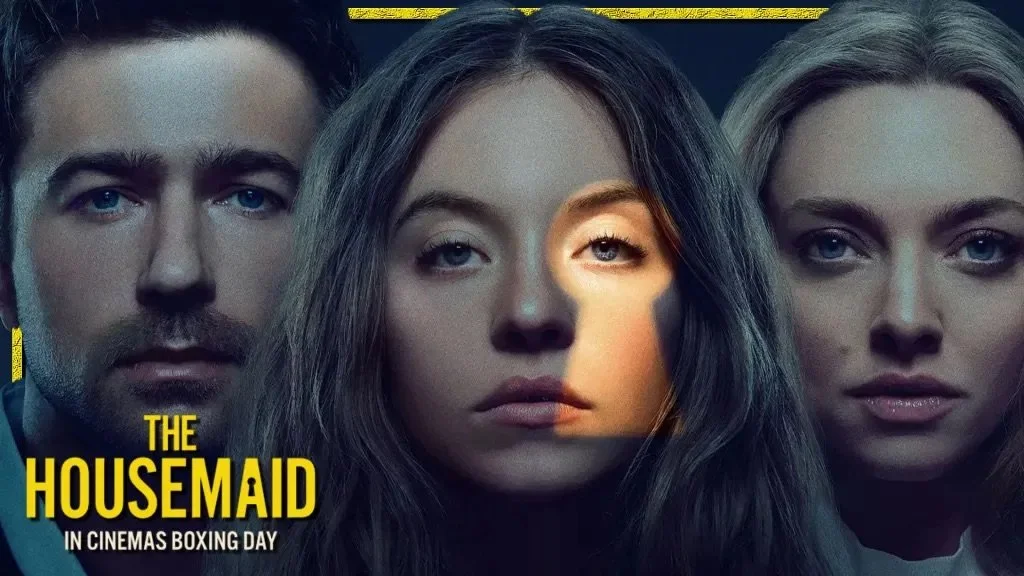
What if you were offered an opportunity that almost seems too perfect? One that promises safety, stability, and a fresh start, but quietly conceals something far more dangerous? This question sits at the center of The Housemaid, directed by Paul Feig, and propels its protagonist, Millie, played by Sydney Sweeney, into a twisted psychological journey that ultimately reframes female rage, survival, and moral clarity in ways the original novel originally laid out.
Courtesy of Lionsgate
Adapted from the best-selling series by Freida McFadden, the film succeeds not simply by translating beloved moments from page to screen but by intentionally reworking key narrative and character choices. These changes offer long-time readers new surprises while strengthening the story’s tension and thematic weight, allowing the adaptation to feel both faithful and newly purposeful.
Nina and Andrew Winchester appear to live an idyllic domestic fantasy: a sprawling home custom-designed by Andrew himself, financial comfort, and a beautiful daughter. Everything about their life feels meticulously curated, bordering on dreamlike, but beneath the polished surface, the foundation begins to crack.

Courtesy of Lionsgate
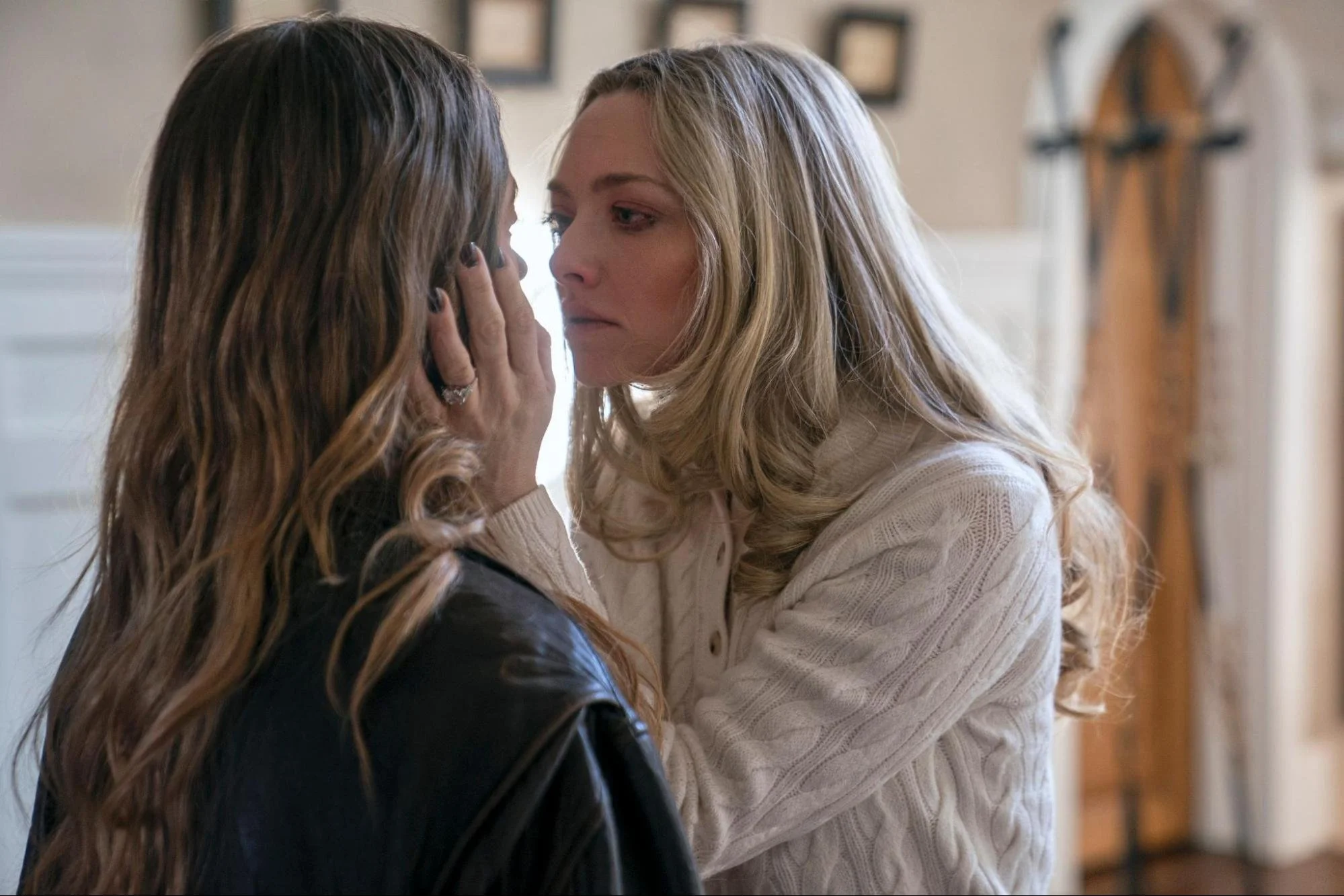
Amanda Seyfried and Brandon Sklenar deliver performances that bring this fractured marriage fully to life. Seyfried, in particular, carries Nina’s volatility with precision, balancing chaos and fury in a way that feels deliberate rather than hysterical. Her performance demands patience from the audience, and that patience is ultimately rewarded.
Sklenar brings an undeniable charm to Andrew Winchester, a choice that makes the character’s underlying menace all the more unsettling. Having previously played romantic protagonists, including Atlas in the It Ends With Us adaptation, Sklenar’s pivot toward a darker role subverts audience expectations and reinforces how easily danger can masquerade as safety.
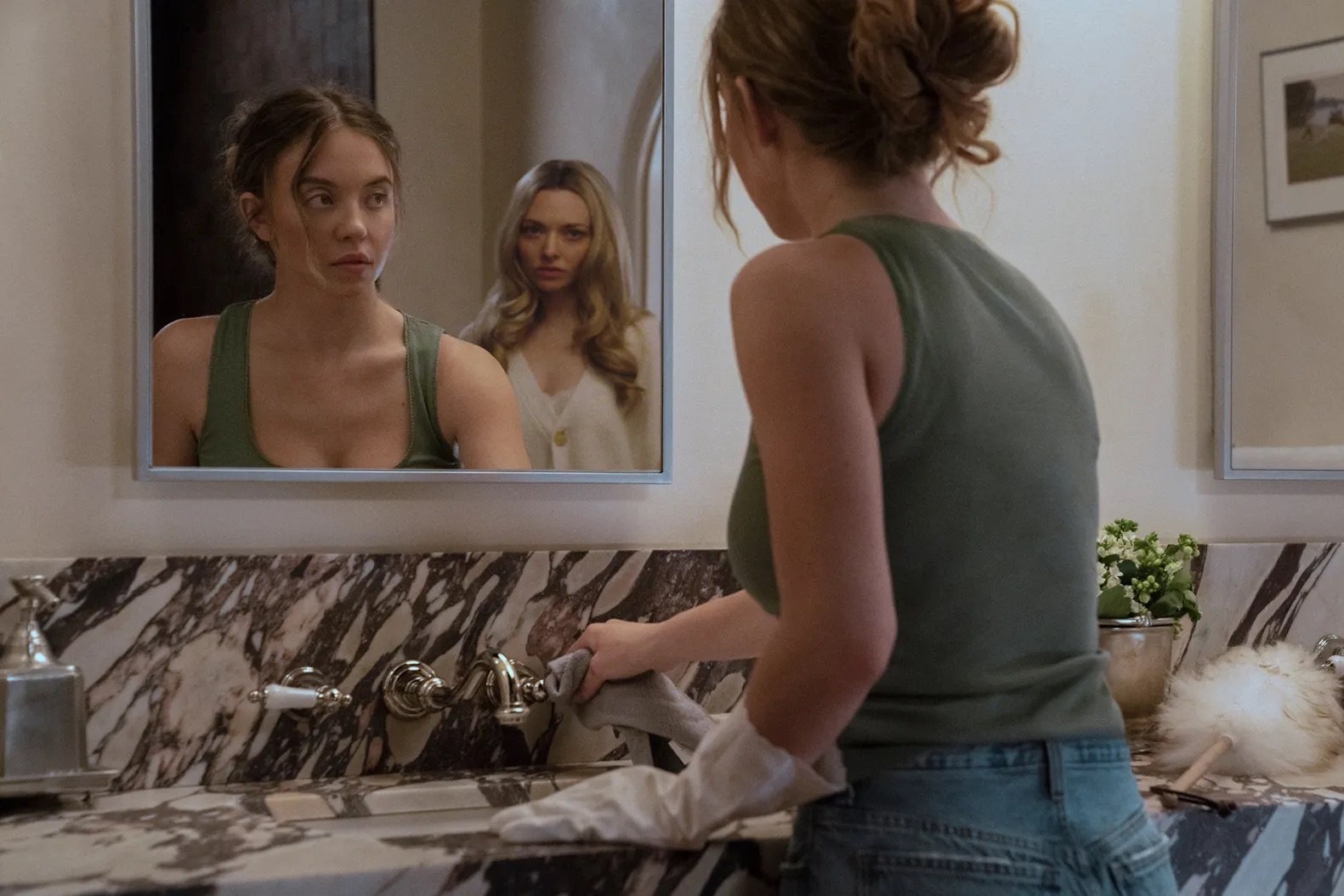
Soon after Millie moves into the Winchester home, she begins to realize that Nina is far more complex than she initially appears. Nina’s erratic behavior escalates into emotional breakdowns, during which she blames Millie for tasks she was never asked to perform. What begins as a dream job quickly turns into a situation Millie feels desperate to escape.
But the film resists making that escape predictable.
Rather than leaning into obvious warning signs, The Housemaid removes several cues present in the novel that signal danger too early. This restraint allows tension to build more organically, trusting the audience to read between the lines rather than relying on heavy-handed foreshadowing. As a result, the film feels far less predictable and far more immersive.
The story’s most significant reveal, that Millie is on parole for killing her friend’s rapist, reframes her character entirely. No longer positioned solely as a victim, Millie becomes morally complex, shaped by justified rage and a history of survival. Crucially, Andrew does not learn this information until the very end, when he threatens Millie’s life and is exposed as the true danger that has been lurking in the house all along. Nina, far from being unstable, is revealed to be calculated and strategic, acting with the singular goal of protecting herself and her daughter.
Courtesy of Lionsgate
While honoring the novel’s major plot points, the film reclaims emotional moments that previously felt restrained. Andrew’s death, in particular, carries a weight that allows the audience to fully share in Nina’s anger, an anger that felt muted in the original text.
That said, one notable piece missing from the adaptation is the importance behind the presence of the housekeeper. In the novel, this character plays a more significant role across the series, and his dimmed presence here leaves Michele Morrone’s importance missing. The loss slightly diminishes the broader narrative readers may be looking for.
The film’s ending strongly suggests plans for a sequel, but this tease feels earned rather than obligatory. The Housemaid shows confidence in its storytelling, allowing space for continuation without sacrificing the integrity of its first installment for fans of the books.
Despite a runtime of two hours and twelve minutes, the pacing remains tight. The film consistently trusts the viewer’s intelligence, moving briskly through its twists without sacrificing clarity or atmosphere. The result is an experience that never drags and instead pulls the audience deeper into the unsettling world of the Winchesters.
Translating a novel so heavily reliant on inner monologue is no small task, yet the film navigates this challenge with restraint and care. Millie’s interiority is conveyed through subtle performance choices by Sweeney, complemented by selective voiceover that uplifts key moments without overwhelming the narrative. This balance allows visual storytelling to take the stage well.
Courtesy of Lionsgate
Beyond its thriller elements, The Housemaid functions as a sobering reminder of the silent struggles many women endure, particularly in situations involving domestic abuse. The film underscores how danger often hides behind charm and comfort, and how situations that appear too good to be true often are.
According to the CDC, one in four women will experience physical violence by an intimate partner during their lifetime. This statistic lends real-world gravity to the film’s narrative, which centers on survival, agency, and the reclamation of control.
By engaging with this reality, the franchise transforms a deeply serious subject into something empowering. It allows women who have experienced similar trauma to see rage not as something shameful, but as a necessary and justified response.
Millie embodies this unapologetic rage by being protective and unashamed of the actions she took to safeguard the women around her.
At its core, The Housemaid delivers more than a gripping psychological thriller. It offers a story that resonates beyond the screen, inviting conversations about power, trust, and abuse while proving that adaptation can be both thrilling and culturally important when it dares to sharpen its message rather than soften it.