Is Reality TV the Modern Gladiator?
By Avery Wilson
For as long as I can remember, I’ve been watching reality TV in one form or another. Growing up, unless I had the remote, the only channels that would play were ESPN, The History Channel, and most notably, Bravo. Airbrushed women spilling their secrets in a backlit confessional were a regular part of my childhood media consumption, and as I grew, so did the scale of the genre.
The bubble in which the genre lived has popped, and it has grown into part of the mainstream cultural zeitgeist; TV shows you would once watch as a guilty pleasure have become an easy icebreaker for bonding with strangers. Unlike other relics of cable, it would seem that reality TV has gotten more popular with the rise of social media, which has introduced long-running legacy shows to a new audience, prompting one slight shift. To other reality veterans and me, it’s increasingly obvious that the audience’s role in these shows has grown larger across the board, breaking the fourth wall between those who appear on these shows and the ones who watch them at home. It’s the elephant in the room no one wants to address because the elephant is also bringing in millions of eyes and, therefore, dollars.
Courtesy of Peacock
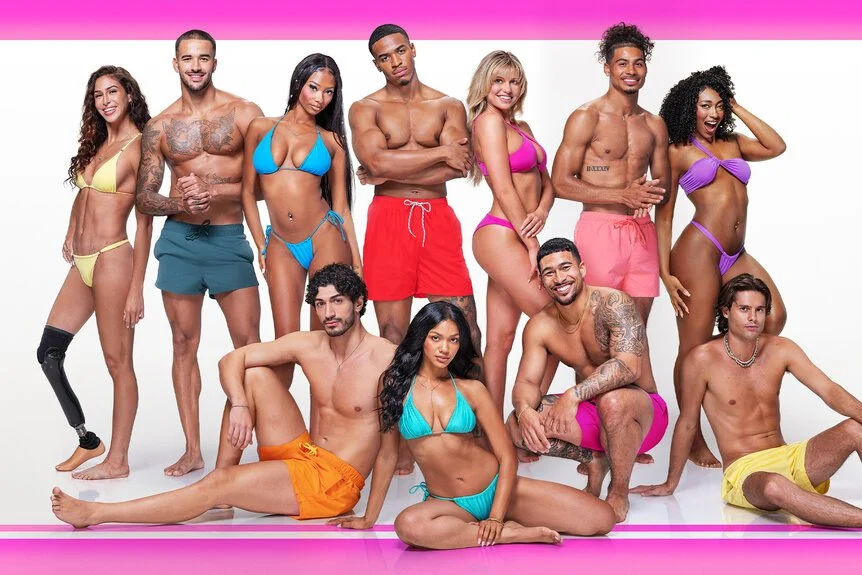
That’s not to say audience participation was never a thing; there are so many shows with a fan-voting aspect: Love Island, Dancing with the Stars, Survivor, Big Brother, etc. However, the audience's interaction with the show's day-to-day operations usually stopped there; we, as the audience, weren’t characters or major influences on participants' decisions. At best, we were an afterthought that would only be included in a reunion or after the season concluded, once contestants were brought back into the real world with no expectation otherwise. That is, until recently, following the conclusion of the latest season of Love Island USA, audience influence and engagement have reached an all-time high.
Inside the villa, the opinions of viewers played a role in the islanders' experience, who were increasingly aware of the cameras and how their actions might be interpreted by America, compared to seasons past. Outside the villa, discussions of the islanders are impossible to avoid online, with people taking a personal stake in their actions throughout the season, acting as if it’s a reflection of them, sparking discourse about narcissists, relationship red flags, psychological analysis, people unionizing to vote them off, and the running list of think pieces goes on. But how did we get here? How did the concept of watching real people on television turn into a modern emperor-gladiator dynamic?

Courtesy of Paramount+
Okay, let’s start from the beginning. If we want to get technical, the first “reality television” show was Candid Camera (1960), which, as the name suggests, used hidden cameras to film everyday people’s reactions to staged practical jokes. Despite being the grandaddy of all reality TV, it doesn’t hold much relevance today and didn't make a splash culturally—boring!
The real era of reality TV starts in the 90s with The Real World, the first non-scripted show to achieve prominence, particularly popular with young people. The show was praised for its ability to tackle tough topics such as racism, homophobia, sexual assault, and AIDS, garnering several competition-based spin-offs and sparking a boom in game-based reality TV in the 2000s.
The first season of Survivor aired in 2000, with its finale drawing 50 million viewers, second only to the Super Bowl that year. The show would spawn 49 more seasons, becoming a global franchise. Funnily enough, the birth of another monster-hit franchise also occurred in the same year as Big Brother aired and, in my opinion, acts as the catalyst for the state of reality TV that we’re in now. The first of its kind for those unfamiliar, Big Brother acts as an IRL The Truman Show, where contestants (known as houseguests) live in a house completely isolated from the outside world, monitored 24/7 by cameras and mics, and compete in various challenges, voting out houseguests until one remains and thus wins the prize. The show acknowledges its place as a sort of Orwellian social experiment through its name, taken straight from 1984, which perfectly fits another surveillant-state piece of entertainment ripe for audience use.

Courtesy of Peacock
With the rapid success of these two programs, an influx of shows was created in hopes of replicating that same achievement using different gimmicks, some competition-based, some not, following the lives of rich housewives, or watching people travel around the world, racing one another, too many dating shows to count; it seemed like reality TV was suddenly everywhere.
What else sets the genre apart from other television is that reality shows are usually cheaper to produce than a scripted series and draw in more viewers, which is helpful when there’s an active writers' strike and networks still need to make money.
But like most things that become popular, reality TV started to get major flak; the once-new and innovative genre that relied on raw, real interactions seemed more mass-produced and overly manufactured, with many discussing how fake everything is and calling it trash TV. It was seen as lowbrow programming that was bad for your brain. I can’t tell you how many shows, growing up, made references to how stupid reality TV is. I remember that one episode of Victorious where they decide to produce a reality TV show at Hollywood Arts, and everything that could go wrong does.
Anyhow, culturally, reality TV was long considered the junk food of media; it wasn't cool to watch reality television, and it certainly wasn't cool to be on it unless they were already famous or had one of the competitions like American Idol. Most contestants returned home to relatively normal lives; you could compete on Survivor and still blend back into everyday life once the season had ended. Compare that with today, where appearing on Love Island can function as an express lane to millions of followers, lucrative brand deals, and influencer status, a reality that has undoubtedly become part of the appeal for many prospective contestants.
Following the breakout success of Love Island USA’s season 6, which revived what had been previously a struggling American adaptation of the British phenomenon, many others and I began noticing a broader cultural shift and how reality television was perceived. Suddenly, the show was appointment viewing; people who only a year earlier had no idea the US version even existed were tuning in every night. The Islanders became celebrities overnight—ultimately and immediately signing with the best talent agencies post-show, shooting major magazine covers, and appearing on other reality TV shows.
Much of that season's success stemmed from its cast and the compelling drama they created. Still, it also reflected something larger: the transformation of the audience itself. Viewers were no longer simply watching reality television; they had become active participants in shaping it through social media discourse,se fan campaigns, and viral content. Most importantly, audience voting fans now influence storylines in real time.
Watching reality TV has evolved into a communal event where participating in the conversation is almost as important as watching the episodes themselves. It came as no surprise, then, that the anticipation for season 7 was immense. What followed, however, was a season defined by manipulation, emotional breakdowns, and an almost relentless amount of crying. Many of its most emotionally charged moments were driven not by organic conflict but by fan voting mechanisms seemingly designed to push contestants towards their breaking points. Online, there was an unsettling sense of satisfaction and watching these people unravel with audiences celebrating decisions that intentionally provoked the worst in them. The line between entertainment and participation had blurred to the point where viewers were no longer just spectators; they became part of the machinery producing the drama itself.

Courtesy of Peacock
As reality television continues to evolve, its future seems increasingly intertwined with the internet. Contestants now enter these shows already aware of the audiences waiting on the other side of the screen, often balancing the pursuit of genuine relationships or competition with the promise of post-show careers. At the same time, audiences wield more influence than ever before capable of shaping narratives elevating favorites or condemning contestants with a single viral post or note reality television has always reflected the culture consuming it and perhaps it's next evolution won't come from a new format or premise but questioning how much power viewers should have over the lives of the very real people they've turned into characters. With this season coming to a close and the new Big Brother season starting, I'm curious to see if this trend will continue.