'Late Fame' and the Weight of Unfulfilled Ambition
By Natalie McCarty
There are films that enthrall you. There are films that infuriate you. And then there are films like Late Fame, which simply... pass by. I spent its runtime waiting for it to either fully captivate me or completely lose me. It did neither. Instead, it drifted along with the same inertia as its protagonist, leaving behind less of an impression than a lingering sense of unrealized potential.
Courtesy of Magnolia Pictures
On second thought, perhaps that's the point. I'm not sure Late Fame could have been made much grander without sacrificing the quiet melancholy at its core.
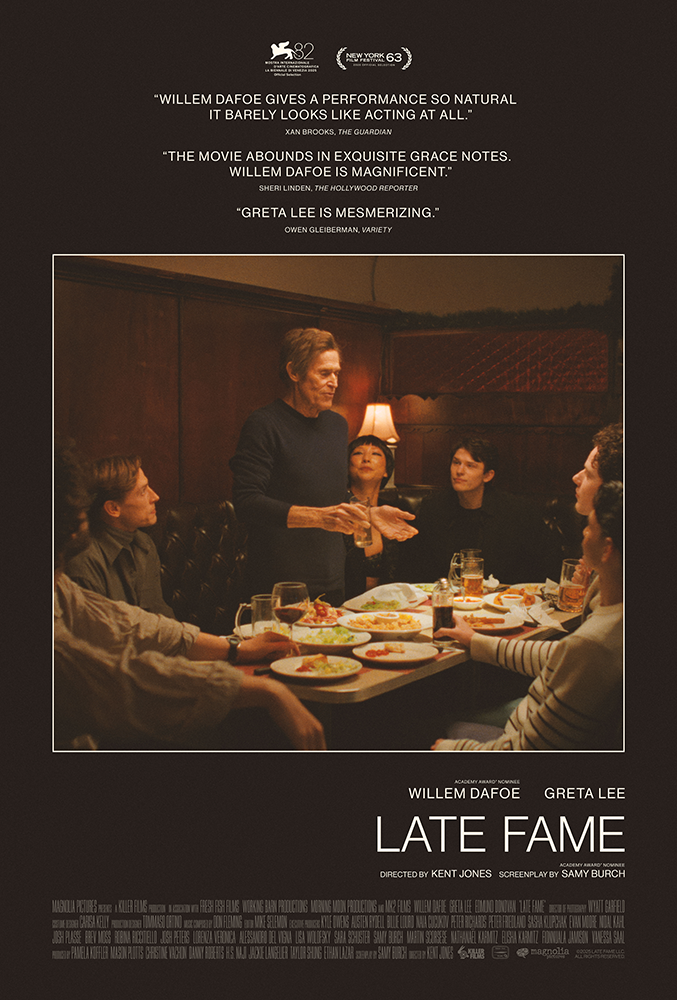
Adapted from Arthur Schnitzler's novella, Late Fame follows Ed Saxberger (Willem Dafoe), a forgotten New York poet turned postal worker who discovers that a slim volume of poetry he published decades earlier has earned a devoted following among a coterie of twentysomething artists. Drawn into their downtown literary circle and intoxicated by both their admiration and the alluring Gloria (Greta Lee), Ed begins to question the authenticity of his newfound relevance. In doing so, he confronts a question every creative person eventually asks themselves: Is it ever too late to become the artist you thought you'd be? And if recognition arrives only after you've stopped chasing it, does it still count?
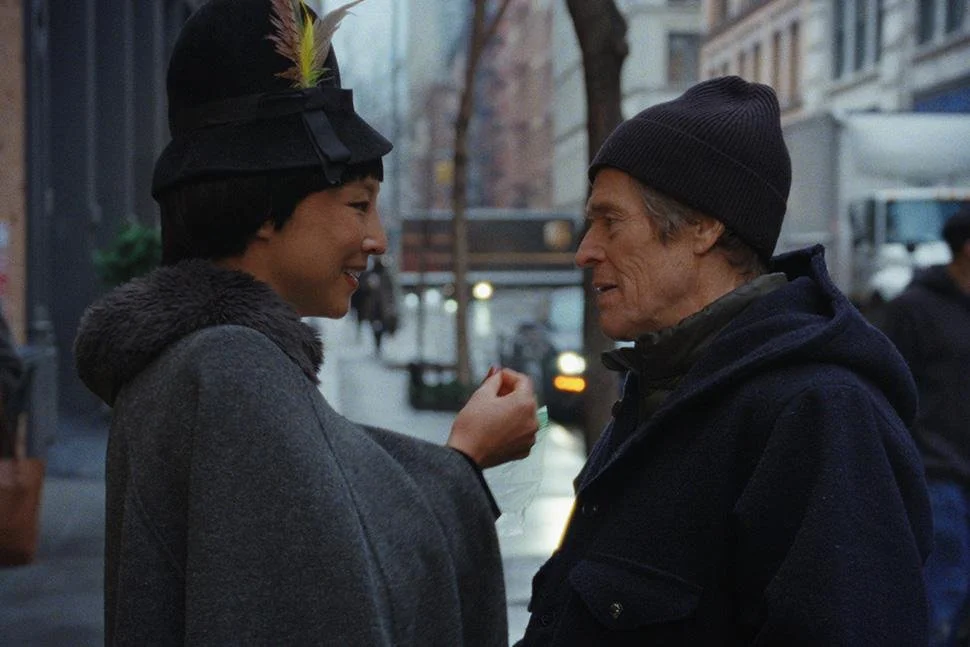
Where praise is due is to the film's heartbeat, which is at its strongest in scenes shared between Willem Dafoe and Greta Lee. Whenever they're together, Late Fame meets its mark. Dafoe and Lee are both effortless in their portrayals of emotional complexity, and it's no different here. It's a shame the screenplay isn't nearly as assured as the performances carrying it.
Courtesy of Magnolia Pictures
Late Fame has the unmistakable energy of an NYU thesis film with a studio budget. It's full of literary readings, downtown galleries, cramped apartments, and artists surviving on equal parts ambition and delusion. As an NYU alum, I recognized these characters instantly: the poets convinced they're one reading away from discovery, the filmmakers forever "working on a screenplay," the writers who mistake proximity to greatness for greatness itself. You admire the ambition. You appreciate the ideas. You catch flashes of brilliance. But ultimately, the pitch is stronger than the picture.
Because Late Fame understands something essential about making art in New York: the real fear isn't failure, it's anonymity. Becoming just another talented person with a manuscript in their tote bag, another actor waiting tables, another filmmaker pitching a project that never gets made.
Ironically, the film falls victim to the very fate it contemplates. Its ideas about aging, ambition, obscurity, and artistic validation are compelling, but the screenplay circles them rather than cuts through them. Even the cinematography feels oddly anonymous for a city that has inspired some of cinema's most iconic imagery. New York should feel like another character, but here it's mostly scenery.
Underwhelming feels like the fairest word. Not because Late Fame lacks intelligence or sincerity, but because it never becomes as compelling as the questions it asks. Like Ed Saxberger himself, it remains caught somewhere between obscurity and greatness.
Still, the film leaves behind one worthwhile thought: maybe it's never too late to make art. Maybe you've already been discovered. Maybe you're still waiting. Either way, there's always the possibility of being rediscovered—not just by an audience, but by yourself.