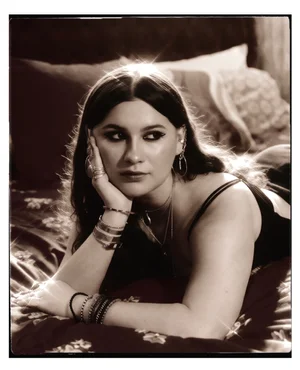
Natasha Joseph Turns Everyday Glamor Into Art
By Natalie McCarty
Upon first stumbling on Natasha Joseph’s original work, you’re struck with the thought that her art looks like it could already be at home hanging up in the MoMA.
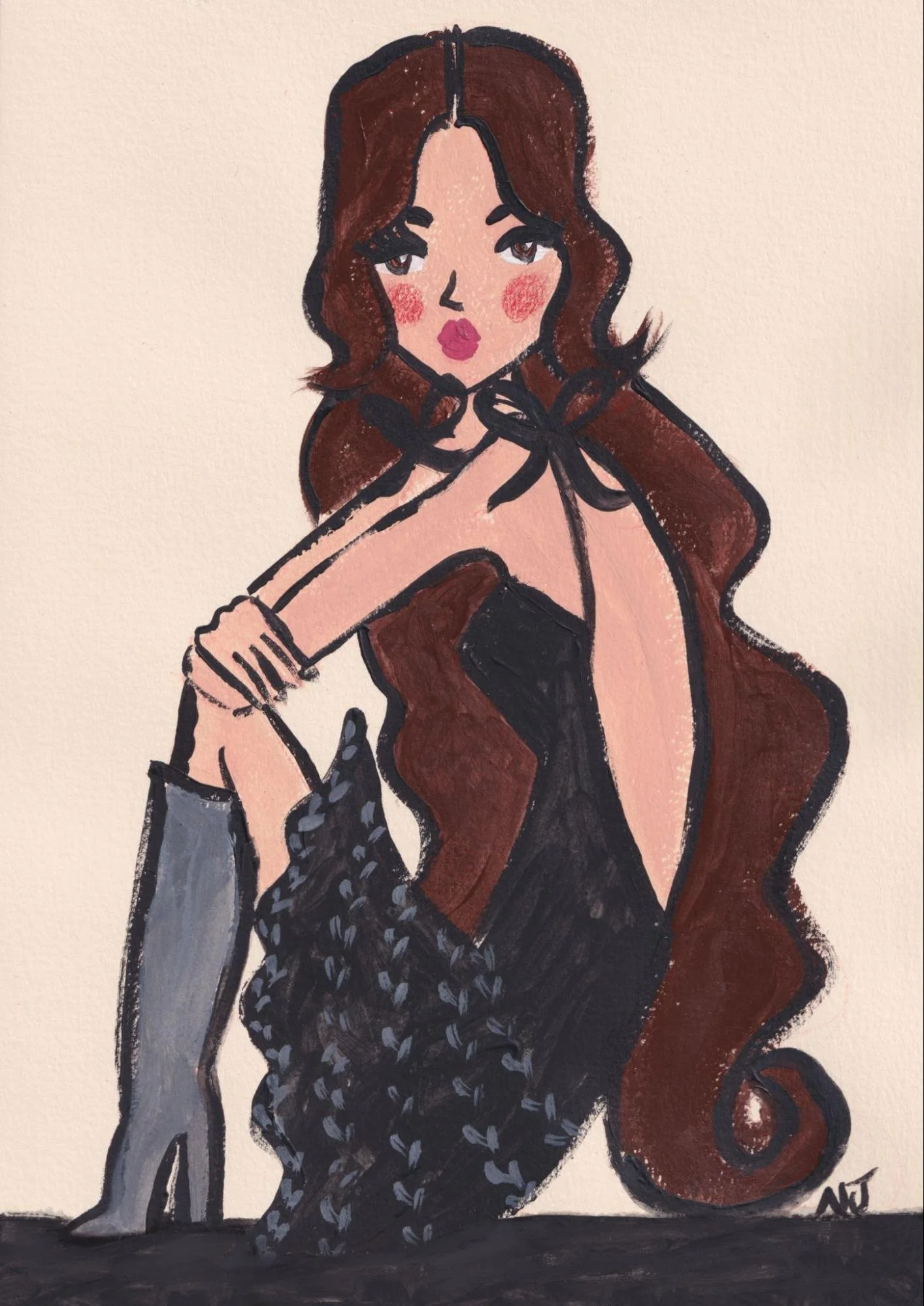
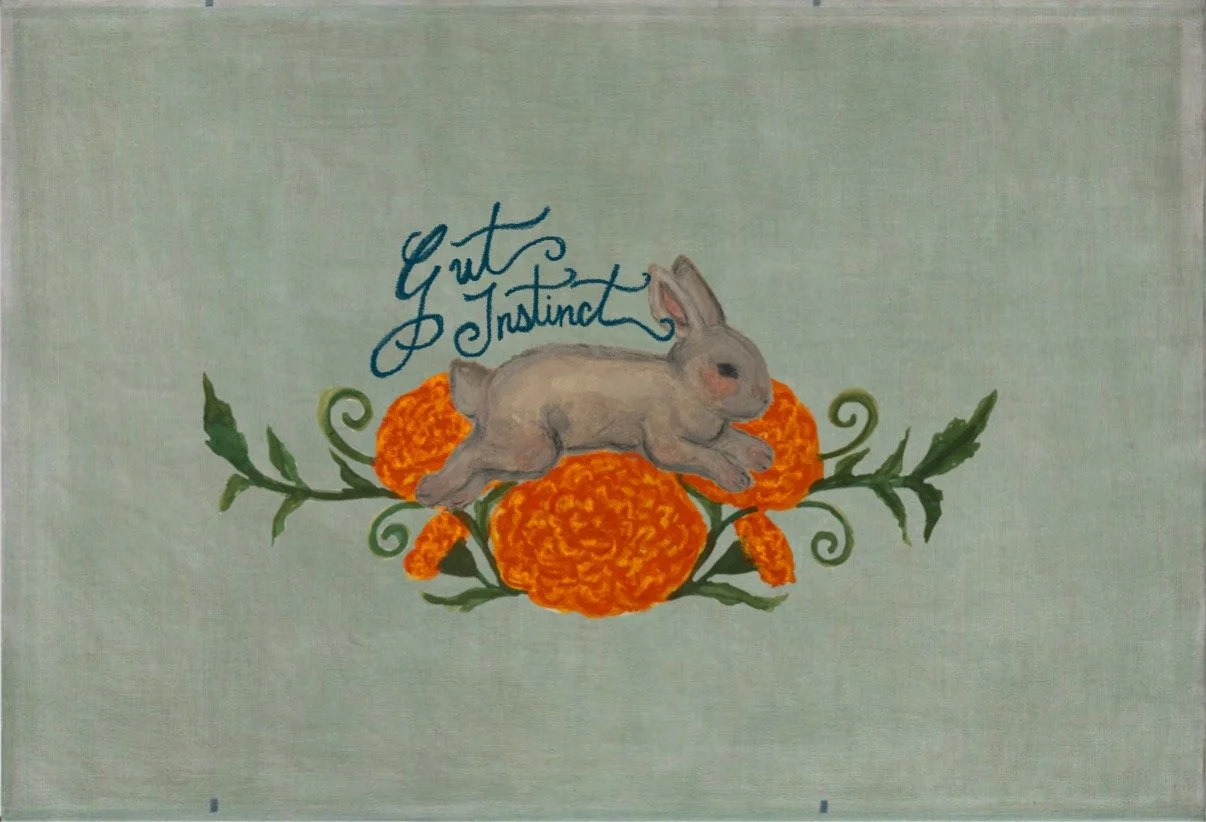
Natasha Jospeh for Gut Instinct Media.
Joseph’s work is tactile and layered. She paints her pieces by hand before digitally uploading them, creating an interesting blur between the physical and digital worlds and, in a way, blurring different ages of art itself. The result is something that feels at once familiar and completely new, playful without being precious, and utterly unmistakable as her own.
Based in London, Joseph takes from fashion, femininity and the visual clutter of everyday life. But there’s nothing ordinary about what she does with it. A pair of vintage shoes, makeup strewn out the counter, a striking outfit–she notices life’s littlest details, then turns them into something entirely her own.

Natasha Jospeh
“I’ve always been an observer, drawn to details such as a pair of vintage shoes, a lipstick on a table, or an outfit that changes someone’s energy,” Joseph says. “I’m inspired by everyday moments that feel a little glamorous, and I like turning them into something colorful, expressive, and playful. That has become my visual language.”
It’s an instinct she can trace back to home. Simply put, creativity was part of Joseph’s life from the beginning. Joseph grew up watching her mother make jewelry and crochet by hand, an early introduction to the pleasure of making something with your own hands. Years later, that same appreciation for the handmade is still visible in the way she works.
“I’ve always loved drawing, painting and experimenting with color, and over time I started sharing my fashion illustrations on Instagram. That gradually grew into a creative practice of its own. Today, my work brings together my love of fashion, color and those little everyday moments that catch my eye.”
Her first language was fashion illustration. But somewhere along the way, Joseph stopped trying to capture clothing exactly as it appeared and started paying more attention to the person wearing it, the mood around it and what could be left out.
“I think my style really came from combining my love of fashion with my love of painting. I started with fashion illustration, drawing clothes, shoes and figures, and over time I became more interested in the feeling and personality behind them rather than capturing every detail perfectly.”
Joseph’s work doesn’t feel like it is trying to prove how accurately it can draw. It is more interested in what a line can suggest. A figure can be expressive without being anatomically precise. A face can have personality without needing every feature rendered. The unfinished quality becomes part of the appeal.
“I began using looser lines, bolder colors and more expressive brushwork. I think that shift from trying to make things look accurate to making them emotive is what helped me find my voice.”
The process behind the paintings follows a similar logic. There is no single formula for where a piece begins, and Joseph seems comfortable with that uncertainty. Images accumulate through Pinterest, a photograph in a magazine, or a tiny moment she notices while moving through the world. Then the colors start to speak to one another, and the original idea can change somewhere along the way.
“I’m very visual, so I collect lots of little references and let them evolve naturally. When I paint, I like to keep things spontaneous and instinctive, playing with color and marks without overthinking it. The final piece is often different from what I imagined, which is what I love most.”
Joseph is building a visual vocabulary from the things she notices and the way they make her feel, and that openness is part of what gives the work its personality. She describes curiosity, sentimentality, and playfulness as the parts of herself that come through most. She’s interested in what other people might overlook and in the possibility of making something out of it.
“I notice little details and moments that others might overlook, and I like turning them into something expressive. I’m drawn to bold color and imperfect, spontaneous marks, which I think makes the work feel very personal.”
Her hope for the viewer is simple. She wants the work to create an immediate feeling, even if it lasts only for a moment. “I’d love for someone to look at a piece and feel an instant little lift, a smile, a memory, or just the urge to look twice. Something light, familiar and a bit unexpected,” she says.
That feeling comes through particularly well in Kindred Spirit, which has become Joseph’s most popular piece. The work brings together a girl and a swan, creating a relationship that feels dreamy, playful and just mysterious enough to leave room for interpretation.
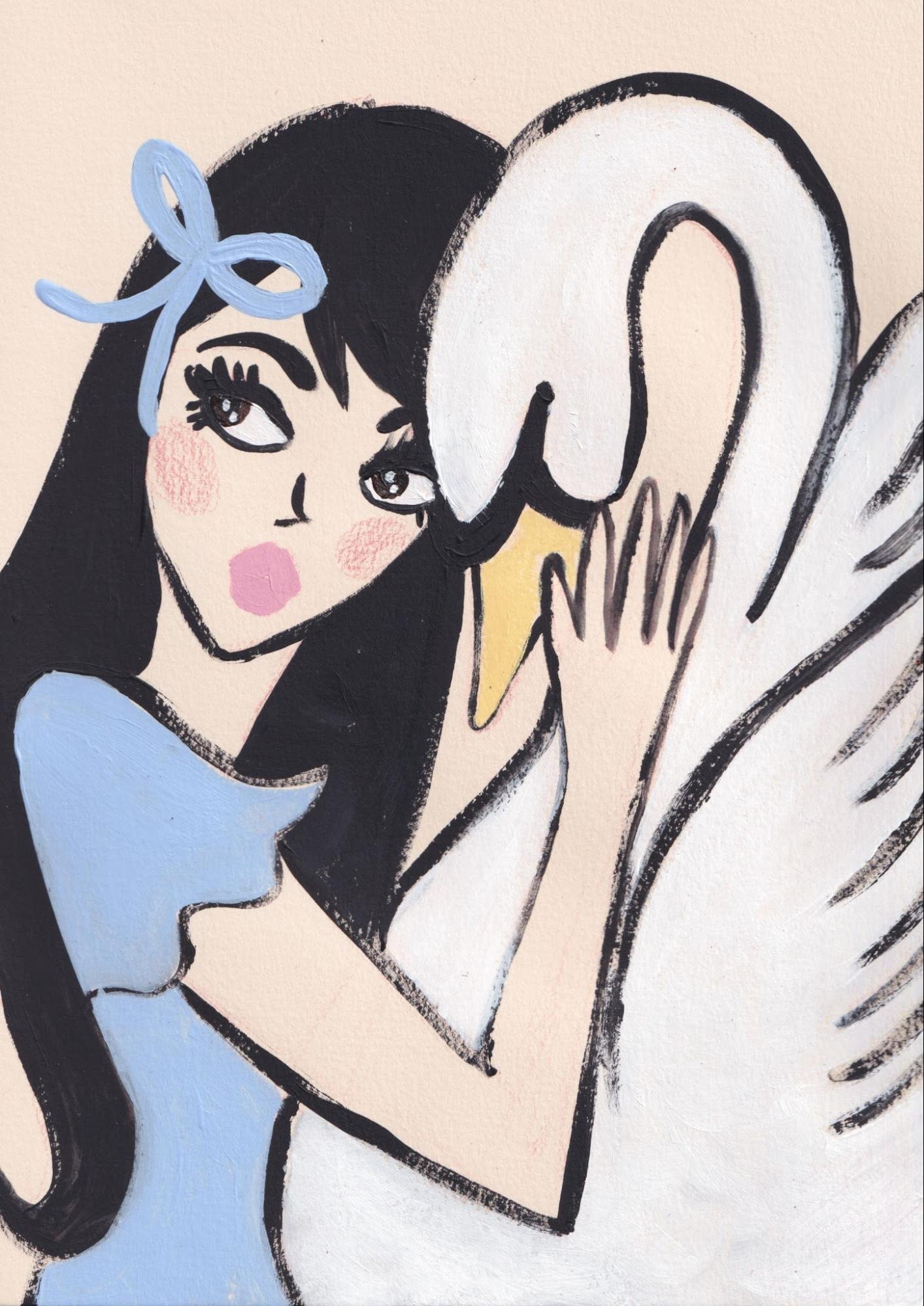
Natasha Jospeh
“I love the connection between the girl and the swan. There’s something dreamy, playful and slightly mysterious about them together. I think everyone can read their own little story into it, which is what makes it so special to me.”
Living in London, England also adds another layer to the work, as fashion is part of the city’s everyday landscape, where people watching can become its own form of research. The city’s influence is less about depicting London literally and more about capturing its particular energy. “Whether it’s the people, the street style, the color or the little moments you catch while walking through London. I want my work to capture that effortless, everyday glamour and bring a bit of that big city girly energy into a space,” she shares.
For Joseph, the argument for human-made art you can actually see in her work. It’s in the red pencil she refuses to paint over, the blush she draws by hand, and the marks that remain because she likes what they do to the finished piece. It gives you evidence of the person who made it.
“There’s something about seeing the artist’s hand in a piece. The quirks, the imperfections and the unexpected marks, all of it has personality.”
“What I love most about my works are the red color pencil soft markings you might notice here and there. It’s how I always start a piece of work, but I love to keep that in and don’t always paint over those lines because I feel like it makes my work more edgy and raw. I also use the same red color pencil to draw blushy cheeks in my portraits, which is unusual for an acrylic painting, but this is what makes the piece recognisable as mine.”
It’s a small detail, but it gets to the heart of what makes Joseph’s work feel so personal. The process is visible; the hand stays in the work.
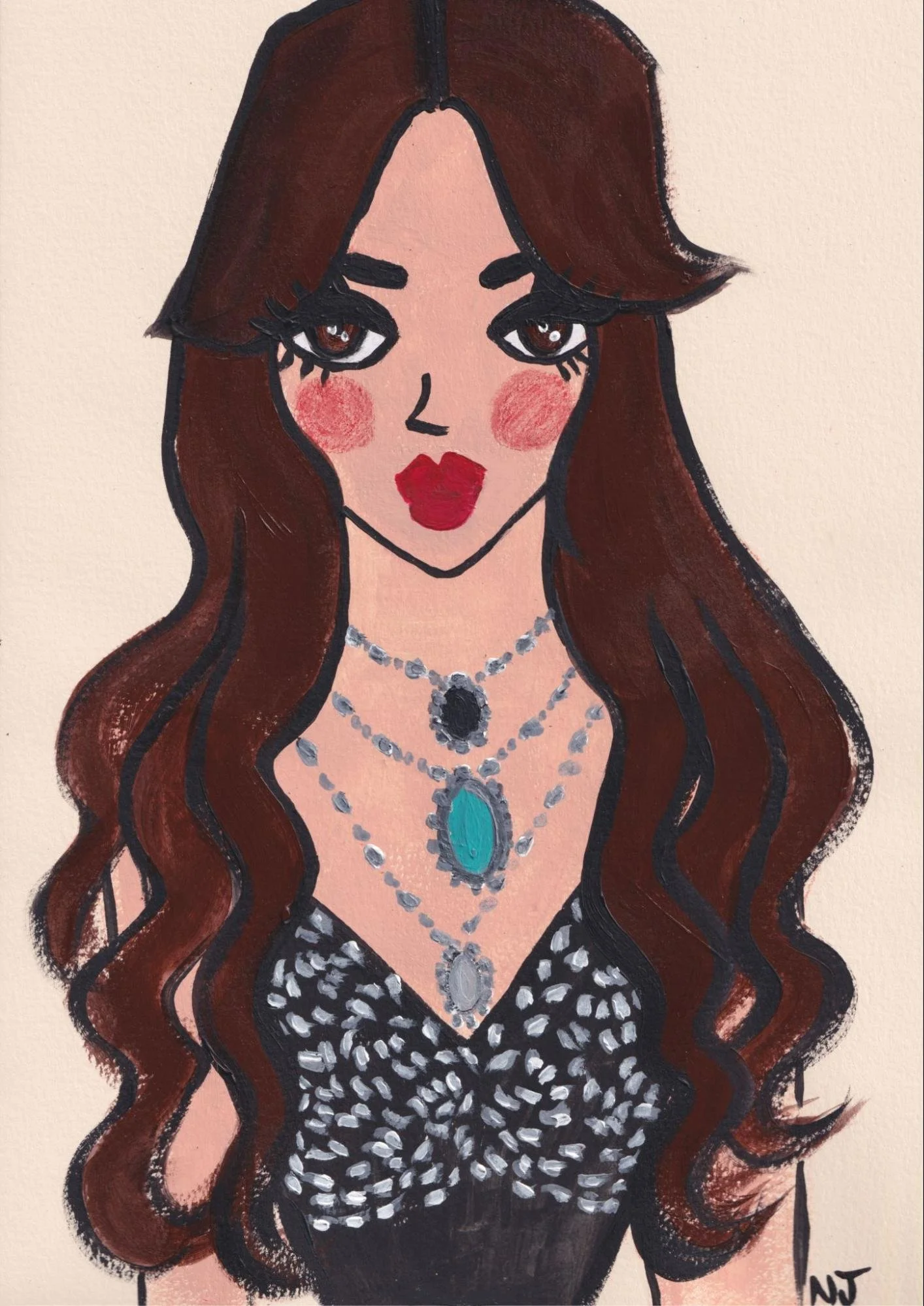
Natasha Jospeh for Gut Instinct Media.
“It was something that started off as a playful accident, and now I can’t get enough of it.”
That feels like an apt description of Joseph’s larger approach. The work has structure, but it doesn’t feel rigid. It references the history of painting without getting stuck in it. It lives physically on paper or canvas and then takes on another life digitally. It can feel nostalgic and contemporary in the same frame.
Which is something that, might I add, AI could never do. As Joseph puts it too, “AI can make something look perfect, but it can’t have that lived-in, human feeling behind it.”
For an artist so interested in fleeting moments, Joseph is thinking far beyond the present. What she wants to leave behind is not simply a recognizable style, but a world: “I’d love to leave behind a body of work that feels unmistakably mine. If years from now people can look at a piece and recognise my world in it, and it still makes them feel something, that would be a pretty amazing legacy to leave.”