'The Invite' Asks: Is Marriage the Death of Romance?
By Natalie McCarty
"One should always be in love. That is the reason one should never marry." — Oscar Wilde.
It's an appropriately mischievous epigraph for The Invite, Olivia Wilde's third feature film, which begins as an awkward dinner party before mutating into something far more compelling: an excavation of marriage, desire, curiosity, and the terrifying possibility that a single conversation might reroute an entire life.
If Oscar Wilde believed marriage was the death of romance, The Invite wonders whether curiosity might be the only thing capable of resurrecting it.
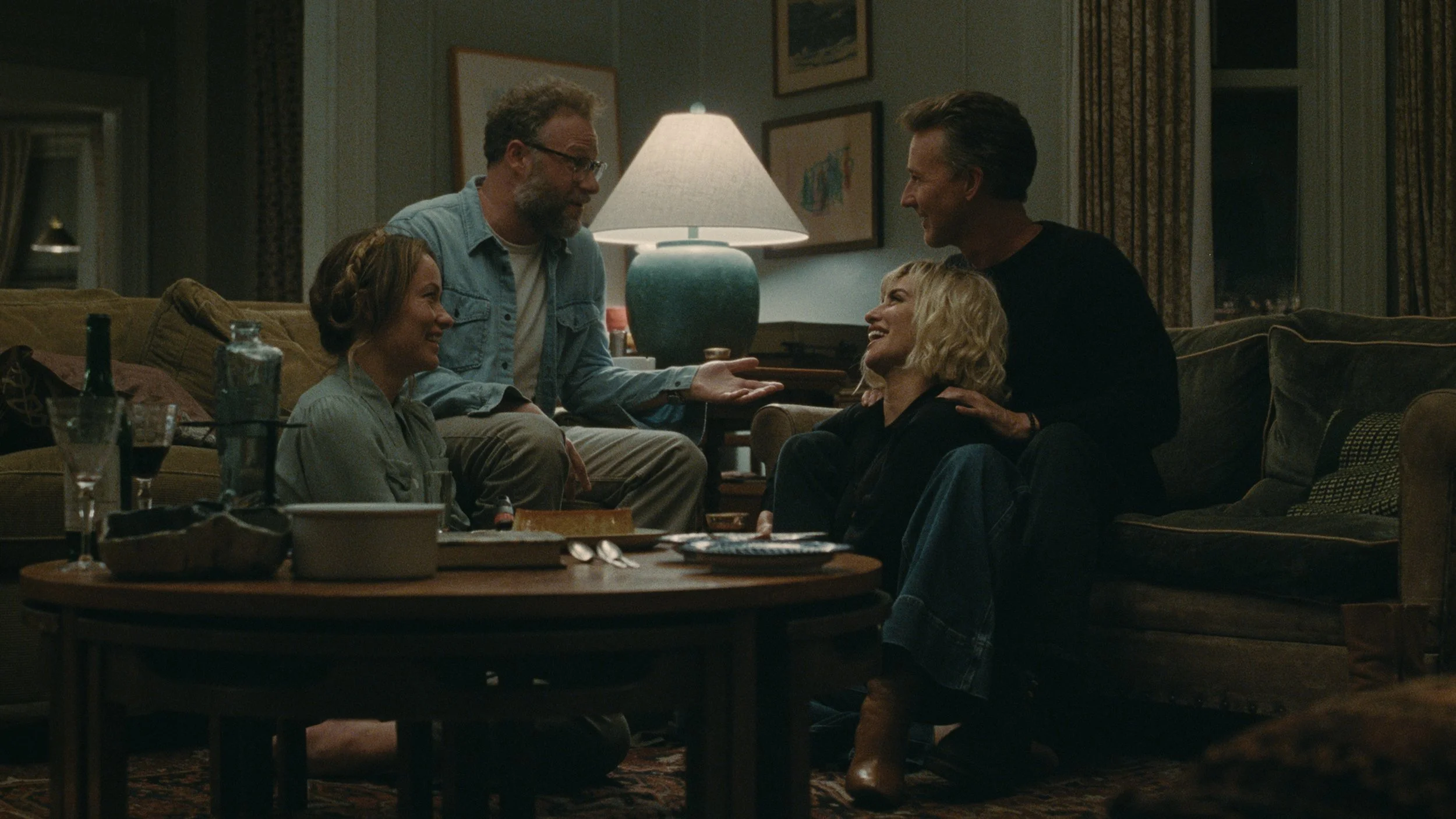
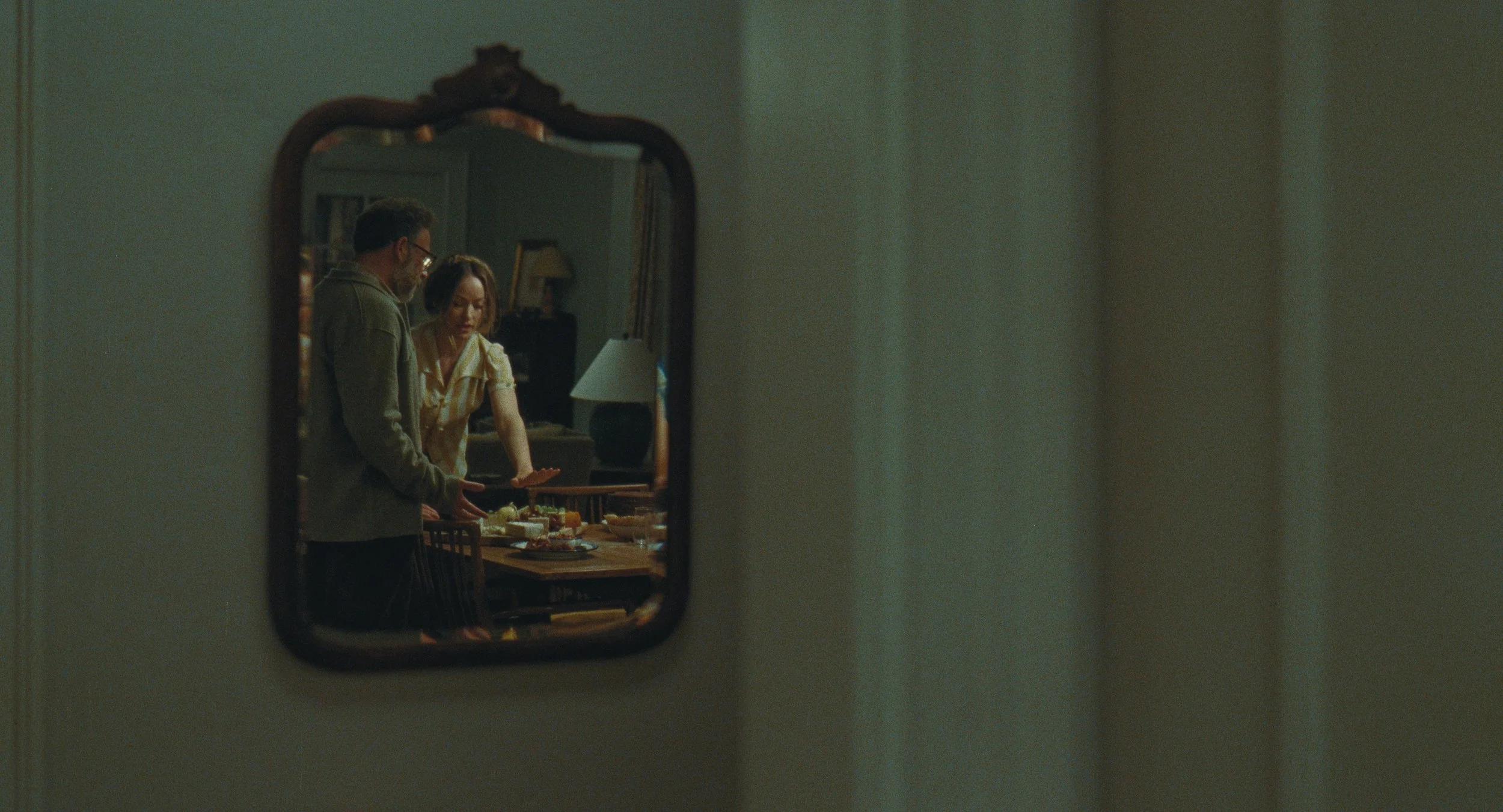
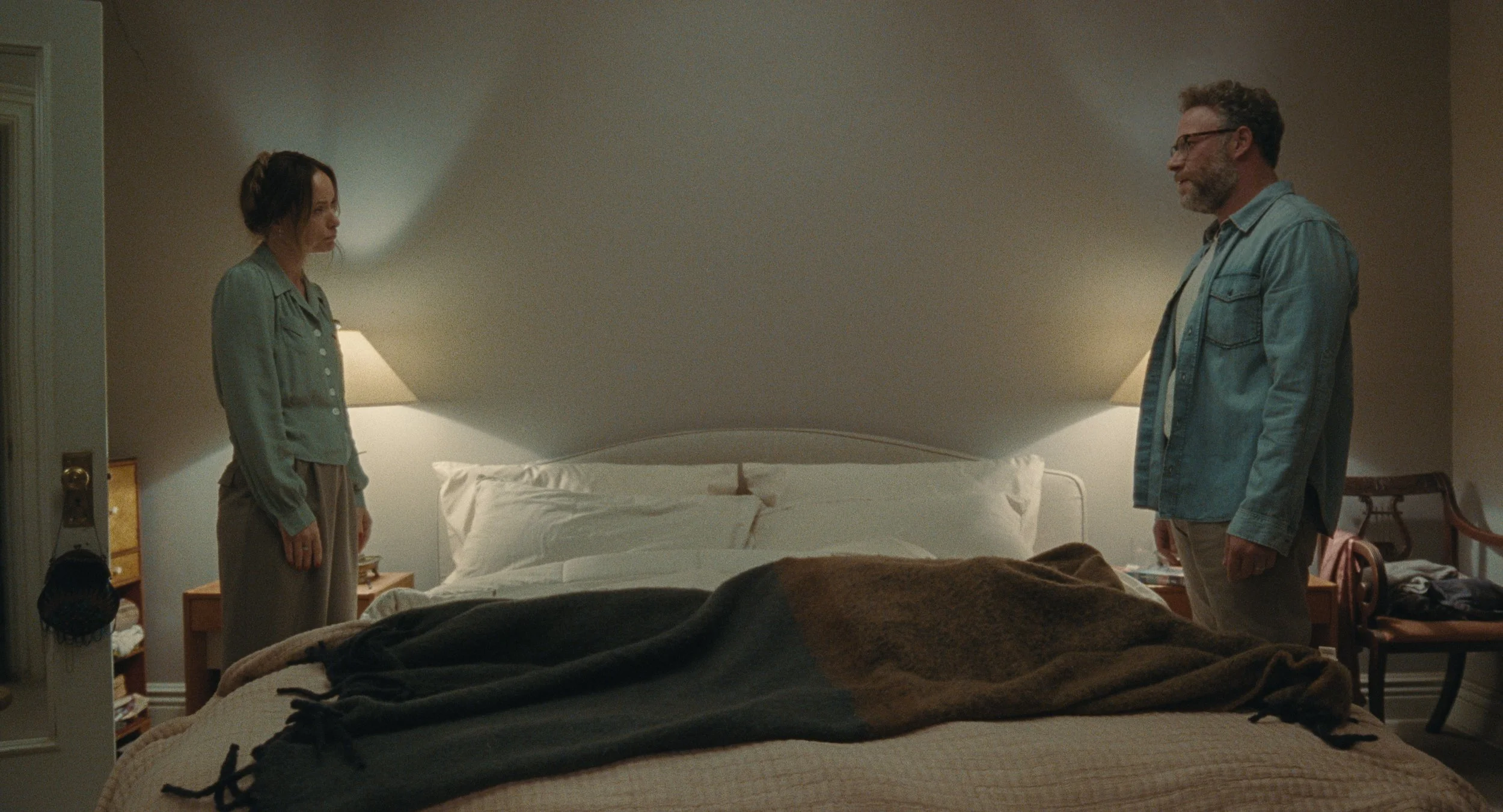
Joe (Seth Rogen) and Angela (Olivia Wilde)’s marriage is eroding beneath the polished veneer of their beautifully renovated San Francisco apartment. There sits the familiar sediment of long-term love: accumulated resentments, unspoken disappointments, and the exhausting labor of pretending everything is fine. Hoping to apologize for months of construction noise, Angela impulsively invites their enigmatic upstairs neighbors, Hawk (Edward Norton) and Piña (Penélope Cruz), over for dinner. What begins as an ordinary evening quickly unravels into a hilariously awkward, emotionally combustible exploration of intimacy, resentment, and the lives we secretly imagine for ourselves.
Courtesy of A24
The setting is interesting for all adults know that dinner parties are an ancient place where we all voluntarily audition our lives for one another. Everyone arrives selling something. Their marriage. Their home. Their career. Their happiness.
But despite the interesting setting, for the first fifteen minutes, I was convinced I'd accidentally wandered into Olivia Wilde's expense-funded therapy session.
Olivia continues to mistake audiences' desire for good storytelling with an appetite for her personal issues displayed for us all to consume. Congratulations! We get it, you got a divorce. After the spectacularly messy public fallout surrounding Harry Styles and Don't Worry Darling, she continues to recycle the same fascinations with infidelity, longing, and emotional reinvention, replaying them onscreen in slightly different configurations. It has become less introspective than utterly exhausting.
However, if you take The Invite at face value, you can stretch it into a fairly classic story about reinvention and people mistaking desire for destiny. The problem is that Wilde seems considerably less interested in interrogating those ideas than simply presenting them. She is an exceptional curator of actors and an increasingly unreliable curator of her own ideas.
Courtesy of A24
Had this film not assembled Seth Rogen, Edward Norton, and Penélope Cruz, I'm not convinced anything short of a gun to my head could've compelled me into that theater to support Miss Wilde.
I digress! Now that I've aired at least some of my grievances with the director, I can move on to the writing, which was considerably sharper than I expected. It feels genuinely collaborative between the filmmakers and the cast, and that collaboration elevates the material. Much of the film's intelligence emerges through conversation. It's delightfully bizarre, painfully awkward, and deeply uncomfortable. It actually reminded me quite a bit of The Drama, so if you enjoyed that film's strange blend of discomfort and comedy, you'll probably find something to appreciate here too.
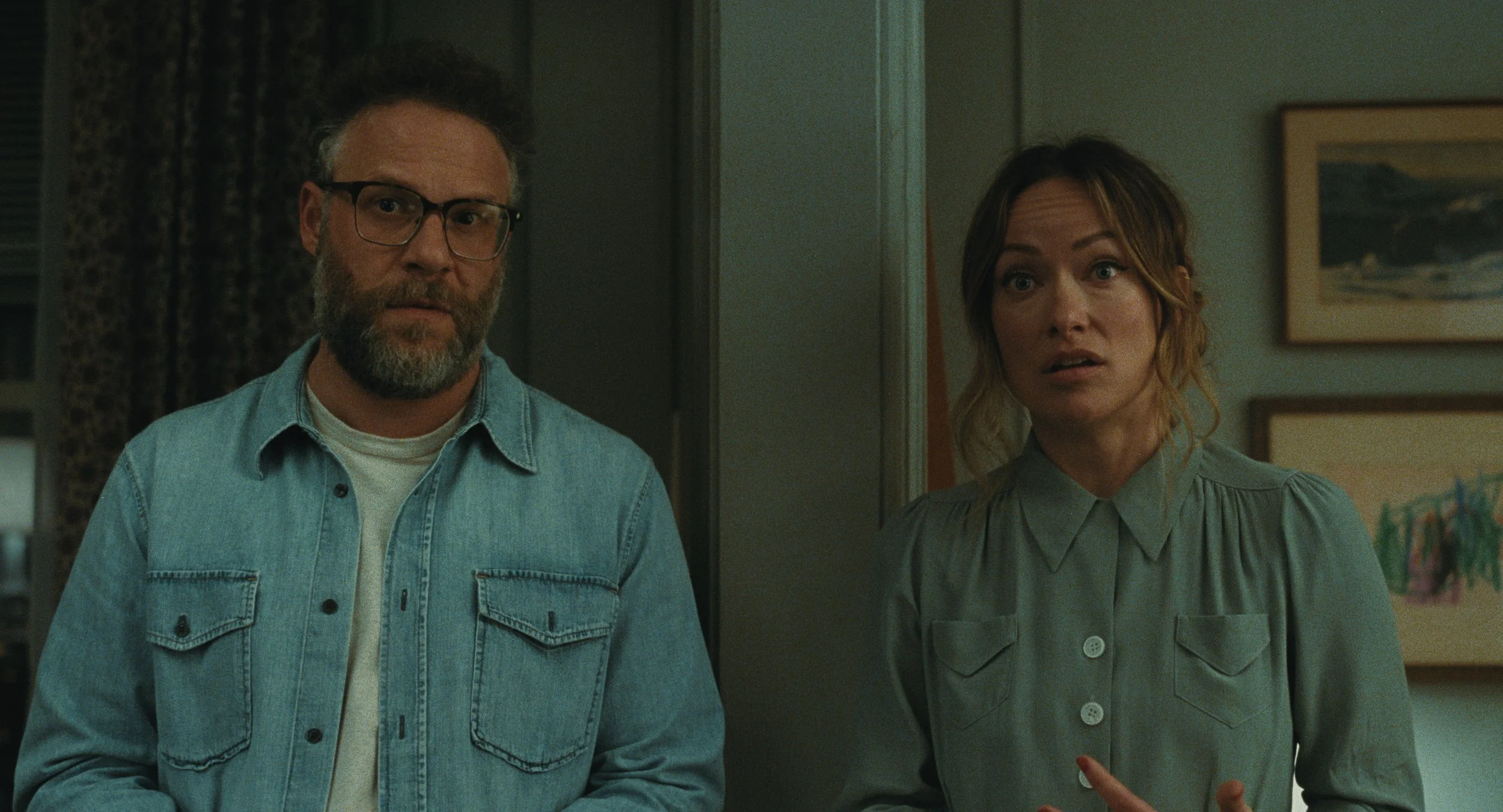
There's something fascinating about the way the film oscillates between genuine emotional catharsis and blunt comedy. One moment you're contemplating the architecture of lifelong partnership. The next, someone says something so catastrophically inappropriate you can't help but laugh. It shouldn't work, but to an extent, it does. Mostly because of Seth Rogen.
Courtesy of A24
Watching the evolution of Rogen's career has been one of the great joys of contemporary Hollywood. Somewhere along the way, he stopped simply being the patron saint of marijuana comedies and quietly became one of the industry's most interesting leading men. I love the choices he's been making lately, allowing himself to flex dramatic muscles without sacrificing the comedic timing that made him a star in the first place. It reminded me a bit of Will Arnett's recent work in Is This Thing On?
Anyway, Rogen is someone that we arrive to the theater already liking, and The Invite wisely weaponizes that goodwill. His warmth, vulnerability, and layered humor give the film its emotional center of gravity. He doesn't ask for our sympathy, but actually earns it.. something Wilde, pitifully, spends much of the film trying and failing to do.
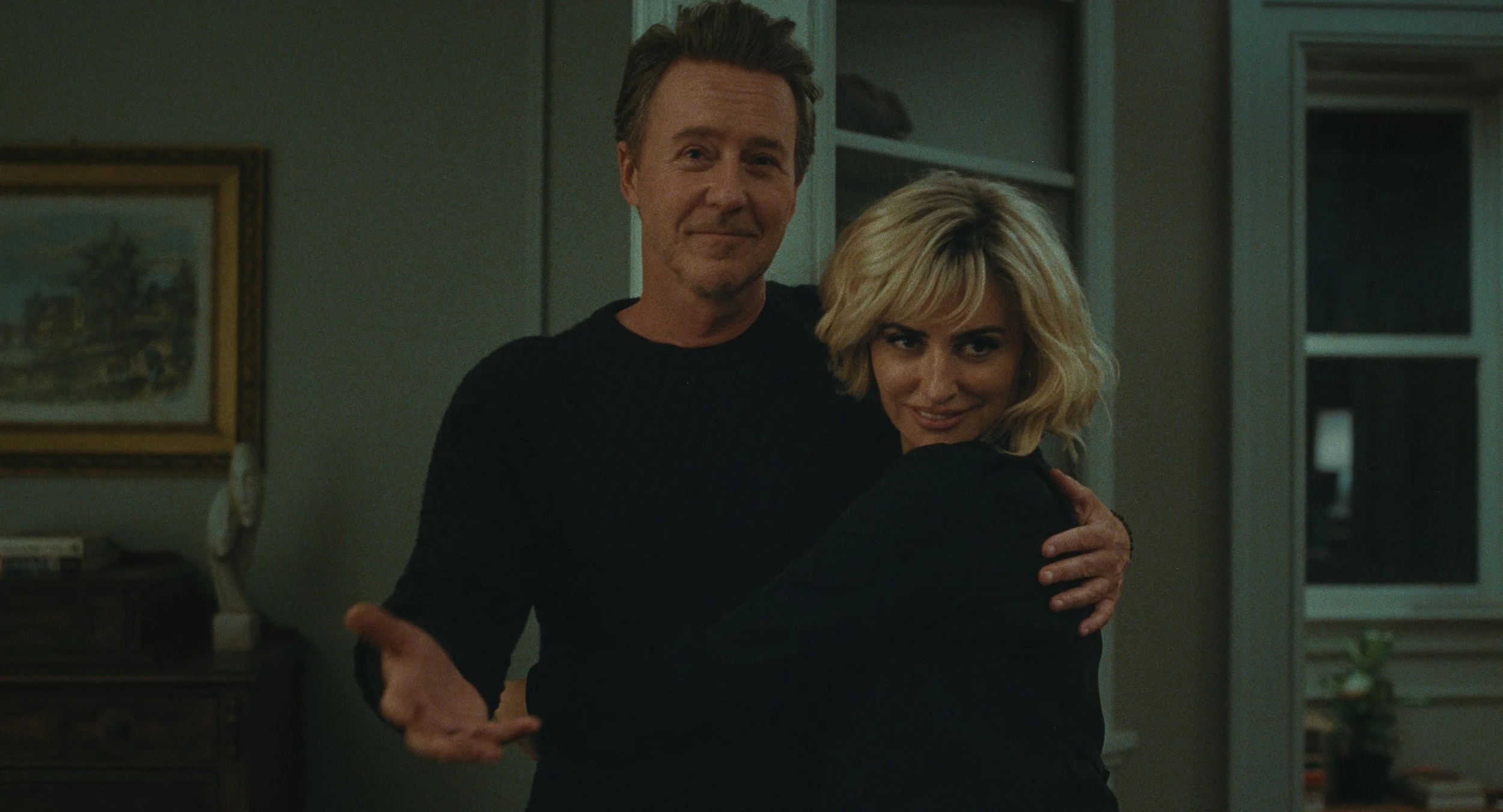
Moving on… Edward Norton and Penélope Cruz completely hijack the movie, and thank God they do! Please cast them together forever.
Courtesy of A24
Norton remains one of the greatest actors of his generation. Watching him here reminded me how grateful I am that performers like him still exist. His style of acting feels almost endangered now. Every choice is intentional, especially in a monologue of his late in the film that is simply extraordinary because of the way which Norton delivers them. It's the kind of performance built on deeply human choices rather than flashy ones, and we're seeing less and less of that in contemporary cinema.
Penélope Cruz also possesses that increasingly rare movie-star quality of changing the temperature of every scene she enters. She is radiant, magnetic, and endlessly watchable. I'll be thinking about the rhythm of her line delivery for weeks. Paired opposite Norton, the two perform like jazz musicians; their chemistry is effortless and endlessly watchable.
Devonté Hynes' score understands this instinctively, too. More than a mere accompaniment, it's propulsionary. The music behaves like another guest seated at the table, gently nudging every conversation toward the places the characters are desperately trying to avoid.
The film's most beautiful idea arrives in its final moments through a monologue from Cruz: "I think we only get a few chances for meaningful relationships in our life."
Because ultimately that is the point of The Invite. Perhaps we don't simply get a handful of meaningful relationships. Perhaps we get several meaningful relationships with the same person.
The question isn't whether you still love the person sitting across from you; it's whether you've remained curious enough to meet them again.
Courtesy of A24
Long-term relationships rarely collapse under the weight of one catastrophic betrayal. More often, they crumble through tiny omissions. The questions we stop asking. The stories we stop sharing. The curiosity we forgo.
Time doesn't simply test love. It also baptizes it. Every decade asks whether you're willing to love a completely different version of the same person.
People spend so much time chasing the possibility of someone new that they forget the person they've loved for years has continued becoming someone new all along.
I've always believed that life changes less through grand gestures than through conversation. Sometimes all it really takes is a dinner party. One question. One confession. One sentence spoken at exactly the wrong, or right, moment.
A great conversation doesn't simply exchange ideas. It proposes another version of your life, which is ultimately why I found The Invite so unexpectedly affecting–even though it never entirely becomes the extraordinary film it's constantly flirting with.
But it brushes against extraordinary ideas often enough that I left the theater thinking less about who these characters wanted to sleep with than who they had stopped asking each other to become.
Perhaps the opposite of love isn't hate, betrayal, or even indifference. Perhaps it's incuriosity in the decision that you've already learned everything there is to know about another person.