Returning to the March Sisters: A Reflection on Greta Gerwig’s 'Little Women'
By Natalie McCarty
The Christmas lights are still clinging to porches, the air carries that familiar winter bite, and the world feels suspended between nostalgia and renewal. Which is to say: it’s Little Women season.
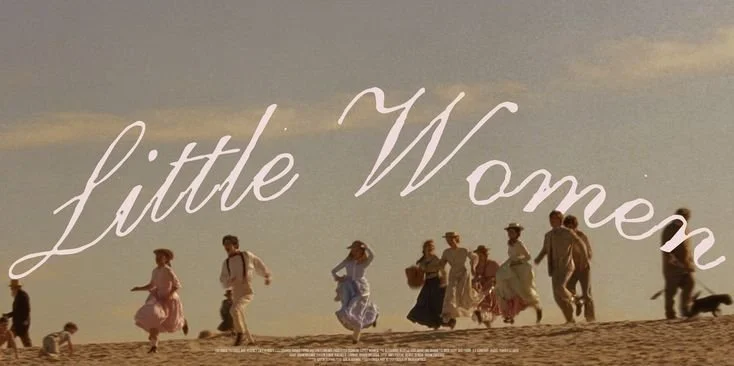
Still from Little Women (2019); Image Sourced through Pinterest
There is something about this stretch of the year that makes the March sisters feel close again, as if their home exists just down the block, lamplight pooling behind frost-laced windows, Laurie watching from across the way. And while Louisa May Alcott’s story has been adapted for nearly a century, Greta Gerwig’s version still feels new with each rewatch, its emotional texture undimmed even as the years pass.
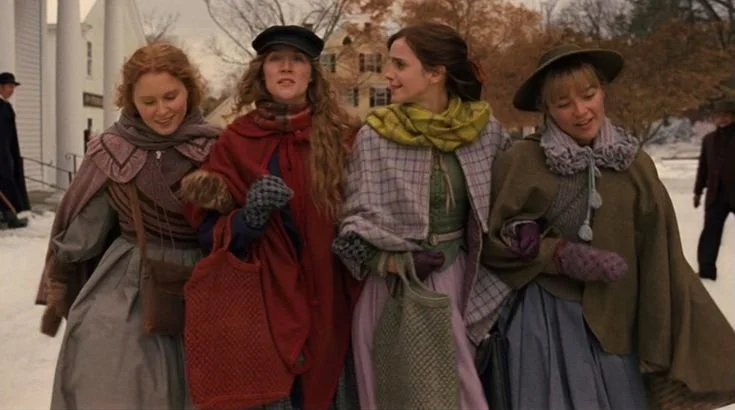
Still from Little Women (2019)
Louisa May Alcott’s Little Women has been adapted so many times that it risks becoming a story we know so well we almost forget to look at it closely. From George Cukor’s 1933 version with Katharine Hepburn to the richly sentimental 1949 Mervyn LeRoy adaptation, to Gillian Armstrong’s beloved 1994 film anchored by Winona Ryder, each era has claimed the March sisters for itself, reshaping them in the tone and sensibilities of its time. But Greta Gerwig’s 2019 interpretation interrogates, reveres, and refracts the novel until the familiar becomes startlingly alive.
Gerwig builds her film on emotional modulation rather than narrative chronology. By rearranging time, she gives the story a pulse. Moments that were once sweet or tragic in isolation become devastating when paired together: childhood’s warmth pressed directly against adulthood’s chill. It is a dynamic approach to adaptation, where each scene holds both memory and consequence at once. For an audience attuned to indie cinema’s preference for psychological layering over plot propulsion, this structural choice feels divine. Perhaps that’s why I’m watching friends quietly log their rewatches on Letterboxd as winter settles in.
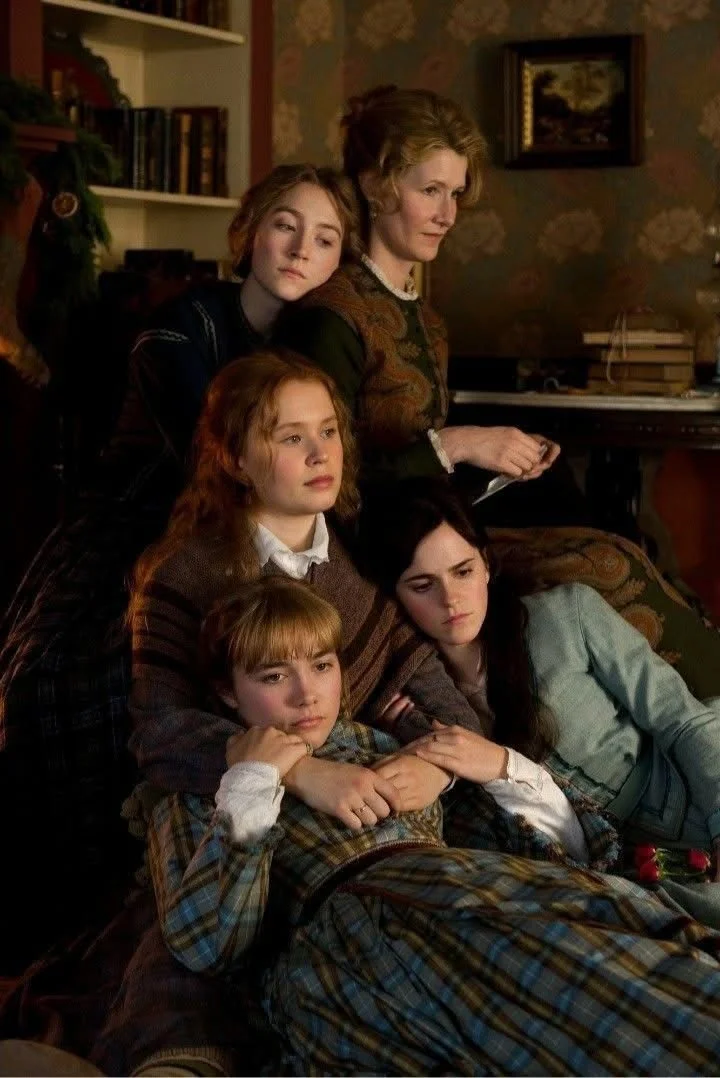
Still from Little Women (2019)
What distinguishes Gerwig’s version is her insistence on complexity. Every character is granted the fullness of contradiction, the kind usually reserved for protagonists alone. Amy is not simply spoiled; she is calculating, fragile, ambitious, and self-aware. Jo is not merely a free spirit; she is angry, lonely, brilliant, and terrified of being misunderstood. Even Marmee, often flattened into maternal perfection, admits she has been angry every single day of her life. Gerwig allows her characters to exist as women rather than archetypes.
The film’s emotional core, though, lives in its confession scenes (which we love here at Gut Instinct, as these moments often anchor our video edits). These scenes have historically served as dramatic peaks in previous adaptations, but Gerwig stages them with such intimacy that they feel almost accidental, as if the characters are revealing something they never intended the audience to witness.
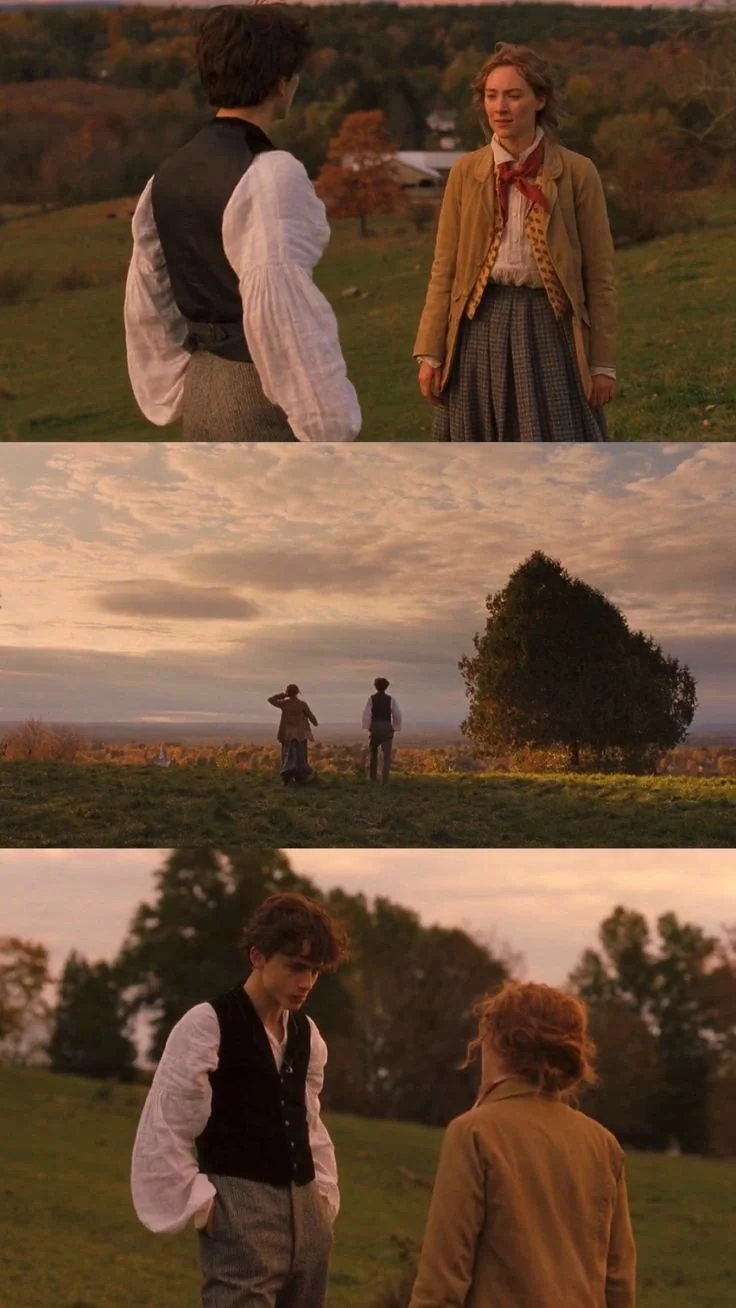
Still from Little Women (2019)
Timothée Chalamet’s Laurie, in his confession to Saoirse Ronan’s Jo, is all trembling boyishness and wounded pride. It is earnest and raw. His voice cracks on the words of love and on the words of rejection. Gerwig lets the silence between them expand until it hurts. It plays like a secret both wish they could forget, which is precisely why it stays lodged in the viewer’s memory. The tension is built on the inevitability of two people who simply cannot want the same life.
Then there is Florence Pugh’s Amy, whose confession to Laurie is one of the most radical reframings in any adaptation. Her speech about marriage as an economic proposition is delivered with pragmatic fury, her posture rigid with the awareness that the world has never belonged to women like the March sisters unless they negotiate ruthlessly for a place in it.
Even Jo’s yearning is not a capitulation; it is a recognition of her own humanity. The negotiation between independence and intimacy becomes one of the film’s most resonant notes: a nod to the women who came before, fighting for their place in a world that wanted them small, and a nod to the women now, reconciling ambition with vulnerability.
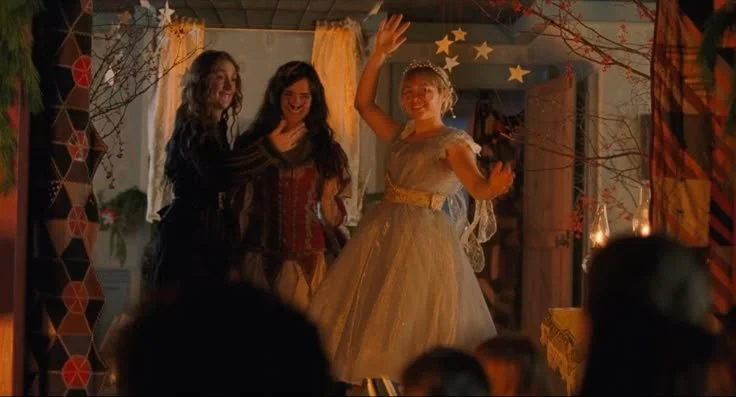
Still from Little Women (2019)
Little Women is so good because it’s not simply a story about four sisters. It is a meditation on choosing which version of ourselves is the most true.
Every winter, I find myself so happy that Gerwig resurrected my childhood favorite. And, in a landscape crowded with classical reimaginings and retellings, I’m so glad hers still stands chief among them.