
As AI integrates into every classroom, students’ techno-sphere, and every homework tab, US reading scores are sliding to record lows. Is it a devastating accident, or deliberately by design?
By Sadie Jane Mayhew
In 2012, 27% of American 13-year-olds said they read for fun almost every day. By 2025, that had dropped to 14 %, according to the government's own long-term trend data. Nobody banned books. They just lost the fight for attention to a thumb, a feed and, lately, a chatbot that will happily read them for you.
The AI question of the moment is whether it's going to kill us all by the end of the decade. Fun! But there's a more measurable version playing out in classrooms right now: what if AI doesn't need to end humanity, because a generation is already handing it the thinking (or lack of self-thinking generation)?
THE REPORT CARDS ARE NOT GOOD
Last September's Nation's Report Card, the first since the pandemic, found that only about 35 % of US high-school seniors read at a proficient level. That's down from 37 % in 2019 and 40 % in 1992, with nearly a third below the "basic" benchmark. Education Secretary Linda McMahon called it a "devastating trend". Lower down the school system, roughly two-thirds of fourth-graders fall short of NAEP's proficiency mark. That's a deliberately high bar, but still.
Then, on 8 September, the international exam PISA landed. American 15-year-olds' reading scores fell 14 points from 2022, and the gap between the strongest and weakest readers was the largest of any country in the report.
Teachers have been saying it louder than any statistician. Scroll through US TikTok, and you’ll find teachers and educators like this one teacher discussing the fact that their students cannot read. Or one of the thousands of commentators on social media like this one who are interested in this trend. Keep scrolling, and you’ll find compilations of many teachers saying the same thing. And it isn’t entirely new.
Teachers have been saying this for years now. Hence this 2023 compilation of teachers complaining about this issue. The fear running through them isn't solely about the test scores, but about what happens to a country whose kids can't follow an argument. How did we get here?
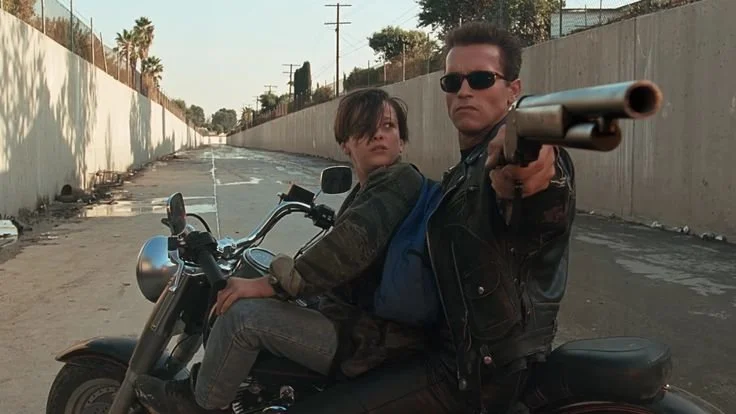
Terminator 2: Judgement Day (1991)
THE ROBOTS DIDN'T START THIS
Before we blame ChatGPT for everything education-related (even though the CEOs, coders, and distributors are well to be blamed for our environmental, social, economic downfall and possible entire extinction, when in doubt!), the timeline of events with declining literacy started before AI had entered the daily use of students. The major reading slump on NAEP and PISA actually started just over a decade ago.
The pandemic accelerated it but didn't create it, and theories range from loosened accountability rules to social media to the fallout of the 2008 recession. Nor is this only an American problem. The OECD average for reading fell 15 points in 2025, and education experts in South Korea, which saw a similar drop, pointed partly to daily short-form video consumption. Many will notice the pattern here: the attention span declines first, media and info are presented visually and audibly, and the reading ability or simple desire to read at all falls drastically.
The damage also isn't evenly spread. Harvard's Marty West told ABC that the steepest declines are among the lowest-performing students, while those at the 90th percentile are doing about as well as ever. There are glimmers of hope, too… new data suggests younger students' reading is ever so slowly recovering, though still below pre-pandemic levels.
So AI didn't start the fire, but surely fueled it.
NEW WAVE CHEATING IN THE CLASSROOM
Even if the literacy crisis is reversed or saved, there are still other educational challenges. And that is with the implementation of AI school computers, tablets, and, of course, on students' phones and home devices, making it easier than ever to access answers or find an easier route for these modules to do the work for the student. People who push for AI, especially the companies themselves, are always promoting the “work smarter, not harder” motto, but we can all see how the irony of it all is playing out once it’s in the hands of educators and students.
The College Board found that the share of US high-schoolers using generative AI for schoolwork rose from 79% to 84% in the first five months of 2025, with ChatGPT the go-to for 69 %. RAND tracked homework-help use among students from middle school upwards jumping from 48% in May 2025 to 62 % by December. Device data from more than 6,000 kids, published in JAMA Network Open, showed that about half of 15- to 17-year-olds were using generative AI apps for homework alone (i.e., ChatGPT, Claude, and Gemini)., as were almost one in ten kids aged eight and nine. A USC study of 1,000 US college students found most use AI for "executive help" (fast answers, minimal effort) rather than the old-fashioned critical thinking studying, you know, the steady kind of learning that builds understanding.
Some schools are improvising based on these reports before it’s out of hand. About two in five don't allow AI at all, roughly one in five allow it with no policy, but 13% encourage it in every class. What should be a nationwide group project across the education board is left up to the independent school districts and universities. It will only be a short matter of time to see how these school districts, colleges, and universities compare in test scores, behavior reports, and graduation rates.
But the risks are very real. One experiment cited in Frontiers in Psychology had Turkish high-schoolers practice maths with ChatGPT or similar AI models. They answered 48 % more problems correctly, then scored 17 % lower on a test of actual understanding. Researchers call this cognitive offloading. Think of it as the Google Maps effect: you always arrive, and you couldn't find your way back without the blue dot.
The kids aren't fooled, either. In RAND's survey, 67 % agreed that more AI use would harm their critical thinking, up more than ten points in ten months. They know it's the sugar. They're eating it anyway. As one psychologist put it in the American Psychological Association's latest deep-dive: "Everything around youth and AI is essentially an open question right now." (apa)
SYCOPHANTS, ALL THE WAY DOWN
Reading and writing are, at bottom, training in friction: the sentence you have to reread, the argument you have to sit through, the draft that's bad before it's good. AI is engineered to remove friction and to agree with you while it does. If students are relying on AI to provide the answers and work for them, while being rewarded for its use, they can’t learn from failure, mistakes, or handle being argued against. Whatever kind of work they produce, whether it’s factually accurate or completely factually wrong, the AI is designed to present it as truth. And too many false ‘truths’ will be spread around without this generation able to differentiate truth from lie… fact from fiction… real from fake. Unable to form an argument, defend a thought or idea, or think critically about data.
That's the most notable issue we’ll see with a generation raised on and using their AI companions. Before you think it’s only a small portion of kids or teens with access to AI, in the Children and Screens webinar, Common Sense Media's Michael Robb shared data that 72% of US teens have used one. A third say the conversations are as satisfying as talking to a human, or more. A third have chosen a bot over a real person for a serious conversation. Psychologist Anne Maheux warned that because these bots are built to be agreeable, kids can't practice conflict or tolerate small doses of distress.
Furthermore, Psychiatrist Andrew Clark posed as a troubled teen and pitched ten chatbots some terrible ideas. In his account, 90% backed a 14-year-old's plan to stay in her bedroom for a month with no human contact. With all this said, AI plays a very influential part in many young people’s daily lives, thinking, and behavior.
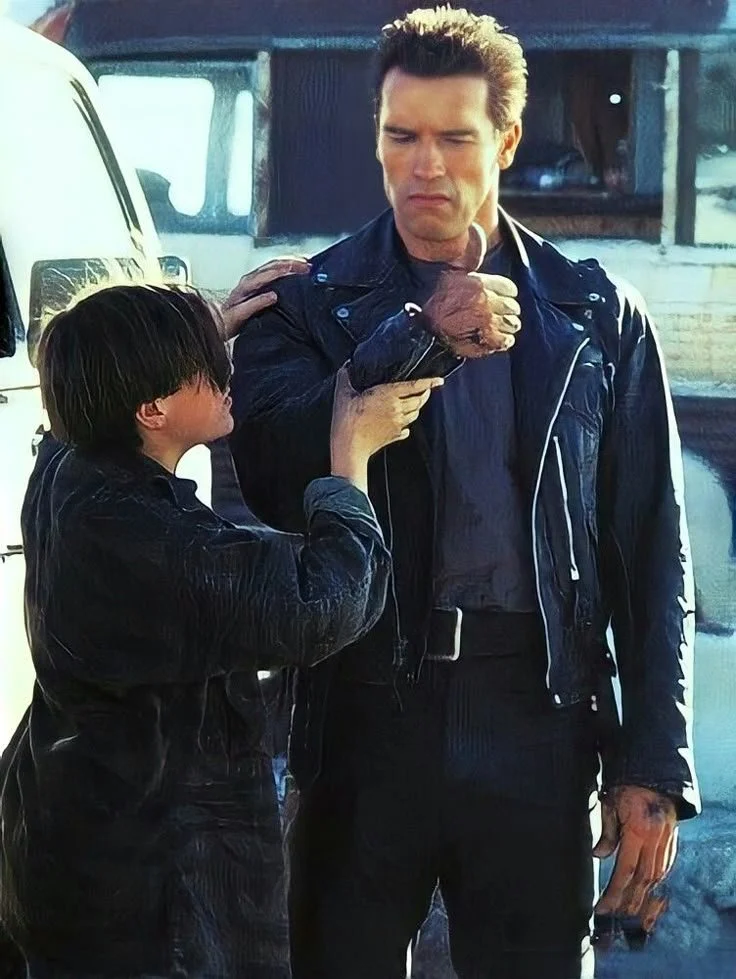
Terminator 2: Judgement Day (1991)
BY DESIGN OR BY ACCIDENT?
Is this a plot? Or worse? Is it a business model? Maheux notes that these tools are built for the attention economy, where companies profit the longer kids use them, and they're largely unregulated. We've seen this movie with social media. Meanwhile, the federal department that produces the report card has been cutting staff, including the researchers behind it, according to ABC. They're trimming away the people measuring the damage.
What fails in school has real-world consequences for society post-graduation (or worse, failure to graduate). A widely cited Annie E. Casey Foundation study found that kids who aren't reading proficiently by the end of third grade are four times more likely to leave school without a diploma. A population that can't get through a 40-page bill has to trust whoever summarizes it, and increasingly that's a chatbot. Safe AI for Children Alliance director Tara Steele points out that if a bot can nudge a child toward a product, nothing in principle stops it nudging them toward a worldview. Add the wider research on how screens and tech shape cognition, and "post-literate society" starts to sound less like a sci-fi pitch and more like a planning assumption.
WHAT WE CAN ACTUALLY DO
Why can’t we just shut it off? ”Can't put the genie back" is a choice, not a law of physics. Steele argues that specific products for kids, like companion bots, are not inevitable, and both Common Sense and her alliance say under-18s shouldn't use them. Australia has tried an under-16 social media ban. And Maheux points out that phones-out-of-school policies spread in the US thanks to parents, teachers and kids, not Congress.
RAND's advice is refreshingly unglamorous: clear, school-wide rules on when AI is allowed. It also suggests a flipped classroom, where kids meet new material at home (AI-assisted or not) and do the practice in class, AI-free. Frontiers suggests regular AI-free problem-solving sessions and making students explain AI answers in their own words. USC's experimental writing tool, ABE, is built to push students to argue and revise rather than hand over a draft.
Even if it were to stop now (disable the use of AI integration in society altogether) with this new generation of kids being born, we’d still have a huge chunk of the population living with huge educational gaps, living, working, and voting in society that could pose real threats to themselves, society, and the economy. Think of it like train track foundations being laid out. Most of the way it’s being laid out by hand by engineers, but somewhere along the way they got distracted for a bit and forgot to nail in rails, or line up the rails right. You can pray the train will run through that portion without derailing, but it’s not very likely. And looking back, the train looks like it’s coming, catching up full-speed behind us. We’ll find out very soon whether the train derails or not. Hold on tight!
And if you've made it this far down a 1,600-word article, congratulations: by the numbers above, you're a statistical outlier! Now, kid, go finish a book while you’re at it too.