The Manic Pixie Dream Girl is Just an Autistic Woman
By Madelyn May
The manic pixie dream girl is just autistic. Or, more specifically: the manic pixie dream girl is what happens when an autistic woman is recognized entirely from the periphery, percolated through a narrative that centers male desire and male self-discovery, and presented to a culture that values difference as charm so long as it remains useful to the man at the center of the story.

I’d like to think I’m something of an authority on this. I’m both diagnosed on the autism spectrum and have been south of the phrase a few times myself, including one night in the South of France…
Cannes is only Cannes for about three weeks in May. During this time, there are nights that feel like everything is about to collapse in on itself; the weight of the city is too much. Too much noise, too many people; it’s as if everyone and everything is tethered to the sidewalks, swaying side to side, shoulder to shoulder, battered by a current of The Movies.
In 2022, I worked at the Festival de Cannes with an American company during the month of May. But, I was also there for January through April, when the wind wasn’t yet a breeze, and the streets weren’t yet a parade. While I still picture myself riding a Vespa, clutching the waist of a hot man, a scarf wrapped glamorously around my head, and flowers pinned under my arm, I’ve become acutely aware of where the “dream me” starts and ends. Perhaps fueled by the most indulgent of American tendencies—narcissism—I still thought it could all be mine one night in an Irish pub.
But wherever you go, there you are, as they say. In fact, there's no better confirmation of the matter than that of the Irish pub. No matter where in the world you travel, the Irish pub remains the same: sticky, sweltering at the seams even in the winter, pulsating, and loud. And no matter where in the world I travel to, I remain the same: a woman on the autism spectrum.
The night I’d like to discuss happened in February in an Irish pub called The Quay’s along the Quai Saint-Pierre. My friends and I were playing cards, as we often did most nights. Three young lads approached us, wanting to play in exchange for drinks. One was English, the other Irish, the third I can’t remember.
I liked the Irish one. He had brown hair and a name that started with the letter “e.” He had his crossed legs shifted towards me which, a Youtuber specializing in body language once told me on the Internet, meant he liked me. I used to watch a lot of those videos.
Are his pupils big when he looks at you?
Where are his feet pointed?
I used to desperately search for something that seemed so intuitive to others. I still do. Being autistic in neurotypical society is like trying to stitch together a quilt, made of actions, words, what they mean, and what’s in between without the instruction guide given to everyone else at birth.
E studied film but was now a humble servant in the liberal arts degree to barista pipeline. He worked at a coffee shop in the city called Copenhagen Coffee Lab. I loved it there. A petri dish of expats, English was welcomed, and no one looked at you as if you had three heads for daring to ask for a milk alternative. He had big eyes and reminded me of Ian Curtis.
Just for one moment, thought I’d found my way
Destiny unfolded,
I watched it slip away.
Joy Division, “Twenty Four Hours”
I was instantly in love with him.
“What kind of music do yer like?”
“Mostly oldies,” I replied, “I really like psychedelic rock from the 60s and 70s. Recently, I can’t stop listening to The 13th Floor Elevators”
“Hmmmm.”
Oh, oh, that wasn’t quite right.
“But I listen to everything pretty much!” I quickly added, catching my breath.
He paused before asking another question.
“So, you probably hate Taylor Swift, huh?”
“Actually, I hopped on the bandwagon around folklore.”
“But yer not a fan?”
“Well, I’m not sure, I like --”
“Yer like a, whad’ya call it? Real-life manic pixie dream girl.”
And you’re the male protagonist who falls in love with me and discards me at the end of the movie?
Okay, I didn’t say that last part because I’m not that quick on my feet, but a girl can dream.
I’d been called that before, mostly in jest, I think. But what stayed with me the most thinking about this interaction now was just how sincerely he seemed to present it to me. When I attempted to assure him that I actually liked Taylor Swift (even if I got there at my own pace) and was thus, like the other girls, he seemed almost crestfallen, desperately trying to preserve the version of me he had already decided he wanted.
It landed after I’d said something overly specific, painfully earnest, and completely true but slightly out of sync with my generation perhaps. I’m on the high-functioning side of the spectrum. My autistic traits tend to manifest more greatly the more you get to know me: intense, highly specific interests, avoidance of eye contact, stimming behaviors. These oddities read, I’ve come to learn, as entertaining and novel, rather than uncomfortable, at first glance at least. Strange but entirely harmless, non-threatening, even cute.
Besides, no woman could actually like psychedelic rock anyway. She must be performing taste for your attraction, dear male protagonist.
This is where the autistic woman becomes the manic pixie dream girl: the intersection of fascination and refusal. Fascinating enough to pursue, to pique interest, but refused to be taken truly seriously.

In the movies, the manic pixie dream girl isn’t a person, her personhood is the social cue. Her appearance lets the audience know, and the male protagonist, that something whimsical has entered the room and the story, and the male protagonist’s behaviors will change because of it. She exists to loosen his tie, to introduce him to an obscure band, to teach him to live life to the fullest, and then disappear, because the longer she stays, the more you get to know her and the more her own interiority gets colored-in and becomes inconvenient to the plot and the male protagonist.
In real life, autistic women aren’t the cues, but they’re missing them all the time. The problem is that the characteristics that make an autistic woman interesting from a distance can look very different up close. Intensity becomes obsession. Sincerity becomes social ineptitude. Difference is charming until it requires accommodation.
To compensate, from an early age, she’s taught to borrow scripts from her neurotypical counterparts. She studies body language, rehearses the appropriate amount of eye contact, learns to talk about her special interests non-chalantly, not too intensely. Be enthusiastic, but not overwhelming. Be different, but remain tameable. Showing too much of yourself, if the movies teach us anything, pushes people away.
This kind of behavioral grooming, self-censoring, is called Masking and yes, there is something incredibly theatrical about it. Like you’re playing the role of Normal Person™. The problem that arises here of course, is the fatigue, exhaustion, and burnout that transpires from feeling like you have to hide your true self to gain any sense of power in the world, which is why the manic pixie dream girl never makes it to the end of the movie.
Why I keep coming back to that night in the Irish pub is because of just how plainly I feel I was not being encountered as a person. I was being read as a collection of character traits: the thrifted Swedish dress I had on, out-of-sync interests, the emotional intensity, the eye contact slightly off. To him, these things formed a character.
Maybe that is the real trick of Cannes. Cannes is a city, of course, but for three weeks in May it becomes Cannes: a movie set built over a real place. The sidewalks fill with celebrities, the boats arrive, the sequins come out, and everyone begins performing the version of themselves they hope someone else will believe. Then the festival ends, the cameras leave, and the city becomes just a city again.
The manic pixie dream girl works the same way. She exists in the movie, in the montage, to teach the male protagonist something. But outside the frame, there is still a person there.
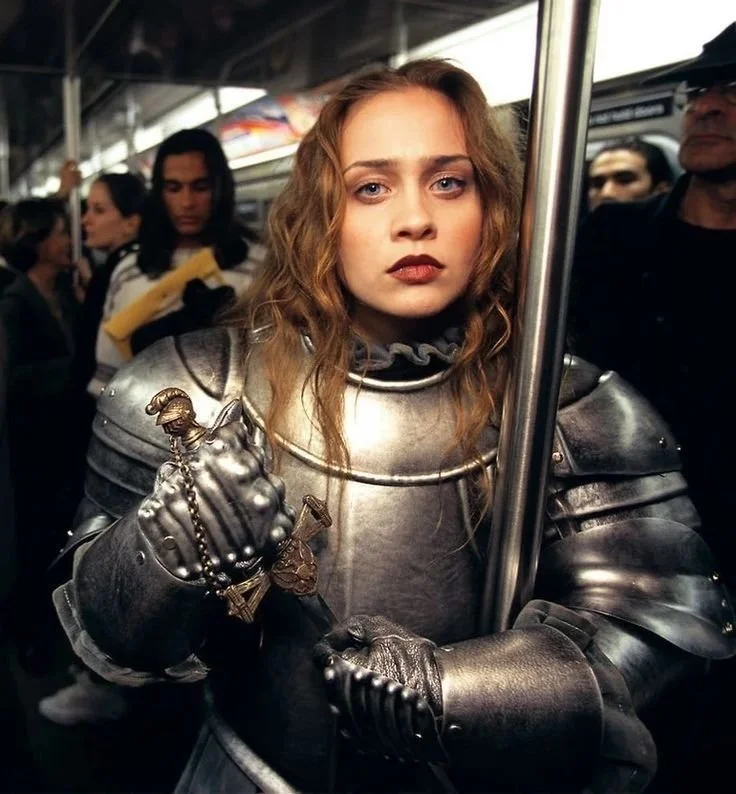
The tragedy of the manic pixie dream girl trope isn't simply that it is sexist, though, of course it is. The worst part is that it takes the identifiable traits of autistic difference and turns them into entertainment while leaving everything else off-screen. The audience is invited to enjoy the novelty without encountering the disability. Confusion becomes mystique. Miscommunication becomes flirtation.
When E called me a manic pixie dream girl, what he meant was: you make me feel interesting. What he didn't mean was: I see you. He had found a character he liked, and like any good movie character, I was most appealing when I remained slightly unknowable. The moment I might have become too complicated, too needy, too literal, too tired, too human, the fantasy would have had to end.
The manic pixie dream girl may just be autistic, but the autistic woman was never just a manic pixie dream girl. And once you let her step outside the frame, she becomes something hell of a lot more interesting than a character: herself.