
The Roots of Ecological Revolution: Green Politics & The Need For Change
By Carolina Dionísio
Green Politics has been an established ideology long before terms like “vegan” and “cruelty-free” became trendy on social media.
The name gained popularity in the late 70s with the rise of the overall environmental movement and the founding of the German Green Party (Die Grünen), although the first ever green political party — The United Tasmania Group — was formed in Australia as early as 1972.
The green ideology covers a spectrum of ideas and approaches that range from moderate to liberal to radical, as its base lies in the cooperation between governments and businesses towards a healthier and more sustainable world.
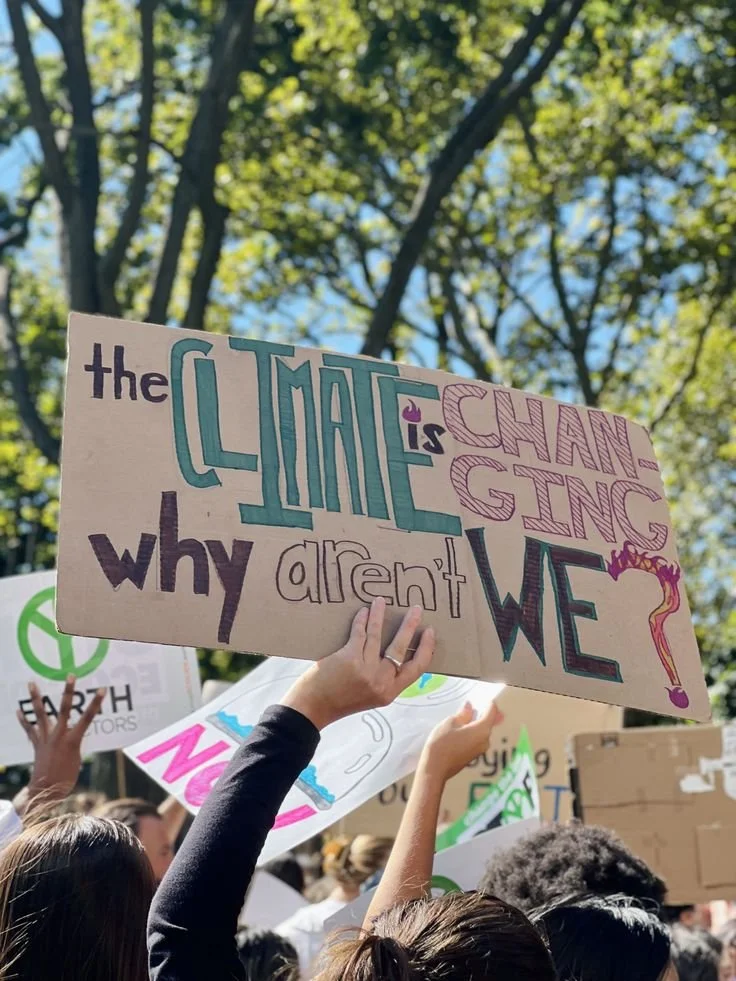
Image Sourced through Pinterest
One of the many branches of Green Politics, and maybe one of the most extreme, is called Eco-Anarchism.
Also known as Green Anarchism, the movement — a political philosophy that merges anarchist principles with ecological issues — aims to abolish human hierarchies while simultaneously erasing the environmental destruction caused by pollution, overconsumption, and others.
Green Anarchism advocated for a society free from all sorts of control, both social, political, and economic, that may lead to oppression, as its main tenet is anti-authoritarianism. It criticizes exploitative systems that may cause alienation in society. Instead, it focuses on the interconnections of humans and nature, self-governing communities, and the natural regeneration and course of life.
Despite Green Politics as a whole promoting change through peaceful and non-violent methods, Green Anarchism, on the other hand, demands direct action, which oftentimes promotes civil disobedience and ecotage (destructive/obstructive action designed to publicize/harass people believed to be harming the environment).
In many cases, protests have been peaceful. But, according to the Global Network on Extremism & Technology, others are not so much.
“The protest group Tesla Takedown emerged as a grassroots movement dedicated to non-violent demonstrations, with at least 253 cities worldwide”, they write. Behind these events, a more extreme ideology was spurred, deeply connected to the vandalism of vehicles and charging stations, sabotage, arson attacks, firebombing, and even a combined arson-and-shooting attack. Then, on March 31st, 2025, 17 Tesla cars were set ablaze at a Tesla dealership in Rome, prompting Elon Musk to declare it an act of “terrorism”.
But is it actually terrorism? And isn’t Musk a terrorist himself, too, given his ecological footprint? Aren’t his astronomical carbon emissions, money hoards, Nazi salutations, and political manipulations more of a terrorist attack on the world than a couple of burning cars?
Besides, these groups aren’t exactly targeting only Musk for his policies and role in the government. Instead, they are creating a whole wave against anti-technology violence, the extreme usage of AI, capitalism, and the hierarchical network of America that cares as much for the environment as for their neighbor.
Green Anarchism’s historical roots trace back to the 19th century, with prominent figures like Elisée Reclus and pre-Socratic philosophers making contributions to the development of the ideology. Today, it is also associated with a range of sub-categories such as:
Eco-Feminist Anarchism, a political philosophy that links environmentalism to feminism, argues that both the patriarchy and capitalism are responsible for both the oppression of women and the degradation of the environment.
Anarcho-Primitivism, a radical offshoot that criticizes civilization itself and advocates for a return to a pre-agricultural model.
Still in this range, we can also study Eco-Socialism as a more moderate approach to environmental revolution.
Although it also dwells on the principles of corruption and capitalism as the cause of ecological destruction and the Earth’s deterioration, it does not resort to such extreme measures as disobedience or the complete erasure of governments and modern industrial civilization.
Eco-Socialism argues we should fight social injustice and environmental crises by supporting integrated sustainable economic policies. For example, implementing a rising carbon tax to shift investment and employment towards a low-carbon economy, and promoting resource efficiency, recycling and upcycling, and the circular economy.
As mentioned, Eco-Socialism also believes the oppressive and obsessive capitalist system of today is what leads to inequality, poverty, and ecological crises, but instead of defending the total abolishment of governments, they focus on one key factor: common ownership of the means of production, which would remove the profit motive as the primary driver of economic activity. This means our economy would shift and be reoriented into going from only growth and profit-driven to more protective and socially equal, by placing control in the public's hands.
Eco-Socialists criticize bureaucratic state-controlled systems and advocate for more democratic and cooperative models.
This ideology was heavily influenced by the growing environmental movements and social critiques of the 1960s, and it emerged as a distinct concept a decade later, although it links back to 19th-century thinkers like British activist William Morris, and of course, Karl Marx.
Today, Eco-Socialism principles are also connected to Grassroots Movements (community-based initiatives driven by ordinary people to bring about social or political change from the bottom up), like the Extinction Rebellion or Fridays for Future.
There have also been different actions proposed to governments and parliaments, like the Green New Deal.
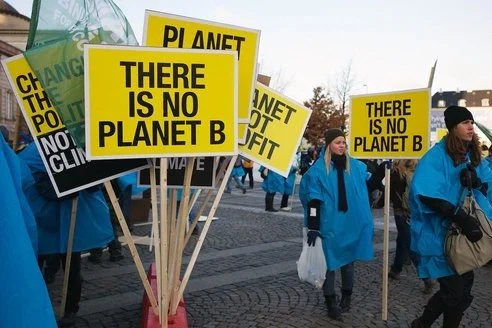
Image Sourced through Pinterest
The term was popularized by progressive Democrats in the late 2010s, most notably Alexandria Ocasio-Cortez and Edward J. Markey, and youth climate activists like the Sunrise Movement, despite being used as early as 2007 by The New York Times columnist, Thomas Friedman.
The initial GND proposal was first introduced in Congress in February of 2019, and it was built around 4 core tenets: climate action, economic stimulus through job creation, infrastructure renewal and retrofitting, and social and economic justice. It draws its name and inspiration from Roosevelt’s original New Deal: a series of projects implemented during the Great Depression with the goal of mitigating its consequences.
Then, in December of 2019, the European Green Deal was launched by the European Commission.
This was the EU’s official comprehensive plan to make the EU climate neutral by 2050. It aimed to transform the Union into a modern, resource-efficient, and competitive economy with no net emissions of greenhouse gases, with a target of a 55% emissions reduction by 2030. The key initiative was to make climate neutrality legally binding, while the plan simultaneously included policies on: industries, chemicals, and waste to ensure clean energy, circular economy, and efficient resource use; zero-emissions vehicles and public transportation for sustainable travels, while also promoting walking and cycling for lifestyle purposes; and biodiversity protection. It even included the Just Transition Mechanism, a model that provided financial and technical support to regions most affected by the transition to a green economy, assuring no one was left behind.
The European Green Deal was supported by an investment of over 1 trillion euros, and promised to benefit its citizens with cleaner air and water, lower energy bills, and better health.
The fight for ecological harmony has been constant. 6 years later, the European Council is still debating, improving, and adopting new laws. Just in 2024, 18 new policies were passed and put in motion, under a wide range of areas, like CO2 emissions, urban wastewater, consumer rights, and corporate sustainability — all accompanied by a variety of strikes.
In 2025, the United Nations held the UNOC3, the third United Nations Ocean Conference. Co-organized by France and Costa Rica, the event was held over the course of 4 days, and its main theme was "Accelerating action and mobilizing all actors to conserve and sustainably use the ocean". The predominant goal was to support the implementation of Sustainable Development Goal 14 (SDG 14) by fostering urgent and expanded action to protect the world's oceans, while bringing together UN member states and international donors, in order to accelerate action for ocean conservation.
The conference concluded with a declaration signed by over 170 countries, committing to conserve and sustainably use the oceans, seas, and marine resources, expand protected areas, decarbonize maritime transport, fight marine pollution, and mobilize support for vulnerable coastal and island nations. It marked a global and crucial step towards better ocean governance.
Additionally, we had other international meetings, like the 30th UN Climate Summit in Brazil, and the 4th International Conference on Financing for Development, in Spain, both vital to strengthening the protection and sustainable use of our resources and planet.
We’ve also witnessed a record of low-carbon emissions worldwide. According to reports from Euronews, “the world generated more than 40 per cent of its electricity from low-carbon sources” — a record not broken since the 1940s — with Europe leading as a “solar superpower”.
In terms of animal life, scientists exploring remote parts of the Southern Ocean (near the South Sandwich Islands) discovered previously unknown marine life, like deep-sea coral gardens, and a colossal squid was filmed for the first time, alive in the wild, one hundred years after its first identification. In South Africa, a gecko species long thought extinct was “rediscovered”. In Spain, the Barcelona Zoo is introducing specialized geriatric treatment for aging animals, emphasizing lifelong care.
These findings highlight that biodiversity and ecosystems can still surprise us, and that protecting the habitat of endangered species and reducing stressors matters and will always make a difference.
But not everything is a sea of roses.
Also in 2025, about 84% of the world’s coral reefs underwent bleaching-level heat stress — making this the most widespread bleaching event ever recorded. This, among other reasons, causes continuous ocean warming and accelerating sea-level rise. The oceans expand, the ice melts, and many coastal regions are threatened, flooded, and endangered.
This kind of environmental change jeopardizes not only human communities and infrastructures but also ecosystems like mangroves, salt marshes, and coastal wetlands, which are all vital for biodiversity, carbon storage, and coastal resilience.
On top of it, the overall global response to climate agreements and actions is still slow and disappointing.
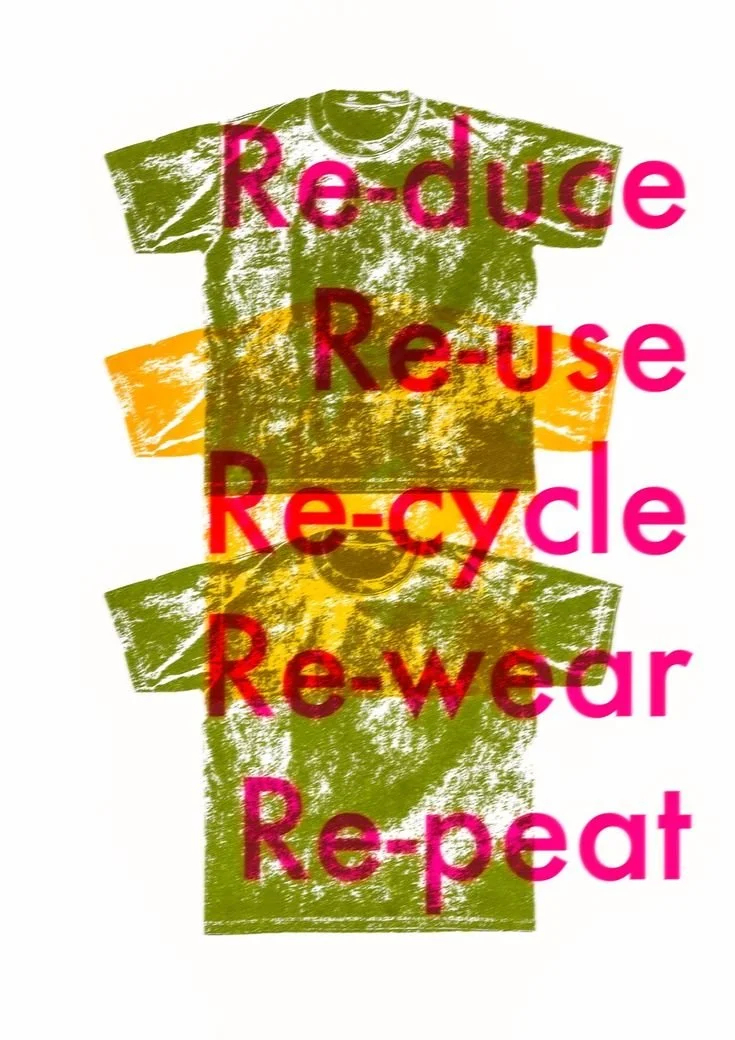
Image Sourced through Pinterest
The final agreement at the COP30 Climate Summit removed all references to phasing out fossil fuels, which is a major setback for a decisive shift away from fossil-based energy.
Fossil-based fuels, like coal, oil, or natural gas, are known to be problematic because of their environmental and health impacts. It has been proven that burning fossil fuels produces large amounts of CO2, methane, and nitrogen oxides, which inevitably warm up our planet while also causing health complications due to pollution.
The problem is: while the great leaders of today make promises, taking action that corresponds to their words is still left undone. Many pledge allegiance, provide funding, and advocate for a better world, but their money and talk can only take them so far — and our clock is ticking.
Although we’ve achieved positive milestones across the current year, which only proves that progress and effective change are both very possible, the negative impacts of today remain critical.
We’re all working towards clearer energy, a brighter ocean, and safer biodiversity habitats, and we’ve verified that many of our current policies, actions, and strikes can blossom plenty of good fruits. There’s no denying the results of our efforts, but the scale of ecological pressure is massive, so said results are yet to be sufficient. Widespread reef loss and inadequate global commitments indicate that without urgent acceleration, we are in deep risk of losing entire species and ecosystems.
So I understand why some groups take extreme measures, and I cannot condone them. Right now, at this age, we can’t simply make promises and hope for the best. Optimism and wishes won’t take any further — action will.
Eco-Socialism, Primitivism, and Green Anarchism are all necessary movements for us to achieve results that are actually reassuring. Besides, we live inside a constant and cyclical capitalist system; therefore, we cannot be oppressed or terrorised by minority groups that burn up some cars once in a while. It’s completely unrealistic to think that these groups are genuinely dangerous to the overall public, just as it is unrealistic to think that we can have ethical billionaires that only further push technological violence and abuse.
Green Politics isn’t just a trend served to us on social media with a quick vegan recipe, a gluten-free snack, or an upcycling hack to turn your skirt into a top. Green Politics goes beyond summits, meetings, and policies that look so good on paper, but are never put into motion. Green Politics starts and ends with every single one of us — so let’s riot!
Green Politics is needed, as it is our future on the line. Because the planet will always be here, but maybe we won’t.