Why Last Night’s Oscar Speeches Matter for the Future of Cinema
By Natalie McCarty
Courtesy of The Academy of Motion Pictures and Sciences
Before the 98th Academy Awards, I said to NRC that there were really only a few directions the night could go: it could lean into comfort and neutrality, offering polished thank‑yous and deferring political or global context, or it could meet the moment directly, speak plainly, and make space for urgency. By the end of the night, it was incredibly refreshing to see many stars rise to the moment and deliver speeches that engaged with our culture, and, more notably, our political climate.
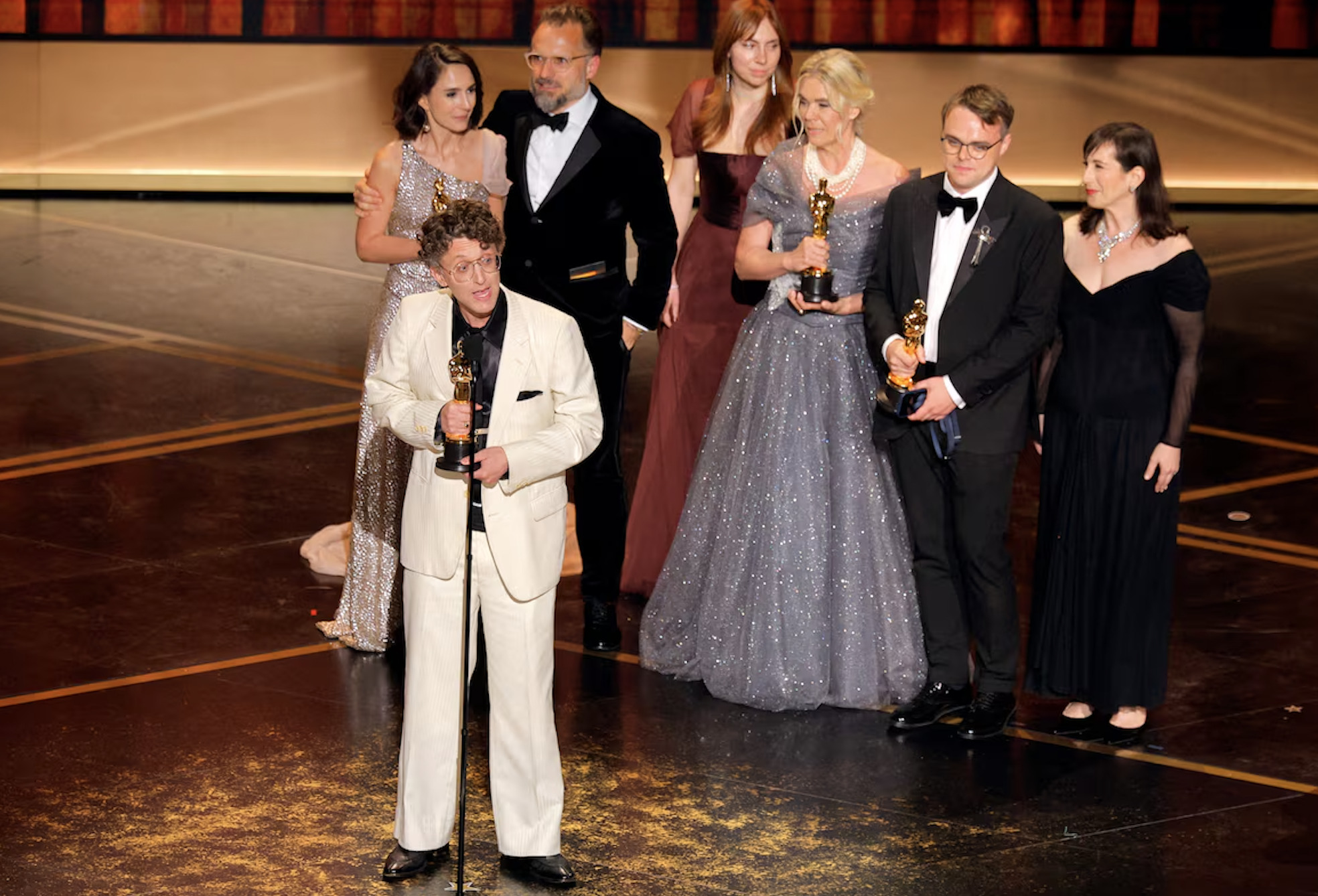
Take the documentary winners for Mr. Nobody Against Putin, which took home Best Documentary Feature. The film’s director, David Borenstein, used the moment not to sanitize his message but to expose it. He said, “Mr. Nobody Against Putin is about how you lose your country. And what we saw when working with this footage, it’s that you lose it through countless small little acts of complicity.”
Courtesy of The Academy of Motion Pictures and Sciences
Even more boldly: “When we act complicit when a government murders people on the streets of our major cities. When we don’t say anything when oligarchs take over the media and control how we can produce it and consume it. We all face a moral choice. But luckily, even a nobody is more powerful than you think.”
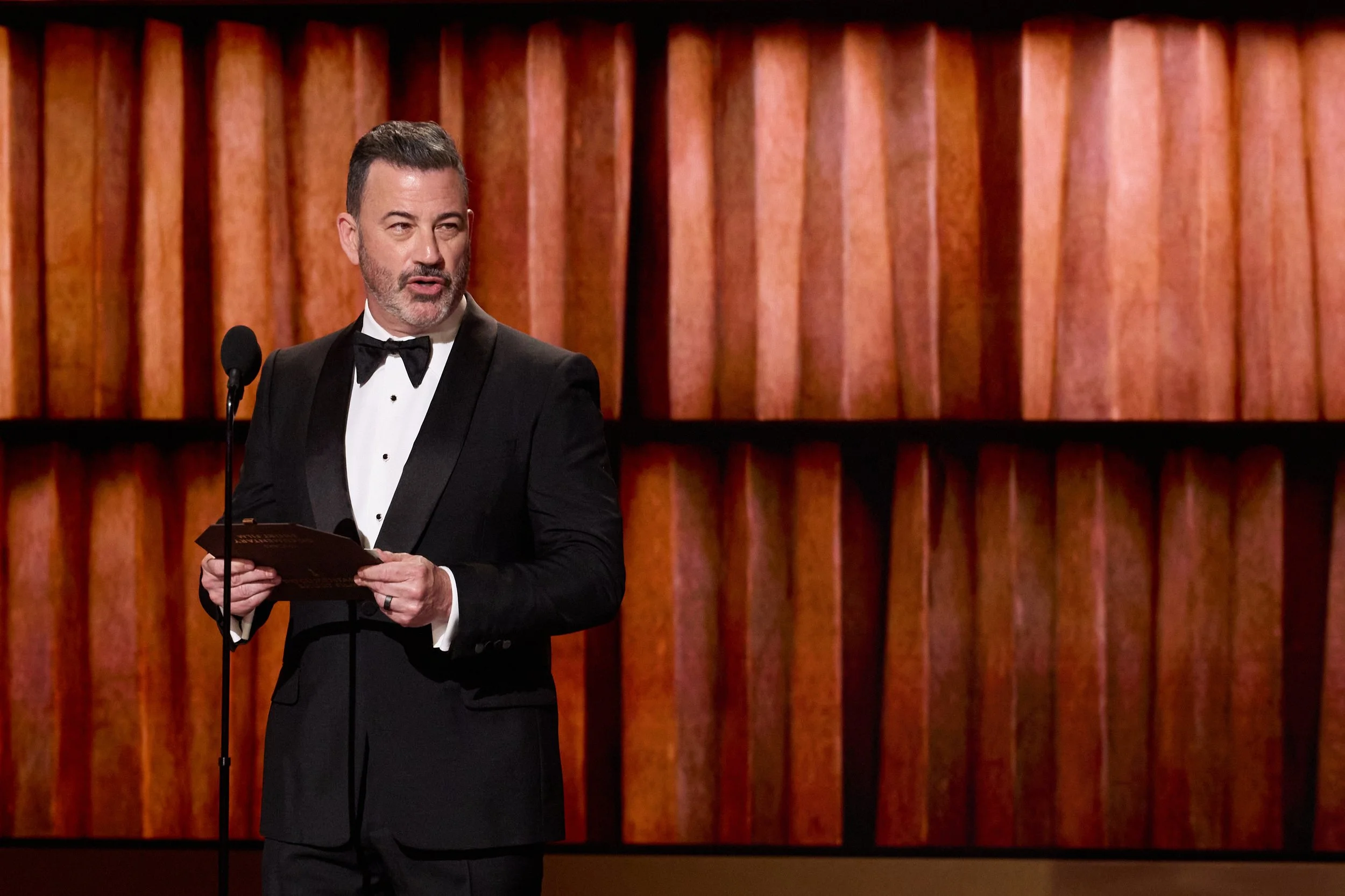
That message of courage and accountability found an echo in Jimmy Kimmel’s moment presenting the documentary awards. He turned humor into a sobering reminder of the stakes: “We hear a lot about courage at shows like this, but telling a story that could get you killed for telling it is real courage. As you know, there are some countries whose leaders don’t support free speech. I’m not at liberty to say which. Let’s just leave it at North Korea and CBS.”
Courtesy of The Academy of Motion Pictures and Sciences
Free speech is the difference between a story being told and a story being erased, and beyond the general public, the film community should be increasingly concerned. You have nothing but your stories, and if you can silence and commodify one industry, you can do it across the board. That’s why Borenstein and Kimmel speaking out matters as much as it does.
Courtesy of The Academy of Motion Pictures and Sciences
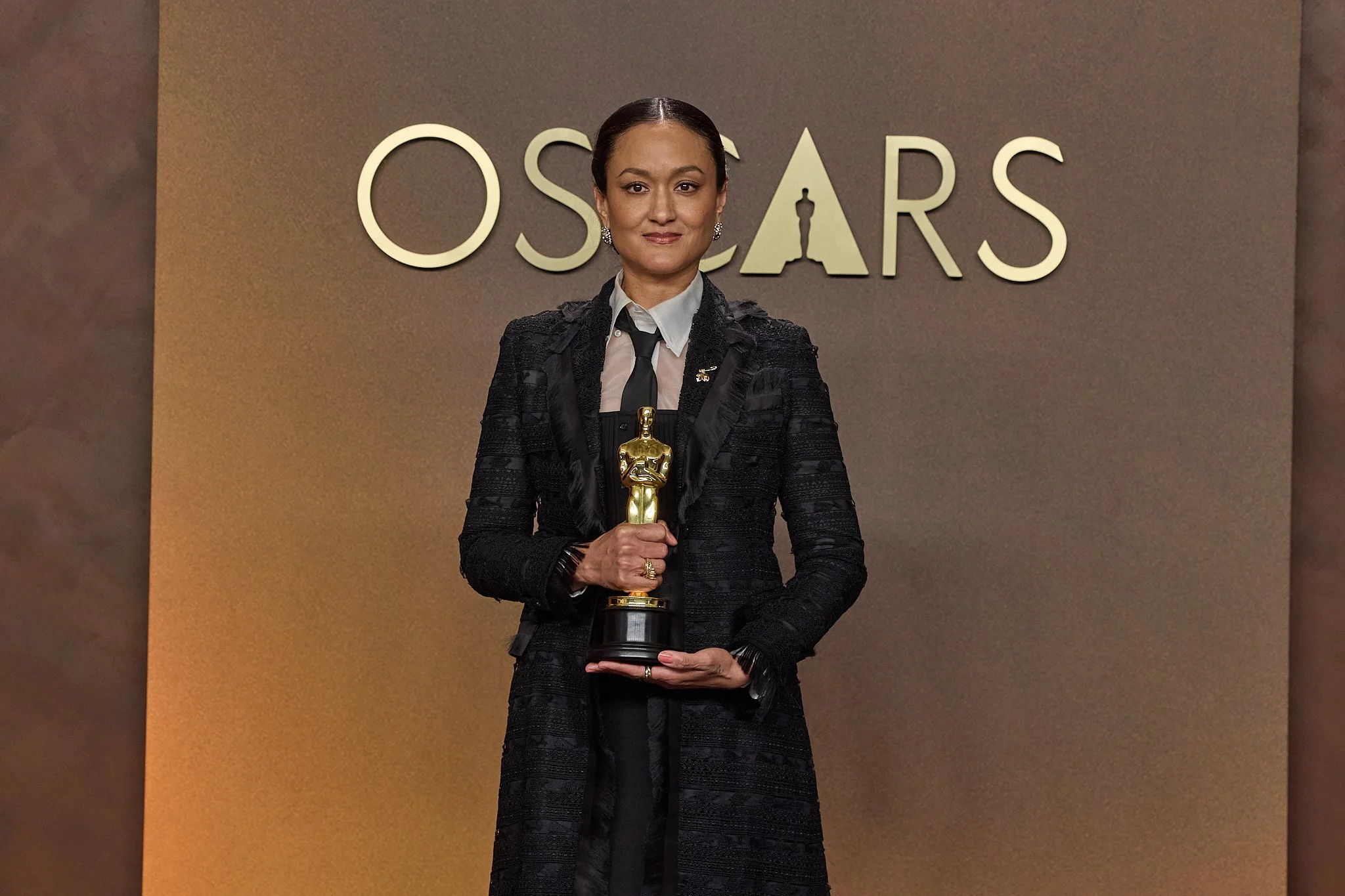
Autumn Durald Arkapaw, the first woman to win Best Cinematography, carried that momentum into a broader acknowledgment of the community that shaped her career. “I really want all the women in the room to stand up… because I wouldn’t be here without you guys,” she said, explicitly naming the people often left out of the history books and behind the camera–a declaration about who gets to create images and whose labor has historically gone unrecognized.
Courtesy of The Academy of Motion Pictures and Sciences
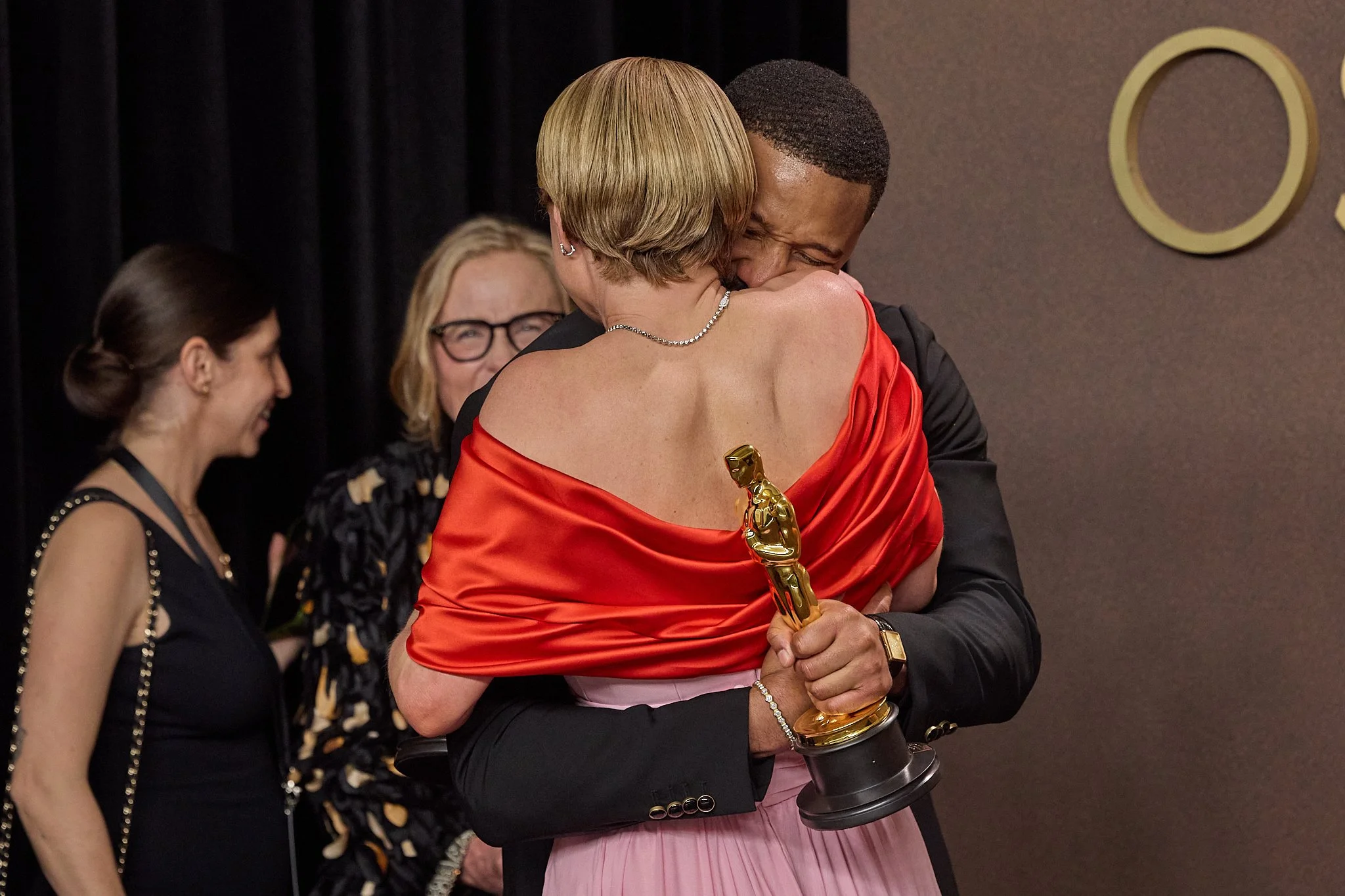
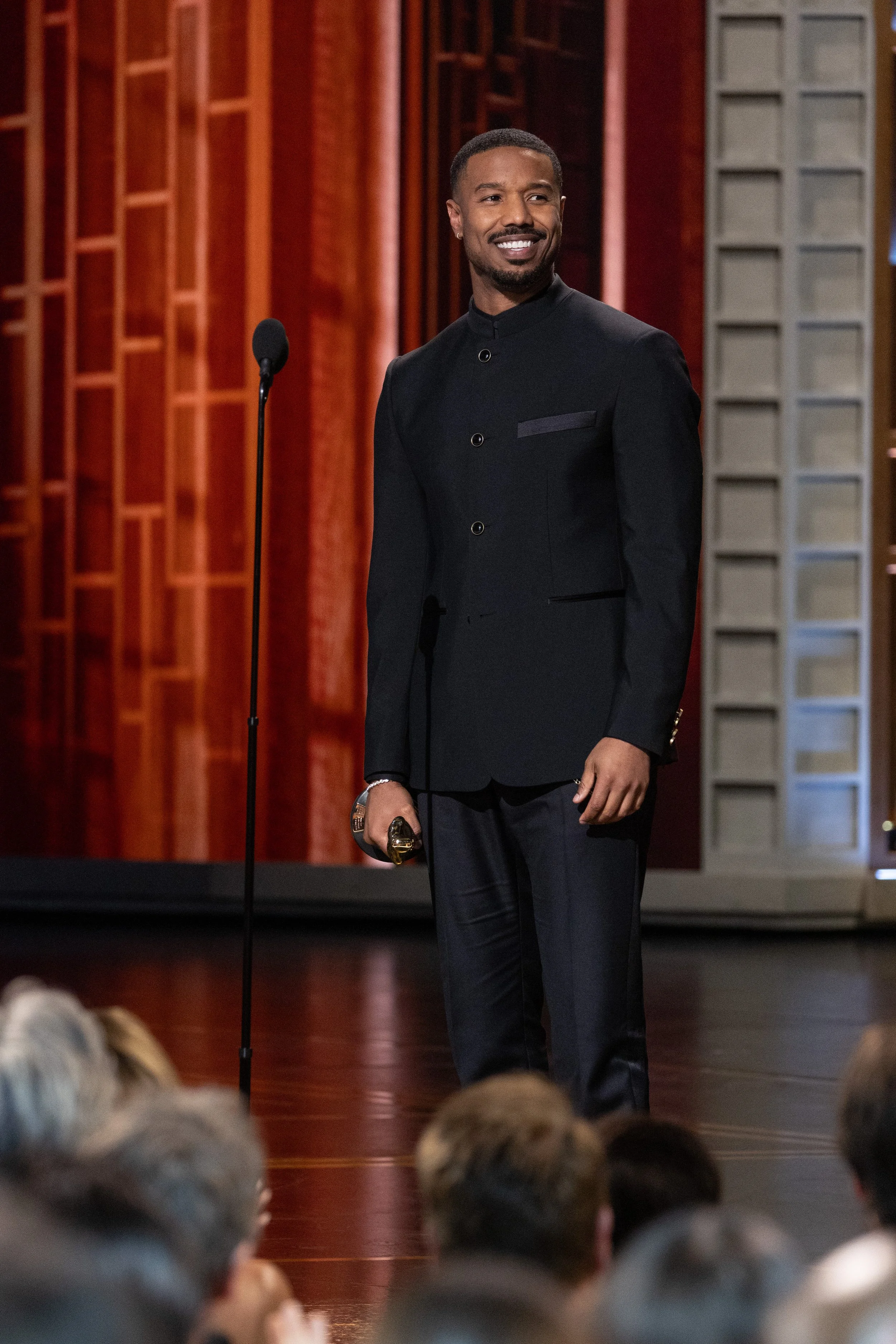
Continuing on the legacy note, Michael B. Jordan, winning Best Actor for Sinners, struck a similar chord, as he became only the sixth Black winner in Oscar history for Best Actor. “I stand here because of the people who came before me… Thank you for betting on me. I’m gonna keep stepping up,” he said. His language wasn’t about individual triumph; rather, much like Sinners, it was about lineage, inheritance, and an acknowledgment that standing on that stage is part of an ongoing tradition of struggle and support.
What connects these statements is not a single ideology but a shared refusal to skirt the realities of our time. These speeches named complicity, community, courage, and hope, and they will have a direct impact on the kinds of conversations we start to see surface in our culture.
For decades, the Oscars operated with an implicit separation between the films and the world. The ceremony celebrated craft and artistry, yes, but it also felt insulated from the very world that these films emerged from. Last night, that boundary dissolved as the topical world events moved into its center.
This is especially significant after years of industry discord: labor movements, questions about authorship, debates about agency, and who gets power in this system. Cinema does not exist in a vacuum; it never has, but last night’s speeches acknowledged how entangled the industry is with the world we all inhabit.
There was no attempt to soften that reality. And in a room this public, silence would have been noticeable. Silence would have read not as neutrality, but as abdication.
Because neutrality is complicity.
And complicity is the thing these filmmakers, technicians, and performers stood up to, both in their work and in the words they chose.
Courtesy of The Academy of Motion Pictures and Sciences
As an audience, as a member of the media, as someone working in the entertainment industry, this is what we want to see more of. We want even bolder messages from Hollywood’s stars—speeches that name Trump directly, call for accountability from the administration, and remind us of the power and responsibility of storytelling.
The future of cinema isn’t just what gets made; it’s what gets said after it’s made, and how we talk about the stories, whether we are brave enough to speak plainly, without padding or euphemism. It is how we choose to locate ourselves inside the narrative, rather than outside it.
And when that becomes the expectation, not the exception, it will change not just the stories we watch, but the society that watches them.